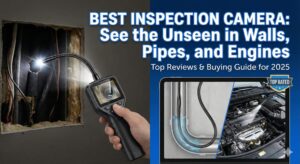
Best Inspection Camera: See the Unseen in Walls, Pipes, and Engines
Whether you’re a DIY homeowner diagnosing a cracked heat exchanger, a plumber retrieving a lost wedding ring from a dark drain, or a master mechanic inspecting cylinder walls without tearing down an engine block, a high-quality borescope is the ultimate diagnostic tool. We thoroughly tested the market leaders to bring you the best options for every budget and use case.
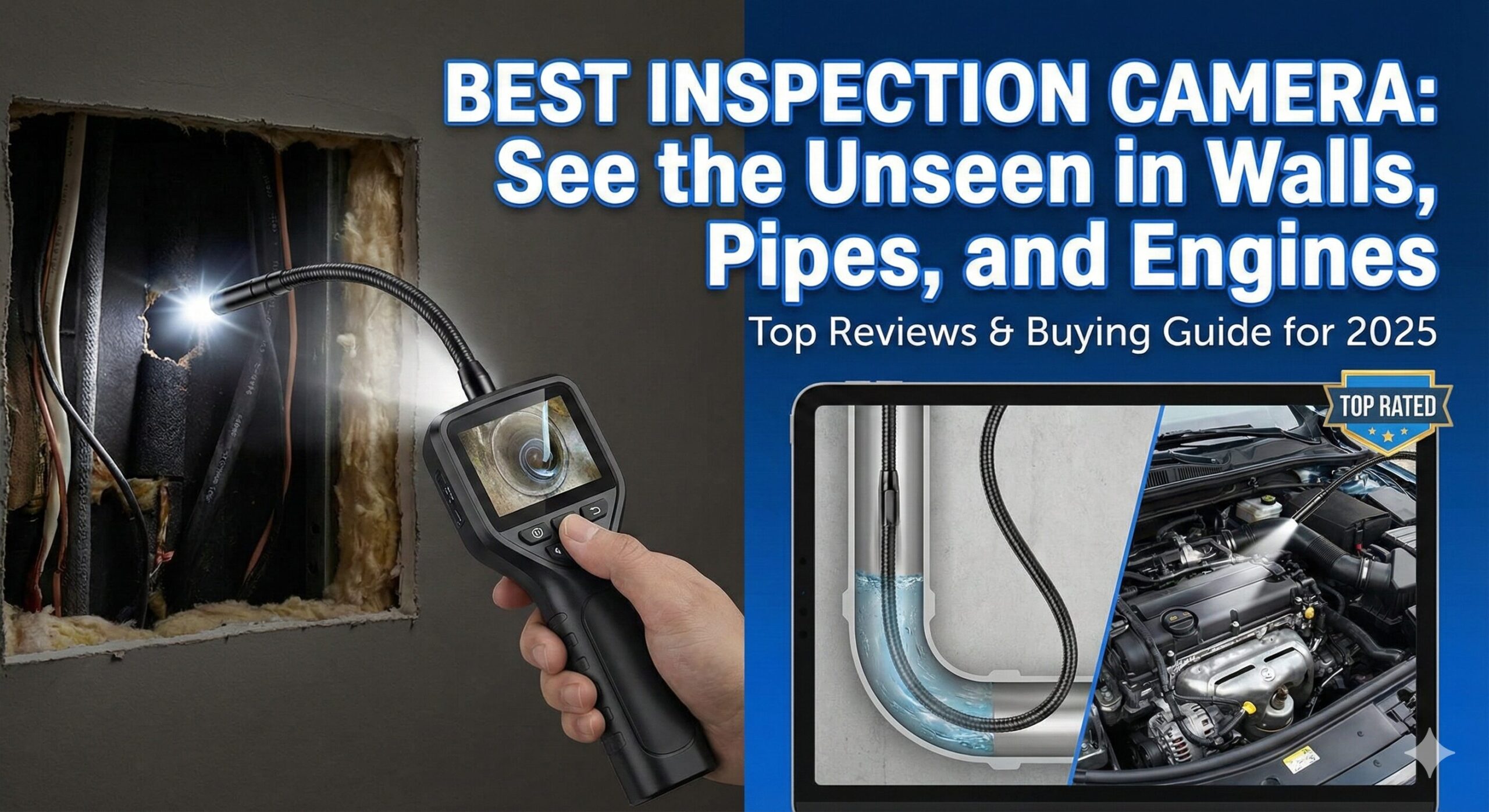
Why Every Homeowner and Pro Needs an Inspection Camera
There was a time when looking inside a wall cavity meant taking a reciprocating saw and cutting a massive, messy hole in the drywall. Similarly, checking an engine cylinder for carbon scoring required completely dismantling the cylinder head—a job that took hours and cost hundreds of dollars in labor. Those days are officially behind us.
The best inspection camera—often interchangeably referred to as a borescope, endoscope, or snake camera—puts high-definition eyes in places your head simply can’t fit. This technology falls under the category of NDT (Non-Destructive Testing). The goal of NDT is to evaluate the properties of a material, component, or system without causing damage. By utilizing a tiny camera mounted on a flexible or semi-rigid cable, you save time, money, and structural integrity.
For automotive mechanics, these tools are indispensable for checking valves, pistons, and catalytic converters without a teardown. For homeowners, they act as the very first line of defense against hidden, incredibly expensive disasters. Imagine hearing faint scratching noises echoing in your chimney in the middle of the night. Before you panic and assume the worst, you can safely snake an inspection camera up the flue to confirm if you need to research humane raccoon removal from chimney safety options or if it’s merely a loose branch scraping against the brickwork.
Similarly, diagnosing water intrusion becomes a surgical process rather than a guessing game. You can trace ceiling leaks back to their exact source, confidently checking if you need to learn how to fix a leaky chimney or if the issue actually lies in a degraded plumbing vent stack. In this comprehensive guide, we break down the top models based on crucial metrics: image clarity, focal length, probe flexibility, screen quality, and job-site durability.
Quick Comparison: Top Rated Inspection Cameras
Short on time? Here is a high-level overview of the top models we tested, categorized by their best use case so you can make a quick, informed decision.
| Model | Type / Display | Camera Resolution | Probe Length | Standout Feature | Best For |
|---|---|---|---|---|---|
| Teslong Dual Lens | Handheld (4.5″ IPS Screen) | 1080p HD (Front & Side) | 16.5 ft (Semi-Rigid) | Push-button side viewing | Overall Best / Automotive |
| Depstech Wireless | WiFi (Smartphone App) | 1200p HD | 11.5 ft (Semi-Rigid) | Ultra-portable, uses phone screen | Budget / Casual DIY |
| Klein Tools ET16 | Direct Phone Attachment | 640×480 (Standard) | 10 ft (Gooseneck) | No batteries required | Electricians / Quick Checks |
| Ridgid Micro CA-25 | Handheld (2.4″ Rugged) | 480 RGB | 4 ft (Expandable) | Job-site drop protection | Professional Plumbing |
Deep Dive Reviews: Testing the Best Borescopes
We took these cameras out of the box and put them into actual walls, pipes, and engine blocks. Here is our detailed breakdown of how they performed in real-world scenarios.

1. Teslong Dual Lens Industrial Endoscope
The Undisputed Champion of Clarity and Versatility
The Teslong Dual Lens stands out in a crowded market because it elegantly solves the biggest frustration professionals have with traditional borescopes: the viewing angle. Standard cameras only look straight ahead. If you want to look at the side of a pipe, you have to screw on a tiny, fragile mirror attachment. These mirrors get dirty instantly, distort the image, and frequently fall off inside engines (creating a massive headache).
Teslong fixes this by putting a second, dedicated 1080p camera lens on the side of the probe. With the press of a button on the handle, you instantly switch views. This is an invaluable feature when inspecting engine cylinder walls for scoring, or when looking laterally at a flue liner for hairline cracks that might indicate severe chimney fire signs.
Key Specifications & Features:
- Display: 4.5-inch IPS color screen. The IPS technology means you can view the screen from extreme angles without the colors washing out—crucial when you are contorted under a sink.
- Probe: 16.5-foot semi-rigid cable. It holds its shape perfectly when pushed across a drop-ceiling.
- Storage: Includes a 32GB MicroSD memory card for recording video/photos directly to the device.
- Battery: Rechargeable 2500mAh lithium-ion battery providing up to 4 hours of continuous continuous use.
- Lighting: 6 adjustable LED lights on the front lens, and 1 dedicated LED for the side lens.
Pros
- Dual-lens design completely eliminates the need for frustrating mirror attachments.
- Crystal sharp 1080p resolution makes reading tiny, greasy part numbers incredibly easy.
- IP67 Waterproof probe easily survives being submerged in flooded drains.
- Standalone unit; no need to drain your smartphone battery or deal with spotty WiFi apps.
Cons
- The screen is not a touchscreen, requiring you to navigate menus via physical buttons.
- The semi-rigid cable, while great for reaching, can be too stiff to navigate through extremely tight 90-degree plumbing P-traps.
Performance Verdict: Ideally suited for serious automotive work, HVAC diagnostics, and detailed home inspections. The ability to see sideways without a mirror is an absolute game-changer. For example, it makes inspecting gas fireplace venting options for blockages infinitely easier, allowing you to check the joints where different pipe sections meet.

2. Depstech Wireless WiFi Endoscope
The Smart, App-Based Solution for the Occasional User
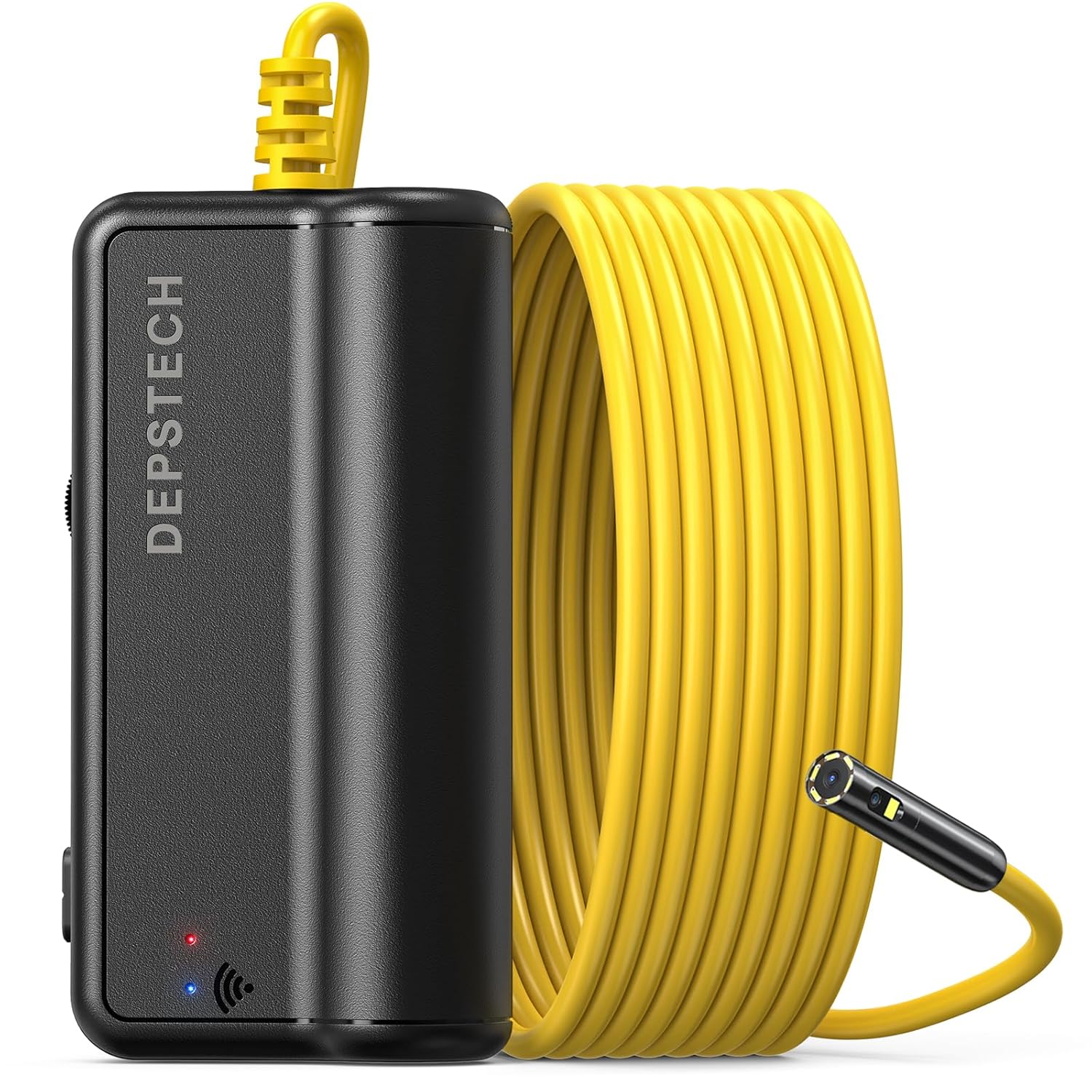
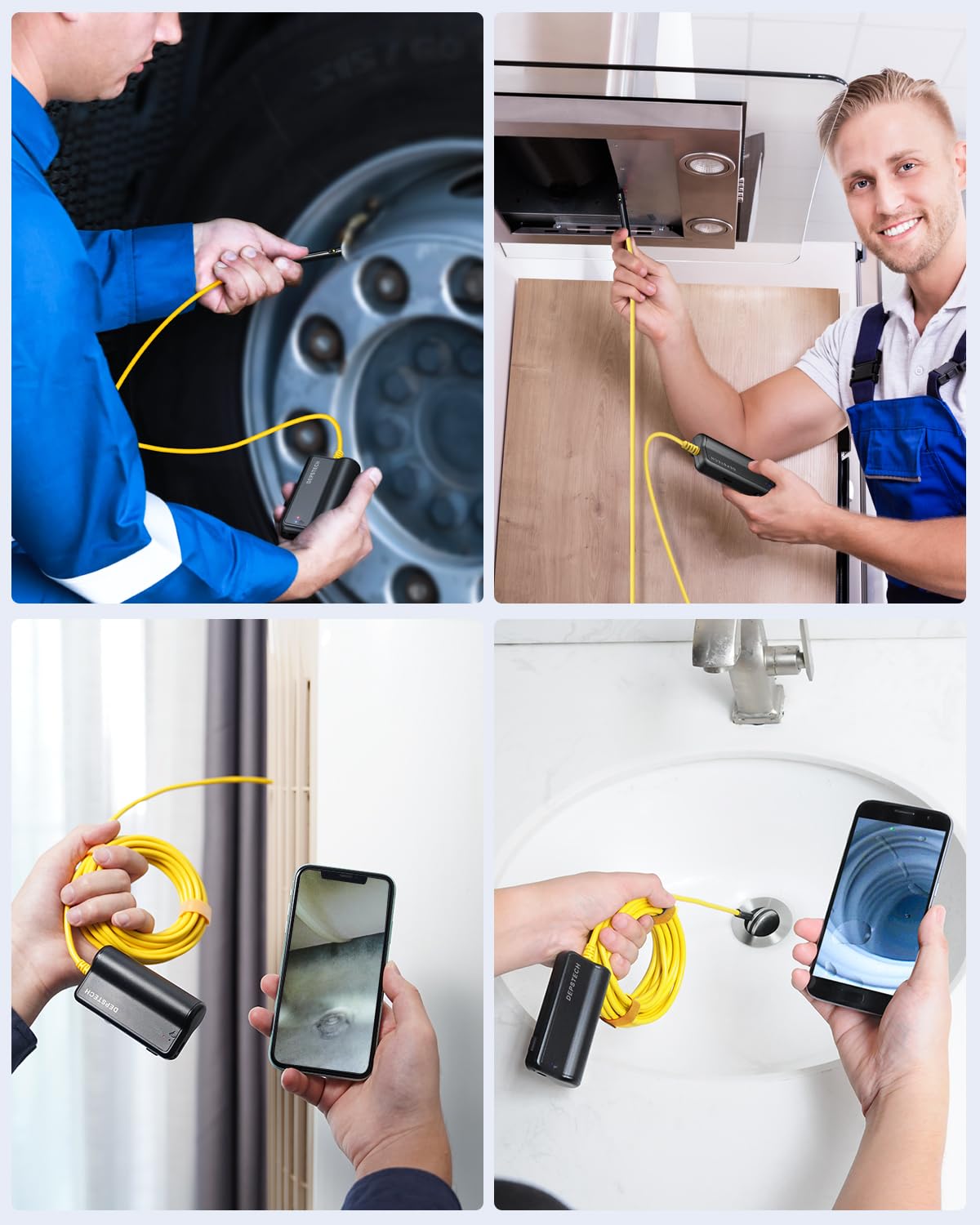
If you don’t use an inspection camera every single day, you might not want to pay a premium for a tool with a dedicated built-in screen. The Depstech Wireless offers a brilliant workaround. It consists of a camera probe attached to a small WiFi transmitter. It broadcasts its own local WiFi network that connects directly to your iPhone or Android device via the free Depstech app.
By leveraging the ultra-high-resolution screen already sitting in your pocket, Depstech keeps the cost incredibly low while delivering fantastic image quality. It is surprisingly capable for sporadic home tasks, like confirming whether you need to research when birds get stuck in chimneys safety next steps, or simply retrieving a set of keys dropped down an air register.
Key Specifications & Features:
- Connectivity: Direct WiFi transmission (Works perfectly in basements or areas with zero cellular service).
- Resolution: 1200p HD CMOS camera chip provides a very crisp image on modern smartphones.
- Attachments Included: Comes with a hook, a strong magnet, and a side-view mirror attachment.
- Probe Diameter: Ultra-thin 8.5mm camera head.
Pros
- Incredibly affordable price point for the technology provided.
- Uses your phone’s superior OLED/Retina screen for viewing.
- Long battery life on the WiFi transmitter (approx. 3-4 hours).
- The thin 8.5mm probe effortlessly fits through standard spark plug holes and tiny drilled drywall holes.
Cons
- Video feed can lag or stutter slightly if there is high WiFi interference in the area.
- Requires downloading and installing a third-party application on your personal phone.
- The included side-view mirror attachment is prone to glare and smudging, making it vastly inferior to a true dual-lens system.
Performance Verdict: This is the perfect “just in case” tool for the casual DIYer. It is lightweight, takes up zero space in a toolbox, and is ready when disaster strikes. It’s excellent for investigating slow drains or checking fireplace draft problems caused by accumulated soot or debris blockages.

3. Ridgid Micro CA-25
The Unbreakable Workhorse for Professional Plumbers
Ridgid is a brand synonymous with heavy-duty plumbing equipment, and their entry into the inspection camera market reflects that ethos. The Micro CA-25 is built explicitly to survive the abuses of a commercial job site. While it intentionally eschews the fancy 1080p resolutions and WiFi gimmicks of consumer models, its durability, drop-resistance, and ergonomic design are virtually unmatched.
It features a ruggedized pistol-grip design that allows for true one-handed operation. You can comfortably hold the screen and manipulate the probe cable simultaneously with one hand, leaving your other hand free to balance on a ladder or hold a flashlight.
Key Specifications & Features:
- Build Quality: Over-molded rubber grip, high-impact plastic housing, and an anodized aluminum camera head.
- Screen: 2.4-inch Color LCD display.
- Lighting: 4 intensely bright, fully adjustable LEDs designed to penetrate pitch-black sewer lines.
- Video Out: Includes a standard RCA cable to output the live feed to a larger external TV or monitor.
Pros
- Extremely durable; designed to survive drops onto concrete.
- Fully waterproof camera head and cable assembly (IP67).
- Digital video rotation feature allows you to flip the image 180 degrees so “up” is always “up” regardless of probe orientation.
- Comfortable, ergonomic pistol-grip design reduces hand fatigue.
Cons
- Much lower screen resolution (480p) compared to modern consumer borescopes.
- The included cable is only 4 feet long (though 3-foot extensions can be purchased separately).
- Higher price tag relative to its technical specs, purely due to the commercial build quality.
Performance Verdict: If you are a tradesperson who throws their tools into the back of a van, this is the camera you need. It won’t break when dropped, and it gets the job done. It is particularly useful for inspecting masonry flues before undertaking a project to determine the best chimney mortar mixes required for a repair.

The Next Level: Articulating Borescopes vs. Standard Borescopes
If you are looking to do advanced mechanical diagnostics, you will inevitably encounter the term “Articulating Borescope”. But what exactly does that mean, and is it worth the significant price increase?
Standard Borescopes (like the ones reviewed above) have a fixed camera head. To change the direction the camera is looking, you have to physically twist, push, or bend the entire length of the cable by hand. Once the camera is 10 feet deep inside a twisting pipe, rotating the handle often does nothing to rotate the camera head due to friction inside the pipe.
Articulating Borescopes feature a mechanical joystick or thumb-wheel on the handle. By manipulating this joystick, tiny high-tension wires inside the cable physically bend the camera head at the very tip, up to 180 degrees in either direction. This allows you to insert the camera straight into a spark plug hole, and then use the joystick to bend the camera back on itself to look directly up at the intake and exhaust valves at the top of the cylinder. While standard cameras cost between $40 and $100, true articulating borescopes usually start around $200 and can easily exceed $1,000 for aviation-grade models.
Advanced Buying Guide: Specs That Actually Matter
It’s easy to get distracted by marketing jargon like “Ultra HD Megapixels.” However, when you are trying to see inside a dark, greasy tube, other specifications are far more critical to your success.
1. Focal Length and Depth of Field (Crucial!)
This is the most misunderstood spec in the industry. Borescope cameras do not have auto-focus lenses like your smartphone. They have a fixed focal length.
[Image demonstrating focal length and depth of field in macro photography]If a camera has a focal length of 1.2 inches to 4 inches, it means anything closer than 1.2 inches will be a blurry mess, and anything further than 4 inches will be out of focus.
For Automotive: You want a short focal length (Macro lens) because the camera will be very close to piston heads and valves.
For Chimneys & HVAC: You want a long focal length or infinite focus. If you are looking down a large flue, a macro lens will only show you the dust floating directly in front of the lens. You need a deep focal depth to see the structural integrity of the masonry or to assess if you need chimney insulation techniques.
2. Probe Diameter
Size matters entirely based on your entry point. For general home plumbing (looking down a 1.5-inch sink drain), an 8mm probe provides excellent lighting and durability. However, if you are a diesel mechanic inspecting fuel injector ports or glow plug holes, an 8mm probe simply will not fit. You will need to seek out a specialized micro-probe in the 4mm to 5.5mm range.
3. Cable Rigidity: Semi-Rigid vs. Soft
Semi-Rigid (Gooseneck): These cables contain a thick internal wire. You can bend them into a “hook” shape, and they will hold that shape against gravity. This is absolutely essential for pushing a camera horizontally across a drop ceiling, or pushing it upward past a fireplace damper.
Soft/Flexible: These act exactly like a piece of thick rope. They are completely useless for pushing upward or horizontally across open spaces. However, they are perfect for dropping straight down a vertical sewer line, allowing gravity to do the work.
4. Illumination Quality (LEDs)
Inside a wall, it is pitch black. A 4K camera is useless without proper lighting. Look for cameras with at least 6 LEDs surrounding the lens. More importantly, ensure the LEDs are dimmable. When inspecting highly reflective surfaces (like a stainless steel flue liner, or checking metal rust removal products effectiveness), having the LEDs on maximum brightness will cause severe glare and white-out the image. Dimmability is key.
Step-by-Step: How to Use an Inspection Camera Like a Pro
Task A: Inspecting a Plumbing P-Trap for Clogs
- Power On and Test: Turn the unit on and verify the LED lights are functioning before inserting it into the dark drain.
- Navigate the Bend: Push the semi-rigid cable down the drain slowly. When you hit the bottom of the “U” shaped P-trap, twist the cable gently while pushing. The twisting motion helps the camera head glide over the plastic curve rather than jamming into it.
- Identify and Retrieve: Once you spot the hair clog or dropped jewelry, note the depth. Pull the camera out. If you are retrieving jewelry, attach the hook or magnet accessory to the camera head, re-insert carefully, and snag the item using the live video feed as your guide.
Task B: Checking Behind Drywall Without Destruction
- Drill a Pilot Hole: Find a discrete location (like behind a baseboard or inside a closet) and drill a hole just slightly larger than your camera’s probe diameter (usually 3/8″ or 1/2″).
- Shape the Cable: Since the cavity between studs is mostly empty air, a limp cable will just fall straight down. Bend the first 12 inches of your semi-rigid cable into an “L” shape before inserting it.
- Sweep and Inspect: Insert the “L” shape into the wall. By twisting the handle outside the wall, the camera head will sweep in a wide circle inside the wall cavity, allowing you to check for moisture, termites, or electrical wiring paths.
More Practical Applications for Borescopes
Chimney and Fireplace Diagnostics
Inspecting your chimney is a safety-critical task that traditionally required a professional. An inspection camera allows you to look up through the damper to check the smoke shelf for debris and monitor creosote buildup. This visual evidence helps you accurately determine chimney cleaning frequency tailored to your specific burning habits. You can also inspect the internal mortar joints near the top of the stack to see if they are crumbling and require repair.
HVAC and Air Ducts
If you have a room that is always freezing in the winter, a motorized damper might be stuck closed deep inside your ductwork. A borescope lets you snake through the floor registers to verify the position of these dampers without cutting open sheet metal in your basement. It’s also incredibly useful for checking the heat exchanger on gas furnaces for dangerous cracks, ensuring safe carbon monoxide detector monitoring is supported by a physically sound furnace.
Pest Detection
Hearing scratching in the walls or attic? Before you spend hundreds calling an exterminator, use a camera to peek under floorboards, behind drywall, or into soffit overhangs. This is often the safest and least destructive way to confirm if a critter has entered, allowing you to identify the entry point and subsequently install chimney rain caps and robust animal guards to prevent future intrusions.
Frequently Asked Questions (FAQ)
In strict terminology, an endoscope is a highly regulated, sterile medical device used by doctors to examine the interior of the human body (like a colonoscopy). A borescope is an industrial tool used for mechanical inspections. However, in the consumer retail market (like Amazon), sellers use both terms interchangeably for SEO purposes. The products reviewed in this guide are industrial borescopes.
Yes, but with caveats. Most high-quality inspection probes have an IP67 waterproof rating. This means the camera head and the cable can be fully submerged in water (perfect for a clogged sink or toilet). However, the handheld monitor unit or the WiFi transmitter box is almost never waterproof. Keep the screen dry.
If you work on cars, yes. The spark plug hole is at the top of the cylinder. A single-lens camera only looks straight down at the piston head. To see the cylinder walls for scratches, you need a side-viewing lens. While single-lens cameras come with mirror attachments, the mirrors get smeared with oil instantly, rendering them useless. A dedicated dual-lens camera is vastly superior.
Inspection cameras are not security cameras; they do not have infrared night vision. They rely entirely on their built-in LEDs. Because the LEDs are tiny, they typically only illuminate 1 to 2 feet in front of the lens in a pitch-black pipe. They are designed for close-up inspection, not long-distance viewing.
Yes, they are excellent for non-destructive leak detection. If you have water stains on your ceiling, you can drill a tiny hole, insert the camera, and trace the water path along the rafters back to the source. For masonry chimney leaks, spotting the water entry point internally can help you decide if you need to apply chimney waterproofing methods to the exterior brickwork.
Final Verdict: Which Camera Should You Add to Your Toolbox?
Choosing the right inspection camera ultimately comes down to your primary use case, your budget, and how frequently you intend to use the tool.
For the absolute best versatility and image quality, the Teslong Dual Lens Industrial Endoscope is our definitive top pick. The ability to switch between forward and lateral views with the push of a button is a feature you won’t want to live without once you’ve experienced it. It effortlessly handles everything from intricate automotive piston diagnostics to inspecting a complex chimney antenna mount installation from the inside of the attic space.
For homeowners on a strict budget who only need a tool for occasional emergencies, the Depstech Wireless Endoscope offers incredible, unbeatable value. By utilizing the smartphone you already own as the screen, it provides high-definition views of clogged drains or dropped items without breaking the bank.
Finally, for heavy-duty professional plumbers and contractors, we highly recommend sticking with the Ridgid Micro CA-25. It may lack the flashy high-resolution screens and dual-lenses of the consumer models, but its ruggedized construction ensures it will survive the daily abuse, drops, and spills of an active construction site.
Ready to see what you’ve been missing?
Stop guessing and start diagnosing. Browse the top-rated models and find the perfect borescope for your next project.
Shop Best Selling Inspection Cameras on Amazon