Chimney Fire Signs: Detect Heat Patterns and Creosote
By Chimney Insight Editorial Team
Posted on November 24, 2025
Disclosure: This page contains affiliate links. We may earn a commission from qualifying purchases at no extra cost to you. As an Amazon Associate I earn from qualifying purchases.
Urgent Safety Warning
If you suspect a chimney fire is happening right now, evacuate your home immediately and call 911. Do not attempt to extinguish a roaring chimney fire yourself. Every second matters.
The warmth of a fireplace is the heart of a winter home, but hidden within the flue, a dangerous enemy may be lurking: creosote. When ignited, this byproduct of incomplete wood combustion creates one of the most destructive forces a homeowner can face — a fire that can exceed 2,000°F and spread to your home’s framing before you even realize it has started.
Understanding chimney fire signs is not just about home maintenance — it is a matter of life and death. This guide covers every warning signal across all five senses, explains the difference between explosive and silent fires, walks through the post-fire damage assessment process, and gives you a complete prevention protocol to ensure you never face this emergency.
25K+
Residential chimney fires annually in the US
2,000°F
Peak flue temp in a free-burning chimney fire
90%
Of chimney fires caused by creosote buildup
$10K+
Average cost if fire spreads to home structure
What Actually Is a Chimney Fire?
A chimney fire is the ignition and combustion of creosote deposits — the residue that accumulates on the inner walls of your flue liner from incomplete wood combustion. It is not the wood in the firebox catching fire more intensely than usual. It is the chimney structure itself burning. That distinction matters enormously for understanding why it is so dangerous and so destructive.
When wood burns, it produces a complex mixture of combustion gases, water vapor, and unburned carbon compounds. In a hot, well-drafted fire with properly seasoned wood, most of these compounds burn off completely. But when combustion is cooler or the wood is wet, those compounds rise as vapor with the smoke and condense on the relatively cooler surfaces of the flue liner — layer by layer, season by season — until the accumulated deposits reach an ignition temperature and catch fire.
For a deeper look at the mechanics of your heating system, explore whether a gas fireplace needs a chimney. For wood burners, the chimney is the engine of the entire system — and creosote is its most dangerous byproduct.
Why Creosote Ignites Differently Than Wood
Dry, seasoned firewood ignites predictably at around 300–400°F and burns in a controlled way. Third-degree creosote — the dense, glazed deposits that form from chronic wet wood or softwood burning — ignites at around 450°F but then burns at temperatures exceeding 2,000°F. This is nearly three times hotter than a normal wood fire, and it is why chimney fires cause such catastrophic structural damage in a short time.
Two Types of Chimney Fire: Know the Difference
Not all chimney fires announce themselves with flames and roaring sounds. Understanding both types — and knowing that one is invisible — is arguably the most important knowledge a fireplace owner can have.
Free-Burning (Explosive) Fires
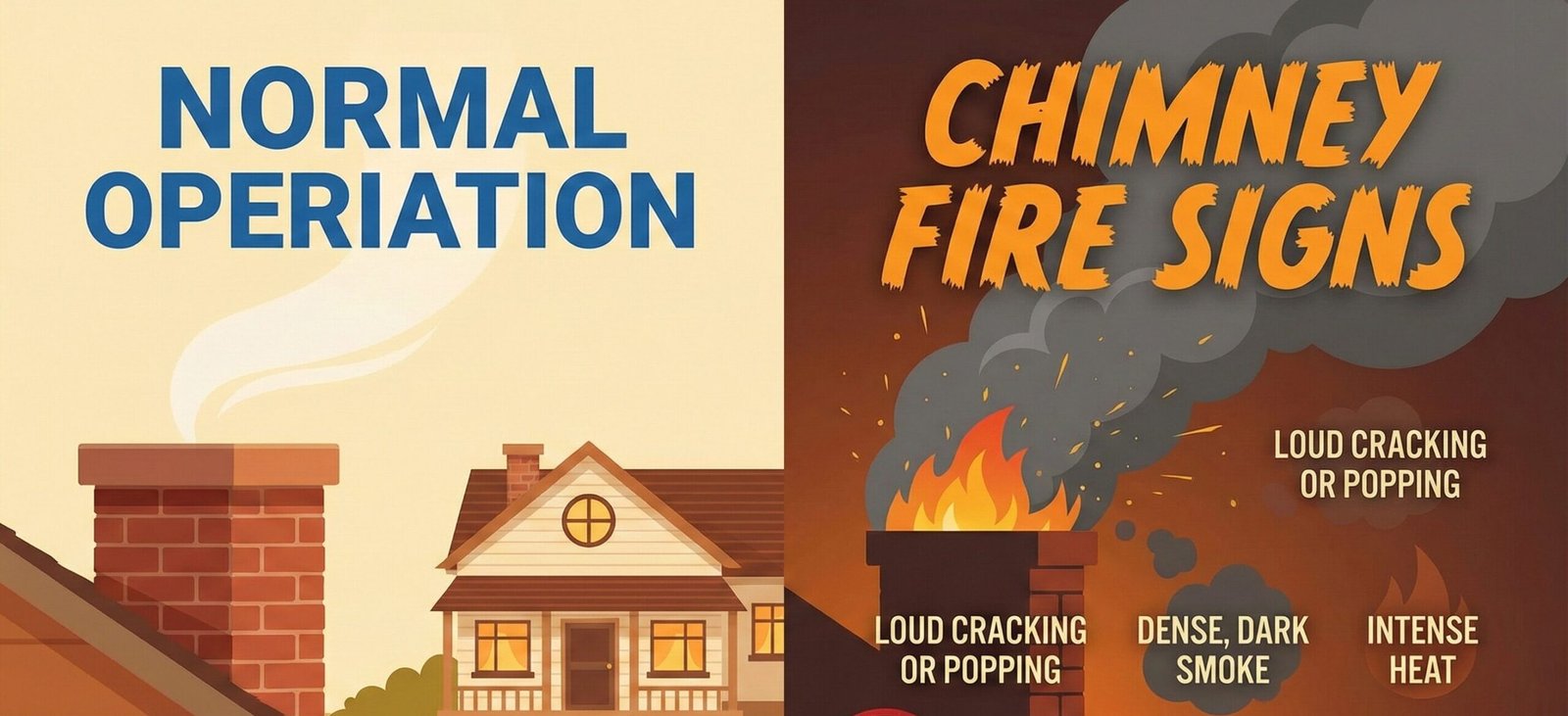
This is the type most people picture when they hear “chimney fire.” It is dramatic, loud, and terrifying. It occurs when there is sufficient creosote buildup to sustain a vigorous, oxygen-fed burn and when draft conditions allow plenty of air to reach the fuel. The fire roars, the chimney shakes, sparks shoot from the top, and the temperature inside the flue rises hundreds of degrees in seconds. While catastrophically dangerous, free-burning fires are at least immediately obvious — homeowners call 911.
- Loud roaring or rushing sound
- Flames visible from chimney top
- Dense dark smoke into the room or outside
- Intense heat from walls and mantel
- Sharp metallic or tar smell
Slow-Burning (Silent) Fires
The silent chimney fire is far more common and, in many ways, more dangerous — because the homeowner does not know it happened. It occurs when creosote deposits ignite but burn slowly due to restricted airflow, lower oxygen availability, or less accumulated fuel. There is no roar, no visible flame, no sudden alarm. The fire burns long enough to crack the liner, fail mortar joints, and compromise the chimney’s structural containment — all silently, while the household goes about its evening.
- No obvious sound or visible flames
- Subtle asphalt-like smell hours later
- Puffy, honeycomb creosote in firebox after
- Hairline cracks in liner discovered at inspection
- Persistent smoky odor in home days later
The Repeat Fire Risk
A silent chimney fire that cracks the flue liner without the homeowner’s knowledge creates a critical secondary risk: the next normal fire burns through a compromised containment structure. Combustion gases and flame can pass directly into the surrounding masonry and framing — causing a structural house fire with no warning whatsoever. This is why annual video inspections are not optional maintenance — they are the only way to detect damage from silent fires.
1. The Auditory Signs: Listening for Disaster
Often, you will hear a chimney fire before you see or smell it. The geometry of a chimney flue acts like a speaker tube, amplifying and projecting the sounds of combustion within. Recognizing these sounds — and distinguishing them from normal fire sounds and other chimney noises — can save your life.
The “Freight Train” Roar
The most commonly reported and most reliably diagnostic sound of a free-burning chimney fire is a deep, escalating roar that homeowners consistently describe as a freight train passing overhead or a low-flying military jet. This sound is caused by the massive convective airflow — thousands of cubic feet of air per minute — rushing upward through the flue to feed the burning creosote. The roar is typically much lower in pitch and far more sustained than any normal fire sound.
The volume can range from a subtle but unmistakably abnormal rumble to a genuinely alarming noise that can be heard from outside the home. If you hear this sound and it is different from anything you have heard from your fireplace before, treat it as an active chimney fire until proven otherwise.
Loud Cracking and Popping
Unlike the pleasant, soft crackling of burning firewood, a chimney fire produces sharp, explosive reports. This sound has two distinct causes. First, the thermal shock to clay tile flue liners — which expand unevenly when exposed to temperatures 3–5 times their normal operating range — causes them to crack audibly. Second, burning creosote deposits (particularly second-degree deposits with higher water content from resin) can pop and snap as pockets of trapped moisture explosively vaporize.
The cracking sound is importantly different from the popping of wet firewood (which originates clearly from within the firebox) — chimney fire cracking comes from within the chimney structure above and around the firebox opening.
Unusual Vibration or Rumbling Through the Walls
In severe fires, homeowners sometimes report being able to feel a low-frequency vibration through the wall or mantel adjacent to the chimney. This is caused by the thermal expansion of masonry components and the pressure differential created by the intense convective draw. If you can feel the chimney vibrating, you are dealing with a significant, high-intensity event. Evacuate immediately.
Sounds That Are NOT Chimney Fires
Not every unusual chimney sound is a fire. Distinguishing correctly prevents both panic and dangerous under-reaction:
ANIMAL SOUNDS
Scratching / Chirping
Repetitive scratching, fluttering, or chattering indicates an animal, not a fire. See our guides on raccoons in chimneys and birds stuck in chimneys.
DRAFT NOISE
Whistling / Howling
Wind-driven whistling or howling through the chimney is a draft issue, not a fire. Can be caused by a damaged or missing cap, an open damper, or pressure differential. See our draft problems guide.
WET WOOD
Hissing / Spitting
Hissing, sizzling, and frequent popping originating clearly from within the firebox indicates wet firewood. Unpleasant and creosote-producing, but not itself a chimney fire.
2. The Visual Signs: External & Internal Cues
Visual confirmation is critical — both for confirming an active fire and for detecting evidence of a past silent fire during routine inspection. Knowing what to look for externally (from outside the home) and internally (inside the firebox and smoke chamber) gives you a comprehensive picture.
External Visual Signs of an Active Fire
- Flames visible at the chimney top: In severe free-burning fires, actual flames extend above the cap opening. This is sometimes called “torching” and is a confirmed fire emergency.
- Sparks and burning embers: A continuous stream of sparks or larger burning particles exiting the chimney top indicates a very intense burn. These sparks can travel significant distances and ignite roof materials, dry vegetation, or neighboring structures.
- Dense, dark smoke: Normal wood smoke from seasoned hardwood is relatively light-colored — whitish or pale gray. Chimney fire smoke is distinctly dark brown, brown-black, or black, and is denser and more opaque than normal smoke. This dark color reflects the incomplete combustion of tar-rich creosote.
- Smoke from unexpected locations: Smoke visible from around the chimney base at roofline level, from attic vents, from around wall penetrations, or from cracks in the exterior masonry indicates that gases have escaped the flue containment — a critical structural failure requiring immediate evacuation.
Internal Visual Signs (Post-Fire Inspection)
These signs are found during a routine firebox inspection and indicate that a silent fire has occurred. Every homeowner should perform a basic visual inspection of the firebox, smoke shelf, and visible damper area at the start and end of each burning season:
FIRE EVIDENCE
Puffy / Honeycomb Creosote
The most reliable indicator of a past silent fire. Creosote that has burned puffs outward and takes on a light, brittle, honeycomb or popcorn-like texture. This is dramatically different from the dense, shiny or flaky appearance of unburned creosote.
FIRE EVIDENCE
Warped or Discolored Damper
Metal damper components that show visible warping, bluish heat discoloration, or that no longer operate smoothly have been exposed to temperatures far beyond normal operating range — consistent with a chimney fire event.
FIRE EVIDENCE
Cracked Smoke Chamber Panels
The smoke chamber above the firebox opening is often the first masonry component to show cracking from chimney fire thermal shock. Visible cracks in the refractory panels or smoke shelf area are a strong indicator of prior fire damage.
FIRE EVIDENCE
Excessive Fallen Debris
Large quantities of creosote fragments, broken tile pieces, or mortar particles in the firebox — especially if the volume is significantly more than after the previous use — indicate something occurred inside the chimney above.
If smoke is coming into the room rather than exiting up the flue, this is a draft problem rather than a fire event. Read our guides on fireplace smoke coming into the house and how to fix draft problems to diagnose the cause.
For external validation on recognizing visual smoke differences, Barnhill Chimney offers excellent insights on spotting the subtle differences between smoke types.
3. The Olfactory Signs: The Smell of Danger
The olfactory (smell) indicators of a chimney fire are often the subtlest of the warning signs, but they are sometimes the first ones a homeowner notices — particularly with slow-burning silent fires that produce no auditory or visual drama. Training your nose to recognize these distinct odors is a genuine safety skill.
The Acrid Chemical Smell
Normal wood smoke has a recognizable organic, slightly sweet smell that varies by wood species. Chimney fire smoke smells chemically different — sharper, more acrid, and with a harsh synthetic quality. This is because burning creosote releases polycyclic aromatic hydrocarbons and other chemical compounds that have a distinctly different odor profile from simple wood combustion.
Hot Metal or “Overheating Engine” Smell
As the fire reaches temperatures exceeding 2,000°F, it can warp metal dampers, connectors, and cast iron components. Heated metal has a distinctive metallic, slightly electrical smell — similar to an overheating car engine or a very old cast iron stove being pushed to its limits. If you smell this during a fire and the fire in your firebox is of normal size, the heat source is in the flue, not the firebox.
Asphalt or Tar-Like Odor
Creosote contains many of the same compounds found in coal tar and asphalt. When it burns, it produces an odor that many homeowners describe as “road tar on a hot day,” “asphalt in summer,” or “roofing material.” This smell is distinctly different from normal wood smoke and, when noticed during or after a fire, should trigger a careful inspection.
Persistent Smoky Odor When Fireplace Is Not in Use
This is one of the most important olfactory warning signs for silent fires and high-risk creosote buildup. If your home smells smoky — particularly on humid days or after rain — when the fireplace has not been used for hours or days, it indicates that volatile compounds from creosote deposits are off-gassing into the living space. Heavy third-degree creosote buildup produces this persistent odor even without ignition. If you notice this, schedule a professional inspection immediately.
The Humidity Effect on Odors
Creosote odors are significantly amplified on humid days and during rain events. Moisture absorbed by the chimney activates the volatile compounds in creosote deposits, releasing them into the home’s air. If your fireplace has a stronger, more persistent odor in summer or during wet weather than in dry winter conditions, you likely have significant creosote deposits that need professional attention before the next burning season.
4. Tactile Signs: Heat You Can Feel
The sense of touch — specifically abnormal heat in surfaces that should not be hot — provides a final layer of chimney fire detection that many guides overlook entirely. These tactile warning signs are particularly valuable for detecting fires that have spread beyond the flue containment to surrounding structural elements.
Hot Walls Adjacent to the Chimney
A normal operating fireplace produces moderate warmth in the walls and mantel immediately surrounding the firebox opening. During a chimney fire, the heat generated inside the flue is so intense that it transfers through the masonry and makes walls, floors, and ceilings adjacent to the chimney structure noticeably — sometimes uncomfortably — hot to the touch. If the wall surface surrounding the chimney in a room other than the fireplace room feels hot, this is an emergency indicator of potential fire spread into the home’s structure.
Hot Mantel, Surround, or Hearth Extension
The mantel shelf above the firebox opening is typically warm during a normal fire but not hot enough to be uncomfortable to touch briefly. During a chimney fire, the heat radiating through the firebox opening and from the surrounding masonry can make the mantel genuinely hot. If you cannot comfortably hold your hand near (not on) the mantel during what appears to be a normal fire, the heat level inside the system is abnormal.
Vibration Through the Structure
In the most severe free-burning chimney fires, the convective airflow through the flue and the thermal expansion of masonry components can create a perceptible vibration in the wall or floor adjacent to the chimney. This is rare but significant — if you feel the house structure vibrating in rhythm with what appears to be an unusually aggressive fire, treat it as a confirmed chimney fire and evacuate immediately.
5. Silent Fires: Detecting After-the-Fact Evidence
Because silent chimney fires produce no obvious warning signs during the event, their detection relies entirely on recognizing the evidence they leave behind. Every homeowner who uses a wood-burning appliance should perform a basic post-season firebox inspection and understand what they are looking for.
The Complete Post-Season Inspection Checklist
1
Inspect the firebox floor and walls.
Look for unusual quantities of debris, fragments of tile or mortar, or flakes of honeycomb-textured material that look different from normal soot or ash.
2
Examine the smoke shelf.
Using a flashlight, look at the smoke shelf above the firebox opening (behind the damper). The presence of puffy, expanded creosote material here is a primary indicator of a past silent fire.
3
Check damper operation.
Open and close the damper fully. A damper that was previously smooth but now sticks, warps, or does not fully seal may have been distorted by excessive heat.
4
Look for new cracks.
Shine a flashlight onto the visible refractory panels in the firebox and smoke chamber. New cracks that were not present at the start of the season require professional evaluation.
5
Smell the firebox.
On a dry day, open the firebox and note the odor. A sharp, chemical tar-like smell from an unused fireplace warrants a professional inspection.
6
Check the exterior chimney above the roofline.
From the ground using binoculars, look for new mortar staining, displaced cap mesh, or unusual discoloration patterns on the exterior masonry that differ from the start of the season.
✓ When to Call an Inspector
If your post-season inspection reveals any of the indicators above, schedule a CSIA-certified Level 2 video camera inspection before your next burning season. Do not wait until the following fall. Structural damage from a silent fire that sits through a wet season will deteriorate rapidly and may be significantly more expensive to repair 6 months later than if addressed promptly.
6. The Three Stages of Creosote Danger
Creosote is not a single uniform substance — it progresses through three recognized degrees of severity, each with different fire risk profiles and different approaches to removal. Understanding the stages helps you gauge your specific risk level and take proportionate action.
| Degree | Appearance | Fire Risk | Removal Method | DIY Possible? |
|---|---|---|---|---|
| 1st Degree | Flaky, sooty, dusty — similar to ash | Low | Standard chimney brush sweep | Yes |
| 2nd Degree | Shiny, hard, tar-like coating — looks like black paint | Moderate–High | Professional rotary tools or chemical treatment | Generally No |
| 3rd Degree | Glazed, rock-hard, dripping tar or thick black glaze | Very High | Chemical softening + professional mechanical removal; may require liner replacement | No |
| Post-Fire (Burned) | Puffy, honeycomb, brittle — expanded and light | Moderate (indicates past fire; check for liner damage) | Professional inspection first; brush sweep after clearance | Inspection required first |
What Creates Each Degree
First-degree deposits are inevitable in any wood-burning system and are easily managed with annual cleaning. The transition to second and third degree is driven by specific conditions:
- Burning wet or green wood (moisture above 25%) — the most common cause of rapid second and third-degree buildup
- Burning softwood (pine, fir, spruce) as primary fuel — high resin content creates sticky deposits that transition quickly to second degree
- Slow, smoldering fires with restricted air — incomplete combustion maximizes unburned compound output
- Infrequent cleaning — first-degree deposits that are not removed progressively harden and transition to second degree over multiple seasons
- Cold exterior temperatures with short fires — the flue never reaches operating temperature, so condensation is maximized
Understanding what to burn to clean a chimney is a common question. While certain chemical logs can help condition first-degree deposits between professional cleanings, nothing replaces annual mechanical sweeping by a certified professional.
7. Risk Factors: Is Your Chimney at High Risk Right Now?
Not all chimneys carry the same chimney fire risk at any given point in the season. Several specific conditions dramatically elevate your risk level. If three or more of the following apply to your situation, consider your chimney at high risk and schedule an inspection before further burning.
HIGH RISK
No Cleaning in Over 12 Months
The NFPA recommends annual inspection and cleaning for any wood-burning system. If you cannot confirm this was done in the past 12 months and you have been burning regularly, creosote buildup may already be at dangerous levels.
HIGH RISK
Persistent Smoky Odor Off-Season
As discussed in the olfactory section, a persistent chimney smell between burning seasons is a reliable indicator of significant third-degree creosote off-gassing — and therefore high ignition risk when next used.
HIGH RISK
Burning Softwood Frequently
If pine, fir, cedar, or spruce has been your primary fuel source rather than seasoned hardwood, resin-based creosote accumulates 3–5 times faster than with equivalent hardwood burning. Your cleaning schedule needs to match this elevated rate.
HIGH RISK
Burning Wet or Green Wood
Even occasional green wood burning in an otherwise well-maintained chimney creates disproportionate creosote deposits. If you burned a cord or more of unseasoned wood in any season without additional cleaning, the risk is significant.
MODERATE RISK
Reduced Draft
A noticeably slower or weaker draft than previous seasons can indicate partial flue obstruction from creosote or debris — both of which elevate fire risk. See draft problems for diagnosis steps.
MODERATE RISK
Recently Moved Into the Home
If you have moved into a home with an existing fireplace and have no inspection history, you have no way of knowing the current state of the flue. Treat it as high risk and schedule an inspection before first use.
8. Immediate Action Checklist: What to Do Right Now
If you suspect an active chimney fire — or if you have identified multiple risk factors above — here is your action sequence. The first checklist applies to an active fire; the second applies to post-event or high-risk situations.
Active Fire: Do This NOW
- Alert everyone in the home immediately
- Call 911 from outside — do not delay for any reason
- Close glass doors or damper if safe and fast
- Deploy Chimfex into firebox if immediately accessible
- Do NOT spray water down the chimney
- Do NOT climb onto the roof
- Meet at the designated family meeting point
- Hose the roof area from the ground if accessible
High Risk / Post-Event: Do This THIS WEEK
- Stop using the fireplace until inspected
- Schedule a CSIA-certified Level 2 inspection
- Document any visible damage with photos
- Check CO detector batteries and placement
- Review your homeowners insurance policy terms
- Inspect the exterior chimney from the ground
- Replace Chimfex if it has been used or is expired
- Practice your family evacuation plan
9. Post-Fire Damage: What to Inspect and What It Means
Once a chimney fire has occurred and the immediate emergency has passed, the damage assessment begins. The structural consequences of even a brief, apparently minor chimney fire can be extensive — and some types of damage are genuinely invisible without professional video inspection.
Flue Liner Damage
The flue liner is the primary containment structure and the component most commonly damaged. Clay tile liners — the most prevalent type in older homes — are rated for normal wood fire temperatures but are not rated to withstand chimney fire temperatures. Thermal shock causes cracking that ranges from hairline fractures (which still allow dangerous gas and flame penetration) to complete section displacement or collapse. After any chimney fire, a Level 2 video camera inspection of the full flue length is the only way to definitively assess liner integrity.
Mortar Joint Failure
The mortar holding the chimney masonry together is rated to withstand certain temperatures and freeze-thaw cycles, but chimney fire temperatures far exceed its design parameters. Failing mortar joints create pathways for gases, moisture, and eventually fire to migrate from the flue into the surrounding structure. If the exterior chimney shows new white calcium staining (efflorescence) or visible cracking after a fire event, mortar joint failure has occurred. Review our guide on the best mortar for chimney repair to understand the repair options.
Crown and Cap Damage
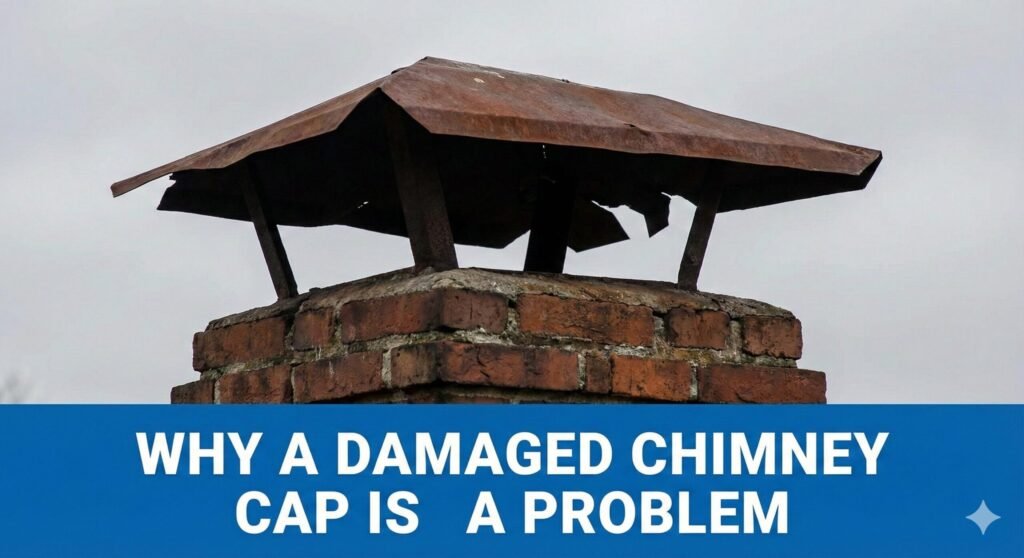
The chimney crown — the concrete slab that seals the top of the masonry around the flue liner — is exposed to both the extreme heat exiting the chimney and the thermal shock of cold rain or snow hitting a super-heated surface. Post-fire crown cracking is extremely common and, if not addressed, allows water to infiltrate the chimney stack. Water accelerates every other form of chimney deterioration dramatically. The best chimney caps for rain protect the crown as well as the flue opening.
Flashing Damage and Leaks
The metal flashing that seals the junction between the chimney and the roof can be warped or debonded by the heat from a chimney fire, particularly if the fire was intense enough to superheat the exterior masonry above the roofline. Damaged flashing creates an immediate water infiltration pathway that, if not addressed before the next rain or snow event, can cause significant interior water damage to the attic, ceiling, and surrounding framing. Check and reapply chimney flashing sealant after any fire event.
The Insurance Dimension
Once the fire is out, the damage remains and the financial recovery begins. A common and important question: does homeowners insurance cover chimney repair? Generally, damage classified as “sudden and accidental” from a fire event is covered under standard homeowners policies. However, damage attributed to deferred maintenance, pre-existing deterioration, or lack of regular inspections may be contested. Maintaining records of annual inspections and cleanings is the best protection against claim disputes.
You may also need to fix a leaky chimney immediately after structural repairs to prevent water from entering cracks caused by the thermal event before the next wet season.
Prevention & Maintenance: Your Complete Defense Protocol
Every chimney fire is preventable. The conditions that lead to one — significant creosote accumulation — develop predictably and are entirely within the homeowner’s control. The following protocol addresses every known contributing factor.
1. Structural Integrity
Water is a chimney’s most persistent enemy. It combines with creosote to create acids that dissolve mortar, accelerates freeze-thaw damage to masonry, and compromises the structural integrity that keeps a chimney fire contained. Your structural defense priorities are:
- Ensure the chimney crown is intact and properly sloped to shed water. Re-apply elastomeric crown sealer if cracks are visible.
- Ensure you understand how to waterproof a chimney properly using penetrating masonry waterproofer — not paint, which traps moisture.
- Address failed mortar joints promptly. Use the best mortar for chimney repair — specifically heat-rated refractory mortar for joints inside the firebox and smoke chamber.
- Maintain effective flashing sealant at the roof-chimney junction. Inspect after every severe storm.
2. The Right Fuel
Fuel choice is the single greatest determinant of creosote accumulation rate. Wet wood creates disproportionate creosote deposits — this relationship is exponential, not linear, at higher moisture levels. Always use seasoned hardwood below 20% moisture content. Check our comprehensive guide on the best firewood for fireplaces for species rankings by BTU, creosote production, and ease of seasoning.
If you are tired of the sourcing, seasoning, and maintenance demands of wood, consider the electric vs. wood fireplace comparison — electric fireplaces produce zero creosote and require no chimney maintenance at all.
3. Burning Technique
- Always warm the flue before loading a full fire — a small kindling fire for 10–15 minutes pre-heats the liner and establishes a strong upward draft, dramatically reducing early-phase creosote deposits.
- Keep the damper fully open during active burning. Only reduce the damper once the fire is well established and burning hot.
- Avoid slow, smoldering overnight fires whenever possible. A sustained, hot fire with adequate draft produces far less creosote per BTU than a long, low-temperature smolder.
- Use proper chimney fire starters rather than liquid accelerants or paper overdose — these establish hot, clean ignition from the first moment of every fire.
4. Regular Cleaning
How often should you clean a chimney? The minimum standard is annually, before each burning season. If you burn more than three fires per week, burn softwood occasionally, or have experienced any of the risk factors described above, semi-annual cleaning is the appropriate schedule.
For professional service, our guide to the best chimney services covers how to evaluate and select a certified provider. For DIY maintenance of first-degree deposits, the best chimney brush for stainless steel liners is the correct tool — never use a metal brush on a clay tile liner.
Seasonal Preparation Calendar
A structured seasonal maintenance calendar — rather than reactive attention to problems — is the most reliable chimney fire prevention system. This month-by-month guide covers the key tasks for each phase of the year.
| Season / Period | Key Tasks | Priority |
|---|---|---|
| Late Summer / Early Fall (Pre-Season) | Schedule and complete professional Level 1 or Level 2 inspection and sweep; check cap and crown for damage from the previous winter; verify damper operation; test CO and smoke detectors; stock Chimfex and fire extinguisher | Critical |
| First Fire of Season | Warm the flue slowly with a small kindling fire before full load; check for any draft problems; ensure cap mesh is not blocked from summer debris | Critical |
| Throughout Burning Season | Burn only seasoned hardwood below 20% moisture; maintain hot fires with full damper; visual check of firebox monthly; listen and smell for any of the warning signs in this guide | Regular |
| Mid-Season (Heavy Burners) | If burning more than 3–4 fires weekly or burning any softwood, schedule a mid-season inspection and light sweep; check CO detector function | Recommended |
| End of Burning Season | Perform post-season firebox inspection for silent fire evidence (puffy creosote, warped damper, new cracks); close damper completely; cover cap if in a region with heavy pollen or spring debris; note any issues for pre-season follow-up | Important |
| Spring / Summer | Address any moisture-related damage from winter freeze-thaw; reapply masonry waterproofer if needed; season new firewood with at least 12–18 months lead time; review and practice family fire escape plan | Maintenance |
“The cost of a professional chimney inspection is approximately $200–$400. The average insurance deductible after a structural chimney fire is $1,000–$5,000. The math is not complicated.”
Essential Chimney Safety Products
Based on our reviews and established safety standards, these are the core tools every wood-burning fireplace owner should have in place before and during burning season.
Stainless Steel Chimney Cap
Prevents rain, debris, and animals from entering while providing spark arrestor protection. A properly fitted cap with 5/8″ mesh is your first line of defense against secondary fire spread from a chimney event.
Best for: Rain Protection & Spark Arresting
Creosote Sweeping Log
Chemically treats first-degree creosote deposits between professional cleanings, making them more brittle and easier to remove at the next sweep. A useful supplemental tool — not a substitute for mechanical cleaning.
Best for: Between Cleanings
Chimfex Chimney Extinguisher
A specialized device that suppresses chimney fires by displacing oxygen in the flue. Deploy it into the firebox and close the doors. The gold standard for homeowner chimney fire response. Keep two units in your emergency kit — use one, replace it.
Best for: Emergency Kits
Ash Vacuum Cleaner
Standard household vacuums cannot handle fine ash or thermally stable soot. A purpose-built ash vacuum with a HEPA filter protects your lungs, your home air quality, and your vacuum motor from damage. Essential for regular firebox maintenance. See: best chimney sweep vacuums.
Best for: Regular Firebox Maintenance
Frequently Asked Questions
What does a chimney fire sound like?
The most commonly reported sound is a deep, sustained roar that homeowners describe as a freight train, low-flying jet, or rushing wind — far more powerful and lower-pitched than any normal fire sound. You may also hear sharp cracking or popping from the chimney structure itself as clay tiles fracture under thermal shock. The absence of this sound does not rule out a chimney fire — silent fires produce no auditory warning.
Can a chimney fire put itself out?
Yes — a slow-burning chimney fire can exhaust its creosote fuel source or become oxygen-starved and extinguish itself. However, this is not a safe outcome to wait for. The structural damage occurring while the fire burns — cracked liner, failed mortar joints, potential fire spread to framing — is happening whether or not you can hear or see the fire. Never wait out a chimney fire. Evacuate and call 911 regardless of the apparent intensity.
How do I know if I had a chimney fire without realizing it?
The most reliable post-event indicators are: puffy, honeycomb-textured creosote deposits in the firebox or smoke shelf (creosote that has combusted and expanded); warped or discolored metal damper components; new cracking in firebox refractory panels; an unusual sharp, chemical smell from the unused fireplace; and large quantities of debris (tile fragments, mortar flakes, or brittle creosote) in the firebox ash. Any of these warrants a professional Level 2 inspection.
How often should a chimney be inspected to prevent fires?
The NFPA recommends at minimum an annual Level 1 inspection for any chimney in regular use. If you burn heavily (more than three fires per week), burn any softwood, or have had any previous chimney fire event, a Level 2 inspection annually and a Level 1 inspection mid-season is the appropriate schedule. Consult our guide on how often to clean a chimney for a full breakdown based on usage patterns.
What does chimney fire smoke look like?
Chimney fire smoke is distinctly darker, denser, and more opaque than normal wood smoke. Well-seasoned hardwood produces relatively light gray or whitish smoke. Chimney fire smoke from burning creosote is dark brown, brownish-black, or black, and is often visibly thicker and more continuous than normal fire exhaust. From outside the home, you may also notice a much larger volume of smoke than the fire in the firebox would logically account for.
Can I use my fireplace the day after a possible chimney fire?
No. The fireplace must be treated as completely out of service until a certified chimney professional conducts a Level 2 video camera inspection and confirms the flue is structurally intact. Even what appears to be a minor event can crack the flue liner in ways invisible to the naked eye — and those cracks create pathways for carbon monoxide and flames to enter the home structure on the next use.
Does burning pine or Christmas trees cause chimney fires?
Pine and other softwoods do not directly cause chimney fires, but they significantly accelerate the creosote accumulation that fuels them. Softwood resin creates sticky, adherent deposits that transition to second and third-degree creosote faster than equivalent hardwood burning. Christmas trees pose an additional acute hazard — dry needles can produce a brief flash-fire in the firebox and a shower of sparks into the flue. Neither is recommended as a regular fuel source, and Christmas trees should never be burned in a standard fireplace.
What is the difference between chimney fire signs and normal fireplace behavior?
Normal fireplace behavior includes moderate wood crackling (from within the firebox), light gray or white smoke, a pleasant wood fire smell, and gentle warmth from the mantel and surrounding walls. Chimney fire signs that differ clearly from normal include: roaring or rushing sounds from the chimney (not the firebox), very dark or black smoke, a sharp chemical or tar-like smell rather than wood smoke, intense heat from the mantel or adjacent walls, and any flames or sparks visible at the chimney top.
Are newer homes or newer chimneys safer from chimney fires?
Factory-built prefabricated metal fireplaces in newer homes are tested and rated to contain a defined chimney fire event at specific temperatures. However, this rating assumes correct installation, no modifications to the system, and maintained clearances to combustibles. Factory-built systems are not immune to chimney fires — they are designed to survive one under specific conditions. The same fuel quality, burning technique, and maintenance requirements apply regardless of chimney age or construction type.
Why does my fireplace smell smoky even when it hasn’t been used?
A persistent smoky smell when the fireplace is not in use — particularly noticeable on humid days or after rain — indicates that volatile compounds from significant creosote deposits are off-gassing into the living space through the damper. This is a reliable sign of heavy third-degree creosote accumulation and is one of the stronger pre-fire warning indicators. It warrants an immediate professional inspection before the next use. A secondary possible cause is a draft issue allowing outdoor air and chimney odors to enter the home — see our draft problems guide.
Further Reading for Home Safety
Your chimney is part of a larger home safety ecosystem. As winter approaches, check our guide on winter home and car comfort tips. If you are renovating or repainting, ensure you choose the best paint for chimney brick — one that allows masonry to breathe without trapping moisture. And if you are in an emergency right now, go directly to our guide on how to put out a chimney fire.