Can You Mount an Antenna to a Chimney? Safety, Masonry Risks & Mounting Options
By Chimney Insight Editorial Team
Posted on July 8, 2025
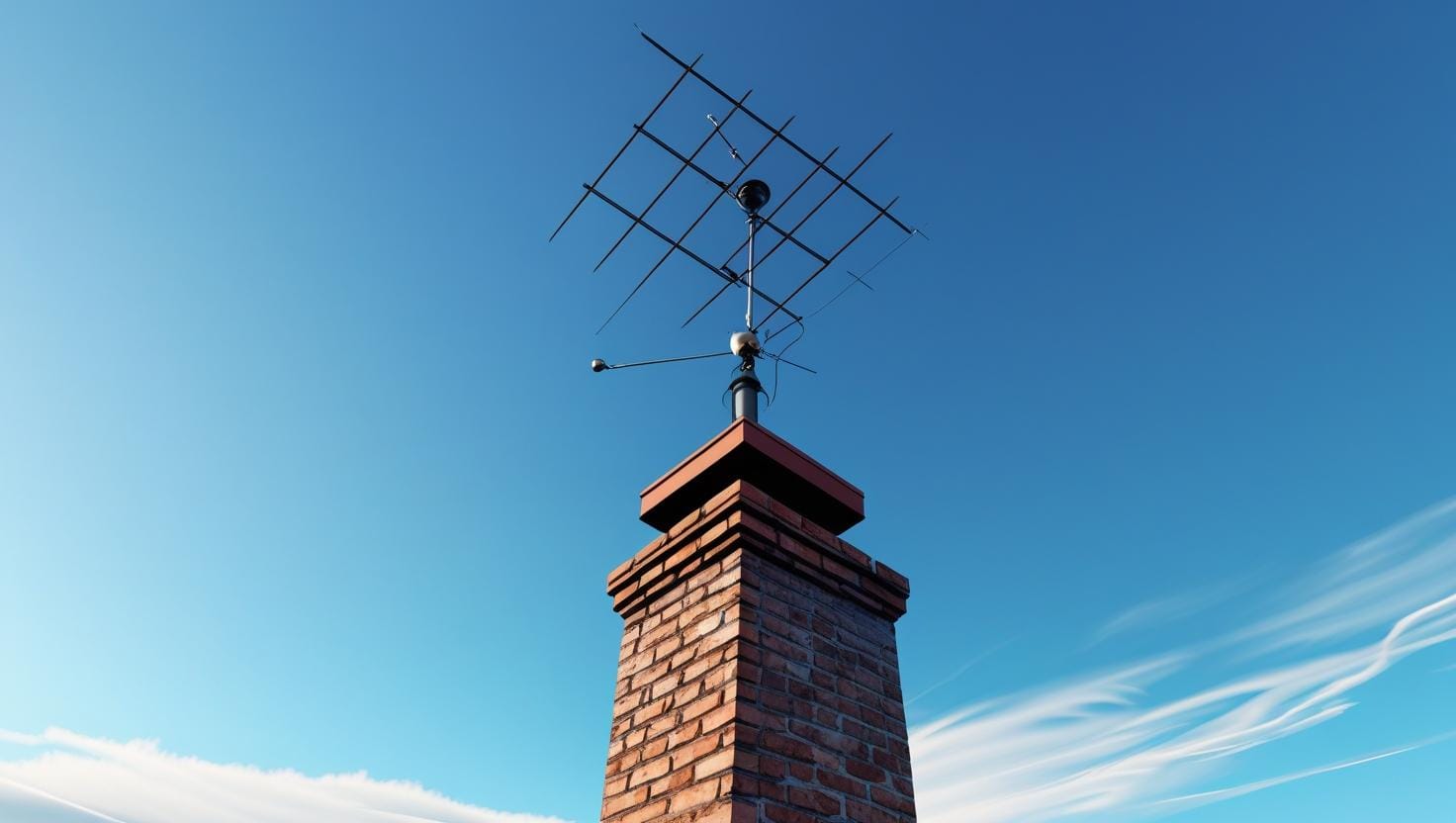
You can sometimes mount an antenna to a sound masonry chimney, but the chimney must be structurally suitable and the mount must not damage the brick, mortar, crown, flashing, liner, or required clearances. A leaning, cracked, spalled, recently repaired, or actively leaking chimney is not an appropriate support.
Because roof work, wind loading, lightning exposure, venting, and falling equipment are involved, professional evaluation and installation are usually the safest approach.
When a Chimney Mount May Be Appropriate
- The chimney is stable, plumb, and built of sound masonry.
- The mount uses a manufacturer-approved strap system rather than drilled anchors, when appropriate.
- The antenna and mast remain within the mount’s wind and weight ratings.
- The straps can bear on suitable masonry without crossing fragile details.
- The installation will not block flue terminals, caps, spark arrestors, or service access.
- Required separation from electrical conductors and other equipment can be maintained.
Approval of one condition does not guarantee the whole installation is safe. Antenna, mount, chimney, grounding, roof access, and local rules must all be considered.
When Not to Use the Chimney
- The chimney leans or is pulling away from the house.
- Brick faces are spalling or mortar can be removed easily.
- There are large cracks, loose caps, damaged crowns, or unstable pots.
- The stack is very short, narrow, decorative, or partially rebuilt.
- The mount would interfere with a gas, wood, oil, or pellet vent termination.
- Manufacturer limits cannot be verified.
- The site is exposed to severe wind, ice, or unusually high mast loads.
For structural movement, review our guide to a chimney pulling away from the house.
Strap Mounts vs Drilled Mounts
| Mount type | Potential advantage | Main concern |
|---|---|---|
| Chimney strap mount | Avoids drilling into masonry when correctly installed | Can crush weak brick, loosen, corrode, or concentrate load. |
| Drilled masonry mount | Direct mechanical attachment | Can crack brick, open water paths, damage joints, and be unsuitable for chimney masonry. |
| Roof or gable mount | Keeps load off the chimney | Requires correct structural attachment, flashing, and roof sealing. |
| Ground mast or tower | Separates equipment from roof and chimney | Requires space, foundation, setbacks, and electrical planning. |
Do not drill into a flue liner, crown, chimney cap, or unknown concealed area. Brick and mortar are not interchangeable anchor substrates.
Wind Load Matters More Than Antenna Weight
An antenna may feel light in your hands yet create substantial leverage in wind. Mast height, surface area, shape, gust speed, ice, and distance from the mount all affect force on the chimney. Adding an extension increases leverage.
Use the antenna and mount manufacturers’ wind-load data and stay within their configuration limits. If the information is unavailable, do not guess. A structural professional can evaluate exposed or high-load installations.
Protect the Chimney’s Function
Keep the antenna, mast, cables, and straps away from flue openings, caps, dampers, and inspection access. Do not route cable across a crown in a way that traps water or requires drilling. Avoid contact with hot vent components.
A gas vent or factory-built metal chimney may have termination-clearance rules that differ from masonry. Do not attach anything directly to a listed chimney system unless its manufacturer explicitly permits it.
Grounding, Bonding, and Electrical Safety
Outdoor antennas and masts can require grounding and bonding under electrical codes and manufacturer instructions. The design may involve the mast, coaxial cable, grounding block, grounding electrode system, and surge protection.
Keep all equipment far from overhead power lines. A mast touching an energized conductor can be fatal. A qualified antenna installer and electrician can coordinate the installation. Do not work during rain, wind, lightning, ice, or when surfaces are wet.
Roof and Fall Safety
Falls are a leading hazard. Ladders, roof pitch, fragile shingles, skylights, wet surfaces, and carrying a mast all increase risk. A chimney should never be used as a handhold or ladder anchor unless a specifically engineered system says otherwise.
Professional installers should use appropriate access and fall protection. Homeowners should not attempt installation when roof access or electrical proximity exceeds their training and equipment.
Water Management
Improper anchors and cable routing can open paths for water. Straps can also abrade masonry or trap debris. Preserve the crown’s drainage slope and the flashing system. Use only compatible exterior cable supports and weatherproofing methods specified for the system.
If the chimney already shows moisture damage, fix the source before mounting. Our chimney waterproofing guide explains why coatings are not substitutes for sound masonry details.
Inspection and Maintenance
- Inspect from the ground after strong wind, ice, or storms.
- Check for loose straps, mast movement, corrosion, cracked brick, and cable wear.
- Keep the installation clear of caps and service paths.
- Have professionals inspect roof-level connections at an appropriate interval.
- Remove abandoned equipment before it deteriorates.
If new cracks or separation appear, stop relying on the chimney as a support and arrange structural evaluation.
Questions for an Installer
- What are the antenna and mount wind-load ratings?
- Has the masonry condition been evaluated?
- Will any holes be drilled, and exactly where?
- How are grounding and bonding handled?
- What clearances from vents and power lines apply?
- How will cables be supported without creating leaks?
- Which permits or homeowner-association rules apply?
Related Chimney Inspection Guide
Before relying on masonry as structural support, learn what the different chimney inspection levels can and cannot assess.
Frequently Asked Questions
Do chimney straps damage brick?
They can if tightened on weak masonry, installed incorrectly, overloaded, or allowed to corrode and move. Sound masonry and correct load distribution are essential.
Can I drill an antenna bracket into a chimney?
Drilling can crack units, damage joints, create water entry, or reach a flue. Use only an engineered, approved method after the construction is understood.
Will an antenna affect chimney draft?
It can if it obstructs the cap or termination or alters airflow close to the flue. Maintain all manufacturer and code clearances.
Is a chimney mount safe in high winds?
Only if the complete antenna, mast, mount, and chimney are rated and suitable for the site’s wind and ice conditions.
What is the safest alternative?
A professionally designed gable, roof, ground-mast, or tower installation may keep loads off the chimney, but each alternative has its own structural and electrical requirements.