Outdoor Fireplace With Chimney: Planning, Draft & Safety Guide
By ehasan28
Posted on September 24, 2026
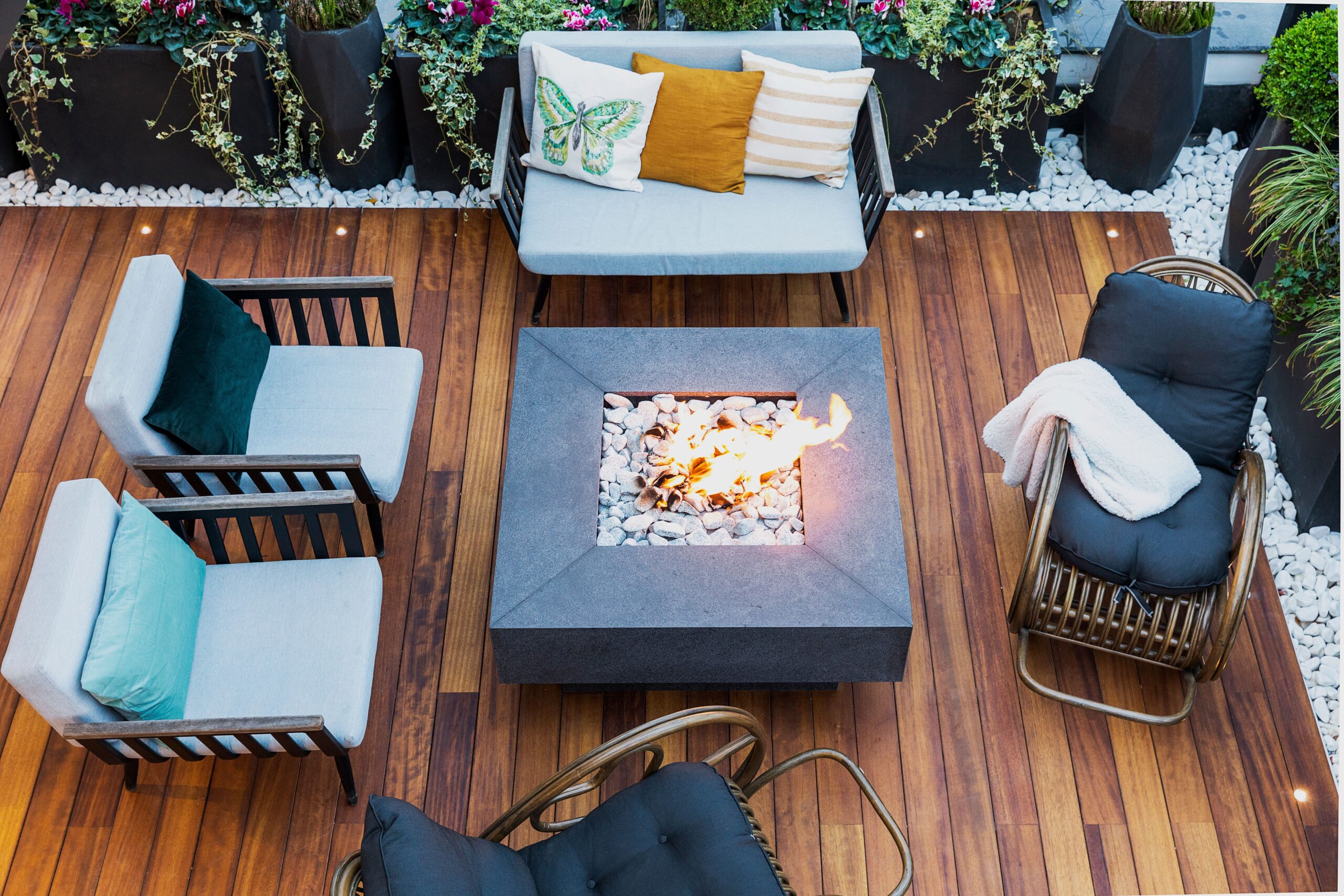
An outdoor fireplace with chimney can create a comfortable backyard gathering place, but it needs more planning than a portable fire pit. The fireplace, smoke chamber, flue, chimney termination, foundation, clearances, and nearby airflow all work as one system. If any part is undersized, poorly placed, or built from the wrong materials, smoke may spill toward people or the structure may become a fire hazard.
This guide helps US homeowners plan the project, understand draft, compare design choices, and recognize the work that belongs with a qualified mason, chimney professional, or local building official. It is not a construction drawing. Local building, fire, zoning, air-quality, and homeowners-association rules take priority over general guidance.
What counts as an outdoor fireplace with chimney?
A true outdoor fireplace has a defined firebox and a venting path that collects combustion gases and carries them above the fireplace through a chimney. That distinguishes it from an open fire pit, chiminea, or decorative bowl. Common versions include site-built masonry fireplaces, factory-built outdoor systems, and fireplace inserts installed within an approved enclosure.
The word “outdoor” does not make ordinary indoor components suitable for weather. Every firebox, liner, chimney section, cap, fastener, finish, and accessory should be listed or specified for the intended outdoor use. A manufactured system must be installed according to its manual; a site-built masonry system needs a design that meets the locally adopted code.
1. Plan your outdoor fireplace with chimney: permits and placement
Before choosing stone or ordering a kit, contact the local building and fire departments. Ask whether the project needs a building permit, setback from property lines, chimney-height review, spark-arrestor requirement, or separate approval for a gas line. Some areas restrict wood burning during drought, wildfire danger, or poor-air-quality days. An HOA may also control the structure’s height, finish, and location.
- Mark the distance to the house, fence, shed, trees, eaves, utilities, and neighboring windows.
- Confirm that the patio or foundation can carry the finished weight without settling.
- Keep the smoke path away from doors, operable windows, soffit vents, and frequently occupied seating.
- Plan noncombustible hearth protection and a clear route for moving wood and removing cold ash.
- Check current burn bans and the local air-quality forecast before every fire.
Do not copy a neighbor’s dimensions. Lot layout, prevailing wind, rooflines, firebox geometry, and local rules can make two similar-looking projects perform very differently.
2. Understand how outdoor fireplace draft works
Draft is the pressure difference that encourages hot gases to rise through the flue. An outdoor fireplace with chimney has less help from an indoor home’s warm-air stack effect, so proportions and wind exposure matter. A cold flue, a large firebox opening, a short chimney, a restrictive smoke chamber, or turbulence from a wall or roof can encourage smoke rollout.
More chimney height is not an automatic cure. Height, flue area, firebox opening, throat, smoke chamber, and termination location must be evaluated together. If smoke repeatedly escapes from the front, stop using the fireplace and have the system assessed. Our guides to testing chimney draft and diagnosing fireplace smoke explain the symptoms without replacing a site-specific inspection.
Two useful accessories for the first fires
Amazon Associates disclosure: As an Amazon Associate, ChimneyInsight may earn from qualifying purchases at no extra cost to you.
Fireplace safety pick
Plow & Hearth Wrought-Iron Fireplace Screen
Best for: A broad fireplace opening where a freestanding mesh barrier may help contain popping embers.
Check before buying: Measure the opening and confirm that the model is suitable for your planned outdoor exposure.
Easy fire-starting pick
Rutland Safe Lite Fire Starter Squares
Best for: Starting dry kindling with a purpose-made starter instead of using liquid accelerants.
Important limitation: A starter cannot correct wet wood, weak draft, or an unsafe fireplace.
3. Size an outdoor fireplace with chimney as one system
| Component | Why it matters | Planning question |
|---|---|---|
| Firebox opening | Controls how much room air enters and how easily smoke can spill forward | Is the opening proportioned to the throat and flue? |
| Smoke chamber | Transitions gases from the wide firebox to the narrower flue | Is the transition smooth, sound, and buildable with approved materials? |
| Flue | Carries heat, smoke, and combustion gases upward | Is the shape and area correct for this exact fireplace design? |
| Chimney termination | Places the outlet in moving air above nearby turbulence | Do local height and clearance rules apply to adjacent roofs or structures? |
| Cap or spark arrestor | Helps limit rain, debris, animals, and escaping embers | Is it approved and does it preserve adequate free area? |
Do not reduce the flue because a smaller component is easier to source, and do not add a fine mesh screen that chokes the outlet. Factory-built systems should use the listed chimney components and adapters specified by the manufacturer. For masonry work, have the professional show how the proposed firebox opening relates to the throat, smoke chamber, flue, and final height.
4. Choose outdoor fireplace with chimney materials carefully
The visible stone or brick is only part of the assembly. The firebox needs heat-appropriate materials; the chimney needs a compatible flue system; and exterior masonry needs details that shed water. Ordinary decorative block, interior-only mortar, or an improvised metal pipe may fail under repeated heat, rain, and freeze-thaw exposure.
- Ask which materials directly face flame and whether they are specified for that use.
- Provide a chimney crown, wash, or factory termination detail that directs water away from joints.
- Avoid trapping water behind veneer or around the firebox enclosure.
- Use corrosion-resistant fasteners and accessories appropriate for the local climate.
- Keep drainage paths open and inspect for settlement, cracking, and loose components.
Water damage can become a venting and structural problem, not merely a cosmetic stain. The same principles discussed in our guide to waterproofing brick chimneys apply to compatible exterior masonry protection, but never coat the firebox or conceal active cracks with a generic sealer.
5. Plan outdoor fireplace with chimney safety zones
Good patio design separates heat, sparks, traffic, seating, and fuel. Keep chairs far enough away that guests cannot lean into the opening or block the tending path. Use a stable, noncombustible surface in front of the fireplace. Do not store firewood, cushions, covers, kindling, or lighter supplies beside the firebox, even if a built-in niche makes that location convenient.
Store logs off the ground with airflow and top protection rather than wrapping the entire stack. See our firewood storage ideas and firewood selection guide for moisture and fuel basics. Never burn painted, treated, glued, moldy, or household waste materials.
6. Use dry wood and watch the smoke
The EPA recommends seasoned wood with moisture below 20 percent and advises against wet or green wood. It also warns not to start fires with gasoline, kerosene, or charcoal starter. Read the agency’s wood-burning practices, then check local air-quality and burn restrictions before lighting an outdoor fire.
A properly operating outdoor fireplace with chimney should not continually bathe the patio or neighboring property in smoke. Visible smoke may increase briefly during startup or refueling, but persistent spillage, soot above the opening, or smoke moving toward doors and windows deserves attention. Extinguish the fire safely and investigate the fuel, wind, chimney, and air path before the next use.
7. Treat carbon monoxide and fire spread seriously
Outdoor placement reduces enclosure risk, but combustion still produces carbon monoxide. Never operate a wood or charcoal fire inside a garage, tent, screened room, enclosed porch, or space that can trap gases. The CDC describes carbon monoxide as colorless and odorless and advises that fuel-burning equipment be properly vented. Review its current carbon monoxide guidance.
Keep a suitable extinguisher available, supervise the fire continuously, and maintain a no-play zone for children and pets. Stop using the fireplace during high wind, drought restrictions, or a burn ban. If flames extend into the chimney, sparks pour from the top, or a roaring chimney fire is suspected, move everyone away and call emergency services. Do not try to solve an active fire by climbing onto the structure.
Indoor alarms still matter when the outdoor fireplace is near a home. Our carbon monoxide detector guide explains placement and feature considerations; always follow the alarm manufacturer’s instructions and local requirements.
8. Inspect the outdoor fireplace with chimney every season
Before initial use, confirm that the permit is closed, required inspections are complete, the flue is unobstructed, the cap is secure, and all construction moisture or curing requirements have been satisfied. A new masonry fireplace may need a staged curing process specified by the mason or material manufacturer. Rushing a large fire can damage fresh work.
At the start of each burning season, look for cracked joints, spalled masonry, loose screen mesh, nesting material, corrosion, vegetation growth, water staining, and movement at the foundation. Remove only cold ash into a covered metal container and store it outdoors on a noncombustible surface. Arrange a professional inspection if damage, blockage, smoke problems, or a chimney fire has occurred.
9. Outdoor fireplace with chimney contractor questions
- Which locally adopted code and manufacturer instructions govern this design?
- How were the firebox opening, throat, smoke chamber, flue area, and chimney height coordinated?
- What foundation and drainage details address the fireplace’s weight and local soil?
- Which clearances are required from the house, fence, trees, furniture, and property line?
- Are all firebox, liner, chimney, cap, and enclosure components approved for this use?
- What curing, first-fire, maintenance, and warranty instructions will be provided in writing?
Accessory comparison before you finish the project
Measure first and treat accessories as secondary controls, not substitutes for a correctly designed outdoor fireplace with chimney. Review the key fit and safety points below before checking current product details.
Plow & Hearth Fireplace Screen
Useful for: A wide, open fireplace front.
Advantage: Freestanding mesh barrier designed to reduce escaping embers.
Limitation: It must fit the opening and be confirmed for outdoor exposure.
Rutland Safe Lite Starter Squares
Useful for: Starting dry kindling without liquid accelerants.
Advantage: Compact, purpose-made ignition aid.
Limitation: Cannot compensate for wet wood, blockage, or poor draft.
Conclusion
The safest outdoor fireplace with chimney begins with the site and venting plan, not the finish material. Confirm permits, respect clearances, coordinate the firebox and flue, use weather- and heat-appropriate components, burn dry fuel, and stop when smoke behavior changes. A qualified local professional should finalize dimensions and approve the completed system before regular use.
Frequently asked questions
Does an outdoor fireplace need a chimney?
A fireplace designed with a firebox and smoke chamber normally needs an approved venting path and chimney. Open fire pits and some listed outdoor appliances use different designs. Follow the appliance instructions and local code rather than converting one type into another.
How tall should an outdoor fireplace chimney be?
There is no universal height that works for every yard. Required height depends on the fireplace design, flue area, nearby structures, rooflines, wind exposure, manufacturer instructions, and locally adopted code. Have the final height established during permit and design review.
Why does my outdoor fireplace smoke?
Common contributors include wet wood, a cold flue, unfavorable wind, blockage, poor firebox-to-flue proportions, or a chimney termination in turbulent air. Persistent smoke rollout is a reason to stop using the fireplace and arrange an inspection.
Can I build an outdoor fireplace under a covered patio?
Only when the complete system and patio construction are specifically designed and approved for that installation. A roof creates additional clearance, venting, and carbon-monoxide concerns. Do not place a portable or open wood fire under a combustible cover.
What wood should I burn outdoors?
Use clean, dry, seasoned firewood appropriate to the fireplace. Do not burn trash, cardboard, plastics, painted or pressure-treated lumber, glued wood products, wet wood, or accelerants. Check local restrictions before each fire.