Chimney Liner Guide: Types, Sizing, Lifespan & Replacement Signs
By ehasan28
Posted on September 23, 2026
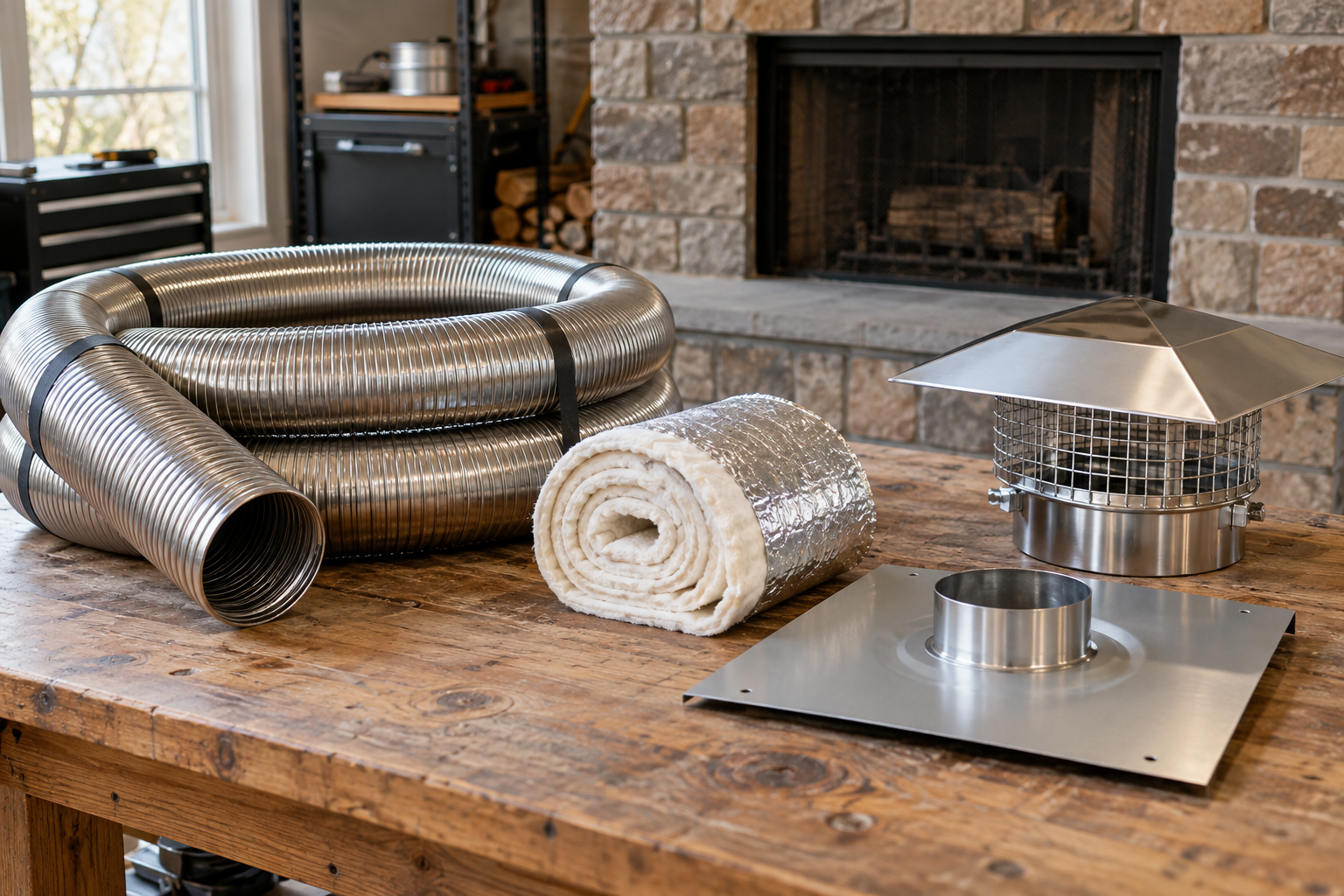
A chimney liner should match the appliance, fuel, chimney geometry, and the liner manufacturer’s installation requirements. The right choice is not simply the largest flexible tube that fits. A qualified installer should confirm the required diameter, material, insulation method, connectors, clearances, termination, and local permit rules before the system is used. Stop using the fireplace or stove if you see liner fragments, smoke indoors, a carbon monoxide alarm, or evidence of a chimney fire.
This chimney liner guide helps US homeowners understand the main liner types, the factors that control sizing, realistic service-life expectations, and the warning signs that justify a professional inspection. It is a planning and comparison guide—not an installation approval or a substitute for the appliance manual, a listed liner system, or an on-site evaluation.
What a Chimney Liner Does
A liner creates the passage that carries combustion gases from an appliance or fireplace to the outdoors. It also separates those gases and high temperatures from the chimney masonry and nearby building materials. A correctly designed passage can support stable draft, while a damaged, blocked, poorly connected, or wrongly sized liner can contribute to smoke spillage, condensation, deposits, corrosion, and unsafe heat transfer.
The U.S. Fire Administration advises having heating equipment and chimneys cleaned and inspected each year by a professional. The CDC also recommends having a chimney checked or cleaned every year because a blocked chimney can allow carbon monoxide to build up indoors. Those checks matter even when the visible fireplace looks clean.
Chimney Liner Types Compared
| Type | Where it is commonly considered | Important limitations |
|---|---|---|
| Clay tile | Traditional masonry chimneys and many older fireplaces | Individual tiles and mortar joints can crack or separate; repair or replacement access can be difficult. |
| Stainless steel | Relining existing masonry chimneys for compatible wood, pellet, oil, or gas appliances when the system is listed for that use | Alloy, diameter, flexibility, insulation, connectors, and cleaning tools must match the appliance and liner instructions. |
| Aluminum | Some specific gas-appliance applications where the appliance and liner listing permit it | Not a universal option and not appropriate for solid-fuel use unless an approved system specifically says otherwise. |
| Cast-in-place | Some damaged or irregular masonry flues where a contractor specifies a poured or pumped lining system | Condition, weight, preparation, curing, clearances, and suitability require professional assessment. |
Material names alone do not establish compatibility. “Stainless steel” covers different constructions and alloys, and a flexible liner is not automatically interchangeable with a rigid one. Buy a complete, listed system whose components are intended to work together rather than mixing a liner, adapter, top plate, insulation, and cap from unrelated systems.
Flexible versus rigid metal liners
Flexible liners can navigate some bends and offsets in an existing masonry chimney. Rigid sections may provide a smoother passage where the chimney is straight and accessible. The choice affects installation access, joints, cleaning, insulation space, and the ability to negotiate offsets. A camera inspection and accurate measurements should come before product selection, not after delivery.
Helpful Chimney Liner Products to Review
As an Amazon Associate, ChimneyInsight may earn from qualifying purchases. Here are two relevant products referenced in this guide. They are examples already stored on ChimneyInsight and are not a complete liner system. Confirm listing, sizing, compatibility, and installation requirements with the liner and appliance manufacturers before buying. Never mix components simply because their dimensions appear similar.
Lynn Manufacturing Ceramic Fiber Insulation Blanket
Best suited to: homeowners comparing insulation materials with a qualified installer. Practical advantage: the stored product page provides a concrete example of a ceramic-fiber blanket format. Honest limitation: it is not automatically an approved chimney-liner wrap; use it only if the complete liner system and manufacturer instructions specifically permit that exact product and configuration.
The Forever Cap CCSS88S Stainless Chimney Cap
Best suited to: homeowners discussing a compatible stainless termination with an installer. Practical advantage: a cap can help keep rain and debris out when it is correctly sized and installed. Honest limitation: this model will not fit every flue or liner system, and a cap cannot correct a damaged crown, flashing leak, blockage, or improper venting design.
How Chimney Liner Sizing Is Determined
The appliance listing and installation manual are the starting point. Sizing can depend on fuel, appliance type, input or output rating, flue-collar size, chimney height, lateral connector length, elbows or offsets, fireplace-opening dimensions, and the condition of the existing flue. Local code and the authority having jurisdiction may add permit or inspection requirements.
An undersized passage may restrict flow and contribute to smoke spillage or poor operation. An oversized passage may cool exhaust too quickly, weakening draft and increasing condensation or deposit problems in some systems. A liner should not be reduced, enlarged, or connected based on a generic online formula when the appliance manual or a code-approved sizing method governs the installation.
A practical sizing checklist
- Record the appliance manufacturer, model, fuel, rating plate information, flue-collar size, and installation manual.
- Measure the chimney height, existing flue dimensions, offsets, throat or damper restrictions, and connector route.
- Document whether the chimney is interior or exterior and whether the existing flue is lined, damaged, or obstructed.
- Confirm the liner system is listed for the appliance and fuel.
- Confirm the required insulation, top termination, bottom connector, clearances, and cleaning method.
- Ask the local building department whether a permit or final inspection is required before work begins.
If a wood stove is being added to an existing fireplace, the full venting plan matters. See our guide to installing a wood-burning stove in an existing fireplace for the other planning questions that surround the liner.
When Chimney Liner Insulation Matters
Insulation is part of many metal-liner systems, especially where the listing, clearances, chimney condition, or appliance instructions require it. It can help the flue stay warmer, support draft, and reduce condensation. It may also be necessary to meet the tested installation configuration of the liner system. The correct method might be a listed wrap, a pour-in product, or another manufacturer-approved assembly.
Do not substitute ordinary building insulation, spray foam, loose household materials, or an unapproved high-temperature blanket. The required thickness, overlap, mesh, clearances, adhesives, and termination details come from the specific liner manufacturer. Our overview of chimney insulation methods and safety explains why the surrounding construction must also be considered.
Chimney Liner Lifespan: Why There Is No Universal Number
A liner’s useful life depends on material, installation quality, fuel, operating temperatures, moisture, deposits, cleaning tools, chimney fires, appliance changes, and maintenance. A warranty is not proof that the liner remains safe, and a liner does not become unsafe merely because it reaches a calendar milestone. Condition and compatibility are what matter.
Clay tiles can remain serviceable for a long time but may crack after movement or thermal shock. Metal can corrode if exposed to moisture or incompatible combustion byproducts. Joints can separate, insulation can be damaged during installation, and connectors can loosen. Annual inspection records and video findings provide more useful evidence than guessing from the age of the house.
7 Signs a Chimney Liner Needs Professional Evaluation
- Clay pieces or metal fragments appear in the firebox or cleanout. Falling material can indicate a damaged tile, joint, connector, or liner surface.
- A carbon monoxide alarm sounds. Leave the building and follow emergency guidance. Do not relight the appliance to test it.
- Smoke spills indoors or draft changes persist. Stop use until blockage, sizing, appliance, house-pressure, and liner conditions are evaluated.
- A camera inspection shows cracks, gaps, missing mortar, holes, severe corrosion, or separated sections. The repair scope should address the actual defect and appliance.
- There was a known or suspected chimney fire. A roaring sound, unusual heat, or flames and sparks at the chimney top can signal an emergency; inspection is required before reuse.
- Moisture, rust, or acidic staining keeps returning. The source may involve the cap, crown, flashing, condensation, appliance operation, or liner—not just the visible stain.
- The appliance or fuel is changing. A liner that served one appliance may be the wrong size, material, or configuration for another.
For a deeper symptom checklist, read seven signs a chimney liner may need replacement. When the defect is not visible from accessible areas, a higher-level inspection may be appropriate; our guide to chimney inspection Levels 1, 2, and 3 explains the differences.
Questions to Ask Before Buying a Liner System
- Is the system listed and approved for my exact appliance and fuel?
- Who performed the sizing calculation, and which manual or code method did they use?
- Does the quote include the liner, insulation, adapter, tee or connector, top plate, cap, fasteners, and required sealants?
- How will the installer verify the existing chimney, clearances, offsets, and passage are suitable?
- Will damaged tiles, mortar projections, debris, or old connectors be corrected before installation?
- What permit, inspection, documentation, and warranty registration will I receive?
- Which brush material and cleaning method does the liner manufacturer allow?
Cleaning tools can damage some liner surfaces. Before sweeping, compare the material and sizing guidance in our article on brushes for stainless-steel liners. The cap also needs to match the termination and fuel; use the chimney cap buying guide to prepare measurement questions.
Useful Components to Discuss With Your Installer
As an Amazon Associate, ChimneyInsight may earn from qualifying purchases. These products are examples already stored on ChimneyInsight and are not a complete liner system. Confirm listing, sizing, compatibility, and installation requirements with the liner and appliance manufacturers before buying. Never mix components simply because their dimensions appear similar.
Lynn Manufacturing Ceramic Fiber Insulation Blanket
Best suited to: homeowners comparing insulation materials with a qualified installer. Practical advantage: the stored product page provides a concrete example of a ceramic-fiber blanket format. Honest limitation: it is not automatically an approved chimney-liner wrap; use it only if the complete liner system and manufacturer instructions specifically permit that exact product and configuration.
The Forever Cap CCSS88S Stainless Chimney Cap
Best suited to: homeowners discussing a compatible stainless termination with an installer. Practical advantage: a cap can help keep rain and debris out when it is correctly sized and installed. Honest limitation: this model will not fit every flue or liner system, and a cap cannot correct a damaged crown, flashing leak, blockage, or improper venting design.
Installation and Safety Limits
Relining can involve roof access, confined or dirty spaces, heavy and sharp metal, chimney obstructions, combustible-clearance questions, gas venting, electrical or appliance disconnection, and permit work. A liner that appears to fit can still be unsafe if it is not listed for the fuel, is improperly insulated, has a bad connection, or is sized incorrectly. Do not use a fire as a draft test for an unapproved system.
If smoke enters the home, a carbon monoxide alarm activates, liner pieces fall, or a chimney fire is suspected, stop using the appliance. During an active emergency, leave the building and call 911. Afterward, obtain a professional inspection and written direction before the system is used again.
Conclusion
The best chimney liner is the complete system that is documented as compatible with the appliance, fuel, chimney, and local requirements. Start with the appliance manual and a condition assessment, then confirm sizing, material, insulation, connectors, and termination as one coordinated design. Age alone does not decide replacement; damage, compatibility, inspection findings, and manufacturer requirements do.
Frequently Asked Questions
What is the best type of chimney liner?
There is no single best type for every chimney. The correct material and construction depend on the appliance, fuel, chimney condition, geometry, clearances, listing, and local code. A professional should document why the selected system is compatible.
Can a chimney liner be too large?
Yes. A passage that is not correctly sized can weaken draft, cool exhaust, and contribute to condensation or deposits in some systems. Use the appliance instructions and an approved sizing method rather than choosing by what physically fits.
Does every stainless-steel liner need insulation?
Requirements vary by liner listing, appliance, fuel, clearances, chimney condition, and local rules. Follow the specific liner manufacturer’s instructions and the approved installation design. Do not substitute unlisted insulation materials.
How do I know when a chimney liner needs replacement?
Replacement may be justified by cracks, gaps, holes, severe corrosion, separated joints, fallen material, chimney-fire damage, or incompatibility with a new appliance. A camera inspection and professional diagnosis should define the defect and repair scope.
Can I install a chimney liner myself?
Some systems may be marketed for installation by experienced homeowners, but the work remains high risk and may require a permit, inspection, roof access, precise sizing, and verified clearances. Professional installation is the safer choice when any condition or requirement is uncertain.