Best Firewood for a Fireplace: Types, Moisture & Burning Guide
By Chimney Insight Editorial Team
Posted on September 27, 2025
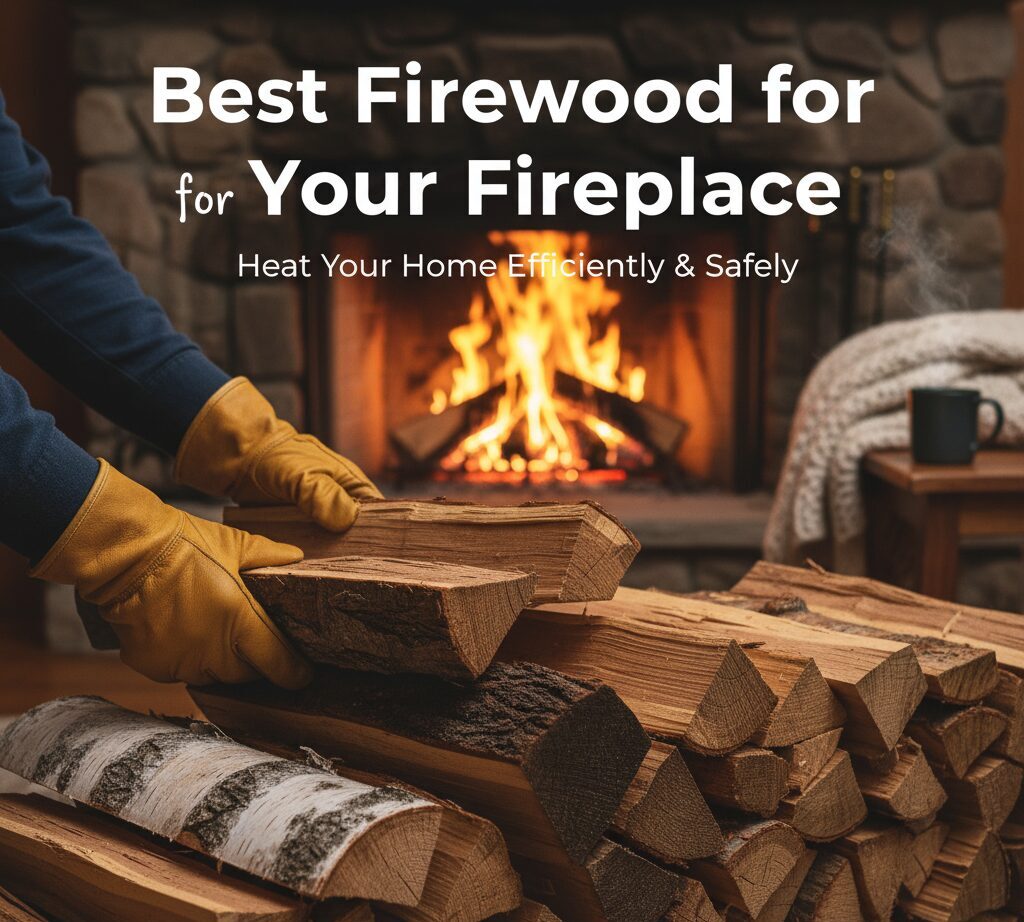
The best firewood for an indoor fireplace is dry, untreated wood that fits the firebox and burns predictably. Dense hardwoods such as oak, hickory, maple, beech, and ash are often valued for longer burns, while softer woods can be useful for kindling and quick startup. Moisture content and proper seasoning matter more than choosing a fashionable species.
Never burn painted or pressure-treated lumber, trash, plastics, glossy paper, or unknown construction scraps. These materials can release harmful pollutants, damage the system, and increase fire risk.
Firewood Types Compared
| Wood type | Typical burning character | Best use |
|---|---|---|
| Oak | Dense, steady, long-burning when fully seasoned | Longer fires; requires patience to season. |
| Hickory | High heat and long burn | Cold-weather fires where locally available. |
| Hard maple | Steady heat and manageable coals | General fireplace use after proper seasoning. |
| Beech | Dense and even-burning | Longer fires; must be stored dry. |
| Ash | Splits and burns predictably when seasoned | General use; still needs moisture verification. |
| Birch | Easy flame and attractive appearance | Mixed loads; bark can burn quickly. |
| Pine and other softwoods | Ignite quickly and burn faster | Kindling or shorter fires when dry and appropriate. |
Species behavior varies with density, moisture, piece size, airflow, and appliance. Any wood can smoke heavily when wet or burned in a smoldering fire.
Moisture Content Is the First Selection Test
Wet wood spends much of its energy boiling water instead of heating the firebox and flue. That produces a cooler, smokier fire and can contribute to deposit formation. The US Environmental Protection Agency recommends burning dry, seasoned wood and provides guidance through its Burn Wise program.
A firewood moisture meter provides a useful check when used correctly. Split a room-temperature piece and test the freshly exposed interior face according to the meter instructions. Surface readings from a wet or sun-dried piece can be misleading.
Hardwood vs Softwood
Hardwoods are generally denser and can provide a longer burn per piece. Softwoods ignite easily and can be helpful for kindling, shoulder-season fires, or establishing draft. Softwood does not automatically create chimney problems; wet fuel and poor burning practices are bigger concerns.
A practical load may combine small dry softwood kindling with seasoned hardwood. Avoid overloading the firebox, and follow the fireplace or appliance manufacturer’s fuel and loading instructions.
How Long Should Firewood Season?
There is no universal seasoning time. Species, split size, climate, stacking, sun, airflow, and the season when the tree was cut all matter. Large unsplit rounds dry slowly. Split pieces stacked off the ground with open sides and a protected top dry more effectively.
Do not judge wood only by cracked ends or gray color. Verify the interior moisture. Our guide to fireplace fuel and cleaner burning habits explains the connection between fuel, airflow, and deposits.
Buying Firewood
- Ask for the species or species mix.
- Clarify whether the wood is seasoned or kiln-dried and what that term means to the seller.
- Confirm piece length fits your firebox with safe clearance.
- Inspect for excessive mud, mold, insects, and visibly wet pieces.
- Understand the delivered quantity and stacking arrangement under local rules.
- Test representative split interiors rather than relying only on the seller’s claim.
Buying locally can reduce the movement of invasive insects and diseases. Follow state and local firewood-transport restrictions, especially when camping or crossing county and state lines.
Safe Firewood Storage
Store the main supply outdoors, off the soil, with airflow around the stack. Protect the top from rain while leaving the sides open when practical. Keep stacks away from ignition sources and follow local requirements for distance from buildings.
Bring indoors only a modest amount for near-term use. Large indoor stacks can introduce insects and add moisture. Never store wood against a fireplace, stove, connector pipe, or other hot surface.
Wood You Should Never Burn
- Pressure-treated, painted, stained, or glued lumber
- Plywood, particleboard, fiberboard, or laminated material
- Household trash, plastic, foam, or packaging
- Glossy magazines and large amounts of paper or cardboard
- Driftwood or wood contaminated by salt or chemicals
- Unknown demolition debris
- Wood that is moldy, saturated, or visibly contaminated
Manufactured firelogs should be used only when the product and fireplace manufacturer allow them, and only according to the instructions. Do not break apart a firelog or combine products unless specifically permitted.
Building a Cleaner, Hotter Fire
- Open the damper fully and verify the flow path is clear.
- Use dry kindling and small splits to establish a hot fire.
- Add larger pieces gradually without crowding the firebox.
- Maintain the airflow specified for the appliance.
- Avoid long, smoky, smoldering fires.
- Never leave the fire unattended beyond the manufacturer’s guidance.
If smoke enters the room, stop adding fuel and review our guide to fireplace smoke coming into the house.
Chimney Maintenance Still Matters
Dry wood reduces smoke, but it does not eliminate the need for inspection and cleaning. Deposit formation depends on appliance operation, flue temperature, fuel, and system condition. Learn how these factors affect chimney cleaning frequency.
Frequently Asked Questions
Is oak always the best firewood?
Oak is popular for long burns, but only when properly seasoned. Locally available dry maple, ash, beech, hickory, or another approved species may perform just as well for your needs.
Can I burn pine in a fireplace?
Dry pine can be used where the fireplace manufacturer permits ordinary firewood. It burns faster and is useful for kindling. Wet wood and smoldering combustion are greater deposit concerns than species alone.
How can I tell if firewood is dry?
Use a moisture meter on the freshly split interior of a room-temperature piece. Light weight, loose bark, and end checks are clues, but they are not reliable substitutes for measurement.
Is kiln-dried wood ready to burn?
It often is, but storage after drying can reintroduce moisture. Check representative pieces and keep the supply protected from rain and ground moisture.
What size firewood is best?
Pieces must fit the firebox with safe clearance and allow airflow. Smaller splits ignite faster; larger splits burn longer. Follow the appliance instructions and avoid overloading.