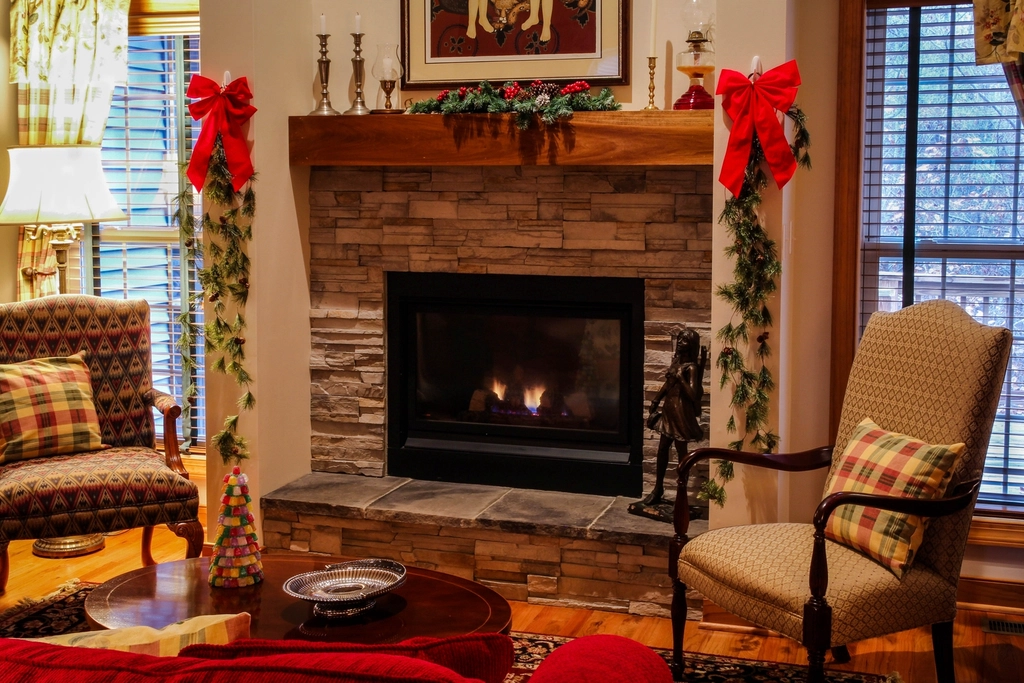
Quick answer: A wood fireplace mantel can be safe, attractive, and durable only when its height and projection match the exact fireplace type, appliance listing, installation manual, and locally adopted code. For a site-built masonry fireplace, the 2024 International Residential Code gives a baseline rule: combustible trim cannot be within 6 inches of the opening, and combustible material within 12 inches is limited to 1/8 inch of projection for every inch of distance from the opening. A factory-built fireplace, insert, or stove may require very different clearances, so its listed manual controls.
That means the best mantel is not simply the shelf that fits the wall. It is the shelf that fits the firebox, respects every clearance, can be anchored to the structure behind the finish, and suits how the fireplace actually produces heat. This guide explains how US homeowners can compare wood fireplace mantels without treating a general rule as installation approval.
Start with the fireplace, not the mantel
“Fireplace” can describe several very different systems. A traditional site-built masonry fireplace follows masonry-fireplace provisions. A factory-built wood or gas fireplace is tested and listed as a complete assembly. A fireplace insert has its own surround and mantel-clearance diagram. A freestanding stove set into an old opening follows the stove and connector instructions. Electric units have manufacturer-specific heat outlets and trim rules even though they do not burn fuel.
If you are unsure what you own, look for a rating plate inside the control compartment, behind a lower grille, near the firebox opening, or in the manual packet. Record the manufacturer and full model number. Our comparison of masonry and prefabricated fireplaces can help you identify the basic construction, but the rating plate and manual are the final references for a listed appliance.
Use this order of authority before buying:
- The exact appliance listing and installation manual. Follow the diagram for that model, including shelf depth, legs, trim, television recesses, heat-management kits, and noncombustible zones.
- Your local adopted building and fire code. Jurisdictions can amend model-code language or enforce a different edition.
- Permit and inspector requirements. The authority having jurisdiction decides what is acceptable for the project.
- The mantel maker’s installation instructions. These address the product and anchoring, but cannot override the fireplace listing or code.
Wood fireplace mantel clearance rules
For a site-built masonry fireplace, 2024 IRC Section R1001.11 says combustible material cannot be placed within 6 inches of the fireplace opening. Within 12 inches of the opening, a combustible projection is limited to 1/8 inch for each inch of distance from the opening. This is a projection rule, not a universal “12-inch mantel rule.” A deeper shelf may need to be higher.
For example, under that model-code geometry, a 1-inch projection reaches the ratio at 8 inches from the opening; a 1.5-inch projection reaches it at 12 inches. A typical 6- or 8-inch-deep wood shelf is outside the zone where this particular ratio applies, but that does not mean 12 inches is automatically sufficient. The rest of the fireplace construction, local amendments, and any listed-appliance instructions still apply.
| Fireplace type | Clearance source to use | Common mistake |
|---|---|---|
| Site-built masonry fireplace | Locally adopted masonry-fireplace code plus approved plans | Calling every shelf above 12 inches safe regardless of depth |
| Factory-built wood or gas fireplace | Exact model’s listing and installation manual | Applying masonry rules to a listed metal firebox |
| Fireplace insert | Insert manual’s mantel and side-trim diagram | Assuming the original mantel remains compliant after an insert is added |
| Freestanding stove in an opening | Stove, connector, hearth, and enclosure instructions | Measuring only from the old fireplace opening |
Manufacturers emphasize this same model-specific approach. Heatilator’s wood-fireplace information directs owners to the installation manual for complete requirements and says installation must follow the instructions shipped with the product. If the manual is missing, use the manufacturer’s official manual library or dealer support rather than a generic clearance chart.
How to measure mantel height and projection
Measure from the correct reference point shown in the manual. For a masonry fireplace, code language commonly references the fireplace opening. A listed unit may reference the top of the appliance opening, hood, finishing flange, noncombustible board, or another labeled datum. Mixing those reference points can move the shelf several inches into an unsafe zone.
- Measure the finished opening width and height, not the rough framing.
- Measure the proposed shelf projection from the finished wall or facing to the front edge.
- Include corbels, brackets, legs, trim returns, and decorative teeth; the nearest combustible projection counts.
- Mark the manual’s minimum clearance on painter’s tape and compare the entire mantel profile, not just the shelf top.
- Confirm the wall assembly contains an approved anchor point without drilling into a flue, gas line, cable, or appliance chassis.
A paper template is inexpensive insurance. Draw the opening, facing, shelf, legs, and projection to scale. Then compare the template with the manual diagram and inspector’s interpretation before ordering a custom shelf.
Useful heat-awareness tools for planning
As an Amazon Associate, ChimneyInsight earns from qualifying purchases.
Rutland Products 701 Stove Thermometer
Best for: Owners of compatible magnetic wood-stove surfaces who want a simple operating-temperature reference.
Practical advantage: It provides an easy visual reading during normal stove operation.
Limitation: It is not a mantel-clearance test, and its placement and useful range depend on the appliance instructions. It is not suitable for every fireplace surface.
Minuteman International Plain Cast Fireback
Best for: Traditional masonry-fireplace owners considering a cast-iron fireback that fits their firebox.
Practical advantage: A properly sized fireback can protect the rear firebox surface and reflect some radiant heat into the room.
Limitation: It is heavy, must fit securely, and does not reduce the required clearance for a combustible mantel.
These tools can support responsible fireplace use, but neither proves that a mantel is safe. Clearances are determined before use from the approved documents and construction, not by watching a thermometer or adding a heat-reflective accessory.
Choosing a wood mantel material
Once the clearance envelope is known, compare the material on stability, finish, weight, and repairability. The words “solid wood” do not automatically mean better, and “reclaimed” does not automatically mean suitable near heat.
| Material | Strengths | Before-buying checks |
|---|---|---|
| Solid hardwood | Durable edges, attractive grain, repairable finish | Moisture content, movement, weight, hidden mounting design |
| Softwood beam | Rustic appearance, often lighter and easier to shape | Dents, knots, resin, checking, adequate structural support |
| Reclaimed wood | Distinctive patina and character | Unknown coatings, embedded metal, insects, rot, contamination, structural soundness |
| Veneered or engineered shelf | Stable dimensions and consistent finish | Core material, adhesive and finish limitations, edge durability, mounting capacity |
| Noncombustible look-alike | May suit designs where combustible wood cannot | Written classification, weight, support, and the fireplace manufacturer’s permitted finishing details |
Paint, stain, varnish, and distressed coatings change appearance, but they do not turn wood into a noncombustible material. Avoid finishes with no temperature guidance for the intended location. Reclaimed lumber deserves particular caution because an attractive surface can hide old lead paint, oil, preservatives, or loose fasteners.
Size, proportion, and mounting
A mantel normally looks intentional when it relates to the width of the opening and surround instead of the entire wall. Leave visual breathing room around columns and trim, and check that doors, curtains, speakers, and built-ins remain outside required clearances. On a narrow wall, a shallow shelf may be visually lighter and easier to support than a deep beam.
Do not choose mounting hardware by shelf weight alone. Include decorations and any accidental downward load. A floating shelf commonly uses a ledger, steel bracket, rods, or a proprietary cleat anchored to framing or masonry. Drywall anchors are rarely an adequate primary support for a heavy timber mantel. Before drilling, verify the flue path and any gas, electrical, or vent components. If the wall is part of a factory-built fireplace chase, unauthorized screws can penetrate listed components or required air spaces.
Plan access too. A mantel should not block a gas control compartment, appliance grille, convection outlet, service panel, or required hood. If an insert is planned later, evaluate that upgrade now; a newly installed shelf may be too low once the insert’s own clearance diagram applies. See our guide to fireplaces versus inserts before locking in the design.
Heat shields, firebacks, and noncombustible facing
These terms are often mixed together, but they do different jobs:
- A fireback sits inside a masonry firebox. It can protect the rear wall and alter radiant heat, but it does not certify a wood mantel.
- A listed mantel shield is a specific component used only when allowed and installed exactly as required by the appliance or shield listing.
- Noncombustible facing covers part of the fireplace wall assembly. It does not necessarily make combustible framing or a wood shelf behind or above it compliant.
- A thermometer reports temperature at its intended location. A cool reading during one fire cannot replace clearance rules, because fuel load, draft, weather, and operating conditions change.
Our guide to fireplace back plates and firebacks explains fit and material choices. Treat any accessory as a supplement to an approved installation, never as a shortcut around the manual.
Wood mantel buying checklist
- Fireplace manufacturer, model, fuel, and installation manual confirmed
- Local code edition, permit need, and inspector contact confirmed
- Reference point, vertical clearance, projection, legs, and trim checked
- Shelf dimensions mocked up on the wall
- Material and finish appropriate for the allowed location
- Weight and planned display load calculated
- Stud, masonry, or approved blocking locations verified
- No conflict with flue, vent, gas line, wire, air space, grille, or service panel
- Mounting system included and compatible with the wall assembly
- Installer scope and inspection responsibility written down
Before using the fireplace after any surround work, arrange the inspection appropriate to the system. Our fireplace inspection checklist helps homeowners organize the questions, though it is not a substitute for a qualified on-site inspection.
Product decision aid: monitoring versus firebox protection
Choose the Rutland 701 if…
You operate a compatible wood stove and its instructions allow a magnetic surface thermometer. The readable dial can support better awareness of stove operation.
Check first: Confirm the exact placement in the stove or thermometer instructions. Do not place it on a mantel, use it on unsuitable surfaces, or treat its reading as clearance approval.
Choose the Minuteman Fireback if…
You have a traditional masonry firebox, want a plain cast-iron fireback, and can verify that its dimensions and weight suit the firebox floor and rear wall.
Check first: Measure carefully and ask a chimney professional about support and damaged masonry. The fireback is not a heat shield for a combustible shelf.
Conclusion
The right wood fireplace mantel begins with documentation, not décor. Identify the fireplace, use the exact manual and locally adopted code, measure every combustible projection, and confirm the structural mounting plan before purchase. Then choose the wood species, finish, depth, and style that fit inside that verified envelope. If the model, opening, or wall construction is unclear, pause the project and have a qualified fireplace professional or local inspector review it.
Frequently asked questions
How high should a wood mantel be above a fireplace?
There is no single height for every fireplace. The required height depends on the fireplace type, mantel projection, exact appliance listing, installation manual, and locally adopted code. Measure from the reference point shown in those documents.
Is 12 inches above the fireplace opening always enough?
No. The IRC’s masonry-fireplace language includes both a 6-inch no-combustible zone and a projection limit within 12 inches, but a deep shelf, listed fireplace, insert, stove, local amendment, or manufacturer instruction can require more.
Can a heat shield let me install a wood mantel lower?
Only when the exact fireplace or shield listing expressly permits that reduction and the shield is installed exactly as specified. A generic metal panel, fireback, or noncombustible facing should not be assumed to reduce clearance.
Are reclaimed wood mantels safe?
They can be used only when the installation meets all combustible-clearance and structural requirements. The beam should also be checked for unknown coatings, contamination, rot, insects, embedded metal, cracks, and adequate mounting capacity.
Can I mount a TV directly above a wood mantel?
Possibly, but only after checking both the fireplace manual and television manufacturer’s limits. Heat at the wall varies by fireplace and installation, and a mantel does not guarantee that electronics above it will stay within their permitted temperature range.