Electric Fireplace vs Wood Fireplace: Efficiency Comparison
By Chimney Insight Editorial Team
Posted on September 27, 2025
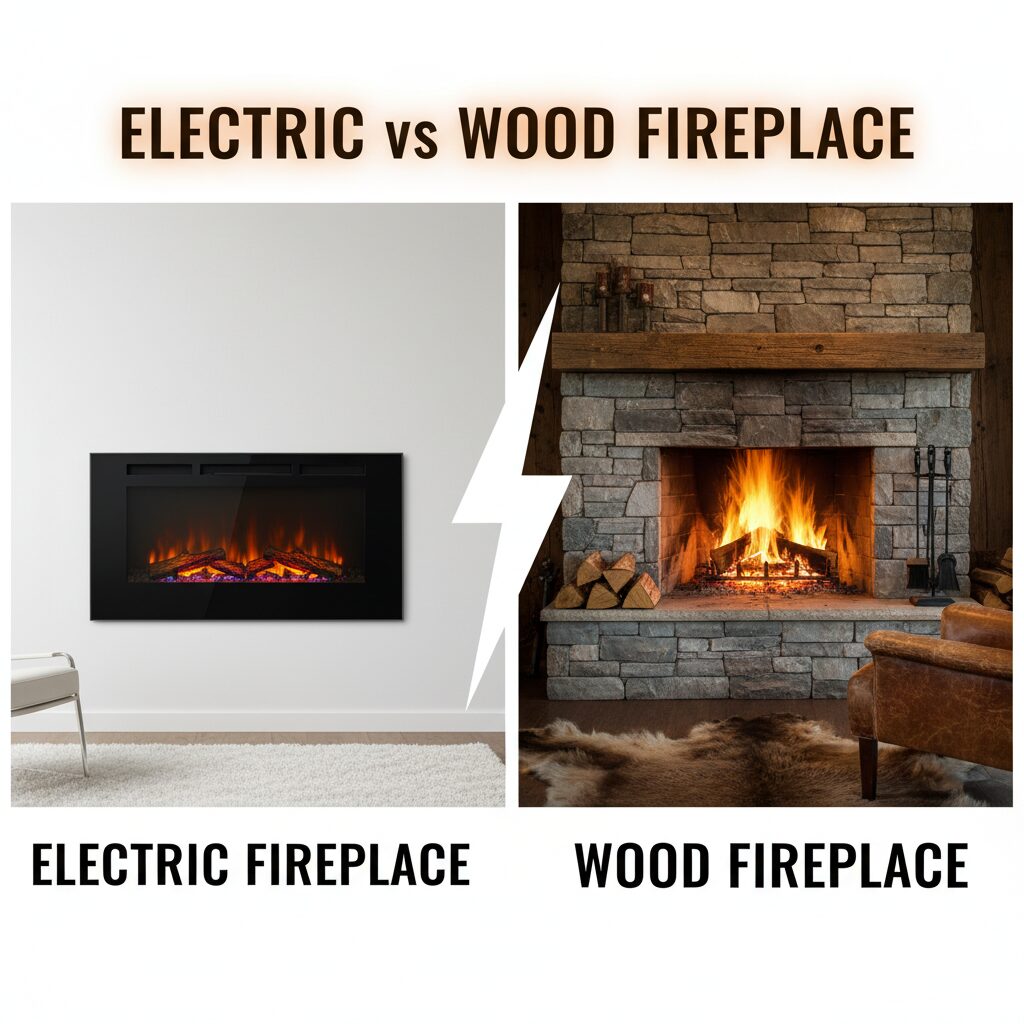
An electric fireplace is usually the simpler choice for supplemental room heat, while a wood fireplace is chosen primarily for real flame, traditional atmosphere, and access to firewood. Electric units convert electricity into heat at the room, require no chimney, and can often be installed with limited construction. Traditional open wood fireplaces lose substantial heat through the chimney and require more maintenance.
The better option depends on whether your priority is easy heat, ambience, installation flexibility, backup capability, or the experience of burning wood.
Electric vs Wood Fireplace at a Glance
| Factor | Electric fireplace | Traditional wood fireplace |
|---|---|---|
| Primary value | Convenient supplemental heat and visual effect | Real flame, sound, and traditional experience |
| Venting | No chimney or combustion vent | Requires a correctly designed chimney and flue |
| Installation | Often simple; circuit requirements still apply | Complex masonry, clearance, hearth, and venting work |
| Maintenance | Cleaning and electrical inspection as needed | Ash removal, chimney inspection, cleaning, and masonry care |
| Indoor emissions | No combustion at the unit | Can release smoke and particles if operation or venting is poor |
| Use during outage | Generally unavailable without suitable backup power | May operate without grid power if the system is safe and designed for use |
| Heat control | Thermostat or selectable heat settings on many models | Controlled through fuel load, airflow, and fireplace design |
Heating Efficiency
Electric resistance heaters deliver their generated heat directly into the room rather than sending combustion exhaust outdoors. That makes them effective as point-of-use supplemental heaters. However, operating cost depends on local electricity rates and how many hours the heater runs.
A traditional open fireplace can draw heated indoor air up the chimney while the fire is burning and after it dies down if the damper remains open. It provides strong radiant warmth near the opening but is usually not an efficient whole-home heater.
A modern EPA-certified wood stove or listed high-efficiency wood insert is a different category from an open fireplace. If heating performance is your priority, compare our wood stove vs fireplace guide.
Installation Requirements
Electric fireplace
Wall-mounted, freestanding, insert, and built-in electric models have different clearance, circuit, and ventilation requirements. Some plug into a suitable receptacle; higher-output or built-in units may need a dedicated circuit or hardwiring by a qualified electrician.
Do not use an extension cord unless the manufacturer explicitly permits it. Keep fabrics, furniture, and decorations outside the required clearances.
Wood fireplace
A wood fireplace requires a properly sized chimney, approved hearth extension, noncombustible construction, and clearances from framing and finishes. New installation is a construction project that may require permits and inspection.
An existing fireplace should be inspected before use, especially after a property purchase, long vacancy, chimney fire, or structural change. See our explanation of chimney inspection levels.
Operating Costs
Electric cost is determined by the heater’s power draw, local utility rate, thermostat cycling, and runtime. The flame display may use much less electricity than the heating element, so many models can provide visual ambience without full heat.
Wood cost varies widely. Purchased seasoned hardwood, delivery, storage, tools, inspections, cleaning, and repairs all contribute. “Free” wood still requires safe cutting, transport, splitting, seasoning, and storage.
Compare annual use rather than only the purchase price. A low-cost electric unit used continuously may cost more to operate than expected, while a masonry fireplace can require expensive maintenance even if wood is inexpensive.
Safety and Indoor Air
Electric fireplaces avoid combustion gases, sparks, creosote, and ash at the appliance. They still present electrical and surface-temperature hazards. Use a properly grounded circuit, keep vents clear, and stop using any unit with a damaged cord, hot receptacle, burning odor, or repeated breaker trips.
Wood fireplaces require a sound flue, open damper, dry fuel, safe hearth, spark control, and working smoke and carbon-monoxide alarms. The EPA’s Burn Wise guidance explains cleaner wood-burning practices.
Maintenance
- Electric: remove dust according to the manual, keep air inlets clear, inspect the cord and plug, and replace lamps or components only as directed.
- Wood: remove ash safely, inspect the firebox and damper, monitor deposits, protect masonry from water, and arrange chimney service based on use and condition.
Learn what affects chimney cleaning frequency before establishing a maintenance plan.
Appearance and Experience
Electric flame effects have improved and offer color, brightness, and ember-bed options, but they do not reproduce the sound, smell, and changing character of a real wood fire. Wood requires hands-on preparation and cleanup; for some homeowners that ritual is a benefit, while for others it is a burden.
Environmental Considerations
An electric unit has no on-site combustion, but its broader impact depends on the electricity source and total consumption. Wood is renewable when responsibly sourced, yet residential smoke contains fine particles and must be minimized through dry fuel, appropriate equipment, and proper operation.
Local burn bans, air-quality rules, and appliance restrictions may affect wood use. Check current local requirements before installing or relying on a wood-burning system.
Which Should You Choose?
- Choose electric for apartments, bedrooms, simple supplemental heat, low maintenance, or locations without a chimney.
- Choose wood when real flame is central to the experience and you can support the fuel storage, maintenance, venting, and safety responsibilities.
- Consider a wood insert or stove if serious heating is the goal and a compliant installation is feasible.
- Consider gas when you want real flame and thermostat convenience, subject to fuel and venting requirements.
Frequently Asked Questions
Is an electric fireplace cheaper to run?
It depends on wattage, runtime, room size, and local electricity rates. Calculate cost from the nameplate power and your utility rate rather than relying on a generic claim.
Does an electric fireplace need a chimney?
No combustion chimney is required. Built-in models still need correct electrical installation and the clearances stated in the manual.
Can a wood fireplace heat an entire home?
A traditional open fireplace is generally a poor whole-home heater. A properly sized modern wood stove or insert can perform differently, but installation and house layout matter.
Can I place an electric insert in an old fireplace?
Often yes, if dimensions, electrical supply, moisture conditions, and manufacturer requirements are satisfied. The old chimney should be protected from water and animals even when no longer used for combustion.
Which option is safer?
Electric models eliminate combustion and chimney hazards, but still require electrical safety and clearances. Wood systems can be used safely only with correct installation, fuel, operation, alarms, inspection, and maintenance.