Chimney Waterproofing Cost: How to Compare Itemized Quotes
By Chimney Insight Editorial Team
Posted on October 29, 2026

Chimney waterproofing cost is meaningful only when you know what the quote includes. A treatment-only price cannot be compared directly with a package that includes cleaning, safe roof access, crown repairs or repointing. Ask for an itemized scope, a named compatible water repellent and a written explanation of the problem it is intended to address.
This guide helps you compare chimney waterproofing quotes before approving work. It focuses on the purchasing decision, rather than repeating our brick-chimney waterproofing preparation and application guide. Prices vary by location and actual conditions; no remote checklist replaces an inspection of your chimney.
As an Amazon Associate, Chimney Insight earns from qualifying purchases.
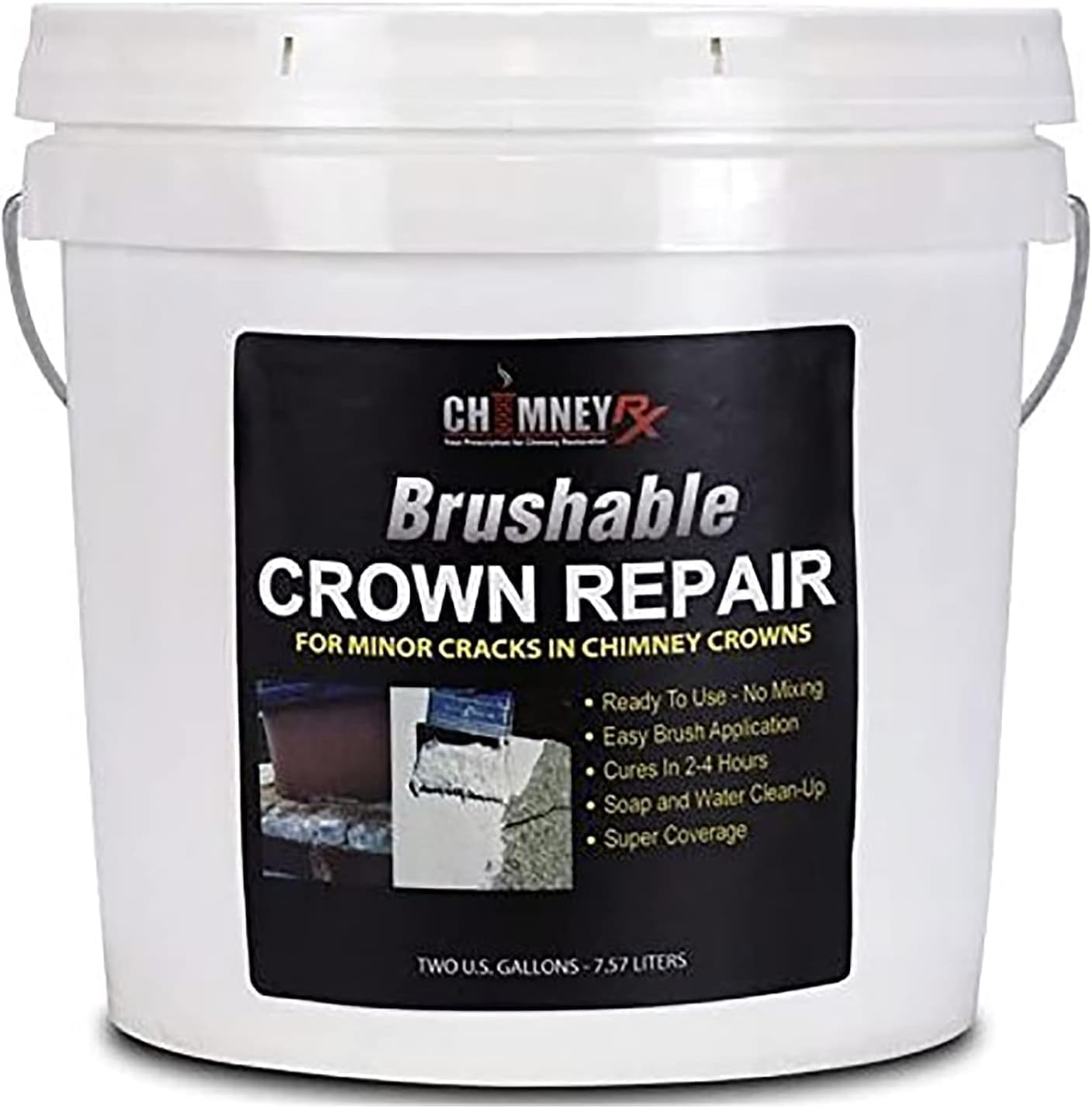
FOR A SUITABLE CROWN REPAIR ONLY
ChimneyRx Brushable Crown Repair
Best for: Comparing a documented crown-coating line item when the crown needs a compatible surface repair.
The manufacturer describes a brushable elastomeric crown coating. It serves a different purpose from treating vertical brickwork; do not buy it as a substitute for masonry water repellent.
Check on AmazonFirst establish what “waterproofing” means on the quote
The word can describe very different jobs. One contractor may mean applying a penetrating treatment to vertical brickwork. Another may include crown coating, flashing work and mortar repairs under the same heading. A useful estimate separates those tasks so you can see which problem each one addresses.
The Sealant, Waterproofing & Restoration Institute distinguishes a penetrating water repellent from a waterproof barrier: the former reduces wetting of compatible, sound masonry while allowing vapor movement. It does not replace repairs to cracks or defective flashing. That distinction should guide what you are paying for.
If water is already entering the house, request diagnosis before buying a coating package. Ask the contractor to identify whether the suspected entry point is the masonry, crown, flashing, cap or an adjacent roof detail. Our leaky chimney diagnostic guide explains why similar symptoms can have different causes.
A current price example, with its limits
On October 28, 2026, Certified Sweeps in the Omaha area advertised chimney waterproofing starting at $500 plus tax, with the final quote depending on size and access. Its page describes checking the crown, cap and flashing first; repair or restoration work outside its core scope is quoted separately.
This is one contractor’s local advertised starting price, not a national average, a guaranteed quote or an endorsement. It illustrates the question to ask about any published price: what chimney and what work does the starting figure actually cover? A higher total may include necessary repairs, while a lower number may omit them. Neither conclusion follows from the price alone.
The line items that make two quotes comparable
| Line item | Ask for | Why it changes the comparison |
|---|---|---|
| Inspection and diagnosis | Findings, photographs and the suspected water-entry route | Treatment should address an identified condition. |
| Area treated | Faces, approximate measured area and excluded surfaces | A short exposed stack and a tall exterior chimney are different jobs. |
| Access and protection | Access equipment, roof protection and overspray control | The work may require more than arriving with a sprayer. |
| Cleaning and preparation | Method, existing coatings and drying requirements | Preparation affects suitability and completion time. |
| Repairs | Separate crown, brick, mortar and flashing scope | Repair costs should not disappear into a vague coating charge. |
| Product and application | Exact product, substrate approval and specified application | Generic “sealer” is insufficient documentation. |
| Completion and warranty | Photos, exclusions, return-visit terms, tax and payment total | Product coverage and installation responsibility are separate. |
Surface area matters, but it is not the whole bill
A contractor should be able to describe the surfaces being treated. For a simple rectangular exposed stack, an illustrative estimate is perimeter multiplied by height: a 3-foot by 2-foot stack has a 10-foot perimeter, so four faces exposed for 6 feet give approximately 60 square feet. This is geometry for understanding a quote, not an instruction to climb up and measure.
Actual jobs can have unequal face heights, roof intersections, adjoining walls or additional exposed masonry below the roofline. Ask the contractor to explain which faces are included. The crown should be described separately because its treatment or repair can require a different product and scope.
Do not judge the quote solely by gallons or a price per square foot. A small job still involves travel, setup, protection and safe access. Coverage also depends on the selected material and the masonry. Ask how the proposed quantity and application method match that product’s current instructions.
Preparation and repairs should come before treatment
A clean-looking chimney can still have loose mortar, failing brick faces or a previous coating that prevents the new material from penetrating. Ask what will be inspected and prepared, and how discoveries affect the quoted price. A proposal that assumes everything is sound should say so explicitly.
SaverSystems’ water-base product label, for example, requires appropriate surface preparation and repair of damaged masonry before treatment. It also specifies weather restrictions and curing intervals. Those are instructions for that formulation, not universal settings to copy onto a different product.
Ask whether mortar repair, cleaning and application happen on separate visits when required. If the proposal promises to complete every stage immediately, request the product-specific basis for that schedule. Our chimney tuckpointing guide can help you understand a separate mortar-repair item.
Safety comes before price comparison. Do not use roof access or chemical application as a casual way to save money. Have a qualified chimney professional assess unstable masonry, suspected venting defects or chimney-fire damage. For a carbon monoxide alarm or smoke emergency, get outside and contact emergency services; a water-repellent appointment is not the response.
How to compare a treatment-only quote with a repair package
Consider two hypothetical proposals with no assumed market prices. Proposal A includes preparation and repellent on the exposed brick faces. Proposal B includes those tasks plus documented crown repairs and replacement flashing. Their totals answer different questions, even if both are titled “chimney waterproofing.”
First ask whether both contractors agree about the defects. If one proposes flashing replacement and the other says it is serviceable, request photographs and an explanation. Then request matching line items for the work they both recommend. You can compare the treatment portion separately without pretending the disputed repair is optional or unnecessary.
Use a simple three-column worksheet: included, excluded and awaiting clarification. Put each task from the table above into one column for each contractor. Do not assign a zero price to an exclusion; mark it as not included until the contractor provides a figure or confirms it is unnecessary.
Questions about materials that protect your budget
- Which exact product will be used? Request the manufacturer, formulation and current label.
- Is it appropriate for this masonry and its existing finish? Painted brick, prior treatments and different substrates can change the plan.
- Will there be a test area? Agree how appearance and suitability will be assessed.
- What is the application scope? Record the faces, amount and method rather than a vague promise of “two coats.”
- How will nearby surfaces be protected? Clarify cleanup and responsibility for overspray or damage.
A product’s advertised warranty is not proof that every substrate, installer or repair is covered. Avoid accepting a generic “lifetime protection” statement without the written terms. If choosing a treatment is your next step, use our masonry water-repellent comparison as a starting point for questions, then check the exact current documentation.
Read the product warranty and workmanship promise separately
A material warranty and the contractor’s promise cover different responsibilities. Ask who handles a callback, what evidence is required and whether labor, removal or reapplication is included. Also ask what happens when a later leak comes from flashing or a defect outside the treated area.
The water-base manufacturer’s terms linked above illustrate why this matters: its limited durability coverage has application conditions and exclusions, and its remedy does not include reapplication labor. Do not transfer those terms to another product. Obtain the exact terms offered with your own installation.
Keep the quote, invoice, product identity, application date and completion photographs together. These records help a future inspector understand what was done. Routine inspection remains important; CSIA homeowner guidance supports annual chimney inspection and cleaning or repairs as needed.
Before you approve the work
- Confirm the diagnosis and whether treatment is appropriate.
- Get separate descriptions for repairs and masonry treatment.
- Check access, protection, preparation and weather-related scheduling.
- Record the exact product and intended surfaces.
- Agree a process for hidden damage: stop, document and approve a revised scope.
- Confirm the final total, tax, payment timing and warranty exclusions.
Do not reject necessary safety work simply because it raises the estimate. Conversely, a coating should not be presented as a substitute for repairing a failed crown or flashing. Our guide to choosing chimney repair services covers checking the company and comparing a wider repair contract.
KEEP REPAIR AND REPELLENT SEPARATE
ChimneyRx Brushable Crown Repair
Best for: A crown your chimney professional confirms is suitable for an elastomeric coating, rather than reconstruction.
Ask whether the quote includes preparation, the specified coating and inspection of the finished crown. This is not a penetrating brick water repellent or a remedy for unstable masonry.
Check on AmazonFinal decision: compare the same job before comparing totals
The most useful chimney waterproofing quote explains the condition, the recommended treatment, the repairs and the limits of the promise. Compare that complete scope across contractors. A clearly documented treatment-only job can be sensible when the masonry is suitable; a repair package can be justified when defects are documented.
If a proposal remains vague, ask for clarification before signing. Knowing exactly what you are purchasing is more valuable than chasing an unsupported national price or assuming the most expensive package solves every leak.
Frequently asked questions
How much should chimney waterproofing cost?
There is no single reliable quote for every chimney. A published local starting price is only a reference point. Compare measured area, access, preparation, product, repairs, tax and exclusions before judging the total.
Does waterproofing include crown or flashing repairs?
Only if the written scope says so. Ask for separate descriptions and prices for crown work, flashing, mortar repairs and water-repellent treatment.
Can I save money by buying the product myself?
Possibly, but confirm that the contractor accepts owner-supplied material and how that affects product selection, quantity and warranty. Buying a container does not include safe access, preparation or application.
Does a ten-year warranty mean every leak is covered?
No. Read the exact product and workmanship terms. A water-repellent warranty can cover a specified treatment effect while excluding labor, existing defects or leaks from other components.
Research-based editorial guidance; no hands-on product testing claimed. The hero is an AI-generated illustration, not a photograph of a completed job. The product-card image shows the exact supplied crown-repair product. Sources checked October 28, 2026.