How Long Does a Stainless Steel Chimney Cap Last?
By Chimney Insight Editorial Team
Posted on October 27, 2026
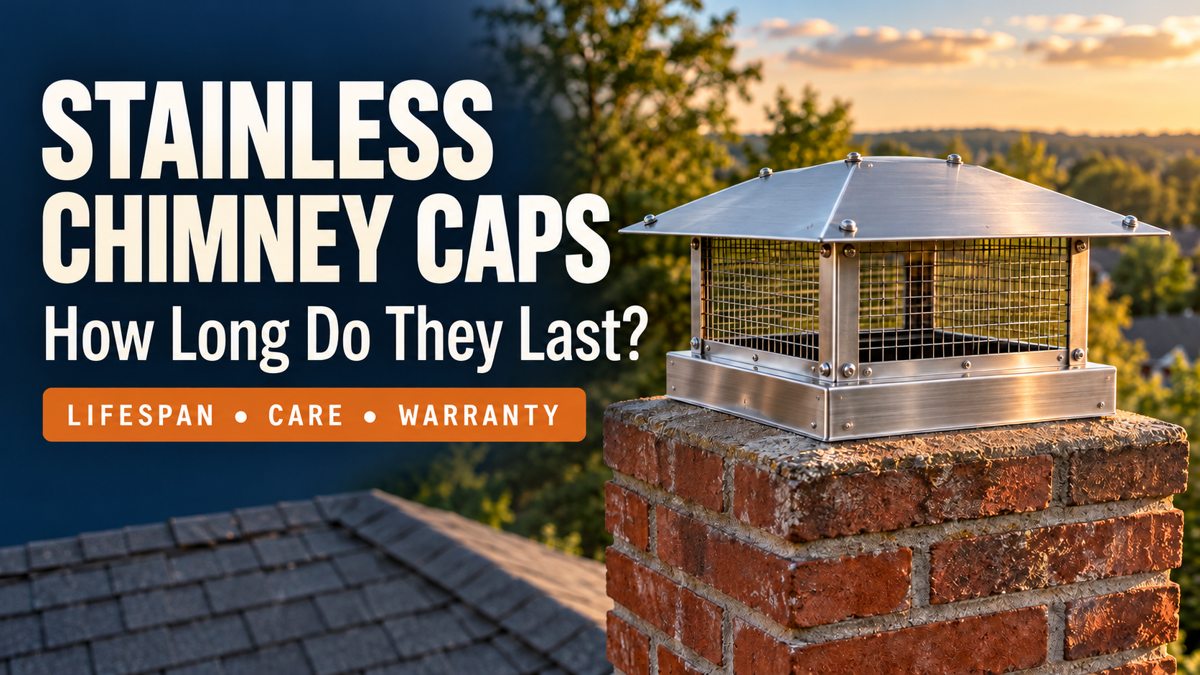
There is no single reliable stainless steel chimney cap lifespan that applies to every home. A well-chosen cap can provide long service, but its useful life depends on metal grade, exposure, fabrication, mounting and maintenance. Replace or repair it based on its condition and compatibility, rather than an unsupported promise of a particular number of years.
This guide explains how to evaluate the cap you already own, what a lifetime warranty actually tells you, and what information makes a replacement quote useful. It is an informational maintenance guide, not a hands-on durability test. For cap shapes and sizing, start with our chimney cap buying guide.
As an Amazon Associate, Chimney Insight earns from qualifying purchases.

A VERIFIED GALVANIZED ALTERNATIVE
CLLOMAGY 17×29 multi-flue chimney cap
Best fit: A measured, compatible large rectangular masonry chimney—not a factory-built vent.
This supplied product has a black powder-coated galvanized-steel construction. It is included as a material comparison, not as an example of stainless longevity. Confirm the exact flue envelope and installation requirements before considering it.
Check on AmazonWhy a fixed lifespan number can be misleading
Two stainless caps of the same apparent age may have very different histories. One might have a known manufacturer, documented alloy and regular service records. The other might have unknown metal, altered mounting hardware and years of deposits underneath its hood. The word “stainless” alone cannot resolve those differences.
For an existing cap, gather its invoice, model number, installation date and service reports. Ask whether the hood, mesh, frame and fasteners are all made from the specified material. A sound hood does not establish that the attachment is secure or the exhaust opening is clear.
Do not replace a cap simply because an online article says its age is “too old.” Equally, do not keep a damaged one because it has not reached an advertised life expectancy. Ask a qualified chimney professional to document whether the assembly remains suitable for continued use.
What affects stainless steel chimney cap corrosion?
Stainless steel resists corrosion; the name does not mean it is immune to every exposure. The Australian Stainless Steel Development Association’s guidance on tea staining identifies environmental exposure, surface condition, design and maintenance as relevant factors. Chloride deposits and locations where contamination accumulates deserve particular attention.
Exposure and the documented alloy
A coastal home should not rely on a generic “weatherproof” claim. Ask the cap supplier which grade is specified for your location, fuel and appliance, and whether the warranty excludes particular environments. Avoid choosing an alloy from a photograph or assuming every shiny cap uses the same steel.
Fabrication, deposits and hardware
ASSDA also explains that contamination from ordinary steel can leave rust stains on stainless surfaces. Brown marks therefore need interpretation: a stain is not automatically a hole through the cap, but a shiny surface is not proof that hidden joints are sound. Have the underside, mesh attachments and mounting points checked during service.
Do not experiment with roof-level chemical cleaning. Ask the cap manufacturer for a suitable method. Household bleach, harsh acid treatments, abrasives or improvised coatings should not be assumed compatible with the cap or chimney system.
Chimney cap warranty vs lifespan: read the fine print
A warranty describes a manufacturer’s obligations under stated conditions. It is not a forecast of how long every installation will remain serviceable. For example, HY-C’s Shelter stainless single-flue cap page describes 304 stainless construction and a limited lifetime warranty. Its warranty text makes proper installation and intended use relevant and identifies the original purchaser as the beneficiary.
The same published terms limit liability to the replacement cost of the purchased product and exclude shipping, labor and consequential damages. That is a concrete reason to separate product coverage from the cost of returning to a roof. These terms describe that manufacturer’s product; they do not apply to every stainless cap or to the galvanized product shown here.
- Save the invoice, seller, model number and purchase date.
- Check whether registration is requested and whether coverage transfers with a house sale.
- Ask which defects are covered and which exposures or modifications are excluded.
- Find out whether removal, reinstallation, delivery and roof access are included.
- Request the current written terms before relying on a headline warranty claim.
Stainless versus galvanized: compare the ownership decision
Galvanized and stainless are different materials, not interchangeable product labels. HY-C describes its Shelter galvanized single-flue caps as galvanized steel with a black powder-coat finish and positions them as an economical option. Do not transfer that manufacturer’s specifications or warranty to another brand.
The practical comparison is between two compatible, documented assemblies for the same chimney. A less expensive cap of the wrong shape is not a saving. A premium cap with unsuitable mounting hardware is not a complete solution either.
| Question | What to compare | Why it matters |
|---|---|---|
| Is it the correct assembly? | Flue arrangement, fit range, mounting and required exhaust clearances | Material quality cannot compensate for incorrect fit. |
| What material is specified? | Hood, mesh, base, screws and declared alloy or coating | A short product name may omit important construction details. |
| What is covered? | Written warranty, purchaser eligibility and exclusions | Product coverage and installed cost are different. |
| How will it be serviced? | Removal or opening method and replacement parts | Future inspection should remain practical. |
| What does the quote include? | Cap, installation, access and separately identified masonry work | Like-for-like scope is more useful than a headline price. |
When does a cap need attention?
From a safe ground-level viewpoint, note a shifted hood, obvious damage or something that has changed since the last service. Use photographs or binoculars if useful, without moving onto the roof. Our missing or damaged chimney-cap checklist covers the broader warning signs.
At the next professional inspection, ask for close photographs and a written finding on these four points:
- Metal integrity: distinguish superficial marks from holes, severe deterioration or broken seams.
- Attachment: check the mounting surface, hardware and whether the cap remains secure.
- Exhaust path: identify deposits, nests or deformation that may interfere with venting.
- Compatibility: confirm that the termination still matches the chimney and connected appliance.
Smoke entering the home, a carbon monoxide alarm or suspected chimney-fire damage calls for stopping appliance use and appropriate professional or emergency help. A new cap alone does not establish that the chimney is safe.
A maintenance record is more useful than an age estimate
CSIA’s homeowner guidance recommends annual chimney inspections, with cleaning and repairs as needed. Include the termination in that conversation even when the fireplace is used infrequently. Professional inspection can assess conditions you cannot see from the yard.
Keep a simple record with four columns: inspection date, photographs, findings and action taken. Record the cap’s model and material once, then attach later service notes. When buying a home, request those records rather than assuming the cap was installed when the roof was replaced.
After a major storm, compare what you can safely see with the previous photographs. If it appears displaced or damaged, arrange assessment instead of tightening unknown fasteners yourself. Our annual chimney maintenance checklist helps place cap care in the wider maintenance plan.
How to request a useful replacement quote
Ask for a quote that identifies the exact cap, construction, fit range and installation method. Request separate lines for roof access, old-cap removal, new hardware, installation and any repairs to the crown or flue tiles. Avoid treating all of those tasks as one unexplained “cap replacement” charge.
For a factory-built chimney or a listed vent system, have the installer verify the required termination from the system documentation. A universal masonry cap is not automatically suitable. If masonry is cracked or the attachment surface is unsound, resolve that issue as part of the scope rather than fastening a new cap over it.
For illustration, one quote might include only supplying a cap, while another includes safe access, removal, installation and a written inspection. Those are different services even if the cap looks similar. This is a comparison method, not a statement of current market prices. Our guide to comparing chimney repair services explains how to evaluate scope.
COMPARE BEFORE REPLACING
CLLOMAGY 17×29 multi-flue chimney cap
Best fit: A compatible large rectangular masonry-flue arrangement when a galvanized cap is an intentional choice.
Compare the documented mounting method and footprint with your professional’s measurements. This galvanized product is not a stainless upgrade, and its listing does not establish a universal lifespan. If stainless is your requirement, request a correctly sized stainless option instead.
Check on AmazonFinal decision: assess condition, then choose the right replacement
Keep a documented, compatible cap when a qualified inspection finds it serviceable. Investigate deterioration, insecure mounting or blocked openings promptly. If replacement is needed, compare the complete installed scope and the exact written warranty; do not choose from an unsupported lifespan number.
A stainless upgrade may be worth discussing when corrosion resistance is a priority, but the decision still depends on the environment and the chimney system. Before ordering, confirm measurements, material, hardware, service access and who will install it.
Frequently asked questions
Does a stainless steel chimney cap last a lifetime?
No universal lifespan can be promised. A limited lifetime warranty is a set of coverage terms, not a guarantee that every cap will remain serviceable indefinitely.
Does brown staining mean the cap must be replaced?
Not necessarily. Surface staining and structural deterioration are different findings. Have a professional assess the metal, joints and mounting instead of deciding from color alone.
Should I replace an older cap that still looks intact?
Age alone is not enough. Ask for a condition assessment that includes the underside, mesh, fasteners, exhaust path and compatibility.
Can I put any stainless cap on a metal chimney?
No. Factory-built chimneys and vent systems can require a specific termination. Confirm the system identity and manufacturer’s instructions before choosing a replacement.
Editorial note: the featured cover is an AI-generated illustration of a generic chimney cap, not a photograph of a tested product. Product-card imagery shows the exact supplied galvanized product. Sources and product documentation checked October 26, 2026.