How to Choose Chimney Repair Services: Quotes, Scope & Red Flags
By Youssef
Posted on September 20, 2026
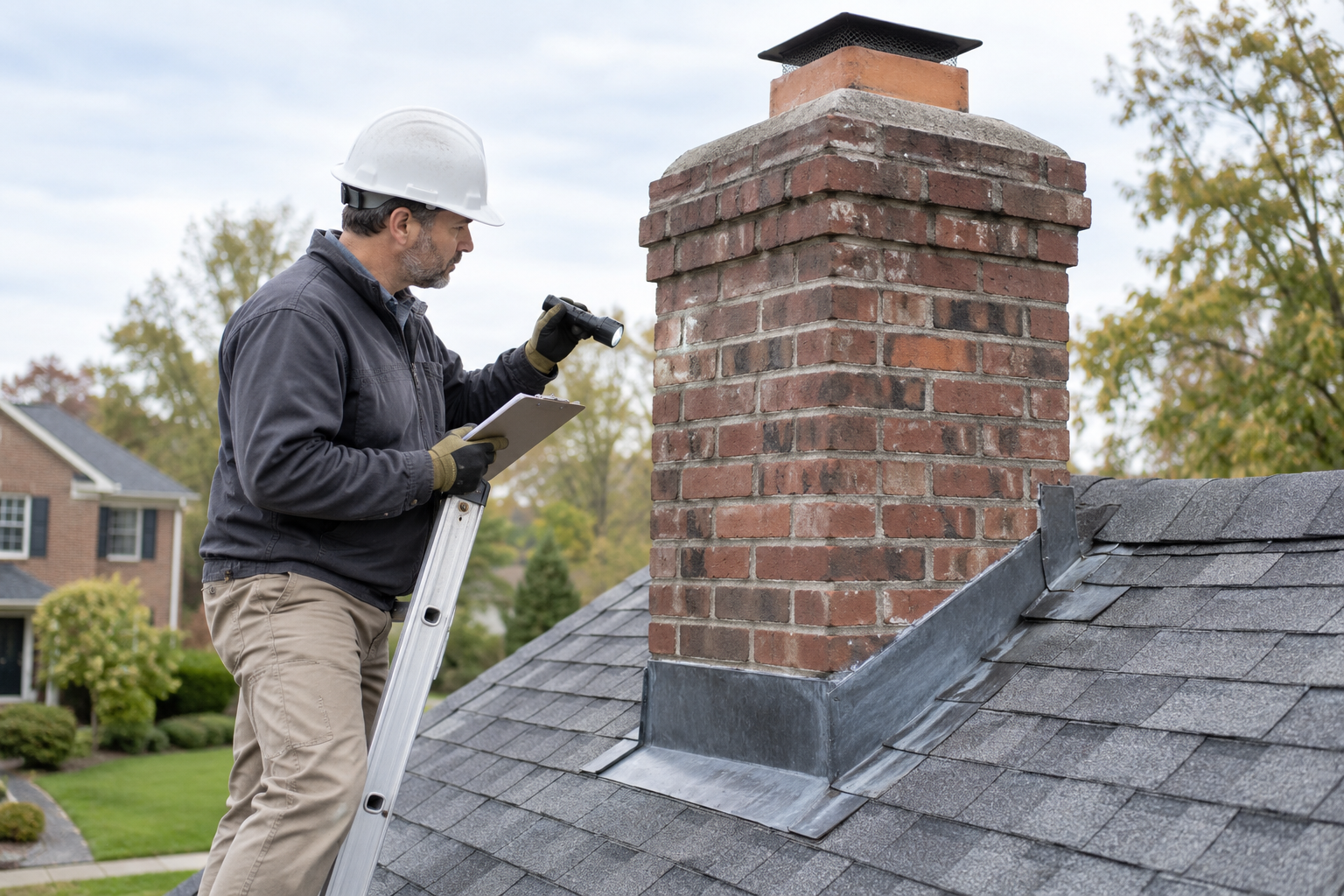
The best chimney repair services diagnose the cause before selling the cure. For most homeowners, that means hiring a company that documents the damage, explains what is urgent versus optional, provides an itemized written scope, and can show appropriate insurance, local licensing where required, and relevant chimney credentials. Compare the same scope across more than one quote—especially for masonry rebuilding, relining, flashing replacement, or work that changes a venting system.
This guide focuses on choosing chimney repair services, not on repeating repair instructions already covered elsewhere on Chimney Insight. It will help you prepare for an inspection, compare proposals, spot weak scopes, and decide when a limited homeowner repair is reasonable—and when the fireplace should stay unused until a qualified professional evaluates it.
Start With the Problem, Not a Product
A stain near a fireplace does not automatically mean the chimney needs rebuilding. Water may enter at the cap, crown, mortar joints, flashing, roof transition, or even through condensation. Smoke in the room can involve draft, blockage, appliance setup, house depressurization, or a damaged flue. Pieces of tile in the firebox can point to liner deterioration rather than a surface masonry issue.
Because several failures can create similar symptoms, the first visit should establish a diagnosis. Ask the technician to show you where the defect is, how it was observed, what could happen if it is left alone, and which repair addresses the underlying cause. Our guide to chimney inspection Levels 1, 2, and 3 explains why the appropriate inspection scope changes with the situation.
Which Chimney Repair Specialist Do You Need?
| Visible problem or project | Useful starting specialist | What the proposal should address |
|---|---|---|
| Loose mortar, spalling brick, leaning stack | Chimney masonry contractor | Extent of removal, compatible mortar, brick replacement, crown condition, structural stability |
| Interior water stains or active leak | Chimney professional and, when roof details are involved, qualified roofer | Confirmed entry point, flashing condition, crown/cap/joints, repair sequence |
| Cracked, missing, or deteriorated flue liner | Chimney venting or relining specialist | Inspection evidence, appliance compatibility, liner type and sizing, insulation, permits |
| Damaged cap or top-sealing component | Chimney service company | Flue measurements, material, mounting method, clearance from flue gases |
| Fire, sudden smoke problem, fallen debris, or suspected blockage | Qualified chimney inspection professional before further use | Safety status, required inspection level, documented damage, repair priorities |
A company offering chimney repair services may cover several of these specialties, but do not assume every sweep is a mason or every roofer understands chimney venting. Ask who will perform each part and whether subcontractors will be used.
How to Screen Chimney Repair Services
1. Verify the business and the person doing the work
Check the company’s legal business name, physical service area, liability insurance, and workers’ compensation coverage where applicable. Contractor licensing rules vary by state and locality, so verify the relevant license with the issuing government agency instead of relying only on a logo on a website. Ask whether the technician has chimney-specific education or credentials. The Chimney Safety Institute of America provides a public route for locating and verifying CSIA-certified professionals.
2. Ask how the diagnosis was reached
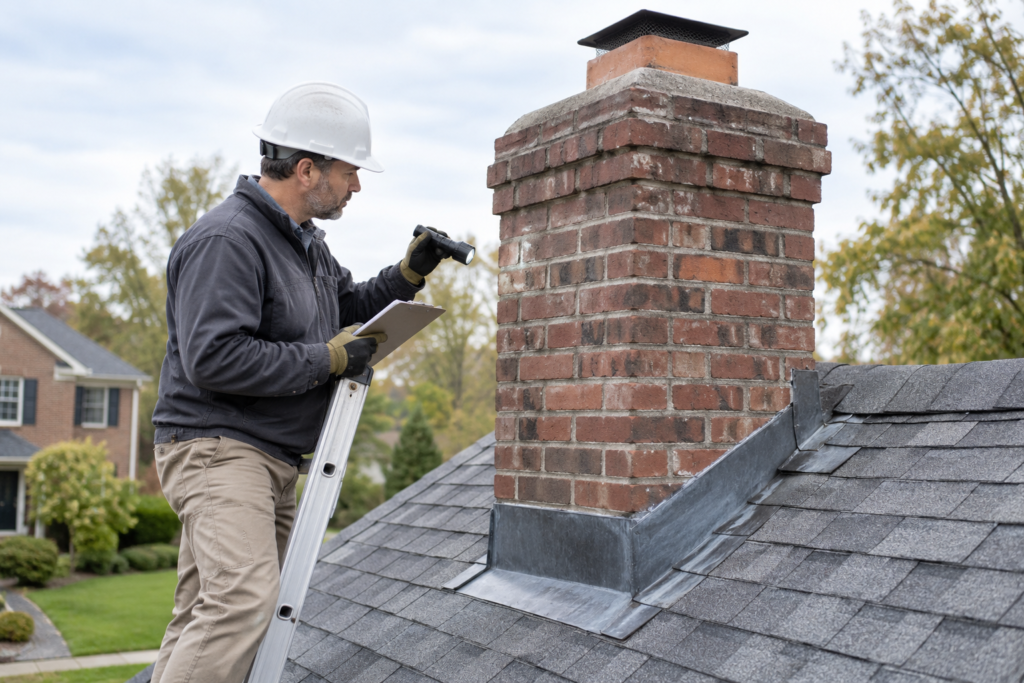
For chimney repair services, a useful proposal connects evidence to the recommended repair. Photos should be identifiable and tied to a location: crown, flashing, mortar joint, smoke chamber, liner, or appliance connector. For hidden flue conditions, ask whether a camera scan was performed and what the images show. A vague statement such as “chimney unsafe” is not enough for a major project without supporting detail.
3. Compare itemized written scopes
When comparing chimney repair services, two totals cannot be compared if one includes demolition, debris removal, scaffold access, permits, liner insulation, and cleanup while the other does not. The Federal Trade Commission’s homeowner guidance recommends getting multiple estimates and says a written estimate should describe the work, materials, completion date, and price. Treat that as the minimum, then add chimney-specific details.
4. Review the repair system, not just the brand name
With chimney repair services, good materials cannot compensate for the wrong diagnosis or poor preparation. For masonry work, ask what will be removed, how joints will be prepared, and whether the replacement mortar is compatible with the existing brick. For waterproofing, confirm that cracks and joints are repaired first and that the proposed treatment is appropriate for masonry. For flashing, ask whether the scope is a temporary seal, a localized repair, or full replacement of step and counterflashing.
The Chimney Repair Quote Checklist
- Company legal name, address, phone number, and contact person
- Proof of current insurance and any license required in your jurisdiction
- Specific defect and the evidence supporting the diagnosis
- Exact work area and components included
- Material type, grade, or system—not merely “premium materials”
- Access method, roof protection, dust control, and debris removal
- Permit responsibility and inspection requirements, if applicable
- Start window, estimated duration, weather limitations, and cleanup
- Payment schedule tied to work milestones
- Written workmanship and manufacturer-warranty terms
- Change-order process for concealed damage
- Photos or documentation supplied at completion
If water is the issue, compare the proposed scope with our leaky-chimney diagnostic guide and the more focused guide to identifying chimney-flashing leaks. These can help you ask whether the proposal addresses the actual entry point rather than simply coating the visible surface.
Red Flags That Deserve a Pause
Reputable chimney repair services should explain urgency with inspection evidence, not pressure.
- Unsolicited urgency: a contractor arrives without being called and says the chimney must be repaired immediately.
- Diagnosis without inspection: a major rebuild or relining recommendation is made from the ground with no documented evidence.
- One-line proposal: “repair chimney” with no materials, quantities, areas, or exclusions.
- Large cash payment up front: especially when the company resists a traceable payment method or written schedule.
- No permit discussion: for work that may alter structure, venting, fuel-burning equipment, or local code compliance.
- Universal cure: sealant, waterproofing, or a coating is offered as the answer to movement, missing mortar, failed flashing, or a damaged liner.
- Credential pressure: a badge is shown, but the technician’s individual status cannot be verified.
- No pause for safety: the company encourages continued fireplace use despite a suspected flue defect, fire event, blockage, or carbon-monoxide concern.
DIY Limits: What a Homeowner Can Safely Do
Homeowners can document symptoms from safe locations, photograph indoor stains, note when leakage occurs, record odors or smoke behavior, and gather previous invoices. You can also clear belongings away from the hearth and make the appliance accessible for inspection.
Do not climb onto a roof without proper training and fall protection. Do not attempt structural masonry work, liner repair, relining, venting changes, or post-fire clearance decisions as a casual DIY project. Stop using the fireplace or connected appliance if you see falling liner fragments, major masonry movement, smoke entering rooms, evidence of a chimney fire, or an active carbon-monoxide alarm. Leave the home and contact emergency services for an alarm or immediate danger.
For a limited crown surface issue, our chimney-crown repair and sealing guide explains the difference between small surface treatment and damage that needs professional correction. If the stack itself is deteriorated, review the factors in our chimney-stack rebuilding guide before comparing bids.
Repair Products to Discuss Before You Buy
As an Amazon Associate, Chimney Insight earns from qualifying purchases.
Products discussed alongside chimney repair services are relevant only to limited, correctly diagnosed surface or flashing work. They are not substitutes for rebuilding unstable masonry, replacing failed flashing, or repairing a damaged flue. Confirm substrate compatibility and the repair scope before buying.
Sashco Through the Roof Sealant
Best suited to: a homeowner or contractor addressing a localized exterior roof penetration or flashing joint after the leak path has been identified. Practical advantage: it is sold specifically as an exterior roof sealant, making it more relevant than an unspecified indoor caulk. Honest limitation: sealant cannot correct poorly designed, loose, corroded, or missing flashing, and it should not be used to conceal structural movement.
Loctite Roof & Flashing Sealant
Best suited to: limited exterior flashing repairs where the contractor confirms the product is compatible with the roof and metal surfaces. Practical advantage: the cartridge format supports controlled application along a prepared joint. Honest limitation: it is not a replacement for step flashing or counterflashing and should not be treated as a permanent fix for a failed flashing assembly.
ChimneyRx Brushable Crown Repair
Best suited to: small, non-structural crown surface cracks after the crown has been inspected and loose material has been addressed. Practical advantage: its brushable format is intended for chimney-crown surface repair. Honest limitation: it will not rebuild a crumbling crown, correct improper slope, or stabilize separated masonry.
How to Compare Two Different Recommendations
When bids from chimney repair services disagree, do not average the prices. Put the scopes side by side and mark the diagnosis, repair area, material, access, permit, warranty, and exclusions. Then ask each company to explain the differences in writing. One bid may be a temporary water-management measure while another replaces the failed assembly; both may be technically plausible but solve different problems.
For a high-cost or irreversible project, consider paying for an independent inspection before authorizing the repair. The cost of a second diagnosis can be small compared with relining, rebuilding, or removing sound masonry unnecessarily.
Conclusion
Choosing chimney repair services is less about finding the lowest number and more about finding the clearest chain from evidence to repair. Verify the company, demand an itemized scope, compare like with like, and keep safety decisions separate from cosmetic improvements. If the defect involves the flue, structure, fire damage, gas venting, or carbon monoxide, leave the system unused until a qualified professional confirms the next step.
Frequently Asked Questions
How many chimney repair estimates should I get?
When comparing chimney repair services for substantial non-emergency work, get multiple written estimates based on the same inspection evidence and scope. A second opinion is especially useful for relining, partial rebuilding, full-stack rebuilding, or complicated water entry.
Should a chimney repair company provide photos?
Photos are helpful when they identify the location and defect, but they are not a diagnosis by themselves. Ask the technician to connect each image to the recommended work and to provide completion photos for concealed or rooftop repairs.
Can a roofer repair chimney flashing?
Many qualified roofers can repair or replace flashing, while chimney companies may address adjacent masonry and crown issues. For complex leaks, the best scope may require both trades with one party clearly responsible for coordination.
Is chimney waterproofing always part of a repair?
No. Waterproofing can be appropriate for sound, porous masonry after joints and cracks are repaired, but it does not replace damaged brick, missing mortar, failed flashing, or a defective crown.
When should I stop using the fireplace?
Stop use when there is suspected flue damage, fallen liner or masonry debris, evidence of a chimney fire, an unresolved blockage, smoke entering the home, major structural movement, or a carbon-monoxide alarm. Seek emergency help for an active fire, alarm, or immediate danger.