Is Your Chimney Cap Missing or Damaged? 9 Signs to Check
By Chimney Insight Editorial Team
Posted on October 20, 2026
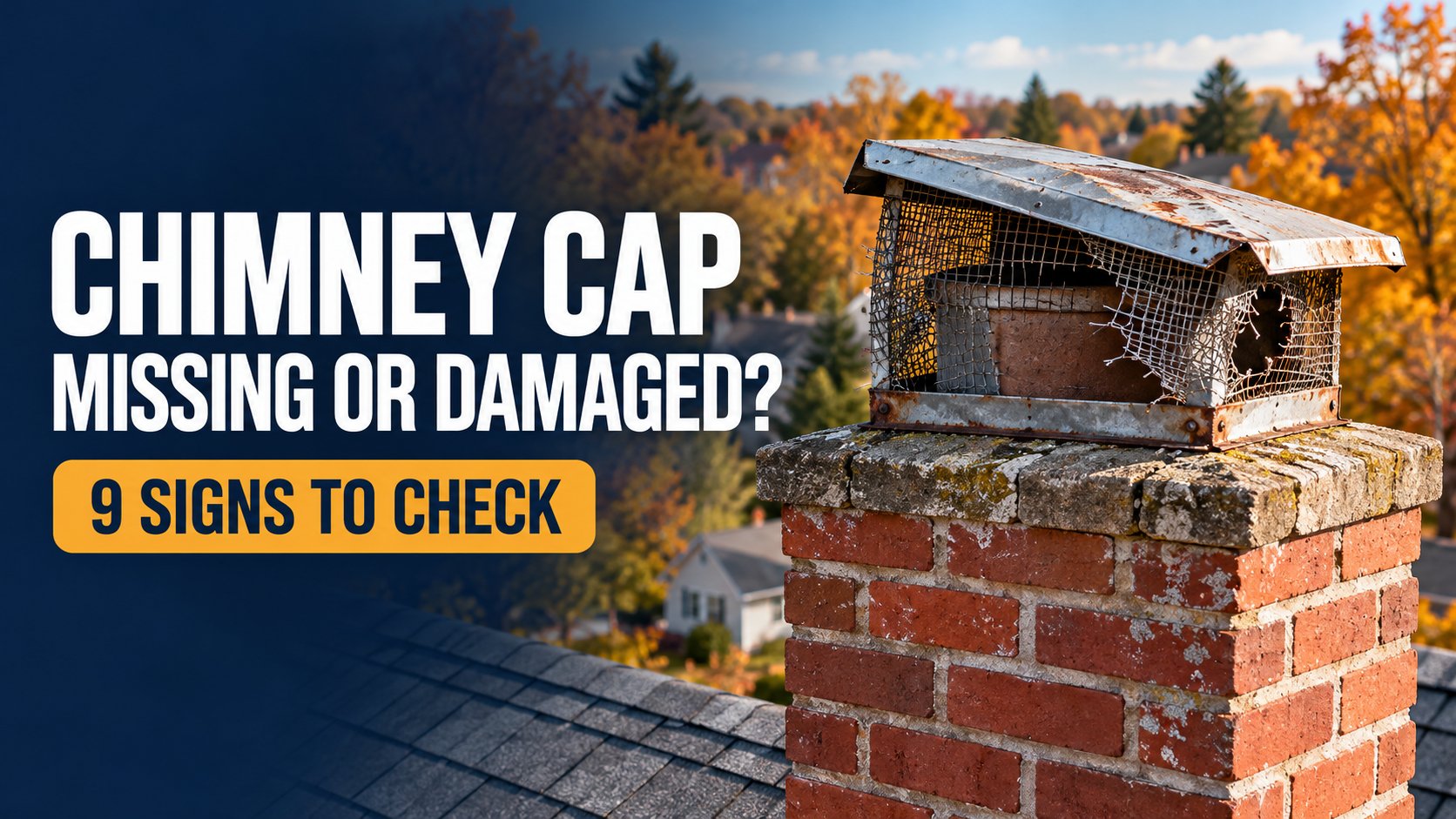
The clearest signs you need a chimney cap repaired or replaced are an exposed flue opening, a shifted cap, a damaged lid, torn screening or metal that has rusted through. Water, animal activity and new rattling can also justify an inspection, but those symptoms do not prove the cap is the only problem.
This checklist helps you collect observations from the ground and explain them to a chimney professional. It focuses on recognizing damage. For choosing a replacement after the defect is confirmed, use our chimney cap buying guide.
PRODUCT TO CONSIDER AFTER INSPECTION
A replacement option to compare
As an Amazon Associate, Chimney Insight earns from qualifying purchases.

Chimney Cap 17×29 Chimney Cover
Considering a replacement? This is one of our supplied chimney-cap options to check after a professional identifies the defect and the correct termination type.
Before buying: The name “17×29” alone does not establish compatibility. Confirm the current fit range, installation instructions and suitability for your system. A cap will not repair damaged flashing or masonry.
Cap, crown or chase cover: identify the part
A cap is the protective termination above the flue. On a traditional masonry chimney, it may look like a metal lid above a screened opening. The crown is the masonry surface around the flue tiles. A chase cover is the larger sheet-metal top commonly found on a framed chimney enclosure. These parts can fail separately.
Confusing them leads to the wrong repair. A sound cap cannot correct a split crown, and a new chase cover does not automatically solve a defective termination. Factory-built systems may require specific approved terminations. A generic cap is not suitable simply because its diameter appears close.
9 missing or damaged chimney cap symptoms to investigate
1. The flue opening is visibly exposed
From a safe viewpoint, you may see the open top of a clay flue with no protective cover above it. Compare with earlier photographs if you have them. A cap that disappeared after a storm is a different situation from an unfamiliar chimney whose original configuration is unknown.
Do not decide from one distant angle alone. Some terminations are low-profile or obscured by a larger cover. Ask for a photograph of the complete termination during inspection, including how it attaches and what system it serves.
2. The cap is tilted or no longer seated
A crooked cap is a visible reason to investigate. The attachment may be loose, the mounting surface may have deteriorated, or the component may be unsuitable for the chimney. Wind can reveal a weakness that was already present rather than being the entire cause.
Keep clear of the area where a loose part could fall. Request inspection of both the cap and its support. Tightening fasteners without checking the underlying flue tile or crown can leave the real defect unresolved.
3. The rain lid is bent, detached or missing
A lid that no longer sits over the opening may leave part of the flue exposed. Look for obvious distortion or a missing panel after severe weather. Record what you can see without trying to bend the metal back from a ladder.
Ask whether the supports, welds or surrounding assembly are also affected. Changing the shape or height without approved instructions can create another problem. A professional should distinguish repairable damage from a part that needs replacement.
4. Screening is torn or has a visible gap
Broken mesh, a separated seam or an opening around the frame deserves attention. Take a zoomed photograph if the damage is visible from the ground. An intact-looking lid does not mean the entire cap is intact.
The repair should restore the appropriate configuration, not add another layer of random mesh. Have the technician confirm compatibility with the appliance, fuel and chimney instead of selecting screening by appearance.
5. Metal has holes or severe corrosion
Surface discoloration alone is not enough to judge remaining strength. More concerning observations include a perforated lid, separated edges or pieces that have fallen away. Ask for close photographs showing the supports and attachment points.
When comparing repair and replacement, ask what sound material remains. Painting over corrosion does not establish that a component is serviceable. Other metalwork may also be responsible for rust-colored staining.
6. You hear new rattling near the chimney top
A new metallic rattle during wind is a useful clue, especially after a storm. Record when it happens and whether anything visible moves. Flashing, a chase cover or another nearby component can make a similar sound.
Describe the observation rather than insisting on a diagnosis: a metal rattle that began after a storm is useful information. Do not test the source by pulling parts or operating the fireplace.
7. Water appears after rain
Note where moisture appears and whether it follows steady rain, wind-driven rain or melting snow. An exposed termination is one possible entry point, but flashing, masonry, the crown and roof details also need assessment.
A cap replacement should not be presented as a guaranteed cure without tracing the leak. Photograph stains and wet areas, then ask which observations identify the entry route.
8. There are nesting sounds or unfamiliar debris
Scratching, chirping, twigs or other material warrants checking whether the flue is occupied or obstructed. A missing lid or damaged screen may explain access, but an inspection must establish the actual route and condition.
Do not light a fire to remove an animal or seal an opening while wildlife may be inside. Arrange appropriate professional help and have applicable wildlife requirements checked before exclusion work.
9. An inspection identifies blocked or unsuitable components
Some defects cannot be seen from the yard. An inspection may show obstructed screening, an incompatible termination or damage hidden behind the lid. Ask for the specific finding, photographs and the compatibility requirement supporting the recommendation.
Cleaning may be appropriate for deposits; replacement may be necessary for structural failure or incompatibility. Neither should be assumed automatically. The termination must be assessed as part of the complete exhaust system.
What you can check safely from the ground
- Identify the system: Note which appliance the chimney serves, if known.
- Take photos from two safe viewpoints: Use zoom instead of climbing.
- Compare with older photos: Look for a missing part or changed position.
- Record the timing: Include storms, rainfall and new sounds.
- Document accessible interior evidence: Stains, dampness or debris can help.
- Arrange an assessment: Explain any change in operation or visible damage.
A ground-level check cannot confirm a clear flue, secure fasteners or sound hidden metal. The U.S. Fire Administration recommends annual professional chimney and heating-equipment cleaning and inspection. CSIA homeowner guidance explains why inspection matters even when a chimney is used infrequently.
Repair, replacement or another chimney repair?
Ask about repair or cleaning
If the component is compatible and structurally sound, ask whether attachment repair or cleaning addresses the documented problem. Have the technician explain why the existing part remains serviceable.
Ask about replacement
If pieces are missing, metal has failed or the termination is incompatible, request the correct replacement specification. Include any damaged mounting surface in the scope.
When the cap is sound but water enters elsewhere, direct work toward the diagnosed defect. Crown damage, flashing problems and failing mortar require different remedies. Our chimney mortar repair guide explains the joint-repair issue, while the brick spalling guide addresses deteriorating brick faces.
Questions before approving a quote
- Can you show which part failed and provide photographs?
- Does this system require a specific termination?
- Is the cap the confirmed problem or one of several possible causes?
- Does the mounting surface need repair first?
- What does the quote include for access, installation and cleanup?
- Will you provide completion photos and explain any restrictions on use?
Keep the estimate, component details and completion photos with your maintenance records. A useful report distinguishes observed damage from suspected causes and identifies anything requiring further investigation. Ask the contractor to explain uncertainties before accepting a solution.
BEFORE YOU CHOOSE
Check the fit before replacing your cap
Chimney Cap 17×29 Chimney Cover
If your inspection confirms a replacement is needed, compare this supplied option with the exact dimensions, mounting method and approved termination requirements for your chimney.
Before buying: The name “17×29” alone does not establish compatibility. Confirm the current fit range, installation instructions and suitability for your system. A cap will not repair damaged flashing or masonry.
What to do next
If your cap is missing, shifted or visibly broken, arrange an inspection rather than shopping by size alone. If the only clues are water or noise, collect the timing and photographs so the cause can be traced. Choose a replacement after confirming both the system and the defect.
For attachment questions, read how chimney caps are mounted. The chimney flue guide explains the wider exhaust path. Use the annual maintenance checklist for ongoing care.
Frequently asked questions
Does water in the fireplace mean the cap is missing?
No. A missing cap is one possibility, but the crown, flashing, masonry and other details may admit water. Identify the entry route before approving a repair.
Can I check the cap without climbing onto the roof?
You can document visible changes with zoomed ground-level photos. Hidden damage, attachment security and flue condition require professional assessment.
Should a rusty cap always be replaced?
Not based on color alone. Have the remaining metal, seams, supports and mounting assessed. Holes or structural failure are more significant than staining.
Can I fit any cap that matches the opening?
No. The termination must be compatible with the chimney and appliance. Factory-built systems may require specific listed parts.
Cover: generated editorial illustration, not a photograph of an inspected chimney.