Gas vs Electric Fireplace: Cost, Heat & Installation
By Chimney Insight Editorial Team
Posted on October 13, 2026
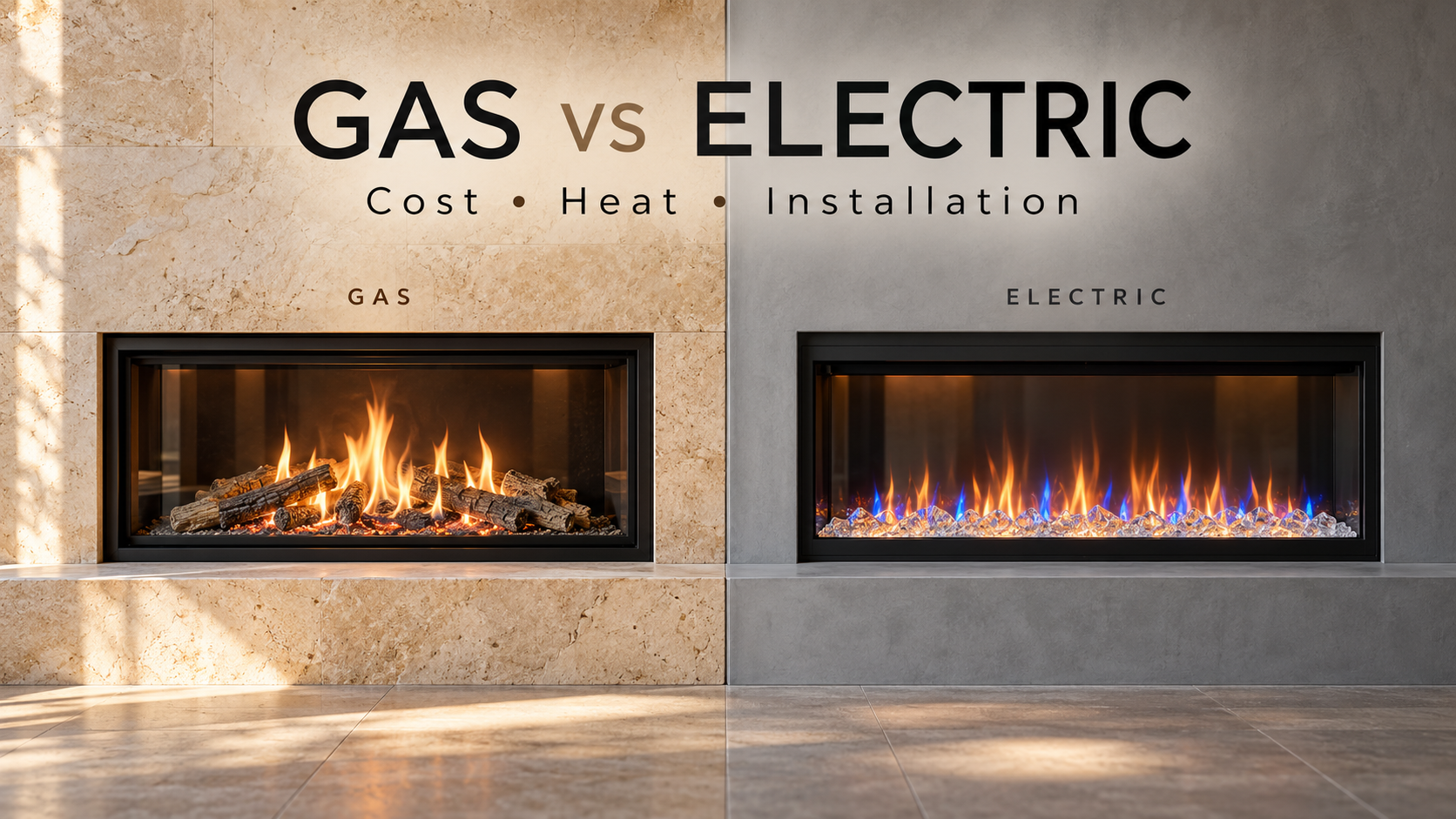
A gas fireplace usually wins when you want stronger, flame-based supplemental heat and already have a suitable gas connection and venting path. An electric fireplace usually wins when simple installation, flexible placement, low routine maintenance, and flame effects without combustion matter more. Neither is automatically cheaper: the better value depends on the room, installation work, local utility rates, how often you use it, and whether you need ambiance or meaningful heat.
This gas vs electric fireplace comparison separates the decision into heat, installation, operating cost, maintenance, safety, appearance, and outage performance. It focuses on built-in or wall-mounted electric units and properly installed gas fireplaces—not portable space heaters or unvented appliances used against local rules.
Gas vs Electric Fireplace at a Glance
| Decision factor | Gas fireplace | Electric fireplace |
|---|---|---|
| Best fit | Flame-based supplemental heat and a permanent installation | Ambiance, simpler installation, and room-by-room flexibility |
| Venting | Depends on appliance type; many units require a listed vent system | No combustion vent or chimney |
| Heat character | Often suited to sustained supplemental room heat | Typically resistance heat from a fan-forced or radiant element |
| Installation scope | Gas supply, venting, clearances, permits, and professional commissioning may apply | Plug-in or hardwired, depending on model and circuit requirements |
| Routine upkeep | Periodic professional inspection and burner, glass, vent, and control checks | Dust removal and electrical inspection if operation changes |
| During a power outage | Model-dependent; fans, ignition, or controls may need electricity | No flame effect or heat without power |
Which One Produces Better Heat?
Do not compare the two by flame appearance alone. Gas creates heat through combustion, while an electric fireplace uses an electrical heating element. A gas unit designed and listed as a heater may be a better choice when the goal is sustained supplemental heat in a living area. Electric units can make a small or moderate room more comfortable, but their heating output is constrained by the appliance and the electrical circuit that supplies it.
Room size is only the beginning. Ceiling height, insulation, window area, outdoor temperature, floor plan, and drafts determine how much heat stays in the space. A large advertised coverage number does not guarantee comfort in a leaky room. Ask for the appliance’s listed input and output information, then have the installer evaluate the actual space instead of relying on a marketing headline.
Electric resistance heat converts electricity to heat at the point of use, but that does not automatically make it the least expensive way to heat a room. Utility prices differ, and a fireplace is not the same as a whole-home heat pump. Likewise, a gas fireplace’s useful heat depends on its design, venting, controls, and installation. Treat both as zone-heating options unless a qualified professional confirms a broader heating role.
Installation: The Biggest Practical Difference
What a gas installation may require
A gas fireplace can involve a gas-line assessment, shutoff location, pressure and leak testing, combustion-air and venting requirements, clearances to combustibles, electrical power for controls, and permits or inspection. Converting an existing opening is not simply a matter of placing a burner in the firebox. The existing chimney, liner, and termination may or may not be suitable for the selected appliance.
If the project involves an existing chimney, start with our guide to when a gas fireplace needs a chimney or direct vent. Homeowners considering an unvented model should also understand the important differences in our direct-vent vs ventless gas fireplace comparison. Local restrictions can be stricter than general product guidance, so confirm the rules with your building department before buying.
What an electric installation may require
Some electric fireplaces plug into a compatible receptacle; others are intended to be hardwired. “No vent required” does not mean “no planning required.” The circuit must match the manufacturer’s instructions, the cord cannot be pinched or concealed improperly, and the unit needs its stated clearance from curtains, furniture, trim, and other materials. A dedicated circuit may be required or advisable for certain models.
Built-in electric units also need a properly framed opening and service access. Before cutting a wall, locate wiring, plumbing, ducts, and structural members. If the unit will share a circuit with other loads or repeatedly trips a breaker, stop and have a licensed electrician evaluate the installation.
Gas vs Electric Fireplace Cost: Compare the Whole Project
A useful cost comparison has four columns: appliance, installation, energy, and maintenance. A low appliance price can be misleading if the room needs new wiring, a gas line, structural work, a vent route, finishing materials, or permit fees. Conversely, a more expensive appliance may fit an existing connection and require less construction.
- For gas: price the appliance, vent components, gas supply work, electrical connection, framing or masonry changes, permits, commissioning, and future service.
- For electric: price the appliance, outlet or hardwired circuit, wall or cabinet work, finish carpentry, and any panel upgrade needed for the load.
- For both: compare warranty terms, replacement parts, expected use, and the local cost of the energy each unit consumes.
Do not use a national fuel-price average as your personal answer. Check your recent utility bills for the actual electricity rate and gas charges, including fixed fees. Then compare the model’s rated consumption at the settings you expect to use. If you want flame effects without heat for much of the year, an electric unit that separates the visual effect from the heater can change the operating-cost calculation.
Maintenance and Expected Ownership Work
Gas fireplace maintenance
A gas fireplace should be kept clean and serviced according to its manual. Service may include inspecting the burner and ignition system, confirming proper flame appearance, checking the glass and gasket, examining the vent termination, testing controls, and looking for corrosion, debris, soot, or signs of incomplete combustion. Decorative media and logs must remain in their specified positions; rearranging them can affect flame behavior.
The U.S. Consumer Product Safety Commission notes that fireplaces and other fuel-burning equipment can produce carbon monoxide when fuel does not burn completely. Its carbon-monoxide guidance emphasizes correct use and regular maintenance of fuel-burning appliances. If a chimney or shared vent is involved, the appropriate inspection depends on the system and any changes made; our chimney inspection levels guide explains the general framework.
Electric fireplace maintenance
Electric units avoid burners, gas valves, combustion deposits, and vent inspections. Routine care is usually limited to keeping air inlets and outlets free of dust, cleaning the display as instructed, and watching for cord, plug, receptacle, fan, or control problems. Never spray cleaner into the heater or block an intake with furniture or fabric.
Noise changes can be useful clues. A grinding fan, hot-plastic odor, flickering unrelated to the intended effect, discolored outlet, or warm plug needs attention. Unplug a plug-in model before cleaning if the manual directs it, and do not open sealed electrical components unless you are qualified and the manufacturer authorizes the procedure.
Safety: Combustion Risk vs Electrical Risk
Gas and electric fireplaces have different hazards, not a “safe” and “unsafe” side. A gas appliance adds fuel, flame, hot glass, exhaust, and possible carbon monoxide. An electric appliance adds electrical load, heating elements, hot surfaces, and fan or wiring failure risk. Both need working smoke alarms, suitable clearances, supervision around children and pets, and installation exactly as listed.
The U.S. Fire Administration’s heating fire-safety guidance advises keeping anything that can burn at least three feet from heating equipment. Follow the product manual when it requires a larger clearance. For a gas unit, install carbon-monoxide alarms in the locations required by local rules and the alarm manufacturer. For an electric unit, do not use an extension cord or power strip unless the fireplace manufacturer explicitly permits it.
Call for help immediately if you smell gas, a carbon-monoxide alarm sounds, flames or soot appear outside the intended area, wiring scorches, or smoke develops. Leave the building before contacting the gas utility or emergency services when a gas leak may be present.
Appearance, Sound, and Everyday Convenience
Gas tends to deliver the depth and movement of a real flame, with heat that arrives quickly. The tradeoff is a permanent fuel-burning installation, hot viewing glass, and regular service. Some gas units also use a fan, so “gas” does not necessarily mean silent.
Electric fireplaces provide more placement flexibility and can offer adjustable flame color, brightness, ember effects, and flame-only operation. The visual effect is simulated, which some homeowners enjoy and others find less convincing. A fan-forced heater may be audible, and reflective glass can look different in a bright room.
View both types operating before deciding. Stand at your normal seating distance, listen with the room quiet, test the controls, and check how the display looks in daylight. If you are comparing a new appliance with preserving an existing masonry firebox, our fireplace vs insert guide can help clarify the broader renovation choice.
Power Outages and Backup-Heat Expectations
An electric fireplace stops heating when utility power is unavailable. A gas fireplace may also lose some or all function if its ignition, valve, blower, thermostat, or safety controls require electricity. Some models are designed for limited operation without household power; others are not. The manual for the exact model—not a general statement about gas—is the deciding source.
Do not purchase either fireplace as emergency heat until you have confirmed its outage behavior, ventilation needs, and safe operating procedure. Never bypass a safety control, use a portable generator indoors, or modify a plug or circuit to keep the unit running.
How to Choose in Five Steps
- Define the goal. Decide whether you mainly want ambiance, occasional chill removal, or sustained supplemental heat.
- Audit the room. Record dimensions, insulation issues, window area, existing gas and electrical service, and possible vent routes.
- Check local constraints. Confirm permit, venting, fuel-gas, electrical, and unvented-appliance rules before selecting a model.
- Compare installed ownership cost. Request itemized quotes and estimate energy use using your actual utility rates.
- Match the appliance to the household. Consider hot glass, children and pets, control simplicity, noise, maintenance willingness, and outage expectations.
Choose gas when you value real flame and stronger supplemental heat, have a practical fuel and venting path, and are comfortable with professional installation and periodic service. Choose electric when flexibility, easy flame-only use, simpler upkeep, and avoiding on-site combustion are higher priorities.
Conclusion
The best gas vs electric fireplace choice is the one that fits the room and the job. Gas is often the more convincing heating appliance, but it brings fuel, venting, code, and maintenance considerations. Electric is easier to place and maintain, but its heat depends on electrical capacity and disappears in an outage. Compare exact models, installed scope, local energy rates, and safety requirements before you buy.
Frequently Asked Questions
Is a gas fireplace cheaper to run than an electric fireplace?
Not universally. Operating cost depends on the appliance’s rated use, local gas and electricity prices, fixed utility charges, and how long and at what setting you run it. Compare exact model data using your recent utility rates.
Does an electric fireplace need a dedicated circuit?
It depends on the model, wattage, installation method, and other loads on the circuit. Follow the manufacturer’s instructions and have an electrician evaluate the circuit when the unit is hardwired, shares a heavily loaded circuit, or causes breaker trips.
Can a gas fireplace work during a power outage?
Some can operate in a limited way, while others need electricity for ignition, controls, valves, or blowers. Check the exact appliance manual and never bypass a safety feature.
Do electric fireplaces need a chimney inspection?
The electric appliance itself does not create combustion exhaust and does not need a chimney. However, an old chimney or fireplace opening may still need evaluation if it will remain part of the building, shows damage, or is being altered during installation.
Which type is better for a bedroom?
The answer depends on local code, the appliance listing, room size, clearances, ventilation, electrical service, and household needs. Do not assume a gas or electric unit is bedroom-approved; verify the exact model and installation rules with the authority having jurisdiction.