Does a Gas Fireplace Need a Chimney?
By Chimney Insight Editorial Team
Posted on April 26, 2025
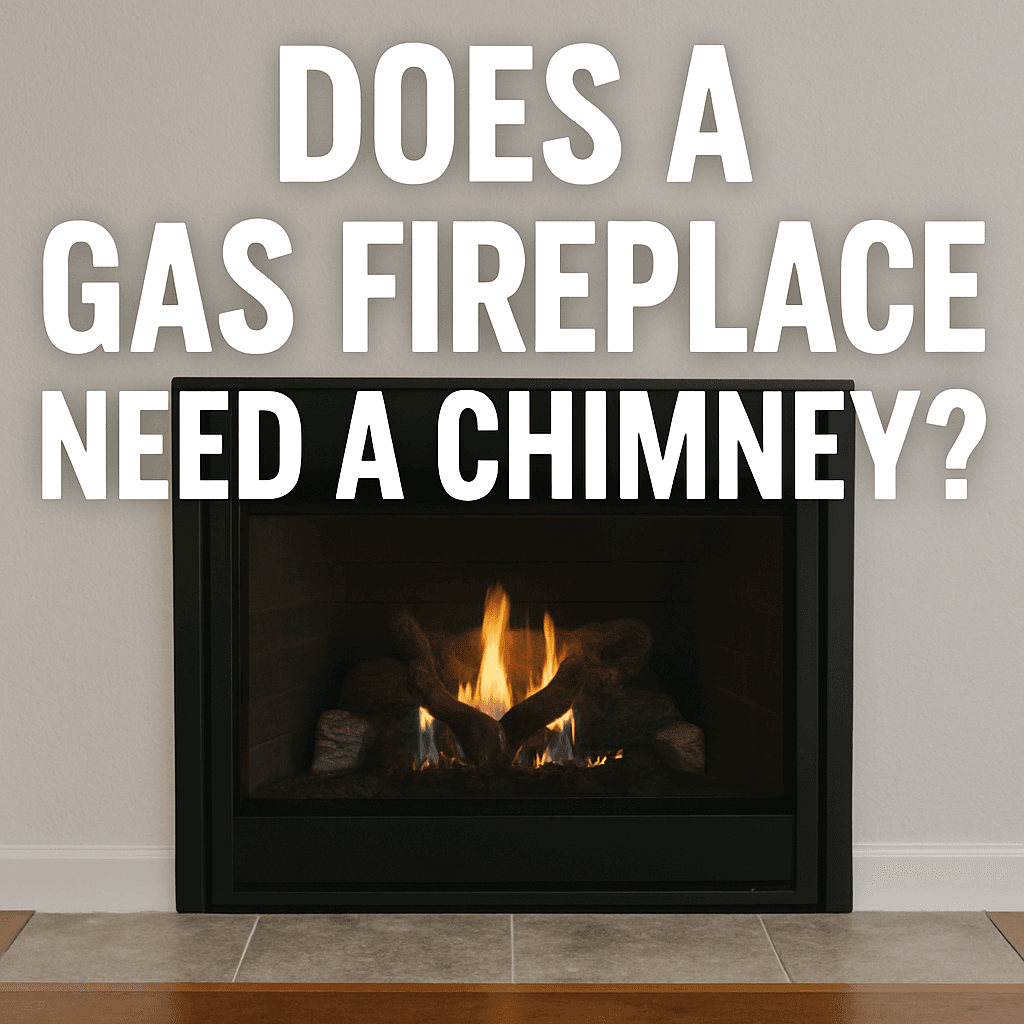
There’s nothing quite like the warm, flickering glow of a fireplace on a cool evening. But the thought of chopping wood, dealing with soot, and yearly chimney sweeps can be a major deterrent. This is where the modern convenience of a gas fireplace shines—instant ambiance at the flick of a switch. But this convenience leads to one of the most common questions we hear from homeowners: “Do I still need a chimney for a gas fireplace?”
The simple, and perhaps surprising, answer is: It depends entirely on the type of gas fireplace you choose. Unlike their wood-burning ancestors, not all gas fireplaces require that traditional brick-and-mortar structure rising from your roof. Modern venting technology has opened up a world of possibilities, allowing you to install a fireplace in rooms and homes where it was once impossible.
As a certified fireplace technician with over a decade of experience, I’m here to clear the air (pun intended). We’ll break down every type of gas fireplace, explain exactly how each one vents, explore co-axial vs. co-linear pipe systems, power venting, installation costs, building codes, maintenance requirements, and help you understand all the critical safety considerations. By the end of this guide, you’ll know precisely which option is right for your home.
The Short Answer: A Quick Guide to Gas Fireplace Venting
The Bottom Line
Whether a gas fireplace needs a chimney is determined by its design:
- Direct Vent Fireplaces: No traditional chimney needed. They use a special co-axial pipe that vents directly outside through a wall or roof.
- B-Vent (Natural Vent) Fireplaces: Yes, they need a chimney or a specific type of metal vent pipe running through the roof.
- Vent-Free (Ventless) Fireplaces: No chimney or vent needed. They exhaust a small amount of fumes directly into the room and come with major safety considerations.
- Gas Log Sets: Depends on type—vented log sets require a working chimney; vent-free log sets do not.
The “Big Four”: Every Type of Gas Fireplace Explained
To truly grasp the chimney question, you need to understand how each type of gas fireplace works. Let’s explore the mechanics, pros, and cons of all four main options on the market today.
1. Direct Vent Gas Fireplaces (The Modern Standard)
Direct vent units are the most popular and widely recommended type of gas fireplace in the U.S. today, and for good reason. They are engineered for safety and efficiency.
How They Work
A direct vent fireplace is a completely sealed unit with a fixed glass front. It draws all the air it needs for combustion from outside the home through a clever dual-chamber pipe. The inner pipe expels the exhaust fumes (like carbon monoxide and water vapor), while the outer pipe draws in fresh oxygen. Because it’s a closed system, it doesn’t affect your indoor air quality or oxygen levels whatsoever. The sealed glass front means no combustion byproducts can enter your living space under any circumstances.
Do They Need a Chimney?
No. They do not need a traditional masonry chimney. The special vent pipe can be run vertically through the roof or, more commonly, horizontally through an exterior wall. This flexibility is their biggest selling point—you can install a direct vent fireplace almost anywhere. When routing a vent through the roof, it’s just another roof penetration, similar to plumbing stacks or securing the best chimney antenna mount for your home entertainment system.
- Pros: High efficiency (70–85% AFUE), excellent safety record, flexible installation, no drafts, improves indoor air quality by not using indoor air, wide range of styles from traditional to linear contemporary.
- Cons: Can be more expensive to purchase and install than B-vent alternatives, requires placement within reach of an exterior wall or roof; the sealed glass front cannot be removed for a “real fire” feel.
2. B-Vent (Natural Vent) Gas Fireplaces (The Traditionalist)
B-Vent units, also known as natural vent fireplaces, operate more like a traditional wood-burning fireplace. They are often found in the form of gas log sets designed to be installed inside an existing masonry chimney.
How They Work
A B-Vent fireplace draws combustion air from inside your home. As the fuel burns, the hot exhaust gases—being lighter than the surrounding cooler air—naturally rise and exit your home through a vertical vent pipe or an existing chimney. It’s simple physics, but it comes with some notable drawbacks in terms of efficiency and air quality.
Do They Need a Chimney?
Yes, absolutely. This type of fireplace must have a vertical vent. It can be a dedicated, double-walled B-vent pipe that runs through your roof, or it can be routed through a pre-existing, fully functional, and properly lined wood-burning chimney. If you use an existing chimney, it must be in excellent condition. This is where regular maintenance is key; you need to ensure the structure is sound, using the best mortar for chimney repairs and knowing if your homeowners insurance covers chimney repair in case of major issues.
Even with a gas insert, an uncapped chimney is an open invitation for wildlife. Dealing with how to get a raccoon out of your chimney is a problem you want to avoid at all costs by installing a proper cap.
- Pros: Often less expensive than direct vent units, can produce a very realistic, tall, dancing flame with an open front appearance.
- Cons: Lower efficiency (often 50–65% or less, as much heat escapes up the flue), draws pre-heated indoor air for combustion, creates a potential path for drafts and back-drafting, slowly being phased out in favor of direct vent systems.
3. Vent-Free (Ventless) Gas Fireplaces (The Controversial Choice)
Vent-free fireplaces are, as the name implies, ventless. They don’t require any chimney, flue, or pipe to the outdoors. This makes them incredibly easy to install, but they come with significant debate and safety warnings that every homeowner should understand before purchasing.
How They Work
These units are designed to burn natural gas or propane with extremely high efficiency—up to 99.9% claimed. Because the combustion is so complete, they produce very low levels of exhaust, which are vented directly into the room. They are required by law to have an Oxygen Depletion Sensor (ODS) that automatically shuts the unit off if oxygen levels in the room drop to an unsafe point.
Do They Need a Chimney?
No. They require no venting of any kind. But the small amounts of carbon monoxide, nitrogen dioxide, and water vapor they produce are all released inside your home. This is why vent-free appliances are banned in California, Massachusetts, and several other states and municipalities. Many fireplace professionals refuse to install them due to long-term health and moisture concerns. Even where they are legal, building codes typically limit the BTU output of vent-free units and prohibit their use in bedrooms and bathrooms.
CRITICAL SAFETY WARNING: Vent-Free Fireplaces
While legal in some areas, vent-free fireplaces introduce combustion byproducts into your living space. They can cause significant issues for people with respiratory problems, allergies, or asthma. They release substantial moisture into the home, which can lead to mold and mildew problems in walls and ceilings over time. We strongly recommend choosing a properly vented option for the health and safety of your family.
- Pros: Highest claimed energy efficiency, low installation cost, can be installed almost anywhere legally permitted.
- Cons: Significant health and air quality concerns, banned in many areas, releases moisture into the home, can deplete oxygen levels, cannot be used in bedrooms or bathrooms in most codes, BTU output is limited by code.
4. Gas Log Sets (The Retrofit Option)
Gas log sets are perhaps the most misunderstood category, because they are not a complete fireplace system—they are a burner assembly and a set of ceramic or concrete logs designed to be placed inside an existing wood-burning firebox. They are the least expensive way to add gas convenience to an existing masonry fireplace, but they come in two completely different venting configurations that are not interchangeable.
Vented Gas Log Sets
Vented gas log sets require a fully functional, open chimney with the damper open during operation—just like a wood fire. They produce the most realistic-looking flames of any gas product, because the logs are deliberately burned with an incomplete combustion flame. The downside is that the damper must stay open, allowing significant heat loss up the flue. They are designed purely for ambiance rather than heating efficiency.
Vent-Free Gas Log Sets
Vent-free log sets operate with the damper closed (or in a fireplace with no damper) and carry all the same concerns as ventless fireplaces: no venting means combustion products stay in the room. They are slightly more efficient as a heating source than vented log sets but share all the legal restrictions and health considerations of ventless appliances.
Key Point: You cannot use a vent-free log set in a fireplace that has an open damper, and you cannot use a vented log set with the damper closed. Using either type incorrectly is a serious safety hazard. Always confirm compatibility with the manufacturer’s specifications and your local codes before purchase.
Co-Axial vs. Co-Linear Venting: What’s the Difference?
Once you’ve decided on a direct vent fireplace, you’ll encounter the choice between two types of venting pipe system: co-axial and co-linear. Understanding this distinction is essential because it affects where and how you can install the fireplace, and not all fireplaces support both systems.
Co-Axial Venting
Co-axial venting is the pipe-within-a-pipe design that is most commonly associated with direct vent fireplaces. A smaller exhaust pipe runs inside a larger intake pipe—both sharing the same axis (hence “co-axial”). The outer pipe brings fresh air from outside into the firebox for combustion, while the inner pipe carries the combustion exhaust gases back to the exterior. The genius of this design is that the cool incoming air insulates the surrounding combustible building materials from the hot exhaust gases, making the system inherently safer.
Co-axial venting uses rigid pipe sections (typically available in 4-inch to 48-inch lengths) along with 45° and 90° elbows that allow routing around obstacles. Because it does not require a vertical termination, co-axial venting is well-suited to horizontal termination through an exterior wall—the most common and cost-effective installation approach for new construction and renovation.
Co-Linear Venting
Co-linear venting uses two separate parallel pipes of the same size running side-by-side—one for intake and one for exhaust. Unlike co-axial, the pipes do not share a common axis; they run linearly beside each other (hence “co-linear”). This system is specifically designed for use inside an existing masonry chimney. The two flexible aluminum pipes are run up the length of the existing chimney flue, with one pipe handling combustion air intake and the other handling exhaust.
If you are converting a wood-burning masonry fireplace to a direct vent gas insert, co-linear venting is typically the correct choice. The flexible aluminum construction allows the pipes to navigate any bends or offsets inside the chimney flue.
| Feature | Co-Axial | Co-Linear |
|---|---|---|
| Pipe Design | Pipe within a pipe (shared axis) | Two parallel pipes side by side |
| Best Used For | New installations without an existing chimney | Converting existing masonry chimney to gas |
| Termination Direction | Horizontal (through wall) or vertical (through roof) | Vertical only (exits through existing chimney top) |
| Material | Rigid aluminum or stainless steel sections | Flexible aluminum (single continuous length) |
| Installation Complexity | Moderate; requires wall or roof penetration | Higher; liner must be sized and run through existing flue |
| Chimney Required? | No | Yes (uses existing chimney as conduit) |
Horizontal vs. Vertical Venting: “Up or Over?”
One of the first decisions a direct vent fireplace installer makes is how to route the venting from the fireplace to the exterior of the home. The industry shorthand for this decision is simply: “Up or over?”
Horizontal Venting (Through the Wall)
Venting horizontally through an exterior wall is the simpler, more cost-effective, and most common approach for new gas fireplace installations. If the fireplace is positioned against or near an exterior wall, the vent pipe runs horizontally from the back of the unit, through the wall cavity, and exits through a termination cap on the outside. The installation is relatively straightforward—the pipe run is short, no roof work is required, and labor costs are lower.
However, the placement of the exterior termination cap requires careful consideration. Building codes specify minimum clearance distances from windows, doors, gas meters, electrical outlets, and property lines. The cap must not be positioned below a window that could be opened, as exhaust gases rising along the exterior wall could re-enter the home. It also should not be located where foot traffic passes directly in front of it or in a corner where exhaust gases could recirculate.
Vertical Venting (Through the Roof)
Venting vertically through the roof is more labor-intensive and costly, but it is necessary in two situations: when the fireplace is positioned on an interior wall without reasonable access to an exterior wall, and when an existing masonry chimney is being used as the vent conduit for a gas insert.
Vertical venting provides stronger natural draft (hot gases rise), which can help with ignition and consistent flame performance. The roof penetration must be properly flashed and weather-sealed, and the termination cap at the roof must meet height clearances above the roofline as specified in the installation manual and local code.
Installer Tip: The Termination Cap Location Matters
Where the vent terminates on the exterior of your home has a bigger impact on safety and performance than most homeowners realize. Before finalizing your fireplace location, walk the exterior of your home and identify where the vent cap will end up. Ensure it is not below a window, directly beneath a deck or overhang, or in a location where wind can force exhaust gases back into the intake.
Power Venting: Installing a Fireplace Virtually Anywhere
One of the most significant—and least-discussed—innovations in gas fireplace venting is power venting. For homeowners who love a particular interior wall location but can’t easily run a standard co-axial vent to the exterior, a power vent system opens up options that would otherwise be impossible.
What Is Power Venting?
A power vent system adds a motorized fan to the venting assembly—either inline within the vent pipe run or at the exterior termination cap. This fan actively pulls combustion air through the system rather than relying on natural draft or the simple pressure differential of a sealed co-axial system. The result is that the venting can be run in configurations that standard venting cannot handle: longer runs, more elbows, downward runs, and complex routing through multiple rooms or floors.
What Power Venting Makes Possible
- Installing a gas fireplace on an interior wall of a large home where a standard vent run would exceed the manufacturer’s maximum length
- Venting a fireplace downward (below grade) and then back up to an exterior termination—necessary for some basement installations
- Running vent pipe through multiple 90° elbows that would restrict airflow in a passive system
- Achieving a “clean” installation in a large open-plan home where the vent pipe needs to travel a significant distance horizontally before reaching an exterior wall
Considerations for Power Venting
Power vent systems add cost to the installation (the fan motor is an additional component), require access to an electrical outlet for the fan, and add a piece of mechanical equipment that must be maintained and can theoretically fail. Not all gas fireplace models are compatible with power venting—confirm compatibility with the manufacturer before specifying this approach. Your installer must also ensure the fan is correctly sized for the length and configuration of the vent run.
Natural Gas vs. Propane: Does Your Fuel Type Change the Venting?
Gas fireplaces can be fueled by either natural gas (supplied through a utility company’s pipeline) or liquid propane (LP gas, typically stored in a tank on the property). The choice between these two fuel sources is primarily driven by availability—many rural areas don’t have access to natural gas lines—and cost, but it also has some important implications for venting, appliance specs, and long-term operating expenses.
Venting Differences
The venting system itself—co-axial pipe, co-linear liner, termination cap—works the same whether the fireplace burns natural gas or propane. The physical vent components are not fuel-specific. However, the fireplace burner assembly must be configured for the correct fuel type. Natural gas and propane operate at different pressures and have different combustion characteristics. A fireplace orifice sized for natural gas will burn incorrectly on propane, and vice versa, creating either an inefficient fire or a potentially dangerous overpressure condition. Most gas fireplace manufacturers offer their units in both NG (natural gas) and LP (liquid propane) configurations, or sell conversion kits. Never attempt to convert a gas appliance from one fuel type to the other without a certified technician performing the conversion.
Cost Comparison
Natural gas is generally less expensive per BTU than propane in most U.S. markets, making it the more economical choice for ongoing operation where it’s available. Propane costs vary more significantly by region, season, and delivery volume. If you have a choice between the two, natural gas typically wins on long-term operating cost. If natural gas isn’t available and you want a gas fireplace, propane is a perfectly acceptable and safe alternative—just factor in the cost of the storage tank and regular refills when budgeting.
| Factor | Natural Gas | Propane (LP) |
|---|---|---|
| Availability | Urban and suburban areas with gas utility service | Available anywhere; delivered by truck to on-site tank |
| Operating Cost | Generally lower per BTU in most U.S. markets | Generally higher per BTU; varies by region and season |
| Infrastructure | Requires gas line connection to utility grid | Requires on-site storage tank (typically 100–500 gallon) |
| Venting System | Identical to propane; same pipe, same termination | Identical to natural gas; same pipe, same termination |
| Appliance Configuration | Must be specifically configured for NG; not interchangeable without conversion kit | Must be specifically configured for LP; not interchangeable without conversion kit |
| BTU Content per Unit | ~1,020 BTU per cubic foot | ~2,488 BTU per cubic foot (denser energy) |
Gas Fireplace Formats: Insert, Built-In, Freestanding, and Log Set
In addition to venting type, gas fireplaces come in distinct physical formats that determine how they’re installed and what kind of home they work best in. Understanding these formats helps you make the right purchase from the start.
Gas Fireplace Insert
Designed to fit inside an existing masonry or factory-built fireplace opening. The insert slides into the firebox, and a new liner runs up the existing chimney. Ideal for retrofitting an existing hearth with gas convenience. The most common renovation approach.
Built-In (Zero Clearance)
A complete firebox built into the framed wall of a home with no existing chimney required. The most popular format for new construction. Can be installed on almost any interior or exterior wall with the appropriate venting run. Widest design variety.
Freestanding Stove
A gas fireplace in a stove cabinet that stands freely in a room. Can be vented directly through a nearby wall or with a short vertical vent kit. Flexible placement; easier to install in some configurations than a built-in. Often less expensive.
Gas Log Set
A burner and ceramic log assembly placed inside an existing masonry firebox. The least expensive entry point. Available in vented (requires open chimney) and vent-free configurations. Limited heat output vs. other formats.
Contemporary Linear Designs
A growing segment of the gas fireplace market is the linear (or ribbon) fireplace—long, narrow, horizontal units that produce a dramatic wall of flame rather than the traditional square or arched firebox profile. These are almost exclusively direct vent built-in units, and they are specifically designed for modern, open-plan interior architecture. Linear fireplaces often feature decorative media (glass pebbles, stones, driftwood) instead of traditional ceramic logs, and many are available in very large sizes (up to 72 inches or more in width). They require horizontal vent runs and are well-suited to installation in an exterior-facing feature wall.
Installing a Gas Fireplace in a Home With No Chimney
If your home was built without a fireplace and you want to add one, a direct vent gas fireplace is your cleanest, most practical solution. You are not limited by the absence of a chimney, and you don’t need to build one. Here’s how the process works from concept to completion.
Step 1: Choose Your Location
The ideal location for a no-chimney direct vent installation is against or near an exterior wall, minimizing the length of the vent run and simplifying installation. However, with power venting, interior walls are also possible. Consider the room’s traffic flow, furniture arrangement, and the exterior wall’s outside features before committing to a location.
Step 2: Structural Framing
A built-in direct vent fireplace requires a framed cavity in the wall to accept the firebox. For a zero-clearance unit (most modern direct vent fireplaces are rated zero-clearance to combustibles), the surrounding framing can be built with standard lumber. The installer will frame the opening to the fireplace’s specified rough opening dimensions, which are provided in the installation manual.
Step 3: Gas Line Rough-In
A licensed plumber or gas fitter must run a new gas supply line from your home’s existing gas service to the fireplace location. The line size (typically ½ inch or ¾ inch diameter) depends on the BTU input of the fireplace, the length of the run, and the total gas load on the supply line. This work requires a permit in most jurisdictions, and the gas line must be pressure-tested and inspected before being covered in the wall.
Step 4: Venting Rough-In
The co-axial vent pipe is run from the fireplace location to its exterior termination point. If venting horizontally through a wall, a hole sized to the vent pipe diameter (typically 4–6 inches) is cored through the exterior sheathing and siding. The vent pipe is assembled in sections and pushed through the wall, with the termination cap installed on the outside.
Step 5: Fireplace Installation, Surround, and Finish
The fireplace unit is placed in the framed cavity, connected to the gas line and vent system, and tested for operation. The installer then builds or installs the surrounding finish—which can range from a simple painted drywall return to an elaborate stone or tile surround and mantel. The design possibilities for the surround are essentially unlimited once the mechanical work is complete.
Converting a Wood-Burning Fireplace to Gas
Have an old, drafty wood fireplace you never use? Converting it to a gas insert is one of the best home improvement projects you can do. It eliminates drafts, provides efficient heat, and gives you a beautiful fire with zero effort.
The process typically involves:
- Thorough Inspection and Cleaning: A certified chimney sweep must inspect the entire structure for safety. Then, years of creosote and soot must be removed. This is a job for the best chimney sweep vacuum with powerful suction and advanced filtration to prevent a mess in your home.
- Running a Gas Line: A licensed plumber or gas fitter will run a gas line to the firebox location. If no gas line currently exists in the room, this involves running new pipe from the main supply—a cost and planning factor to account for.
- Installing the Insert and Liner: A direct vent insert is fitted into the opening, and a co-linear liner system is run up the length of the old chimney flue to ensure proper venting. The liner is sized to the insert’s specifications—typically a 3-inch or 4-inch pipe. The original chimney is not demolished; it becomes the conduit for the new liner. The chimney cap is replaced with a termination fitting appropriate for the direct vent liner.
- Finishing and Trim: Most gas inserts include a surround trim kit that covers the gap between the insert face and the existing firebox opening, giving the installation a clean, finished appearance.
Building Codes, Permits, and NFI Certification
Installing a gas fireplace is not a casual DIY project—it involves working with fuel gas systems, structural modifications, and combustion appliances that are subject to a comprehensive framework of building codes and local regulations. Understanding this regulatory landscape before you start protects you legally, financially, and most importantly, physically.
National Standards
Gas fireplace venting in the U.S. is governed by several national standards, including NFPA 54 (National Fuel Gas Code), NFPA 211 (Standard for Chimneys, Fireplaces, Vents, and Solid Fuel-Burning Appliances), and the International Fuel Gas Code (IFGC). These standards set minimum requirements for vent pipe materials, clearances from combustibles, termination locations, connector lengths, and much more.
Local Jurisdiction Requirements
While national standards set the floor, local jurisdictions often layer additional requirements on top of them. Your local building department may require minimum vent pipe clearance distances even if the manufacturer’s installation manual allows tighter tolerances. Some municipalities have adopted specific restrictions on vent-free appliances that go beyond state law. Always consult your local building department and obtain the required permits before any gas fireplace installation begins.
What Permits Are Required?
Most gas fireplace installations require at minimum a mechanical permit (covering the gas appliance) and often a plumbing permit (covering the gas line rough-in). Some jurisdictions also require a building permit for the structural framing work associated with a new built-in fireplace. The permit process ensures that a licensed inspector reviews and approves the installation before the gas is turned on. Unpermitted gas work is not only illegal—it can void your homeowner’s insurance and create liability issues when you sell the home.
NFI Certification: What It Means
The National Fireplace Institute (NFI) is the professional credentialing organization for the hearth products industry. An NFI-certified specialist has passed rigorous written and practical examinations covering gas appliance theory, venting systems, code compliance, and safety practices. The NFI offers three primary certifications: Gas Specialist (for gas fireplaces and inserts), Wood Specialist (for wood-burning appliances), and Pellet Specialist.
When hiring a gas fireplace installer, an NFI Gas Specialist certification is the most meaningful credential to look for. It indicates that the person installing your appliance has demonstrated professional-level knowledge of exactly the systems, codes, and safety practices that protect your home and family.
Manufacturer’s Installation Manual: The Final Word
Every gas fireplace comes with a detailed installation manual. This document is not just a suggestion—it contains the legally binding requirements for vent pipe lengths, angles, clearances, fuel types, and termination specifications for that specific unit. Local inspectors use it as the benchmark for their inspection. Never deviate from the installation manual without explicit written authorization from the manufacturer. Many manufacturers also require brand-specific venting components (called “proprietary pipe”) for warranty validity. Using a generic vent pipe on a unit that requires proprietary pipe is a warranty violation and may be a code violation.
How Much Does a Gas Fireplace Installation Cost?
Before making a final decision, it’s essential to have a realistic picture of the total cost of ownership—from purchase through installation to ongoing operation. Gas fireplace pricing has many variables, but here is a comprehensive breakdown of what to expect.
| Component | Typical Cost Range | Notes |
|---|---|---|
| Direct Vent Built-In Unit | $1,500 – $5,000+ | Wide range; entry-level vs. premium brands; linear styles cost more |
| B-Vent Insert | $800 – $2,500 | Generally less expensive than direct vent; limited to chimney homes |
| Gas Log Set (Vented) | $200 – $800 | Most affordable entry point; requires existing functional chimney |
| Venting Materials | $200 – $800 | Co-axial pipe, elbows, termination cap; higher for longer runs |
| Gas Line Rough-In | $300 – $800 | New line from supply; longer runs or difficult access increases cost |
| Installation Labor | $500 – $1,500 | Varies significantly by region; built-ins more labor-intensive than inserts |
| Surround, Mantel, Finish | $300 – $5,000+ | Extremely variable; simple painted drywall vs. custom stone surround |
| Permit Fees | $50 – $300 | Varies by jurisdiction |
| Annual Servicing | $100 – $250/year | Professional inspection and cleaning; recommended annually |
| Total Installed (Direct Vent Built-In) | $3,500 – $9,000+ | All-in estimate including unit, venting, gas line, labor, and basic surround |
Essential Safety: Carbon Monoxide, Detectors, and Glass Care
Regardless of which type of fireplace you choose, safety is paramount. The single most important device you can own is a carbon monoxide detector. Since CO is colorless and odorless, it’s the only way to be alerted to a potential leak or malfunction.
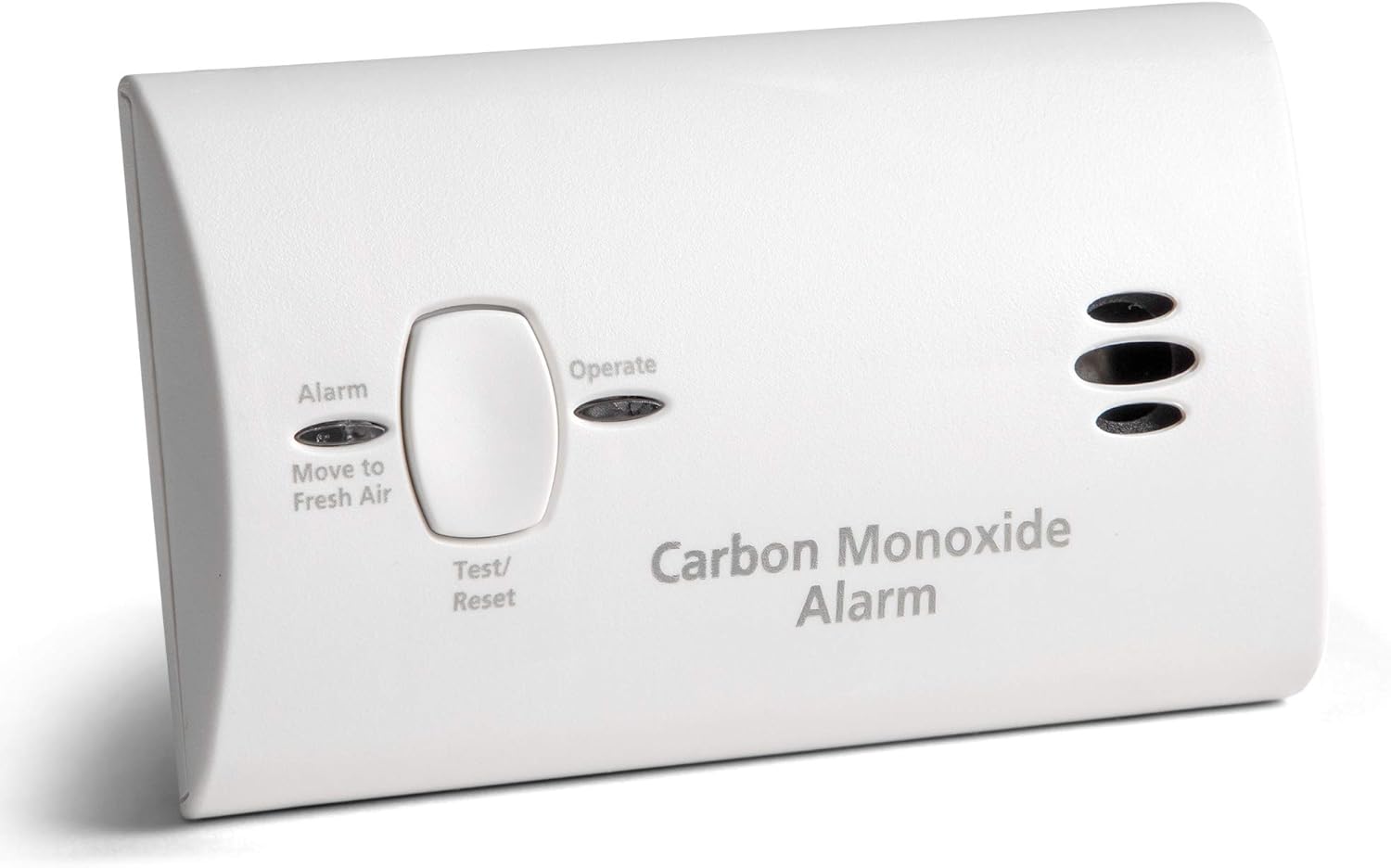
Non-Negotiable Safety: Kidde Carbon Monoxide Detector
This is not an accessory; it’s a necessity. This plug-in detector with a battery backup provides continuous monitoring for carbon monoxide. Place one on every level of your home, especially near sleeping areas and rooms with fuel-burning appliances.
CO Detector Placement for Gas Fireplace Homes
Current codes and safety guidelines recommend placing a CO detector on every level of the home, within 10 feet of each sleeping area, and within the same room as any fuel-burning appliance. For a home with a gas fireplace, this means placing a detector in the room with the fireplace and in adjacent rooms or hallways. Hardwired detectors with battery backup are preferable to battery-only units, as they are not dependent on battery life and will continue working during a power outage.
Understanding Your Fireplace’s Ignition System
Modern gas fireplaces use one of three ignition systems, and understanding yours is important for troubleshooting and safety:
- Standing Pilot Light: A small, continuously burning flame that ignites the main burner when the fireplace is turned on. Uses a small amount of gas continuously, but is the most reliable ignition method and works without electricity. The pilot is kept alive by a thermocouple or thermopile safety device that cuts off gas if the pilot is extinguished.
- Intermittent Pilot Ignition (IPI): An electronic spark ignites the pilot only when the fireplace is turned on. The pilot is not burning when the fireplace is off, saving a small amount of gas. Requires electricity to operate.
- Hot Surface Ignition: Less common in residential fireplaces; uses a ceramic heating element to ignite the gas. Requires electricity.
Thermocouple and Thermopile: The Safety Devices
The thermocouple and thermopile are the two safety devices that control gas flow to your fireplace based on the presence of a live flame. A thermocouple is a simple heat-sensing device that generates a small electrical voltage when heated by the pilot flame. This voltage holds open a safety valve that allows gas to flow to the main burner. If the pilot goes out, the thermocouple cools, the voltage drops, and the safety valve closes—cutting off gas flow and preventing an unburned gas hazard. A thermopile works similarly but generates more voltage, providing enough power to operate a wall switch, remote control receiver, or thermostat. Understanding these devices helps you diagnose common problems: a fireplace that won’t stay lit often indicates a failing thermocouple, while a fireplace that won’t respond to a remote control may have a weak thermopile.
Cleaning the Glass Front
The glass front of a direct vent fireplace will develop a white, hazy film over time—a normal result of condensation and combustion byproducts depositing on the glass surface. Never clean the glass while the fireplace is hot or warm. Wait until the unit has been off and completely cool for several hours. Use only fireplace-specific glass cleaner—standard glass cleaners like Windex contain ammonia that can damage the ceramic glass material. Apply the cleaner with a soft cloth, allow it to dwell briefly, and wipe clean. For stubborn deposits, a specialized ceramic glass kit with a mild abrasive may be required.
Controls and Smart Home Integration
One of the great joys of a gas fireplace over its wood-burning counterpart is the ability to control it without getting off the sofa. Modern gas fireplaces support a range of control options from basic to fully integrated smart home systems.
Wall Switch Control
The simplest control method is a two-wire wall switch that operates the fireplace on/off. This is the baseline and is included with most units. The switch completes or breaks a low-voltage circuit that triggers the gas valve. Installation is similar to a standard light switch and can be placed anywhere accessible from the installed gas line.
Remote Control
Most modern gas fireplaces are either supplied with a remote control or offer one as an accessory. Remote controls typically offer on/off functionality and may include flame height adjustment, thermostat mode (the fireplace cycles on and off to maintain a set room temperature), and timer functions. Basic infrared remotes require line of sight; more sophisticated RF (radio frequency) remotes work through walls and around corners.
Smart Thermostat Integration
Many contemporary gas fireplaces are compatible with smart thermostats, which can control the fireplace based on room temperature, time of day, and programmed schedules. Some units also support integration with home automation platforms like Google Home, Amazon Alexa, and Apple HomeKit, allowing voice control and remote operation via smartphone app. For smart home integration, the fireplace must have a compatible electronic control module—confirm compatibility with both the fireplace manufacturer and your chosen smart home platform before purchase.
Annual Maintenance: What You Must Do Every Season
Gas fireplaces are often marketed as “maintenance-free” compared to wood-burning units. While they are certainly lower-maintenance, they are not zero-maintenance. Annual servicing by a qualified technician is genuinely important for both performance and safety.
What a Professional Annual Service Includes
- Inspection and testing of the pilot light, thermocouple/thermopile, and gas valve
- Visual inspection and cleaning of the burner and log/media assembly
- Cleaning of the glass front (interior side) using appropriate ceramic glass cleaner
- Inspection of the venting system for blockages, damage, or improper termination
- Check of the exterior termination cap for bird nests, insect nests, or debris
- Verification of all clearances and proper combustion characteristics (flame color and pattern)
- Testing of the remote control receiver and any electronic control systems
- Confirmation that the CO detector in the room is functional
What You Can Do Yourself Between Services
- Visually inspect the exterior termination cap seasonally for debris, nesting, or damage
- Test your CO detector monthly using the test button
- Clean the exterior glass with a cool, approved cleaner as needed
- Listen for unusual sounds (hissing, popping, excessive noise) during operation and report any changes to a technician
- Check that the area around the fireplace is free of combustible materials (curtains, furniture, paper) at all times
Mounting a TV Above a Gas Fireplace: The Complete Guide
The TV-above-the-fireplace design is one of the most popular living room layouts in the U.S.—and it’s certainly visually dramatic. But done incorrectly, it can result in an overheated television, poor viewing angles, and a very expensive replacement. Here’s how to do it right.
Heat Is the Primary Concern
The reason you can mount a TV above a gas fireplace (and not above a wood-burning one) is that direct vent gas fireplaces are engineered as sealed units—all the combustion heat exits through the flue, and the glass-front design controls how much radiant heat projects into the room. The heat that reaches the wall above the fireplace is primarily convective (warm air rising), not radiant. However, this convective heat can still be significant, and electronics have specific maximum operating temperatures.
Key Requirements for Safe TV Mounting Above a Gas Fireplace
- Maintain Manufacturer Clearances: Every gas fireplace installation manual specifies a minimum clearance above the unit for combustible materials. This clearance is non-negotiable and represents the distance at which the surface temperature is within acceptable limits. Do not mount the TV closer than this distance.
- Measure the Actual Heat: Before permanently mounting a TV, run the fireplace at maximum output for one hour, then use an infrared thermometer to measure the surface temperature at the exact spot where the TV will hang. If it exceeds 100°F (the general threshold above which most electronics show accelerated wear), you need additional heat management solutions.
- Consider a Mantel or Heat Deflector: A projecting mantel shelf above the fireplace acts as a physical barrier that directs rising warm air away from the wall above it. Even a modest 6-inch projection can reduce the temperature at the TV mounting location significantly. Purpose-made heat deflectors are also available as accessories for many fireplace models.
- Use a Tilting TV Mount: Even when heat is managed correctly, mounting a TV high above a fireplace typically results in an uncomfortable viewing angle—you’re looking up at the screen rather than at eye level. An articulating arm mount that allows the TV to be angled down is strongly recommended to improve ergonomics.
- Run Cables Inside the Wall: Surface-mounted cables above a fireplace are an eyesore and can be a fire hazard if they are not rated for in-wall installation. Plan the cable routing during the fireplace installation process to allow for a clean, concealed installation.
Gas vs. Electric Fireplace: Which Is Right for You?
No discussion of whether a gas fireplace needs a chimney is complete without acknowledging the alternative: the electric fireplace. For some homeowners and some room configurations, an electric unit is genuinely the better choice. For others, gas wins decisively. Here’s a balanced comparison.
| Factor | Gas Fireplace | Electric Fireplace |
|---|---|---|
| Real Flame | Yes — genuine combustion flame | No — LED or projection simulation (increasingly realistic) |
| Heat Output | Very high (10,000–60,000+ BTU) | Modest (4,000–5,000 BTU from most plug-in units) |
| Venting Required | Yes (except vent-free) | No — 100% zero emission; no venting ever needed |
| Installation | Complex; requires gas line, permits, venting work | Simple; most plug into standard electrical outlets |
| Installation Cost | $3,500 – $9,000+ (all-in) | $150 – $3,000 depending on model |
| Operating Cost | Lower per BTU with gas | Higher per BTU (electricity rate dependent) |
| Works in Power Outage? | Yes (standing pilot models) | No |
| Rental / Apartment Use | Not practical without landlord approval | Plug-in models are renter-friendly |
| Maintenance | Annual professional service recommended | Minimal; bulb/LED replacement occasionally |
| Zone Heating Effectiveness | Excellent for primary heat source | Adequate for supplemental heat in a single room |
The bottom line: if you want genuine heat output, a real flame, and the flexibility to heat significant portions of your home, a gas fireplace is the superior choice—provided you can accommodate the installation requirements. If you want a purely decorative element, are renting, or have a space where gas installation is genuinely impractical, a high-quality electric fireplace can be an excellent alternative.
Frequently Asked Questions (FAQ)
Can I install a TV above a gas fireplace?
Yes, this is a very popular design choice, but it must be done correctly. Maintain the manufacturer’s specified clearance above the unit, measure actual surface temperatures before mounting, and consider a projecting mantel shelf or heat deflector to redirect rising warm air. A tilting TV mount is strongly recommended to address the elevated viewing angle. See our full guide in the section above for all the details.
How much does it cost to install a gas fireplace without a chimney?
A complete direct vent built-in gas fireplace installation—including the unit, venting materials, gas line rough-in, permits, and basic finish—typically ranges from $3,500 to $9,000 or more, depending on the unit model, installation complexity, and your region. High-end linear fireplaces with custom stone surrounds can exceed this range significantly. Always get at least two quotes from NFI-certified installers.
Do I need electricity for a gas fireplace to work?
Most modern gas fireplaces use a battery-powered or standing pilot ignition system and will still light and produce heat during a power outage. However, blower fans (which circulate heat into the room), remote controls, thermostat-based controls, and smart home integration all require electricity. A standing pilot unit with a wall switch is the most power-outage-resilient configuration.
Can animals get into my fireplace vents?
It’s a valid concern. For B-vents using a traditional chimney, a proper cap is essential to keep animals out. Direct vent terminations on the side of a house are designed to prevent animal entry, but it’s wise to check them periodically for nests. It’s far less of an issue than an open flue, where you might ask how long for a bird stuck in a chimney to die, but diligence is always smart.
What is the difference between a gas fireplace insert and a built-in gas fireplace?
A gas fireplace insert is designed to fit inside an existing masonry or factory-built firebox opening. It retrofits an existing hearth. A built-in (zero-clearance) gas fireplace is a complete unit that is framed into the wall of a home with no existing firebox—it is the format used for new construction or renovation where there is no existing fireplace. Inserts use the existing chimney for venting (typically with a new liner); built-ins require new venting installed during construction.
How long does a gas fireplace last?
A quality gas fireplace that is properly installed, annually serviced, and not run beyond its rated duty cycle can last 15–25 years or more. The components most likely to need replacement before the unit itself ages out include the thermocouple or thermopile (relatively inexpensive), the igniter, and the glass gasket seal. Major components like the gas valve and heat exchanger are built to last the full life of the appliance under normal use.
Can I convert my gas fireplace from natural gas to propane (or vice versa)?
Yes, most gas fireplace manufacturers offer conversion kits that allow switching between natural gas and propane configurations. However, this conversion must be performed by a licensed technician—it involves changing the burner orifice and adjusting the gas valve pressure regulator. Incorrect conversion can result in improper combustion, carbon monoxide production, or a fire hazard. Never attempt this yourself.
Do gas fireplaces require annual servicing?
Yes. While they are lower-maintenance than wood-burning fireplaces, gas fireplaces should be inspected and serviced by a qualified technician annually. A service appointment typically includes checking the pilot system, cleaning the burner and glass, inspecting the venting, and verifying that all safety systems are functioning correctly. Annual servicing extends the life of the appliance, maintains its efficiency, and is often required to maintain the manufacturer’s warranty.
Conclusion: The Future of Fireplaces is Flexible
So, does a gas fireplace need a chimney? As you now know, the answer is a resounding “no” for the most popular and modern types—and with power venting technology, you have more placement flexibility than ever before. Thanks to direct vent technology and co-axial venting systems, the warmth and beauty of a fireplace are no longer limited to homes with existing masonry structures. You have the freedom to add a stunning focal point to almost any room in your house.
The key is to prioritize safety and performance by choosing a properly vented system, hiring an NFI-certified installer, obtaining all required permits, and committing to annual professional maintenance. Never, ever operate any fuel-burning appliance without a working carbon monoxide detector nearby. By making informed choices, you can enjoy decades of cozy, convenient, and safe fireside memories—no chimney sweeping required, and no need for Santa to find an alternate route, though there are always fun theories on how Santa gets in without a chimney!