What is the Chimney Effect? The Science of Airflow, Draft, and Home Comfort
Understanding the physics behind how your fireplace breathes and how your home retains heat.
Have you ever wondered why smoke magically rises up a flue rather than pouring into your living room? or why your basement feels drafty in the winter while your upstairs bedrooms are sweltering hot? The answer lies in a fundamental principle of building physics known as the Chimney Effect (also frequently called the Stack Effect).
While most homeowners associate this strictly with their wood-burning fireplace, the chimney effect dictates the airflow of your entire home. It influences your energy bills, indoor air quality, and the safety of your heating appliances.
In this comprehensive guide, we will break down the science of the chimney effect, how it powers your fireplace, why it sometimes fails (causing smoke issues), and how to manage it for a more energy-efficient home.
The Core Definition: What is the Chimney Effect?
At its simplest level, the chimney effect is the movement of air into and out of buildings, chimneys, or flue stacks resulting from air buoyancy. Buoyancy occurs due to a difference in indoor-to-outdoor air density resulting from temperature and moisture differences.
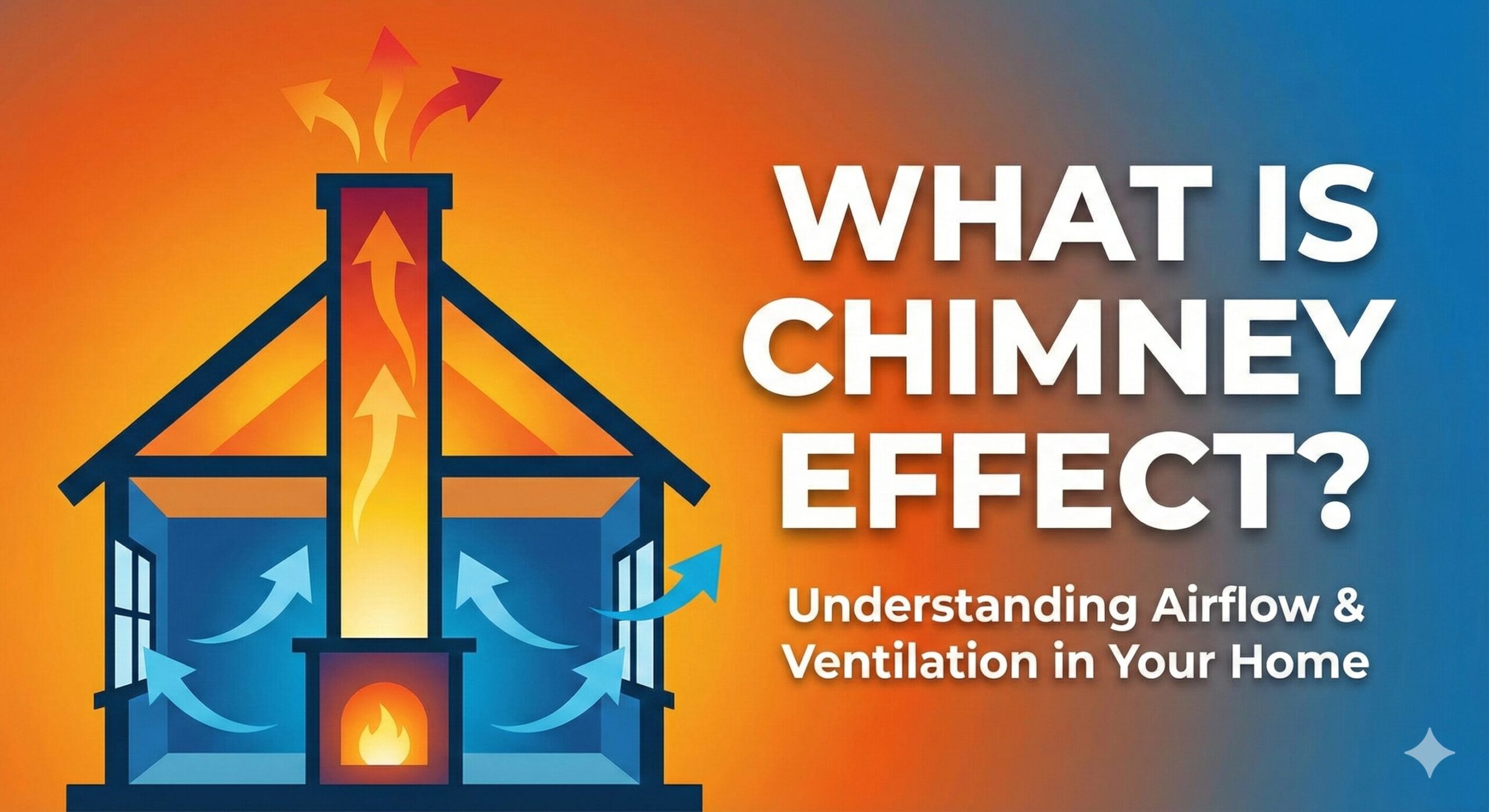
When you light a fire in your fireplace, the air inside the flue becomes significantly hotter than the air outside. This hot air rises rapidly, creating a vacuum (low pressure) at the bottom of the firebox. To fill this vacuum, fresh air from the room rushes into the fireplace. This continuous cycle—hot air going up, fresh air coming in—is what we call “draft.”
The Two Environments of the Stack Effect
- The Appliance (Fireplace/Stove): Here, the effect is intentional and necessary. Without it, you cannot burn wood safely.
- The Building Envelope (Your House): Here, the effect is often unintentional. Your entire house acts like a giant chimney, leaking warm air out of the attic and sucking cold air in through the basement.

Identify Air Leaks Instantly
Use a thermal leak detector to see where the chimney effect is stealing your heat.
How the Chimney Effect Works in Fireplaces
For a fireplace to function, the chimney effect must be strong enough to overcome external pressures (like wind) and internal competition (like exhaust fans). If you are experiencing fireplace draft problems, it is usually because the chimney effect has been disrupted.
The Mechanism of Draft
When you ignite your kindling, the heat warms the air directly above it. As these gas molecules expand, they become less dense. The heavy, cold air outside the chimney pushes down, but because the air inside is lighter, it floats on top of the cold air, rising up the flue.
The strength of this draft depends on two critical factors:
- Temperature Difference (Delta T): The hotter the fire compared to the outside air, the stronger the draft. This is why stoves draft better in the dead of winter than on a mild spring day.
- Chimney Height: A taller column of warm air creates more pressure difference. Generally, a taller chimney drafts better than a short one.
The “Cold Plug” Phenomenon
Sometimes, the chimney effect fails to start. If your chimney is on the outside of the house and it is very cold, a column of heavy, cold air can get trapped in the flue. This forms a “plug.” When you try to light a fire, the smoke hits this cold plug and rolls back into the room. You may need to learn how to use chimney starters or prime the flue with a newspaper torch to break this lock.
The Whole-House Stack Effect
Beyond the fireplace, your home experiences the chimney effect 24/7 during the heating season. This is crucial for understanding energy efficiency.
Winter Dynamics
In winter, your heating system warms the interior air. This warm air rises to the top floors and attic. If there are cracks, recessed lighting fixtures, or unsealed attic hatches, the warm air escapes (exfiltration). This escaping air creates negative pressure in the lower levels of the house.
To balance the pressure, the house sucks in cold, outside air through cracks in the foundation, windows, and doors (infiltration). This makes your floors feel cold and forces your furnace to work harder.
The Neutral Pressure Plane
Every house has a “Neutral Pressure Plane” (NPP). Below this line, air is being sucked in. Above this line, air is being pushed out. At the line, the pressure is neutral. The goal of air sealing is to lower the NPP so that less warm air escapes the top.
Expert Insight: The Danger of Renovations
If you tighten up your home by installing new windows and doors but don’t address the fireplace, you might starve the fire of oxygen. The chimney effect needs makeup air. In ultra-tight modern homes, you may need a dedicated fresh air intake kit. If you are seeing smoke spillage, check our guide on fireplace smoke coming into the house.

Stop the Draft When Not in Use
A fireplace draft stopper or chimney balloon prevents your home’s heat from escaping up the flue.
Factors That Disrupt the Chimney Effect
Ideally, smoke goes up and stays up. However, several variables can fight against the natural buoyancy of air, leading to dangerous backdrafting.
1. Negative House Pressure
Modern homes use many devices that push air out: kitchen range hoods, bathroom exhaust fans, and clothes dryers. If these devices are running simultaneously, they can create a vacuum stronger than the chimney’s updraft, pulling smoke back down into the room. This is a common reason why people ask why do they call it a chimney in 911 situations—often due to CO alarms triggered by backdrafting.
2. Wind Loading
Wind blowing across the roof can either help or hinder draft. If the wind hits a tall obstruction (like a roof peak or trees) and swirls down the chimney, it creates a downdraft. This necessitates the installation of specialized caps. Knowing the best chimney caps for rain and wind is essential for maintaining a steady draft.
3. Chimney Condition
A chimney that is structurally compromised will not draft well. Cracks in the liner or missing mortar allow cool air to enter the flue, cooling the smoke and reducing buoyancy.
- If you see visible gaps, you may need to research the cost to rebuild a chimney stack.
- For minor masonry issues, using the best mortar for chimney repair can restore airtightness.
Step-by-Step: The Cycle of Airflow
To visualize the process, let’s trace the journey of an air molecule involved in the chimney effect:
- Intake: Air enters the home through a gap in a window frame or a dedicated vent.
- Heating: The air is warmed by the furnace or the radiant heat of the fire.
- Rise: The molecule gains kinetic energy, becomes less dense, and floats toward the highest point (the ceiling or up the chimney).
- Exit (The Draft): If in a flue, the intense heat accelerates the molecule upward.
- Dispersal: The air exits the chimney cap.
- Replacement: The departure of that molecule creates a micro-vacuum, instantly pulling a new molecule in at the bottom to replace it.
Common Problems & Solutions
When the chimney effect goes wrong, it affects comfort and safety. Here is a breakdown of common symptoms and fixes.
The “Smelly Fireplace” in Summer
This is the Reverse Stack Effect. In summer, the air inside your house (air-conditioned) is heavier than the hot air outside. Gravity pulls this heavy air down the chimney, bringing the smell of soot and creosote with it.
Solution: Install a top-sealing damper or learn how to get rid of fireplace smoke smell in house.
Difficulty Starting a Fire
As mentioned, this is a cold air block.
Solution: Warm the flue with a hair dryer or a torch of rolled-up newspaper before lighting the main logs. Ensure you are using seasoned vs. unseasoned firewood, as wet wood does not burn hot enough to establish a strong draft.
Carbon Monoxide Backflow
If the draft reverses while embers are still smoldering, odorless CO gas can fill the room.
Solution: Ensure proper venting and always have a working detector. Read our guide on the best carbon monoxide detector for home safety.

Safety First
The chimney effect can sometimes reverse, bringing deadly gases in. Protect your family with a reliable CO detector.
Comparison: Natural Draft vs. Mechanical Draft
While the natural chimney effect relies on physics, some modern systems force the issue mechanically.
| Feature | Natural Draft (Chimney Effect) | Mechanical Draft (Fans) |
|---|---|---|
| Power Source | Heat & Gravity (Passive) | Electricity (Active) |
| Reliability | Variable (affected by wind/temp) | Consistent |
| Noise | Silent | Low Hum/Fan Noise |
| Maintenance | Requires regular cleaning | Requires motor maintenance |
| Cost | Low (Construction only) | Higher (Electricity + Install) |
Optimizing Your Chimney for the Best Effect
To ensure your chimney utilizes the stack effect efficiently, follow these maintenance tips:
1. Proper Sizing
The flue size must match the appliance. If you vent a small wood stove into a massive masonry fireplace chimney, the smoke will cool down too fast, lose buoyancy, and sink. This is why stainless steel liners are critical. If you are unsure about your liner, check our review of the best chimney brush for stainless steel liner maintenance.
2. Insulation
An insulated chimney keeps the smoke hot. Hot smoke rises faster. If you have an uninsulated metal flue running up the outside of your house, you will likely suffer from poor draft. Learn how to insulate a chimney to solve this.
3. Waterproofing
A wet chimney is a cold chimney. Water evaporation absorbs heat, killing your draft. Regular waterproofing is essential. We recommend checking the best chimney waterproofing products to seal bricks against moisture.
FAQ: Common Questions About the Chimney Effect
Does the chimney effect work with gas fireplaces?
Yes, B-vent and natural vent gas fireplaces rely on the chimney effect to exhaust fumes. However, Direct Vent units use a balanced system that does not rely on indoor air for combustion. For more, read does a gas fireplace need a chimney.
Why is my chimney pulling cold air down?
This is often due to the “Neutral Pressure Plane” being too high in the house, or simply that the chimney is colder than the room, causing the air inside it to sink. It creates a cold draft even when no fire is lit.
Can I increase the chimney effect?
Yes. You can increase the height of the chimney, insulate the flue liner to keep gases hotter, or use hotter burning hardwood firewood.
What is the stack effect in high-rise buildings?
In tall buildings, the stack effect can be very powerful. In winter, it pulls massive amounts of cold air into the lobby and forces warm air out the roof. This can make elevator doors hard to close and cause high heating bills.
Conclusion
The chimney effect is a fascinating example of physics in action within our daily lives. Whether you are trying to enjoy a cozy winter evening by the fire or wondering why your energy bills are skyrocketing, understanding how air density and pressure differentials work is the first step toward a solution.
A healthy home breathes, but it should breathe under your control. By maintaining your chimney, sealing air leaks in your attic, and understanding the balance of air pressure, you can harness the chimney effect for safe venting while keeping your conditioned air where it belongs—inside.
If you suspect your chimney is structurally failing to provide a proper draft, do not wait. Issues like chimneys pulling away from the house or severe leaks require immediate professional attention. Safety is paramount when dealing with fire and airflow.
Need to clean your flue to improve airflow?
Check out the top-rated tools for the job.