Chimney Pulling Away From House: How to Fix?
By Chimney Insight Editorial Team
Posted on December 15, 2025
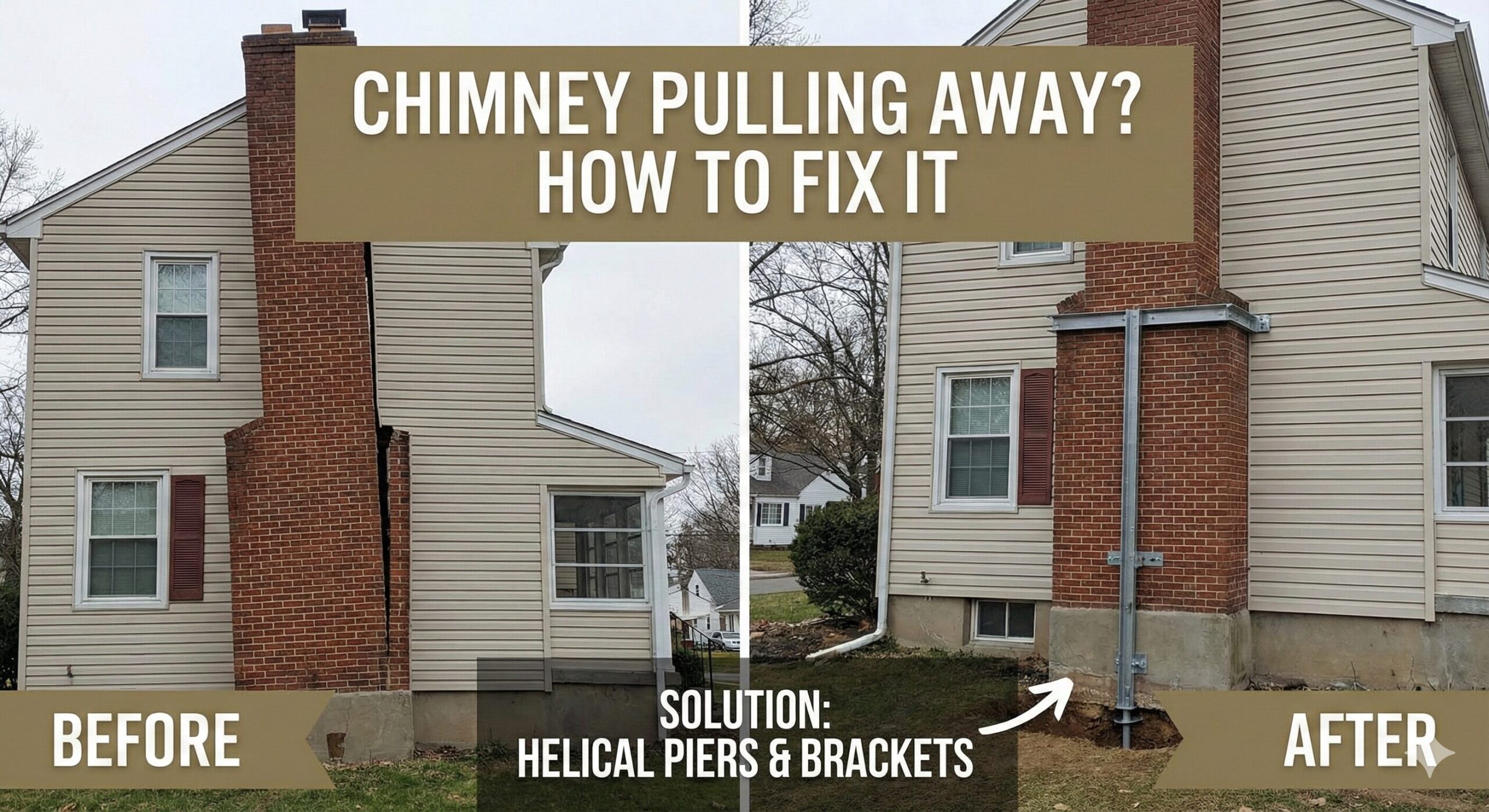
A chimney pulling away from the house is a structural warning, not a cosmetic gap to fill with caulk. The chimney may be settling, rotating, or losing support because of an inadequate footing, soil movement, water, frost, deterioration, or a combination of conditions. Stop using connected appliances until the chimney and venting have been evaluated.
Repairs range from drainage correction and stabilization to partial or complete rebuilding. The correct solution depends on measurements and the cause of movement.
Signs of Chimney Movement
- A widening vertical gap between chimney and siding or wall
- Cracks where the chimney meets the house
- A visible lean when viewed from different angles
- Stepped cracks in nearby masonry
- Separated flashing or roof gaps
- Interior cracks near the fireplace or chimney chase
- Doors or floors changing near the chimney foundation
- Loose bricks, mortar, or falling fragments
Take dated photos from the same safe ground-level locations. Do not climb onto the roof to measure a leaning chimney.
Why Chimneys Separate
Inadequate footing
A masonry chimney is extremely heavy and often has a foundation separate from the house. If that footing is too small, shallow, damaged, or built on unsuitable soil, the chimney can settle independently.
Soil movement
Expansive soil, poorly compacted fill, erosion, drought, plumbing leaks, and changes in groundwater can move support beneath the footing. Frost heave can contribute in cold climates.
Water and drainage
Downspouts, roof runoff, grading, or underground leakage can saturate or wash out soil. Water also deteriorates masonry and can widen freeze-thaw damage.
Deteriorated masonry
Failed mortar and spalled brick can weaken the stack, but visible separation may still originate below grade. Surface repointing cannot correct foundation rotation.
Connection or construction defects
Improper ties, flashing, clearances, or past additions can create gaps and stress. A chimney should not depend on siding or framing to support its weight.
Immediate Safety Steps
- Stop using fireplaces and appliances vented through the chimney.
- Keep people away from the exterior fall zone.
- Do not push, strap, jack, or brace the chimney yourself.
- Watch for fallen masonry, roof openings, gas odor, smoke, or alarm activation.
- Call emergency services for active collapse, fire, or suspected gas leakage.
- Arrange assessment by a qualified structural engineer and experienced chimney or foundation contractor.
Movement can crack flue liners or disconnect appliance vents even when the exterior gap looks small.
How the Problem Is Diagnosed
A professional assessment may document lean, crack patterns, footing dimensions, soil and drainage, connection to the building, flue condition, roof interaction, and evidence of ongoing movement. Measurements over time can show whether displacement is active.
A chimney inspection evaluates venting and accessible components; a structural engineer evaluates stability and repair design. Significant movement may require both. See our chimney inspection-level guide.
Repair Options
| Repair | When it may apply | Limitations |
|---|---|---|
| Drainage correction | Water is contributing to soil or masonry deterioration | Does not automatically restore a shifted footing. |
| Underpinning or piers | Engineering identifies recoverable foundation settlement | Design, access, soil, and chimney condition control feasibility. |
| Partial rebuilding | Upper stack is damaged but lower support is stable | Not suitable if footing or lower masonry continues to move. |
| Complete rebuilding | Foundation and masonry are extensively failed | Major project requiring design, permits, and venting details. |
| Removal or appliance conversion | Chimney is no longer needed and removal is feasible | Roof, wall, framing, venting, and historic considerations remain. |
Why Caulk and Straps Are Not Structural Repairs
Sealant may temporarily reduce water entry at a small joint after movement is stabilized, but it cannot carry a masonry chimney or stop settlement. Improvised straps can transfer dangerous loads into framing and may hide continued movement.
Likewise, repointing cracked joints before stabilizing the footing can conceal evidence and crack again. Diagnose first, then repair in the correct sequence.
What Affects Repair Cost?
- Chimney height, size, and weight
- Degree and direction of movement
- Footing depth and access
- Soil investigation and engineering
- Need for scaffolding or roof protection
- Damage to liners, fireplaces, roof, walls, and finishes
- Permits, inspections, and utility coordination
- Whether masonry can be stabilized or must be rebuilt
For rebuilding considerations, see our guide to the cost of rebuilding a chimney stack. Obtain itemized scopes based on the same engineer’s recommendations when comparing bids.
Questions to Ask Contractors
- What evidence identifies the cause of movement?
- Is an engineer’s design included or required?
- How will the footing and soil be accessed?
- How will movement be monitored before and after work?
- Does the scope include flue, flashing, roof, and interior repairs?
- Which permits and inspections apply?
- What conditions could change the scope?
- What warranty covers stabilization versus masonry work?
Preventing Recurrence
Direct downspouts and roof runoff away from foundations, maintain positive grading where appropriate, repair plumbing leaks, and keep the crown and flashing functional. Do not add heavy construction to an existing chimney without checking support.
After structural repair, the flue and connected appliances must be evaluated before use. A stable exterior does not prove the liner or vent connections are intact.
Frequently Asked Questions
How serious is a chimney pulling away?
It can indicate foundation or structural movement and may damage the venting system. Treat it as a prompt assessment issue rather than a cosmetic repair.
Can a leaning chimney be pushed back?
Some engineered stabilization systems may reposition or support a chimney, but forcing masonry without design can cause collapse or hidden damage.
Will homeowners insurance cover the repair?
Coverage depends on the cause and policy. Gradual settlement and deterioration are often excluded, while sudden covered events may be treated differently. Review our chimney insurance guide.
Can I keep using the fireplace?
Not until the chimney and venting have been evaluated. Movement can crack liners and create fire or carbon-monoxide hazards.
Who should inspect it first?
A structural engineer is appropriate for movement and stability. A qualified chimney professional assesses the flue and appliance. Complex cases often need both.