Cost to Rebuild a Chimney Stack: What You Need to Know
By Chimney Insight Editorial Team
Posted on December 15, 2025
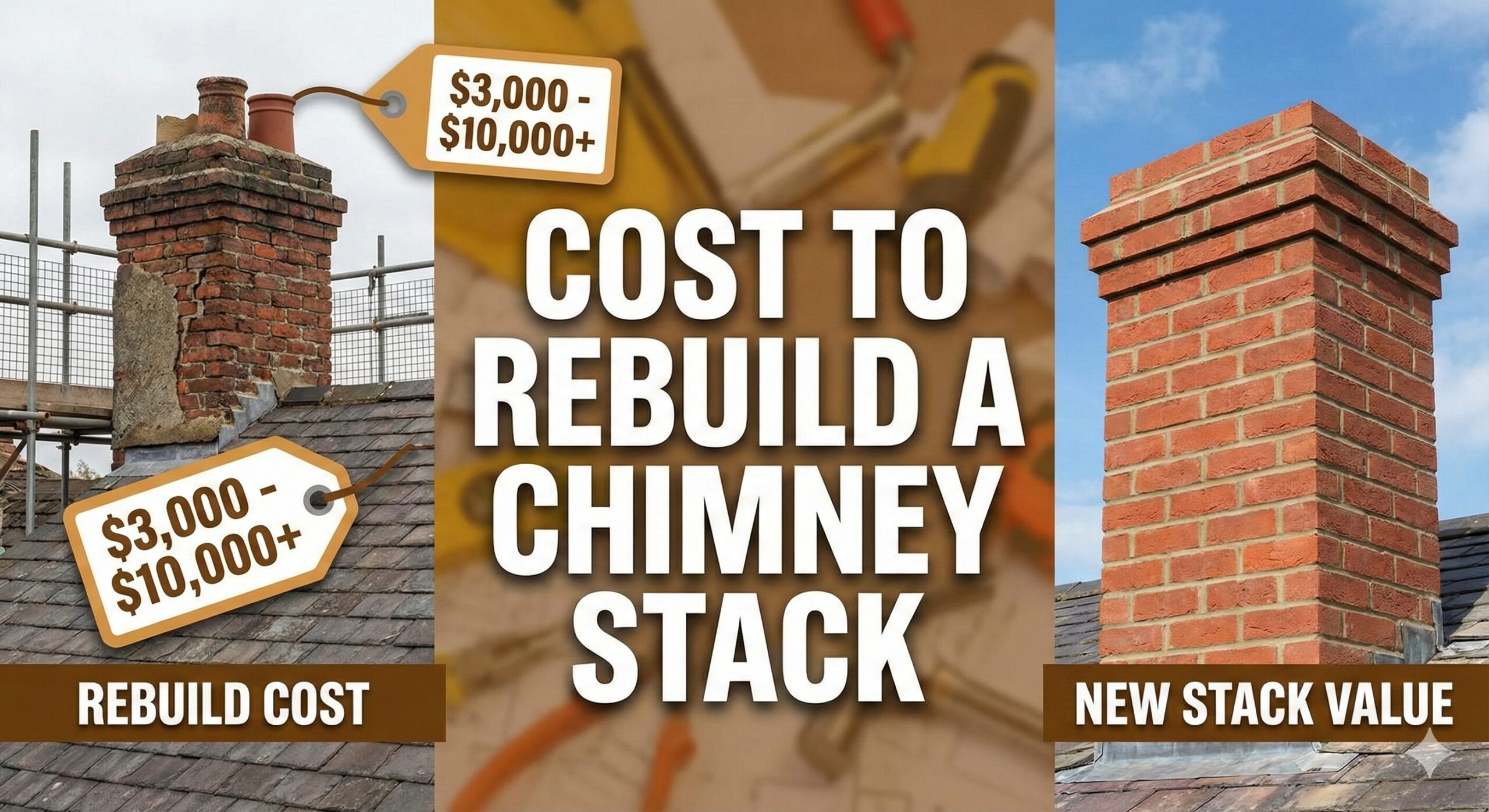
The cost to rebuild a chimney stack depends on how much masonry must be removed, the stack’s height and size, roof access, brick and mortar compatibility, flashing and crown work, liner condition, permits, and local labor. A short rebuild above the roofline is very different from rebuilding the chimney to its footing.
Rather than relying on a national average, obtain an itemized local estimate after the cause and extent of damage are documented.
Three Common Rebuild Scopes
| Scope | Typical work | Major cost drivers |
|---|---|---|
| Top courses or crown area | Remove and replace limited damaged masonry; rebuild crown details | Access, matching brick, crown, cap, and weather protection. |
| Above-roof stack | Rebuild from roofline or flashing level upward | Scaffolding, roof protection, flashing, height, multiple flues. |
| Full chimney | Demolish and rebuild substantial exterior and interior masonry | Footing, structural design, framing, liners, fireplaces, finishes, and permits. |
When Is Rebuilding Necessary?
- Multiple bricks are loose, spalled, cracked, or displaced.
- The stack leans, bulges, or separates from the house.
- Mortar loss is deep and widespread rather than limited to repairable joints.
- Freeze-thaw damage has weakened brick throughout the wall.
- A chimney fire, impact, or severe storm caused structural damage.
- Past repairs used incompatible hard mortar or coatings that accelerated damage.
Localized mortar erosion may be suitable for repointing instead. Read our guide to chimney mortar compatibility.
Factors That Change the Price
Height and access
Steep roofs, limited staging space, power lines, landscaping, and tall stacks can require scaffolding, lifts, protection, and additional labor.
Brick and mortar matching
Historic, discontinued, or unusual brick can be difficult to match. Compatible mortar may require specialized materials and workmanship. A visual match alone is not enough.
Number of flues
A larger stack with multiple flues requires more masonry and may involve several liners, caps, appliances, or partitions.
Crown, cap, and flashing
A rebuild should correct the details that keep water out. New counterflashing, a properly designed crown, and compatible caps can be separate line items.
Liner and smoke chamber condition
Rebuilding exterior brick does not automatically repair a cracked liner, damaged smoke chamber, or disconnected appliance vent. Inspection may add a liner or internal repair scope.
Permits and code requirements
Local authorities may require permits, structural details, inspections, and upgrades. Ask whether drawings, engineering, or code-related work is included.
What a Good Estimate Should Include
- Exact demolition and rebuild limits
- Brick, mortar, crown, cap, and flashing specifications
- Scaffolding, roof, landscaping, and interior protection
- Debris removal and cleanup
- Liner, smoke chamber, and appliance-connection work
- Permit and inspection responsibility
- Weather protection and curing procedures
- Allowances, exclusions, and change-order process
- Warranty terms for masonry and water-shedding work
Compare estimates using the same scope. A lower bid may omit flashing, cap, liner evaluation, or staging.
Inspection Before Rebuilding
Determine why the chimney failed. Water entry, footing movement, roof interaction, chimney fire, inappropriate paint, or incompatible past repairs must be addressed or the new work may deteriorate again.
A camera inspection may be appropriate when rebuilding follows a fire, impact, major change, or suspected liner damage. Review chimney inspection Levels 1, 2, and 3.
Repair, Rebuild, or Remove?
Repointing is appropriate only when the masonry units remain sound and the structure is stable. Partial rebuilding can work when damage is limited above a clear cut line. Full rebuilding is considered when movement or deterioration affects the whole chimney.
If the chimney no longer serves an appliance, removal may be considered. Removal still requires careful treatment of roof, walls, framing, ventilation, historic features, and any shared flues. Do not remove a stack without confirming what it supports and vents.
How to Control Cost Without Cutting Safety
- Get the diagnosis before asking for bids.
- Use one written scope for all bidders.
- Schedule before emergency deterioration when possible.
- Bundle logically related crown and flashing work.
- Preserve sound original brick when technically appropriate.
- Verify contractor insurance, masonry experience, and references.
- Ask how unexpected liner or roof damage will be priced.
Do not save money by omitting safe access, curing protection, compatible mortar, flashing, or a needed liner assessment.
Warning Signs After a Quote
- The contractor recommends rebuilding without identifying the damage.
- The scope says only “fix chimney” without quantities or materials.
- No plan addresses flashing, crown, or water entry.
- The proposal uses one generic mortar for every historic and modern chimney.
- Large deposits are requested before permits or materials are defined.
- The contractor discourages inspection or another opinion for non-emergency work.
Related Structural Problems
If the entire chimney is leaning or separating, the footing may need engineering rather than an above-roof rebuild. See our guide to a chimney pulling away from the house.
Frequently Asked Questions
Can only the top of a chimney be rebuilt?
Yes, when deterioration is limited and the lower stack, footing, liners, and connections are stable. The cut line and rebuilding details must be planned carefully.
Does rebuilding include a new liner?
Not automatically. The estimate should state whether the liner is inspected, retained, repaired, or replaced.
How long does a rebuild take?
Duration depends on scope, height, access, weather, curing, materials, permits, and concealed damage. Ask for milestones rather than relying on a universal number.
Can I use the fireplace during rebuilding?
No. Connected appliances should remain out of service until work is complete and the venting system is cleared for use.
Will insurance cover a chimney rebuild?
It may cover damage from a qualifying sudden event, subject to the policy. Gradual deterioration and maintenance are commonly excluded.