How to Start a Fire in a Fireplace Safely (Step by Step)
By Chimney Insight Editorial Team
Posted on October 6, 2026
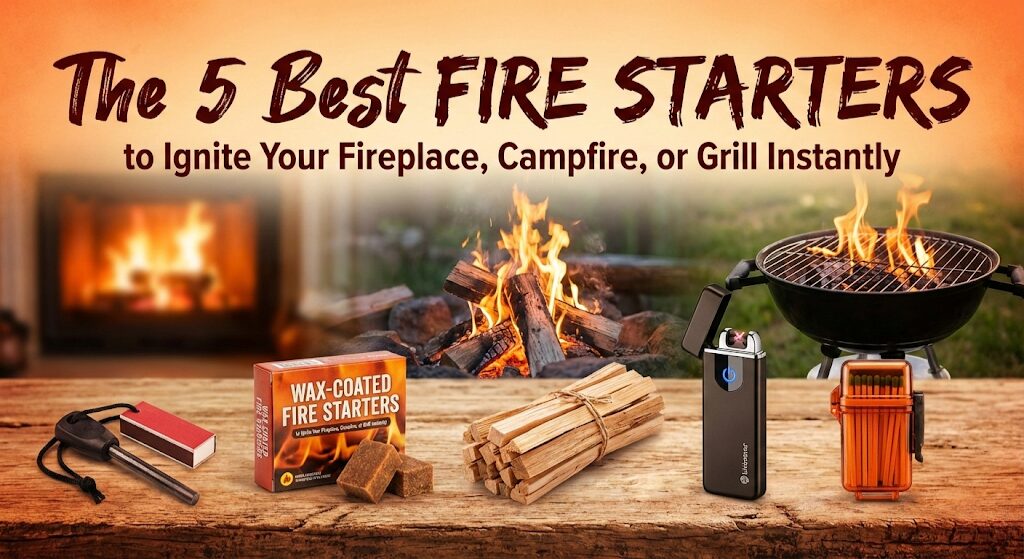
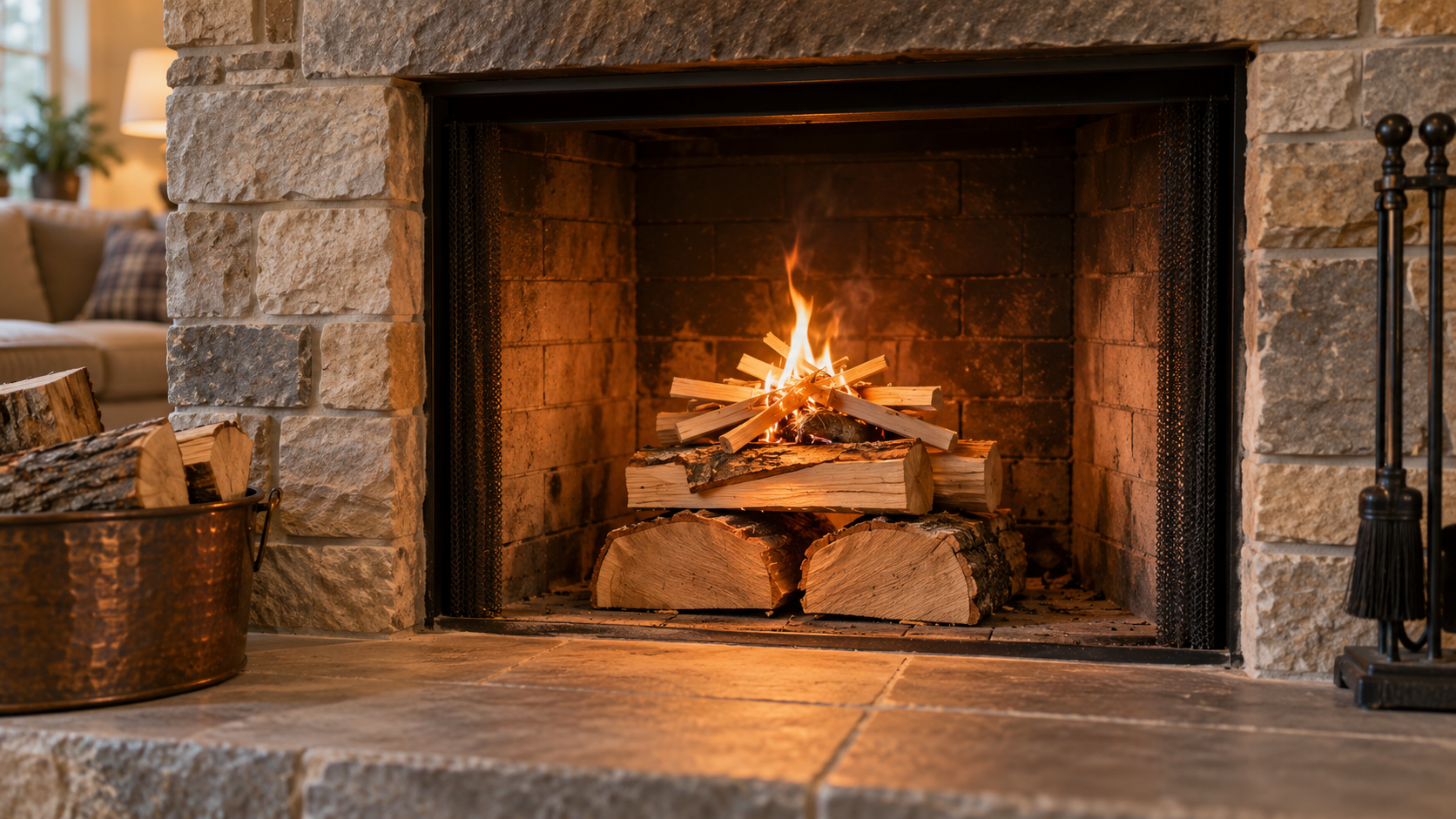
To start a fire in a wood-burning fireplace safely, first confirm the fireplace and chimney are ready, fully open the damper, use dry firewood, and build a stable stack with plenty of air space. A top-down arrangement—larger splits on the bottom, smaller pieces above, and kindling at the top—can give a controlled start without repeatedly rearranging burning logs.
The method is only one part of a safe fire. A clean flue, working smoke and carbon-monoxide alarms, adequate draft, a fireplace screen, and an adult staying in the room matter more than the shape of the stack. If smoke enters the room, the damper will not open, the chimney has not been inspected, or the fireplace shows damage, do not light it.
Before You Light the First Match
Do not use an unfamiliar fireplace simply because the opening looks clean. A blocked flue, closed or damaged damper, cracked firebox, missing chimney cap, heavy deposits, or an improperly installed appliance can turn a routine fire into a smoke or fire hazard. If the system has been unused for a long period, has changed owners, or has had water, animal, or masonry problems, arrange a professional inspection before burning.
The U.S. Fire Administration recommends professional cleaning and inspection of heating equipment and chimneys each year. It also advises keeping anything that can burn at least three feet from fireplaces and other heat sources. Move furniture, baskets, decorations, books, rugs, and spare firewood outside that clearance zone before ignition.
Complete this short readiness check:
- The fireplace and chimney are approved for wood burning and have no known defects.
- The damper moves freely and is fully open.
- The firebox is not overloaded with old ash; a thin residual layer is acceptable if the fireplace instructions allow it.
- Smoke alarms and carbon-monoxide alarms are working.
- A sturdy screen fits the opening and can remain in place after lighting.
- A multipurpose fire extinguisher is accessible, and household members know how to call for help.
- Children and pets can be kept away from the hearth.
If you are unsure about the flue’s condition or service interval, review our guide to how often a chimney should be cleaned before using the fireplace.
What You Need for a Reliable Wood Fire
| Material | Purpose | What to check |
|---|---|---|
| Split firewood | Provides the main fuel | Clean, dry, seasoned, and sized for the firebox |
| Smaller splits | Bridges kindling to full-size logs | Dry pieces that ignite more easily than large logs |
| Kindling | Creates the first sustained flame | Dry, thin pieces with open space between them |
| Ignition material | Lights the kindling | Plain newspaper or an all-natural fire starter approved for the fireplace |
| Long match or utility lighter | Keeps hands farther from ignition | Working condition and used without leaning into the firebox |
| Fireplace screen | Helps contain sparks and rolling embers | Stable, undamaged, and sized to cover the opening |
EPA guidance says wood burns best below 20% moisture and recommends testing it before use. Measure on a freshly split interior face rather than the exposed end of a log. Our firewood moisture testing guide explains the correct procedure.
Do not burn trash, cardboard, coated or colored paper, painted or pressure-treated lumber, plywood, particleboard, plastic, or wood containing glue. EPA warns that unsuitable materials may release harmful chemicals or damage the appliance. See the full wood-not-to-burn safety guide if the history of a piece of lumber is uncertain.
Top-Down vs Traditional Bottom-Up Fire
A traditional bottom-up fire puts paper and kindling under the logs. It is familiar, but a weak base can collapse before the larger pieces ignite, and adding wood over an active flame may disturb the stack. A top-down fire reverses the fuel sizes: larger logs form the base, medium pieces sit above them, and kindling is lit at the top.
The top-down method is useful because the initial flame has direct access to air, the stack can be assembled before ignition, and the fire gradually reaches larger fuel. It does not guarantee a smoke-free start. Wet wood, a cold or obstructed flue, negative indoor pressure, poor stack spacing, or an incompatible appliance can still cause trouble.
Follow the fireplace or appliance manual when it specifies a different loading pattern. Some inserts and stoves have particular air-control and ignition instructions that take priority over a general fireplace method.
How to Start a Fire in a Fireplace Step by Step
1. Open the damper and verify the flue path
Fully open the damper before arranging or lighting fuel. Use a flashlight from the firebox to confirm the damper is visibly open, but do not reach into a dirty flue or climb onto the roof. A damper handle position is not enough if the linkage is damaged or unfamiliar.
2. Check for draft before ignition
Cold outdoor air can settle in the chimney and push air into the room. Hold a small strip of tissue near the upper firebox without letting it enter the flue. Air should move toward the chimney. If it moves into the room, stop and address the draft problem. Opening a nearby window slightly may help in a tightly sealed house, but it does not fix a blocked or defective chimney.
If a sound chimney is simply cold, our guide to priming a chimney flue explains cautious ways to establish upward airflow. Do not use a torch, liquid fuel, or an improvised open flame in the flue.
3. Place two or three larger splits on the bottom
Lay the pieces parallel with narrow gaps between them. Keep the stack well inside the firebox and below any height limit in the fireplace instructions. The base must be stable; round pieces that can roll should not support the stack.
4. Add a crosswise layer of smaller wood
Place two or three smaller splits across the base. The alternating direction creates channels for air and helps the flame spread gradually. Do not pack every gap. A dense pile restricts airflow and can smolder instead of burning brightly.
5. Build a loose kindling layer at the top
Arrange dry kindling in a small crisscross or loose lattice. Put a small amount of plain newspaper or one approved natural fire starter beneath or within this upper layer. Avoid glossy paper and excessive loose sheets that can lift burning fragments toward the flue.
6. Light the top and watch the first minutes
Use a long match or utility lighter from a stable position. Light the ignition material in one or two places, withdraw your hand, and place the screen over the fireplace opening. Stay nearby and watch for upward flame movement and smoke traveling into the chimney.
7. Let the fire establish before adjusting anything
Do not immediately poke the stack or add full-size logs. Allow the kindling to ignite the smaller splits. If the fire goes out, wait until the material is cool before rebuilding. Repeatedly adding paper to a weak, smoky fire can send embers upward without solving the cause.
8. Add one log at a time when a coal bed forms
Once the original stack is burning steadily and producing glowing coals, add a properly sized dry split with fireplace tools. Avoid throwing wood, crowding the firebox, or allowing a log to rest against the screen. Keep the damper fully open while the fire and embers remain active.
How to Keep the Fire Burning Cleanly
EPA recommends hot fires rather than prolonged smoldering. Add modest amounts of dry wood before the coal bed becomes too weak, and maintain visible active flames. More fuel is not automatically better: an overloaded firebox can create excessive heat, increase spark production, and make the fire harder to control.
Use fireplace tools rather than hands, and open a screen or door slowly so a pressure change does not pull smoke into the room. For an insert or stove, operate air controls exactly as the manual directs. Never leave a wood fire unattended, and do not go to bed while flames or hot embers remain active.
Why a Fireplace Smokes When You Start It
A little visible smoke inside the firebox is not the same as smoke spilling into the room. Indoor smoke signals that combustion gases are not moving safely up the flue. Common contributors include:
- A closed, partly closed, or defective damper
- A cold flue or downdraft
- Wet firewood or too little dry kindling
- A blocked chimney or animal nesting material
- Exhaust fans, clothes dryers, or tight construction depressurizing the room
- An oversized fire or stack placed too close to the fireplace opening
- Flue sizing, height, or installation problems
If smoke spills into the room, stop adding fuel, keep people away from the smoke, ventilate when safe, and let the fire die under supervision. Do not close the damper on a burning or smoldering fire. Persistent smoke needs professional diagnosis; use our fireplace smoke troubleshooting guide to organize the symptoms before calling.
What Never to Do When Starting a Fireplace Fire
- Never use gasoline, kerosene, charcoal lighter fluid, alcohol, or another liquid accelerant.
- Never light a fireplace with a closed damper or unknown flue condition.
- Never burn trash, treated wood, plastics, or glued wood products.
- Never use wet logs and compensate by adding more paper or fire starter.
- Never leave children, pets, or guests unsupervised near the hearth.
- Never close the damper until the fire and embers are completely cold.
- Never treat a chimney roar, intense vibration, shower of sparks, or rapidly overheating masonry as normal. Leave the home and call emergency services if you suspect a chimney fire.
Bottom Line
A safe fireplace fire begins before ignition. Confirm the system is inspected and ready, open the damper, establish upward draft, use dry clean firewood, and keep combustibles away. A stable top-down stack can provide a controlled progression from kindling to larger logs, but it cannot overcome a damaged chimney, wet fuel, or poor draft.
Stay with the fire, use a screen, add fuel conservatively, and respond immediately to indoor smoke or abnormal chimney behavior. The goal is not the biggest flame; it is a bright, manageable fire that remains inside a sound system.
Frequently Asked Questions
Should the fireplace damper be fully open when starting a fire?
Yes. A wood-burning fireplace damper should be fully open before ignition and remain open while flames, smoke, or hot embers are present. If the damper will not open or its position is uncertain, do not light the fireplace.
What is the easiest way to start a wood fire in a fireplace?
Use dry wood and plenty of kindling in a stable top-down stack: larger splits at the bottom, smaller wood above, and kindling with a small approved starter at the top. Draft and fuel moisture are often more important than the exact stack shape.
Can I use cardboard to start a fireplace fire?
EPA advises against burning household trash, including cardboard and boxes. Use a small amount of plain newspaper, dry kindling, or an all-natural fire starter instead.
Why does my fireplace smoke when I first light it?
Possible causes include a cold flue, closed damper, wet wood, insufficient kindling, room depressurization, or a blockage or design problem. Stop if smoke enters the room, and have persistent problems evaluated professionally.
When can I close the damper after a fire?
Only after all flames and embers are completely out and the ashes are cold. Closing it early can force smoke and carbon monoxide into the home. When uncertain, leave it open and wait longer.
Sources: EPA: Best Wood-Burning Practices; U.S. Fire Administration: Heating Fire Safety.