How to Test Firewood Moisture Correctly Before Burning
By Chimney Insight Editorial Team
Posted on October 2, 2026
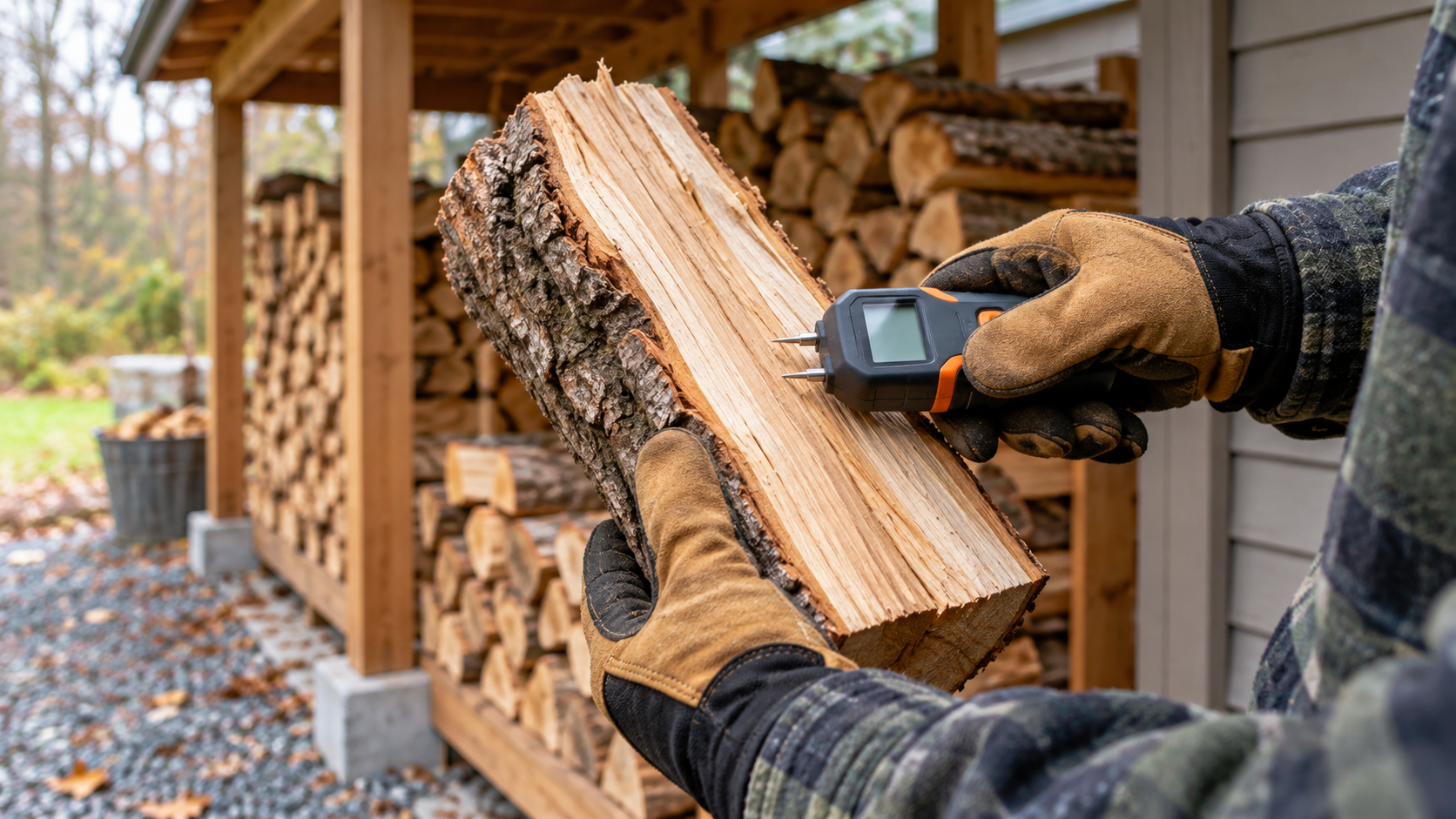
To test firewood moisture correctly, split a representative log and press a wood moisture meter’s pins into the newly exposed interior face, following the grain. Test several logs from different parts of the stack rather than trusting the bark, an end check, or one convenient piece. For ordinary residential wood burning, the U.S. Environmental Protection Agency says wood burns best below 20% moisture content.
A meter is useful only when the sample and technique are sound. Rain can make the outside of seasoned wood look wet while the center remains ready to burn. Conversely, a dry-looking end can hide moisture deeper inside a thick split. This guide explains how to obtain a meaningful reading, interpret it without false precision, and improve wood that is not ready.
Why Firewood Moisture Matters
Water in a log must heat and evaporate before the wood can burn efficiently. That process consumes energy that would otherwise help sustain a hot, cleaner fire. Wet fuel is harder to ignite, tends to smolder, produces less useful heat, and can create more visible smoke and creosote-forming compounds.
The EPA’s wood-burning guidance recommends dry, seasoned wood and identifies moisture content below 20% as the best range for burning. A moisture meter does not certify that a chimney or appliance is safe, but it removes much of the guesswork from deciding whether a batch of firewood is ready.
Moisture is only one part of good fuel selection. Species, split size, storage, appliance instructions, and the condition of the chimney also matter. Our guide to the best firewood for fireplaces explains how wood type changes heat potential and burn characteristics.
What Moisture Reading Is Good for Firewood?
| Interior reading | Practical meaning | What to do |
|---|---|---|
| Above 20% | The sample is wetter than the EPA’s recommended burn-ready level. | Keep seasoning it outdoors with airflow and weather protection. |
| 15% to 20% | This is the efficient-burning range described in EPA moisture-meter material. | Confirm with several representative logs before using the batch. |
| Below 15% | The tested interior is quite dry, but one low reading does not describe the whole stack. | Check additional logs and follow the appliance manufacturer’s fuel instructions. |
Do not interpret the display as a laboratory certificate. Affordable meters, wood species, temperature, probe depth, battery condition, and user technique can all influence the number. The useful decision is whether repeated interior readings consistently fall on the appropriate side of the 20% target.
What You Need Before Testing
- A moisture meter intended for wood, with working pins or the sensing method specified by its manufacturer
- A splitting axe, maul, or other appropriate tool used on a stable chopping surface
- Eye protection, sturdy footwear, and gloves suitable for handling rough wood
- Several logs selected from different parts of the stack
- The meter manual, especially if it includes species groups or temperature correction instructions
Pin meters are convenient for firewood because their electrodes can contact the fibers on a fresh split face. Pinless meters can be useful for woodworking and flat material, but their sensing depth, required surface contact, and calibration may not suit irregular firewood. Use the method specified for your particular device rather than assuming all meters behave the same way.
How to Test Firewood Moisture Correctly
1. Select representative logs
Choose at least several pieces from the top, middle, and more sheltered parts of the stack. Include thicker pieces because they usually dry more slowly than small splits. Avoid testing only the lightest, most cracked log at the front; that creates an unrealistically favorable picture of the entire pile.
2. Bring the samples to a suitable testing temperature
Very cold wood and a warm meter can produce inconsistent readings. Follow the meter manufacturer’s temperature guidance and allow the device and samples to approach the conditions specified in its manual. Do not heat logs in a kitchen oven, microwave, or against a space heater to speed this step.
3. Split each log immediately before testing
The outside surface exchanges moisture with rain, snow, sun, and air. End grain can also dry sooner than the center. Splitting exposes the interior that best represents the moisture the fire must drive off. The EPA’s moisture-meter instructions specifically say to test the newly split side.
Use a stable block and a clear work area. Keep bystanders away and stop if the log is unstable, frozen in a way that makes it unpredictable, or too large for your safe equipment and skill.
4. Place the pins on the fresh interior face
Press the pins into clean wood away from bark, loose fibers, visible water, dirt, knots, and obvious rot. Insert them in the orientation required by the manufacturer; EPA material illustrates inserting the probes into the wood grain. Make firm, even contact without twisting the meter or forcing delicate pins beyond their intended depth.
5. Take more than one reading
Measure near the center of the fresh split and, when the meter instructions allow, at another interior point. Record the stable value rather than the first flicker on the display. Repeat the process on all selected logs. A group of readings is more useful than an average that hides one very wet piece, so note both the typical result and the highest result.
6. Make a batch decision
If the representative interior readings are consistently 20% or less, the batch meets the EPA’s practical moisture target. If multiple pieces remain above 20%, keep seasoning them. When results vary widely, separate the wetter logs, improve airflow, and retest later rather than mixing questionable pieces into the ready stack.
Common Moisture-Meter Mistakes
Testing the bark or unsplit surface
The surface may be temporarily wet after rain or unusually dry after sun exposure. Neither condition reliably describes the center. Always split a log and test the fresh interior.
Testing only one log
Stacks dry unevenly. Wood near the ground, against a wall, under a leak, or deep inside a tightly packed pile may retain more moisture. Sample different locations and split sizes.
Using the wrong material mode
Some meters offer settings for lumber species groups, drywall, masonry, or other building materials. A relative building-material scale is not necessarily a firewood moisture percentage. Confirm that the display is in the correct wood mode and apply only the corrections described in the manual.
Relying on sound, color, weight, or cracks alone
Seasoned logs often feel lighter, show end checks, or sound sharper when struck together, but those clues are imperfect. Species, size, decay, and surface drying can mislead you. Use them as screening clues, then verify the interior with a meter.
Assuming dry wood fixes a smoking fireplace
Dry fuel can reduce one major source of smoke, but indoor smoke can also result from a closed damper, negative house pressure, a blocked flue, poor chimney height, an oversized fire, or appliance problems. If smoke continues with verified dry fuel, stop and use the checks in our fireplace smoking guide.
What to Do When Firewood Is Too Wet
Return wet logs to an outdoor seasoning stack. Split large rounds into smaller pieces, keep them off the soil, leave the sides open to moving air, and protect the top from rain and snow without wrapping the entire pile. A tarp draped tightly down every side can trap moisture and slow drying.
Position the stack where it receives airflow and, when practical, sun. Do not pack firewood directly against the house, and follow local fire-safety and pest guidance. The EPA advises at least six months of storage for softwood and at least twelve months for hardwood as broad planning estimates, but actual readiness depends on species, split size, climate, starting moisture, and storage. The meter should make the final decision.
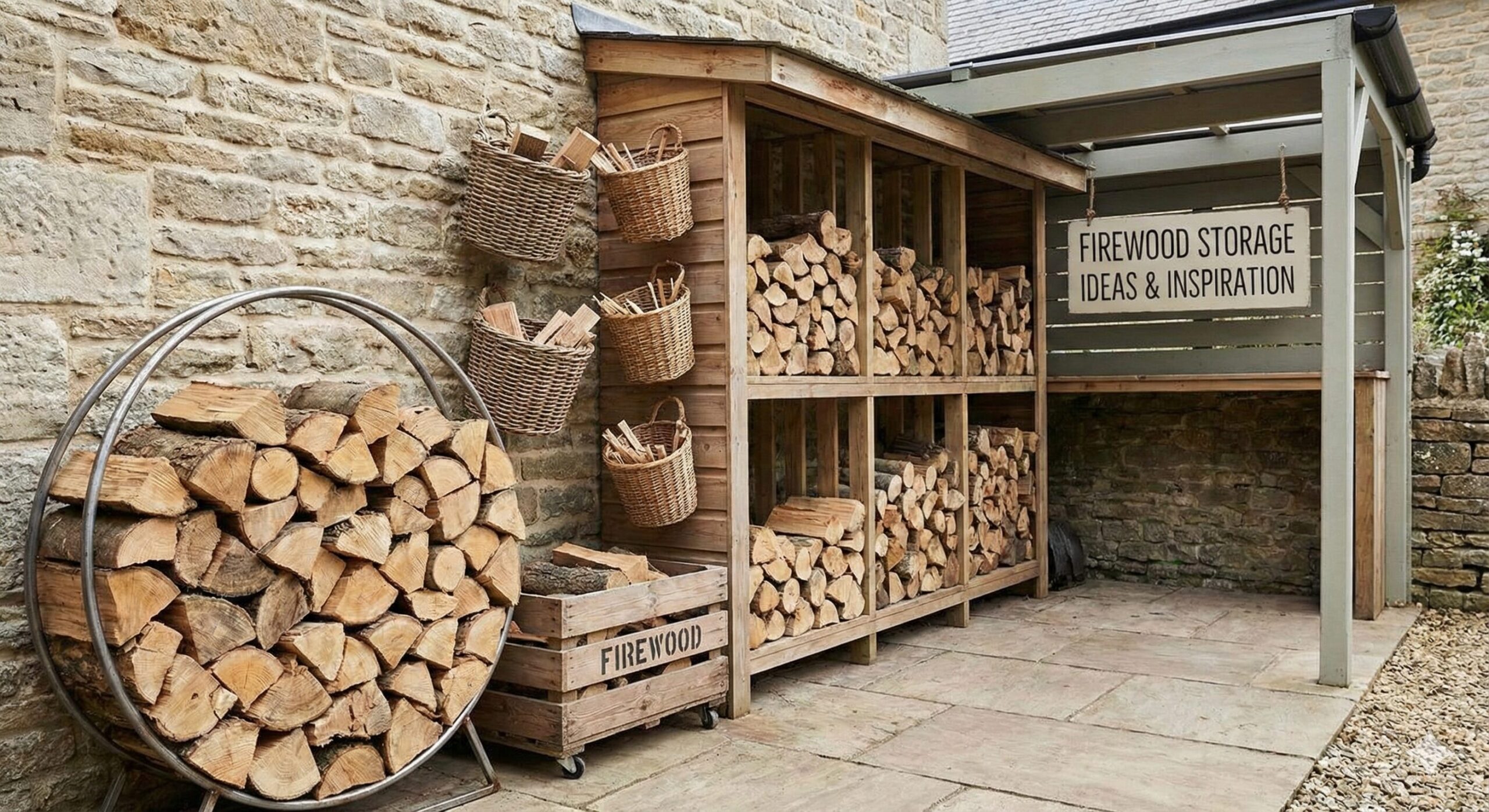
For layouts that promote drying, see our firewood storage and ventilation ideas. If you are comparing old and recently cut supplies, our seasoned versus unseasoned firewood guide explains the visible and burning differences.
Can Rain Make Seasoned Firewood Unusable?
A rain shower mainly wets exposed surfaces. Properly seasoned logs often dry again when returned to a covered, ventilated stack. The correct response is not to guess from appearance: split a representative log after surface water has drained, test the fresh center, and delay burning if the interior is above the target.
Long-term saturation is different. Wood stored on soil, under a leaking cover, or without airflow can absorb more moisture and develop mold or decay. Separate questionable pieces and correct the storage problem. Never burn painted, treated, glued, or contaminated wood even if a meter reports a low number; review what wood not to burn in a fireplace.
Firewood Moisture and Chimney Safety
Burning dry wood supports a hotter, cleaner fire, but it does not remove existing creosote or reveal chimney defects. Have the chimney and wood-burning appliance inspected and maintained on the schedule recommended for the system and its use. Keep smoke and carbon monoxide alarms installed and maintained according to their manufacturers and local requirements.
Stop using the fireplace or stove if smoke enters the room, a carbon monoxide alarm sounds, you hear a roaring chimney, or you see flames or heavy sparks coming from the chimney top. Leave the home and contact emergency services for a suspected chimney fire. A moisture reading is fuel information, not permission to use an unsafe venting system.
Conclusion
The reliable way to test firewood moisture is simple: choose representative logs, split each one, test the fresh interior face with a wood moisture meter, and compare several stable readings. Aim for 20% moisture or less, using the meter manual for settings and corrections. If the batch is wetter, improve outdoor airflow and weather protection, then retest rather than trying to force wet wood to burn.
Frequently Asked Questions
Where should I test firewood with a moisture meter?
Split the log and test the newly exposed interior face, not the bark or an old end surface. Place the pins into clean wood in the orientation required by the meter manufacturer.
What moisture percentage is best for firewood?
The EPA says wood burns best below 20% moisture content. Its moisture-meter material identifies roughly 15% to 20% as an efficient range. Confirm the result across several logs.
How many pieces of firewood should I test?
There is no universal household sample count, but several logs from different stack locations and thicknesses provide a far better decision than one piece. Include the thickest and most sheltered pieces likely to dry slowly.
Can I test firewood without splitting it?
You can obtain a surface reading, but it may be distorted by rain, sun, or faster-drying end grain. A fresh split exposes the interior and gives a more useful burn-readiness check.
Does a low moisture reading mean my fireplace is safe?
No. The meter evaluates the tested wood, not the chimney, liner, clearances, draft, or appliance. Inspection, maintenance, correct fuel, alarms, and safe operation remain necessary.