Firewood Rack Buying Guide: Size, Materials & Covers
By Chimney Insight Editorial Team
Posted on October 7, 2026
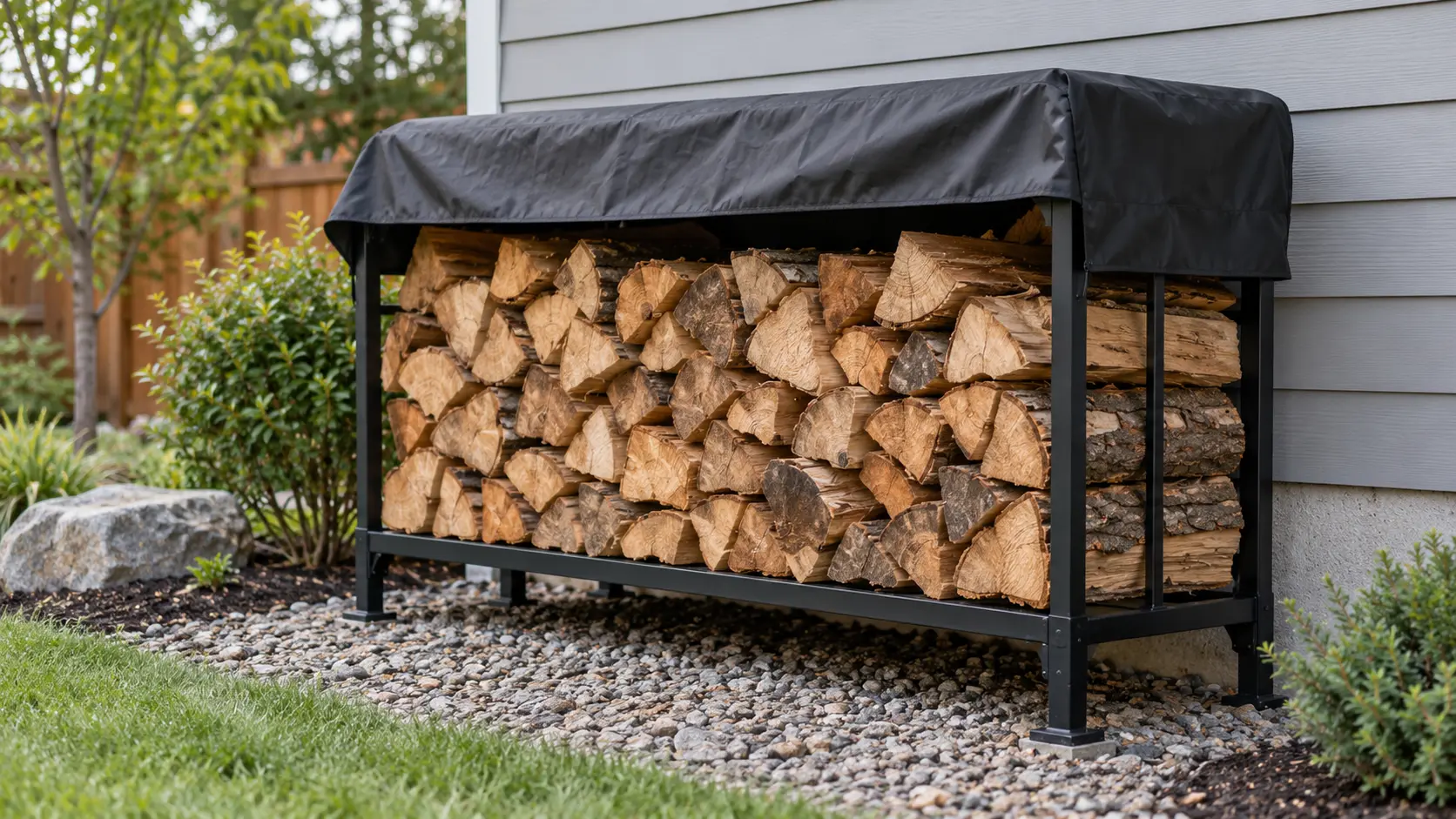
The best firewood rack is sized for the amount of wood you actually rotate, keeps logs off the ground, stays stable when partly loaded, and matches its location. For outdoor storage, prioritize a rigid frame, open sides, ground clearance, and a top cover or roof that does not trap moisture. For indoor use, choose a compact holder that contains bark and debris without placing more wood near the fireplace than you will burn soon.
A larger rack is not automatically better. An oversized indoor holder can bring insects and damp wood into the house, while an outdoor rack that is too deep or tightly wrapped can slow drying. This buying guide explains how to compare size, steel construction, covers, feet, assembly, and placement without relying on vague capacity labels.
Quick Recommendation: Match the Rack to Its Job
| Use | Best rack style | Priorities | Watch for |
|---|---|---|---|
| Seasoning and bulk outdoor storage | Long open-sided rack or ventilated woodshed rack | Ground clearance, airflow, stable base, top protection | Full side covers that trap moisture |
| Ready-to-burn outdoor supply | Medium covered steel rack near a convenient path | Weather resistance, drainage, easy cover access | Low spots where runoff collects |
| Short indoor supply | Compact log holder with tray or raised base | Stable footprint, smooth edges, debris control | Combustible clearance and long-term indoor storage |
| Occasional fires | Small rack or carrier-style holder | Portability and compact storage | Overloading a narrow frame |
If your main goal is drying wood rather than displaying it, start with our guide to firewood storage, airflow, and moisture control. A rack helps only when its placement and cover allow the stack to release moisture.
Indoor vs Outdoor Firewood Racks
Outdoor racks should favor drying and drainage
An outdoor rack has two jobs: prevent the bottom course from absorbing ground moisture and keep the pile from collapsing. Open sides let wind move through the stack. EPA guidance recommends storing wood outdoors, off the ground, with only the top covered because wrapping the sides can trap moisture.
Look for a rack whose rails hold the lowest logs above soil, grass, or a wet slab. A paved, gravel, or otherwise firm and drained surface is easier to level than soft soil. Do not place the rack where roof runoff, sprinklers, or drifting snow repeatedly wet it. A cover should shed water from above but leave space for air to escape.
Indoor holders should stay small and stable
An indoor firewood holder is best treated as a short-term staging rack. Minnesota agriculture guidance recommends avoiding long-term indoor firewood storage because wood can carry insects. Bring in a modest supply, inspect it, and replenish as needed rather than moving an entire season’s stack indoors.
Choose a broad, stable base and a height that does not invite a top-heavy pile. A removable tray can catch bark and dirt, but it should not create a sealed, damp compartment. Smooth handles and rounded or capped edges matter when the holder sits in a walkway. Keep it outside the appliance’s required clearance zone; decorative proximity is never a substitute for the manual.
How to Choose the Right Firewood Rack Size
Measure usable space first
Measure the maximum length, depth, and height available at the intended location. Leave working room to load the rack, lift its cover, sweep underneath, and inspect the wall or ground behind it. Confirm that doors, gates, vents, downspouts, and paths remain usable when the rack is full.
For outdoor racks, compare the frame’s inside dimensions, not just the overall shipping dimensions. Decorative ends, roof overhangs, and angled feet can add width without adding log capacity. For an indoor holder, check the footprint at floor level because flared handles or arched sides may make the top wider than the base.
Estimate capacity from the wood you rotate
Marketing terms such as “season’s supply” are not reliable because heating demand, log length, and stacking density vary. A more useful approach is to estimate how many days of ready-to-burn wood you want accessible, then measure one representative row of your existing stack. Multiply the rack’s usable length, height, and depth to compare models on the same basis.
If you buy wood by the cord or fraction of a cord, remember that rack volume is not the same as loose delivery volume. Irregular splits leave air gaps, and stated capacity may assume a specific log length. Favor exact interior measurements over a capacity label that does not explain its assumptions.
Match depth to log length
The rails should support the logs without leaving their ends so far beyond the frame that they can roll or be bumped. Measure several typical splits because firewood is rarely identical. A rack that is much deeper than one row of logs may encourage a double row, which can reduce airflow through the center and make rotation harder.
Firewood Rack Materials Compared
| Material | Advantages | Limitations | Best fit |
|---|---|---|---|
| Powder-coated steel | Rigid, widely available, relatively slim frame | Scratches and exposed joints may rust; coating quality varies | Most indoor and covered outdoor locations |
| Stainless or galvanized steel | Better corrosion resistance in exposed settings | Often costs more; hardware may use a different metal | Humid or frequently wet environments |
| Wrought iron or decorative steel | Traditional appearance and substantial feel | Heavy; ornate shapes can reduce usable space | Small indoor display holders |
| Wood frame | Customizable and repairable with basic tools | Needs weather-appropriate construction and maintenance; must not become burn fuel by accident | DIY outdoor racks under a roof |
Do not judge strength by tube diameter alone. Wall thickness, joint design, bracing, fasteners, and the distance between supports all influence rigidity. Because manufacturers do not always report these details consistently, inspect the assembly diagram and look for cross-bracing, supported center spans, locking fasteners, and replacement-hardware availability.
Cover Design: Protection Without Trapped Moisture
A good rack cover behaves more like a small roof than a sealed bag. It protects the upper surface from rain and snow while leaving the long faces open. Full-length zippered covers can be convenient for already seasoned wood, but they require deliberate venting and regular opening. A tightly wrapped green stack can hold humid air around the logs.
Compare covers on these details:
- Fit: enough overlap to shed water without dragging on the ground.
- Attachment: straps, toggles, or elastic that resist wind without compressing the stack.
- Drainage: a pitched or tensioned top that does not form water pockets.
- Access: a flap you can lift without removing the entire cover.
- Ventilation: open sides or purposeful vents that remain clear when the rack is full.
- Replacement: a separately available cover so a worn fabric part does not retire a sound frame.
A waterproof label does not explain seam durability, ultraviolet exposure, or cold-weather flexibility. Inspect the cover seasonally and replace it when tears, brittle fabric, or failed fasteners allow water to collect against the wood.
Stability, Feet, and Assembly Details
A rack can be stable when full but awkward when half empty. End supports should remain upright without the logs bracing them. Long models benefit from a center support or cross-brace that limits sag. Fasteners should seat fully without forcing misaligned holes, and the frame should sit level before loading.
Wide feet spread the load on pavers and help prevent sinking into soft surfaces. Adjustable feet can level a rack on a slightly uneven slab, but they are not a remedy for unstable soil. If the instructions permit anchoring, use only the specified method and confirm what lies beneath before drilling.
Read the assembly sequence before purchase. Some frames become square only after every bolt is loosely installed and then tightened in stages. Confirm that the packaged sections can reach the final location through gates, stairs, or narrow halls. Wear appropriate hand protection when handling rough firewood; our firewood glove buying guide explains the difference between grip, splinter, and heat protection.
Placement and Firewood Quality
A rack cannot correct wet fuel by itself. Split a representative piece and check the fresh interior surface with a moisture meter before burning. Our guide to testing firewood moisture correctly shows where and how to take the reading. EPA guidance says wood burns best below 20% moisture.
Rotate the stack so older, dry wood is used first. Do not bury questionable pieces in the center where mold, decay, or pests are hard to see. If you store more than one species, label the rows or keep them separated; our hardwood versus softwood guide explains why burn behavior differs.
Buy or collect firewood close to where it will be burned and follow state quarantine rules. Moving untreated firewood can transport invasive insects and diseases. The rack should also be positioned where you can inspect spilled bark and debris rather than letting it accumulate unseen.
Firewood Rack Buying Checklist
- Is the rack intended for indoor, covered outdoor, or fully exposed outdoor use?
- Do its usable dimensions match your typical log length and desired rotation supply?
- Does the bottom rail keep every log clear of the ground?
- Can air move through the sides and center of the stack?
- Is the base stable when the rack is partly loaded?
- Does a long rack include adequate center support or bracing?
- Are the coating, frame, and hardware suitable for the location?
- Does the cover protect the top without sealing the sides?
- Can the cover and hardware be replaced separately?
- Will the loaded rack preserve required appliance clearances and household walkways?
- Can you sweep, inspect, and rotate wood without dismantling the rack?
- Do the instructions state a load limit, anchoring method, and assembly sequence?
Maintenance After Purchase
At least seasonally, unload enough wood to inspect the bottom rails, feet, bolts, and the surface below. Tighten hardware according to the instructions, touch up damaged coatings with a compatible product, and remove trapped bark. Replace bent sections rather than loading them further.
Check the stack after strong wind, heavy snow, or ground movement. Do not climb on a rack or use it as a shelf for tools, fuel containers, or hot fireplace equipment. Bring only clean, dry logs indoors, and follow safe ignition practices when they reach the hearth; see how to start a fireplace fire safely.
Bottom Line
Choose an outdoor firewood rack for airflow, drainage, stability, and top protection—not for appearance alone. Choose an indoor holder for a small rotating supply, a secure footprint, clean edges, and easy debris control. Measure the actual location and your usual logs, compare interior dimensions, and reject any setup that requires sealing wet wood or crowding a heat source.
A well-selected rack makes firewood easier to inspect and rotate, but dry fuel and safe placement still determine whether the system works. Keep bulk wood outdoors, protect the top, leave the sides ventilated, and move only a short supply inside.
Frequently Asked Questions
Should a firewood rack be covered?
Outdoor firewood should be protected from precipitation at the top, but the sides should remain open enough for airflow. A full cover can work for dry wood only when it is ventilated and used so moisture does not remain trapped around the stack.
How far off the ground should firewood be?
There is no single universal rack height. The important point is that all logs clear wet soil, standing water, snow accumulation, and damp surfaces. Choose feet and bottom rails appropriate for the site, then keep the area beneath the rack drained and inspectable.
Is a metal or wood firewood rack better?
A coated or corrosion-resistant metal rack is compact and convenient for most buyers. A properly built wood rack can be customized and repaired, but outdoor lumber, joints, and fasteners need weather-appropriate design and maintenance. Stability and airflow matter more than the material name.
Can I keep a full firewood rack indoors?
It is better to keep bulk firewood outdoors and bring in a small ready-to-burn supply. Long-term indoor storage can introduce insects and debris, and the holder must remain outside the fireplace or stove manufacturer’s combustible-clearance zone.
Does a firewood rack help wood dry faster?
It can help by raising wood and supporting an open stack, but location and stacking still matter. A rack placed in runoff, packed too tightly, or wrapped on every side can remain damp. Split wood, airflow, sun exposure, top protection, and time all affect drying.
Sources: EPA Best Wood-Burning Practices; Minnesota Department of Agriculture Firewood Information; U.S. Fire Administration Heating Fire Safety.