Best Chimney Brushes for Masonry & Clay Flues
By Chimney Insight Editorial Team
Posted on February 26, 2026
Disclosure: This page contains affiliate links. We may earn a commission from qualifying purchases at no extra cost to you. As an Amazon Associate I earn from qualifying purchases.
There is nothing quite like the comforting crackle and warmth of a wood-burning fireplace on a freezing winter evening. However, that cozy ambiance comes with a hidden, potentially devastating responsibility: creosote buildup. Every time you burn wood, combustion byproducts travel up your chimney. As they hit the cooler air near the top of the flue, they condense into a highly flammable, tar-like substance known as creosote.
According to the National Fire Protection Association (NFPA), failure to clean heating equipment—primarily chimneys—is the leading factor contributing to home heating fires. This is not a maintenance task you can afford to ignore. While hiring a professional sweep is recommended for severe blockages or complex inspections, arming yourself with one of the best chimney brushes and a rotary kit allows you to perform routine mid-season cleanings safely and efficiently, saving you hundreds of dollars over the lifetime of your home.
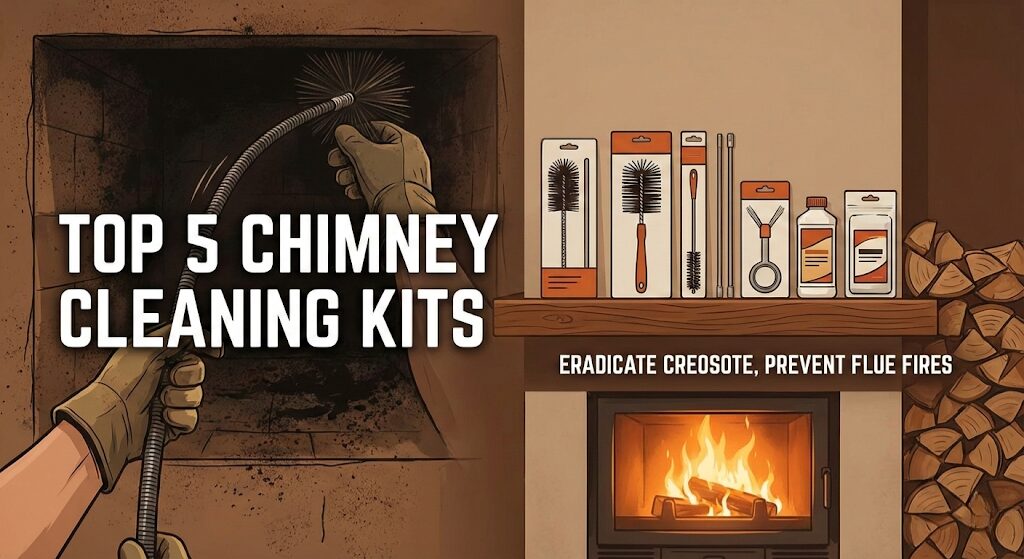
In this massive, comprehensive guide, we are reviewing the top 5 chimney sweep kits available on the market right now. Whether you have a traditional masonry flue, a stainless steel liner, or a pellet stove, we will break down exactly which brush system will safely strip away dangerous creosote without damaging your chimney’s interior.
1. Why Regular Chimney Sweeping is Non-Negotiable
When you burn wood, especially unseasoned or soft wood, the resulting smoke is dense and moisture-rich. This smoke coats the inside of your chimney lining. Over time, this coating restricts airflow (ruining your fireplace draft) and creates a massive fire hazard. A chimney fire can exceed 2,000°F—hot enough to melt mortar, crack masonry, and easily ignite the surrounding wooden framework of your roof and walls.
Beyond fire safety, a dirty chimney causes smoke to back up into your living room, bringing toxic carbon monoxide into your breathing space. Learning about your chimney cleaning frequency based on how much wood you burn is the first step in responsible homeownership. If you burn one or two cords of wood a season, an annual sweep using a high-quality rotary brush kit is generally sufficient to keep your family safe.
2. Understanding the 3 Stages of Creosote
Before buying a brush, you need to know what you are fighting. Creosote develops in three stages, and your brush’s effectiveness depends entirely on catching it early:
- Stage 1 (Soot): Flaky, velvety, and powdery. This is easy to remove with almost any standard nylon or poly chimney brush.
- Stage 2 (Crunchy): Looks like shiny black cornflakes or hard, crusty tar. It is harder to remove and requires the aggressive mechanical whipping action of a drill-powered rotary cleaning kit.
- Stage 3 (Glaze): Looks like thick, black, shiny glass poured down the inside of your flue. Warning: Standard DIY brushes cannot remove Stage 3 creosote. Attempting to force a brush through it can break your rods or damage your flue. This stage requires professional chemical treatments and industrial chains. If you want to know how to spot this dangerous stage, read our guide on the signs of a chimney fire and creosote buildup.
3. Holikme 30 Feet Chimney Sweep Kit

The Holikme 30 Feet Chimney Sweep Kit is one of the most popular and highly-rated DIY kits on the market, and for good reason. It hits the perfect sweet spot between affordability, ease of use, and effective cleaning power. This kit is designed to be used with a standard power drill (rotary sweeping) from the bottom up, meaning you never have to climb onto a dangerous, icy roof.
The kit comes with multiple flexible nylon rods that easily snap together, allowing you to reach up to 30 feet. The brush head features durable, stiff synthetic bristles that use centrifugal force to whip away Stage 1 and Stage 2 creosote without scratching metal liners.
Pros
- Cleans from the bottom up (no roof climbing).
- Incredible value; pays for itself in one use.
- Flexible rods navigate 45-degree bends easily.
- Synthetic bristles will not scratch stainless liners.
- Includes drill adapter and hex key.
Cons
- Rods can snap if drill is spun in reverse.
- Not aggressive enough for baked-on Stage 3 creosote.
- Push-button connections can become stiff with soot.
4. Particle Furnace Cleaning Flexible 15-Rod Sweep Kit

If you have a chimney flue that features severe offsets, bends, or a flexible stainless steel liner that snakes through an older masonry chimney, stiff rods are going to get stuck. Enter the Particle Furnace Cleaning Flexible 15-Rod Sweep Kit.
This kit is specifically engineered for high flexibility. The nylon rods are designed to bend significantly without snapping, allowing you to push the spinning brush head past tricky dampers and through winding flues. The brush bristles are tough enough to break down crusty soot but gentle enough to ensure they do not tear or puncture thin metal flexible liners. Be sure to reference our guide on the best chimney brushes for stainless steel liners to protect your warranty.
Pros
- Superior flexibility for flues with tight angles.
- Easy-to-use threaded rod connections.
- Can be used manually (push/pull) or with a power drill.
- Brush head automatically centers itself in the flue.
- Great for pellet stoves and wood stove pipes.
Cons
- Excessive flexibility means less rigid pushing power.
- Threaded connections must be taped securely so they don’t unscrew in the chimney.
5. Sealegend 30 Feet Flexible Chimney Cleaning Kit

The Sealegend 30 Feet Flexible Chimney Cleaning Kit is a robust contender that competes directly with the Holikme kit but offers a slightly different rod connection system. Made from reinforced nylon, this kit is highly durable and designed for rigorous drill-powered sweeping.
What sets the Sealegend apart is the density of its brush head. The bristles are densely packed, providing a wider surface area of contact against the chimney walls. This means you spend less time running the drill up and down the flue to achieve a clean surface. It easily tackles soot and grime, restoring your chimney’s draft and ensuring your winter fires burn cleanly.
Pros
- High-density bristle head cleans much faster.
- Rods are strong enough for 2-story chimney heights.
- Secure locking mechanism prevents rod detachment.
- Safe for masonry, clay tile, and metal flues.
- Includes heavy-duty plastic storage bag.
Cons
- Locking pins can be difficult to press with gloved hands.
- Requires a fairly powerful cordless drill to maintain speed at 30 feet.
6. Gardus RCH205-B SootEater Rotary Chimney Cleaning System

When it comes to the gold standard of DIY rotary sweeping, the Gardus SootEater is the undisputed king. Unlike traditional brush heads that feature a round cluster of bristles, the SootEater uses a unique “trimmer line” whip head. As the drill spins, these thick, heavy-duty nylon lines expand outward, slapping against the sides of the chimney with incredible force.
Because the whip lines expand dynamically based on spin speed, the SootEater automatically adjusts to fit multiple flue sizes (from 5 inches to 18 inches) and shapes (round, square, oval, or rectangular). It literally beats the creosote off the walls. This is the closest you can get to professional-grade mechanical cleaning at home. Optimizing your chimney fuel selection will reduce creosote, and the SootEater handles the rest effortlessly.
Pros
- Unique whip design is highly aggressive on Stage 2 creosote.
- Automatically fits any flue shape or size perfectly.
- Premium, highly durable button-link fiberglass rods.
- Trim-to-fit lines allow for custom flue sizing.
- The safest and most effective bottom-up system available.
Cons
- Higher price point than generic synthetic brush kits.
- Whip lines will eventually wear down and need replacing.
7. Multi-Scene Durability Multi-Purpose Cleaning Kit

If you love a multi-tasking tool, the Multi-Scene Durability Multi-Purpose Kit offers fantastic versatility. While it is marketed heavily as a chimney sweep, the design of its brush head and the specific flexibility of its rods make it equally adept at cleaning out long dryer vents, pellet stove exhaust pipes, and HVAC ductwork.
Homeowners often forget that lint buildup in a dryer vent is just as flammable as creosote in a chimney. Having one high-reach rotary kit that can tackle both annual maintenance tasks is incredibly efficient. The synthetic bristles are firm enough to remove soot but gentle enough not to puncture thin aluminum dryer ducting.
Pros
- Multi-purpose design (Chimneys, Dryer Vents, Pellet Stoves).
- Cost-effective all-in-one home maintenance tool.
- Easy to assemble and attach to a standard drill.
- Flexible rods navigate tight household pipe bends.
Cons
- Brush head is smaller, requiring more passes in large fireplaces.
- Rods may be slightly too thin for heavy-duty creosote scraping.
8. Direct Product Comparison Table
To help you make an informed decision quickly, use our responsive head-to-head comparison chart of the top kits reviewed above. Swipe left or right on mobile to view the full table.
| Kit Name | Best Feature | Rod Length / Type | Cleaning Style | Ideal Flue Type |
|---|---|---|---|---|
| Holikme 30Ft | Best Overall Value | 30 Feet / Snap-Lock | Rotary (Drill) | Straight / Metal / Masonry |
| Particle 15-Rod | Maximum Flexibility | ~30 Feet / Threaded | Rotary or Manual | Tight Bends / Offsets |
| Sealegend 30Ft | Dense Bristle Head | 30 Feet / Snap-Lock | Rotary (Drill) | Heavy Soot / Straight Flues |
| Gardus SootEater | Premium Whip Action | 18+ Feet / Button-Link | Rotary (Drill) | All Shapes / Heavy Creosote |
| Multi-Scene Durability | Multi-Purpose Use | Varies / Snap-Lock | Rotary (Drill) | Pellet Stoves / Vents |
9. Buying Guide: How to Choose the Right Chimney Brush
Not all chimneys are created equal, and choosing the wrong brush can result in a tool permanently stuck in your flue or severe damage to your liner. Here is what you must consider before clicking ‘buy’.
Rule #1: Know Your Flue Material
If you have an older, unlined brick and mortar chimney (clay tile), you can use a stiff wire brush. However, if you have a modern stainless steel liner, you MUST use a synthetic nylon or poly brush (like all the rotary kits reviewed above). Wire brushes will scratch stainless steel, causing it to rust rapidly and completely voiding your manufacturer’s warranty.
Measure Your Flue Size
If you are buying a standard, stiff poly push-brush, you must measure the inside dimensions of your flue (e.g., 6″ round). A brush that is too small won’t scrape the walls; a brush that is too big will get wedged. Advantage: Rotary kits use centrifugal force to expand the bristles, meaning a single rotary brush can often adapt to clean flues anywhere from 5 to 12 inches wide!
Rod Flexibility vs. Pushing Power
If you have a straight-shot chimney, stiffer fiberglass rods are excellent because they transfer upward pushing power effortlessly. However, if your chimney features a “smoke shelf” or dogleg bends, you need highly flexible nylon rods. Flexible rods will bend around corners easily, though they require a power drill to spin them upwards.
10. Step-by-Step DIY Chimney Sweeping Guide (Bottom-Up)
Cleaning your chimney from the inside of your house (the bottom-up method) using a rotary drill kit is the safest and cleanest way to perform this task. Here is how to do it without turning your living room into a soot-covered nightmare.
- Prepare the Hearth: Remove any grates or logs from the firebox. Lay down a heavy canvas drop cloth over your hearth and surrounding floor.
- Seal the Opening: Cut a large piece of heavy-duty plastic sheeting. Use painter’s tape to securely tape it over the entire fireplace opening. Do not skip this step, or the downdraft will blow black soot everywhere.
- Create an Access Slit: Cut a small “X” in the center of the plastic sheeting. This is where you will feed the rods through.
- Assemble and Insert: Attach the brush head to the first flexible rod. Insert it through the slit in the plastic and up past the damper into the flue.
- Attach the Drill: Connect the bottom end of the rod to your cordless drill. (Always use a cordless drill; corded drills have too much torque and can snap the rods).
- Spin and Feed: Start the drill on a medium speed, spinning forward (clockwise). Slowly push the spinning rod up into the chimney. The brush will whip against the walls, causing a rain of soot to fall safely behind the plastic.
- Add Rods: Stop the drill. Detach it from the rod, click on your next extension rod, reattach the drill, and continue spinning and pushing upwards until you hit the chimney cap.
- Clean Up: Slowly pull the spinning rods back down, detaching them one by one. Wait 15 minutes for the airborne soot dust behind the plastic to settle. Carefully peel back the plastic and use a shop vacuum with a fine-dust filter to vacuum up the pile of creosote.
11. Frequently Asked Questions (FAQs)
Can I use a wire brush on a stainless steel chimney liner?
No. You should never use a wire brush on a stainless steel chimney liner. The wire bristles will scratch the stainless steel, exposing it to moisture and causing galvanic corrosion (rust). This will rapidly destroy your liner and void the manufacturer’s warranty. Always use a synthetic poly or nylon brush.
How often should I sweep my chimney?
The NFPA recommends an annual inspection for all chimneys. If you use your wood-burning fireplace regularly as a primary heat source, you should sweep it at least once a year, or whenever creosote buildup reaches 1/8 of an inch.
Do creosote sweeping logs really work?
Creosote sweeping logs contain chemical modifiers that dry out sticky, tar-like creosote (Stage 2) and turn it into flaky soot. However, they do NOT remove the creosote from the chimney. They are designed to make physical sweeping with a brush much easier. You still must use a brush.
Is rotary sweeping better than manual push-pull sweeping?
Yes, in most cases. Rotary sweeping (using a power drill to spin the brush) utilizes centrifugal force, which is far more aggressive at breaking down hardened creosote. It is also physically easier on the user and allows for the safe ‘bottom-up’ cleaning method.
What do I do if my chimney brush gets stuck?
If a brush gets stuck, do not yank aggressively, as this can break the rods. Try pushing up slightly before pulling down, or twisting gently (only clockwise if using threaded rods). If it is hopelessly wedged, you will need to call a professional chimney sweep who has specialized retrieval tools.
Do I need to get on the roof to clean my chimney?
Not anymore. With modern flexible rotary kits, you can easily clean your chimney from the firebox inside your living room (the bottom-up method). This entirely eliminates the risk of falling off a slick, icy roof.
Can a dirty chimney cause carbon monoxide poisoning?
Yes. If a chimney is heavily blocked by creosote, bird nests, or debris, the toxic exhaust gases (including carbon monoxide) cannot escape the house. Instead, the downdraft will push these deadly gases back into your living space.
How do I clean my chimney cap?
The chimney cap spark arrestor mesh often gets clogged with creosote. While the flue can be cleaned from the bottom up, the cap usually requires a trip to the roof to manually brush the mesh screen clean with a stiff wire or poly hand brush.
12. Final Thoughts: Protect Your Home and Hearth
Chimney maintenance is an unavoidable part of enjoying a wood-burning fireplace, but it doesn’t have to be intimidating, expensive, or dangerous. By investing in a high-quality rotary sweep system, you take control of your home’s fire safety.
For most homeowners, the Holikme 30 Feet Sweep Kit offers unbeatable value and reliability for straight-forward flues. If you demand premium performance for heavy creosote or irregular shapes, the Gardus SootEater is the undisputed champion. Whichever system you choose, committing to an annual sweeping routine ensures that your winter nights remain warm, cozy, and entirely safe from the threat of a flue fire.