Chimney Flashing Repair Cost: Materials, Labor & Warning Signs
By Chimney Insight Editorial Team
Posted on October 30, 2026
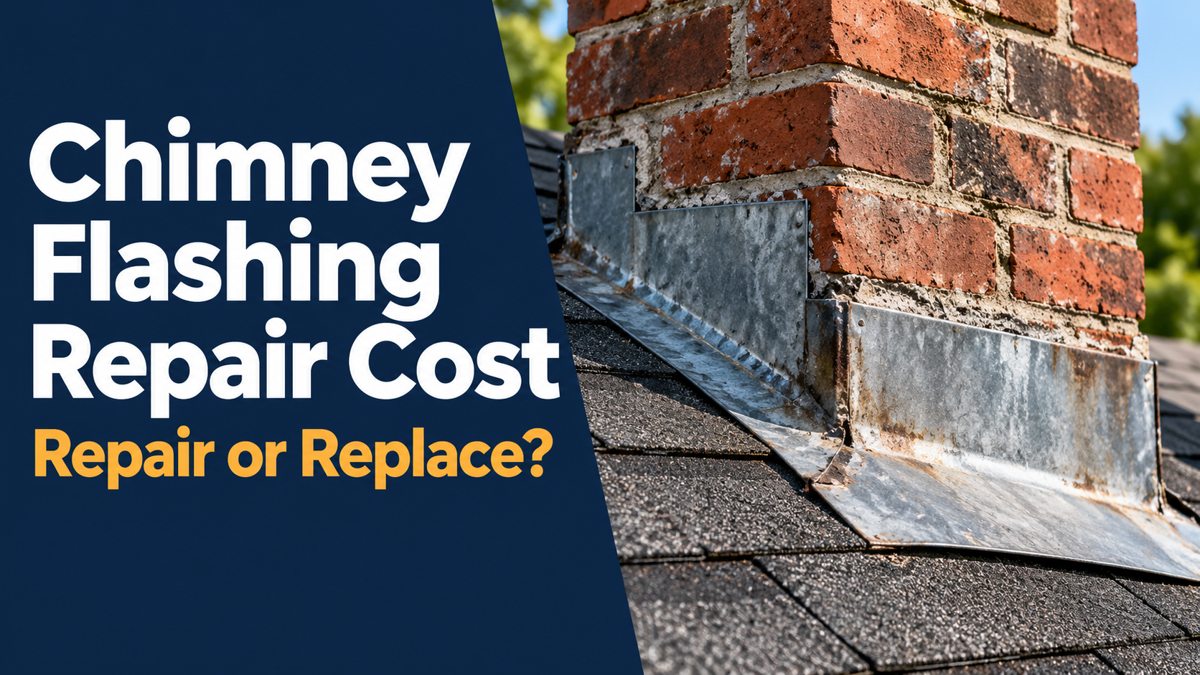
Chimney flashing repair cost depends first on what is actually being repaired: a failed sealant joint, a localized metal defect, or the entire roof-to-chimney flashing assembly. Roof access, roofing material, metal choice and concealed damage then change the labor and scope. Compare written estimates for the same work rather than judging a quote by the price of a tube of sealant.
A small resealing job and a complete reflash are different projects. This guide explains how to tell those scopes apart, which warning signs deserve prompt assessment, and what to ask before approving the bill. It does not supply a national average or a guaranteed local price: an inspection and itemized contractor estimate are needed for your chimney.
As an Amazon Associate, Chimney Insight earns from qualifying purchases.

SIKA Sikaflex Construction Sealant, 12-Pack
Best for: Compatible masonry-to-metal construction joints where the specified flashing design calls for flexible sealant.
A non-sag polyurethane sealant can be relevant to a correctly designed joint. Have the installer verify the current product instructions and all contacting materials; this is not a universal flashing patch.
Check on AmazonWhy flashing repair estimates can be so different
Flashing is the connection between a chimney and the surrounding roof. The visible metal is only part of the detail. For a typical asphalt-shingle roof, the U.S. Department of Energy describes base flashing, step flashing integrated with the shingles, and counterflashing overlapping those components at the masonry. Their arrangement matters more than how freshly the exposed seam is coated.
Ask an estimator to name the failed component and show it in photographs. “Seal chimney” leaves too much unresolved: does it mean renewing a specified joint, coating old metal, removing shingles to replace step flashing, or rebuilding an entire transition? An estimate is easier to assess when it answers that question before listing materials.
If the leak source remains uncertain, begin with our chimney flashing leak inspection guide. A nearby ceiling stain alone does not establish which component has failed. Paying for the wrong repair can leave both the leak and the original uncertainty.
Localized repair or full replacement?
| Proposed scope | What to establish | Why the quote changes |
|---|---|---|
| Renew a specified sealant joint | Surrounding metal, masonry and drainage remain serviceable; sealant failure is the identified defect. | Removal of old material, joint preparation, backing and curing protection. |
| Replace a localized flashing component | The installer can integrate the new section with sound adjacent layers. | Roofing removal, metal forming and reinstatement around that section. |
| Complete chimney reflash | Several components are defective, inaccessible or incorrectly integrated. | More dismantling, replacement metal, roof-layer integration and disposal. |
| Reflash plus concealed repairs | Opening reveals damaged decking or masonry that cannot support the planned work. | Separately defined repair work and an approved change order. |
These are scope categories, not price tiers with fixed dollar amounts. A localized repair on a difficult roof may involve more setup than a larger repair on an accessible one. Conversely, a low quote for surface coating may omit the dismantling needed to correct an underlying installation defect.
Replacement deserves discussion when metal is perforated or extensively deteriorated, several transitions have failed, or the layers cannot be properly joined with a limited repair. Do not assume age alone proves replacement is necessary. Request condition evidence and a clear explanation of what can reasonably be retained.
Materials: specify the whole assembly
Metal type and compatibility
Ask the contractor to identify the proposed metal, thickness or product specification, and how it will connect to existing components. “New flashing” is not an adequate material description. Appearance may influence your choice, but compatibility with the roof, masonry and adjacent metals also needs professional assessment.
A copper option and a different metal option may have different fabrication and joining requirements. Compare the complete installed scope, including corners and terminations. Do not treat a material upgrade as proof that the drainage detail has been redesigned correctly.
Roofing and underlayment
The cost to repair chimney flashing can include lifting or replacing surrounding roof coverings, restoring underlayment, and replacing pieces that cannot be reused. Ask whether matching shingles are included and how the contractor will handle brittle or unavailable roofing. For tile, slate, metal or low-slope roofs, request the detail appropriate to that specific system.
Building America guidance emphasizes connecting flashing with the roof’s water-control layers and inspecting penetrations during reroofing. This is why an apparently small metal repair may require work beyond the exposed edge. Ask for photographs before those layers are concealed.
Sealants, coatings and tapes
A product should be specified for its intended joint and substrates. A crown coating, brick water repellent and construction sealant perform different jobs. None automatically replaces missing flashing or a defective overlap. Our flashing sealant guide is a separate material-selection resource, rather than a reason to skip diagnosis.
Labor and roof access: questions that explain the bill
The working location can change a repair substantially. Ask how the contractor will reach the chimney, protect the roof and adjacent property, and provide safe working access. Height, slope, obstacles and the condition of the roof are useful quote details, not merely inconveniences to ignore.
Find out whether setup, removal and cleanup are included. A quote that lists only “install metal” may leave out old sealant removal, disposal or roof-covering reinstatement. Ask who supplies replacement materials and whether work by a roofer and mason will be coordinated under one scope or separate agreements.
Weather also affects scheduling and protection. Ask what temporary weatherproofing is included if the roof is opened and the job cannot be completed that day. Do not press a contractor to ignore product application or curing conditions to meet a calendar date.
Hidden damage and change orders
Concealed damage is a reason to define a process, not an unlimited allowance. Before signing, ask what the installer can see now, what remains hidden, and which discoveries could change the price. Examples include unsound decking, deteriorated mortar at the termination, or roof layers that cannot be reinstated as planned.
The agreement should explain how you will receive photographs, a description of the additional work and its price before authorizing it. Where practical, ask for unit rates or a separately stated allowance with clear limits. Avoid assuming that an unspecified “wood repair” charge includes every possible structural problem.
If the chimney has loose or displaced masonry, consult a qualified chimney professional or mason. A flashing contractor may identify a problem outside their scope. Our chimney mortar repair guide explains a different repair category that may need separate assessment.
Warning signs: when to arrange prompt assessment
- Fresh water appears around the chimney after rain, or a stain is actively spreading.
- Visible flashing has pulled away, has holes, or is accompanied by damaged roofing.
- Repeated patching has not stopped water entry.
- Interior finishes are bulging, or electrical fittings are exposed to water.
- Loose masonry, unusual smoke entry or damaged venting is also present.
Record dates, rainfall conditions and photographs from a safe location. Do not climb a wet roof, walk an unboarded attic, or disturb suspect structural damage to obtain a quote. Water near electrical equipment needs appropriate urgent professional attention. Stop using the fireplace or connected appliance if venting damage or unsafe operation is suspected, pending qualified inspection.
The Chimney Safety Institute of America identifies water entry and damaged flashing as concerns. Those signs justify assessment; they do not prove that flashing is the only source. A crown, cap or masonry defect can require a different scope.
A checklist for comparing two written estimates
- Same defect: Does each contractor identify and document the suspected entry point?
- Same extent: Is this joint maintenance, component replacement or a complete reflash?
- Same materials: Are metal, roofing, underlayment and any sealant specified?
- Same access: Are setup, protection and disposal included?
- Same exclusions: Are decking, masonry and interior repairs separately addressed?
- Same approval process: Must additional work be documented and priced first?
- Same completion evidence: Will you receive photographs and a written description?
- Same warranty scope: Who handles a callback, and what maintenance or exclusions apply?
For example, imagine one proposal offers to renew a visible joint while another includes opening the surrounding shingles and replacing multiple flashing components. The difference cannot be evaluated fairly until both contractors explain whether the existing concealed layers are serviceable. This is a scope-comparison example, not a price estimate.
Chimney flashing replacement cost during reroofing
If a roof replacement is already planned, ask for the chimney detail to be addressed explicitly in the roofing proposal. Access to underlying layers may allow inspection and integration at that stage. It does not mean chimney work is automatically included or that existing metal must always be replaced regardless of condition.
Ask what will be reused, what will be replaced, and who accepts responsibility for the finished transition. When two trades are involved, get their responsibilities in writing. A roof warranty and a chimney-repair warranty may cover different components and exclusions.
Before buying repair materials
Have the installer specify the actual joint and product first. Buy the amount the approved scope needs, rather than assuming a bulk pack lowers the total job cost. For a small repair, a twelve-cartridge case may leave substantial unused material.
SIKA Sikaflex Construction Sealant, 12-Pack
Best for: Contractor-planned, compatible construction joints with enough measured work to justify twelve cartridges.
Compare the exact cartridge, substrate restrictions and quantity with the contractor’s specification. A case can be excessive for a single small joint, and it will not replace damaged metal or correct bad drainage.
Check on AmazonFrequently asked questions
Why can a small flashing repair involve substantial labor?
Safe access, removal of old materials and integration with surrounding roofing may take more work than the visible defect suggests. Request a breakdown of these tasks in the estimate.
Can caulking replace chimney flashing?
No. Compatible sealant may belong in a specified joint, but it does not create the missing metal and drainage layers of a properly designed flashing assembly.
Should I use a roofer or a chimney professional?
Choose someone qualified for the diagnosed work. Roof-layer integration, masonry repair and venting assessment may require different expertise or coordinated trades. Confirm the scope each contractor will handle.
Does a higher price guarantee the leak will stop?
No. Diagnosis, the proposed detail, installation quality and any remaining water-entry sources matter. Compare evidence, scope and callback terms rather than price alone.
Make the repair decision with the scope in front of you
Start by identifying the defect, then compare like-for-like proposals. A sound estimate states what will be removed, installed and reinstated, how concealed damage will be handled, and what evidence you will receive at completion. That is a more useful basis for judging chimney flashing repair cost than a generic average.
If a completed repair still leaks, use our post-repair callback checklist to document the problem. For contractor selection beyond this specific job, see how to choose chimney repair services.
Sources and editorial basis
Research-based guidance, reviewed October 29, 2026. No hands-on product testing or local price survey is claimed. The cover is an AI-generated editorial illustration.