What is the Chimney Effect? The Science of Airflow, Draft, and Home Comfort
By Chimney Insight Editorial Team
Posted on December 15, 2025
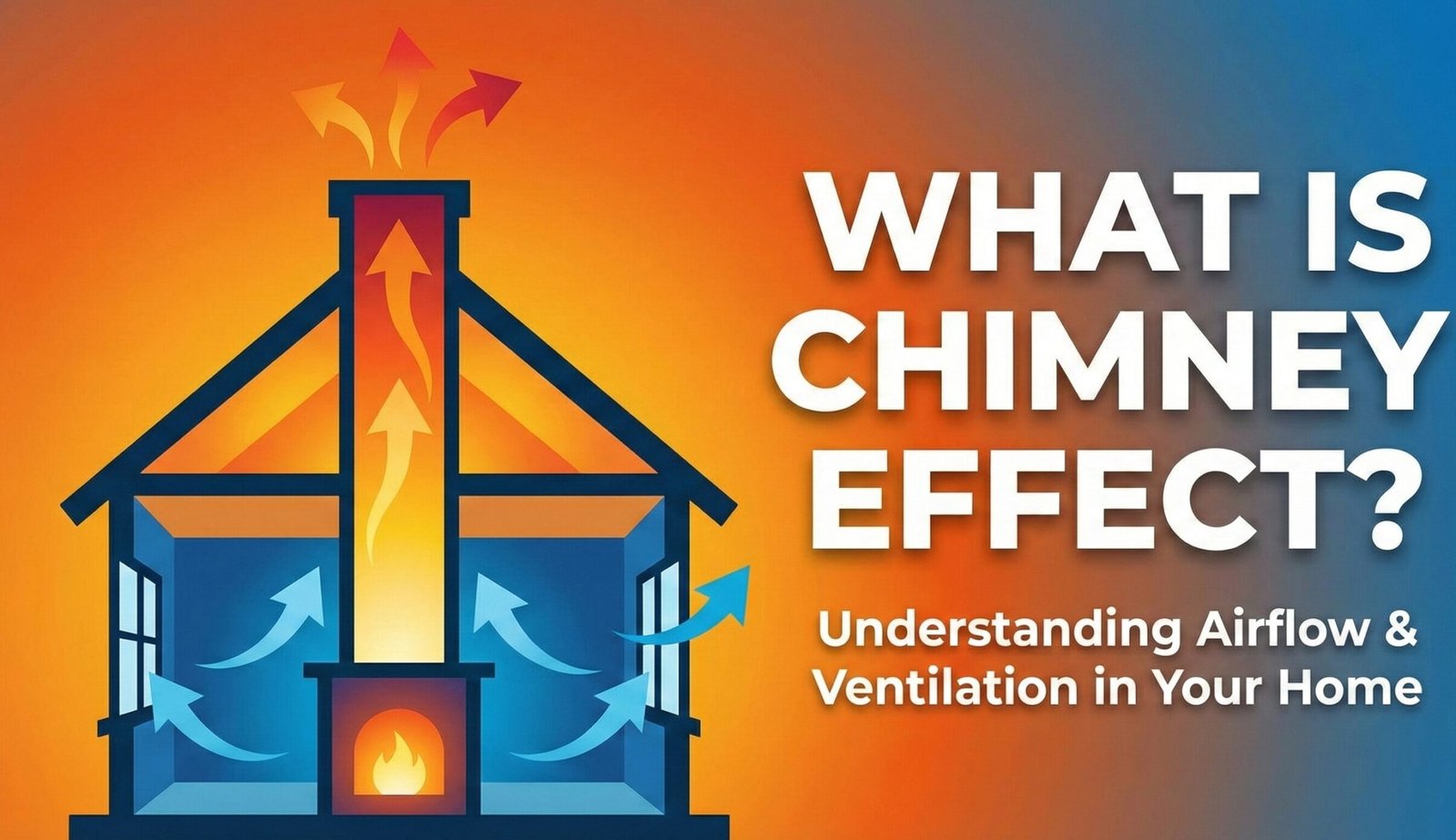
Have you ever wondered why smoke magically rises up a flue rather than pouring into your living room? Or why your basement feels drafty in the winter while your upstairs bedrooms are sweltering hot? The answer lies in a fundamental principle of building physics known as the Chimney Effect (also frequently called the Stack Effect).
While most homeowners associate this strictly with their wood-burning fireplace, the chimney effect dictates the airflow of your entire home. It influences your energy bills, indoor air quality, and the safety of your heating appliances. It governs skyscrapers, mine shafts, hospital stairwells, and even the humble baseboard heater in your hallway.
In this comprehensive guide, we will break down the science of the chimney effect from first principles, explore how it powers your fireplace, examine why it sometimes fails (causing smoke issues and carbon monoxide hazards), and show you how to manage it for a safer, more comfortable, and more energy-efficient home.
The Core Definition: What is the Chimney Effect?
At its simplest level, the chimney effect is the movement of air into and out of buildings, chimneys, or flue stacks resulting from air buoyancy. Buoyancy occurs due to a difference in indoor-to-outdoor air density resulting from temperature and moisture differences. The result is either a positive or negative buoyancy force — and that force drives everything from fireplace draft to heating bills to indoor air quality.
The Physics Rule of Thumb: Warm air is lighter (less dense) than cold air. Therefore, warm air rises, and cold air sinks. This simple truth is the engine behind billions of dollars of energy loss and the reason your fireplace draws smoke upward.
When you light a fire in your fireplace, the air inside the flue becomes significantly hotter than the air outside. This hot air rises rapidly, creating a low-pressure zone (partial vacuum) at the bottom of the firebox. To fill this vacuum, fresh air from the room rushes into the fireplace. This continuous cycle — hot air going up, fresh air coming in — is what we call draft.
The Two Environments of the Stack Effect
- The Appliance (Fireplace/Stove): Here, the effect is intentional and necessary. Without it, you cannot burn wood safely or cleanly.
- The Building Envelope (Your House): Here, the effect is often unintentional. Your entire house acts like a giant chimney, leaking warm air out of the attic and sucking cold air in through the basement.
Why “Stack Effect” and “Chimney Effect” Are Used Interchangeably
Both terms describe the same fundamental physics. “Stack effect” is the preferred engineering term used in building science, HVAC design, and fire safety codes. “Chimney effect” is used more commonly in the context of residential fireplaces and flue systems. Throughout this guide, we use both terms depending on context — but they always refer to the same phenomenon: thermally driven vertical air movement caused by density differences.
Industrial engineers also use the term “draft” to describe the same pressure differential in large power plant stacks, boiler exhausts, and process industry chimneys. The physics are identical regardless of scale.

Identify Air Leaks Instantly
Use a thermal leak detector to see where the chimney effect is stealing your heat.
Physics Deep Dive: Pressure, Buoyancy & the Draft Equation
To truly master the chimney effect — and to diagnose problems when your fireplace misbehaves — you need to understand the underlying thermodynamics. Don’t worry: no calculus required.
Air Density and Temperature
Air, like all gases, follows the Ideal Gas Law: when temperature increases, volume increases (at constant pressure), meaning the same number of molecules occupies more space. Those molecules become more spread out — the air becomes less dense. Less dense air is lighter. Lighter air floats on top of denser, heavier air. This is the entirety of the chimney effect distilled into physics.
The Pressure Difference Equation:
ΔP = C × h × (1/Toutside − 1/Tinside)
Where ΔP is the pressure difference driving draft (in Pascals), C is a constant (3,460 when using absolute temperatures in Kelvin), h is the height of the chimney or building in meters, and T values are absolute temperatures. This shows two key levers: height and temperature differential. Double the height, double the pressure. Double the temperature differential (roughly), double the pressure.
What Drives Strong vs. Weak Draft
Understanding this equation explains everything about chimney performance:
- Cold outdoor temperatures create stronger draft — the temperature differential between flue gas and outside air is maximized. This is why a fireplace in deep winter draws magnificently but struggles on a mild autumn evening.
- Taller chimneys draft better — more vertical height means more column of warm, rising gas, creating greater pressure differential at the base.
- Hotter fires draft better — high combustion temperatures produce very hot flue gases, maximizing the density difference versus outdoor air.
- Insulated flues draft better — if the flue gases cool down before reaching the top, buoyancy is lost. An uninsulated exterior chimney loses heat rapidly to cold masonry.
Pressure Zones: Positive, Negative, and Neutral
The chimney effect creates distinct pressure zones within any building. Below the Neutral Pressure Plane (NPP), interior pressure is lower than outdoors — air is being sucked in. Above the NPP, interior pressure is higher than outdoors — air is being pushed out. The NPP is not fixed; it moves based on how airtight the building is, where openings are located, and whether mechanical ventilation is running.
In a typical leaky house, the NPP sits roughly at the mid-level. In a tightly sealed house with a chimney, the NPP may drop dramatically, leaving almost the entire building under negative pressure relative to the outside — which makes it very hard to start a fire and very easy for appliances to backdraft.
Bernoulli’s Principle and Wind Interaction
Wind adds another layer of complexity. When wind blows across the top of a chimney, it creates a low-pressure zone (Bernoulli’s principle: faster-moving air has lower pressure). A properly shaped chimney cap can harness this to increase draft. However, if wind blows at the wrong angle — such as into the mouth of the chimney — it creates positive pressure that fights the upward draft and causes downdrafts.
The “zone of turbulence” above the roofline is where wind behavior becomes unpredictable. Standard building codes require chimney tops to extend at least 2 feet above any roof surface within 10 feet horizontally — specifically to escape this turbulent zone.
How the Chimney Effect Works in Fireplaces
For a fireplace to function, the chimney effect must be strong enough to overcome external pressures (like wind) and internal competition (like exhaust fans). If you are experiencing fireplace draft problems, it is usually because the chimney effect has been disrupted.
The Mechanism of Draft — Stage by Stage
When you ignite your kindling, the heat warms the air directly above it. As these gas molecules expand, they become less dense. The heavy, cold air outside the chimney pushes down, but because the air inside is lighter, it floats on top of the cold air, rising up the flue.
The strength of this draft depends on two critical factors:
- Temperature Difference (Delta T): The hotter the fire compared to the outside air, the stronger the draft. This is why stoves draft better in the dead of winter than on a mild spring day.
- Chimney Height: A taller column of warm air creates more pressure difference. Generally, a taller chimney drafts better than a short one.
The “Cold Plug” Phenomenon
Sometimes, the chimney effect fails to start. If your chimney is on the outside of the house and it is very cold, a column of heavy, cold air can get trapped in the flue. This forms a “plug.” When you try to light a fire, the smoke hits this cold plug and rolls back into the room. You may need to learn how to use chimney starters or prime the flue with a newspaper torch to break this lock.
Priming the Flue: A Crucial Skill
Flue priming is the act of pre-warming the air column inside the chimney before starting your main fire. This is done by holding a lit, rolled-up newspaper near the open damper for 30–60 seconds. As the warm air displaces the cold plug upward, you will feel the draft engage — a slight pull toward the fireplace opening. That’s your signal to light the kindling.
Modern solutions include electric chimney fans, which can be installed at the chimney top to mechanically force the initial airflow before the fire is strong enough to sustain its own natural draft.
The Role of the Damper
The damper is the adjustable metal plate inside the throat of the fireplace, above the firebox opening. Its job is to control the rate of airflow — and therefore the intensity and burn rate of the fire. A fully open damper allows maximum airflow, producing a hot, fast-burning fire. A partially closed damper restricts airflow, slowing combustion and conserving fuel (though risking smoke spillage if closed too far). When the fireplace is not in use, the damper should be fully closed to prevent the whole-house stack effect from exhausting your conditioned air straight up the chimney.
Many older fireplaces have throat dampers that warp over time, leaving gaps even when “closed.” Upgrading to a top-sealing damper, which mounts at the chimney crown and seals the flue from above, is one of the most effective energy-saving modifications you can make.
Flue Gas Dynamics & Combustion Chemistry
Understanding what actually travels up your chimney — and why it behaves the way it does — is key to maximizing draft, minimizing creosote, and keeping your household safe.
What’s In Flue Gas?
Flue gas from a wood fire is not simply “smoke.” It is a complex mixture of:
- Water vapor (H₂O): Wood contains moisture even when “dry.” Combustion produces water vapor, which condenses on cold flue walls as temperature drops — contributing to creosote formation.
- Carbon dioxide (CO₂): The primary product of complete combustion. Harmless in ventilated spaces but a significant indicator of combustion efficiency.
- Carbon monoxide (CO): Produced by incomplete combustion (insufficient oxygen or temperature). Odorless, colorless, and lethal at elevated concentrations.
- Particulate matter (PM2.5): Fine particles of partially burned carbon. Responsible for visible smoke and the characteristic smell of a wood fire.
- Volatile organic compounds (VOCs): Unburned hydrocarbons from wood. Form a component of creosote deposits.
- Nitrogen oxides (NOₓ): Formed at high combustion temperatures. Contribute to outdoor air pollution.
Temperature Profiles Along the Flue
Flue gas exits the firebox at temperatures that can exceed 600°C (1,100°F) in a hot, established fire. As it rises up the flue, it loses heat to the surrounding masonry or metal. By the time it exits the chimney top, temperatures in a well-burning wood fire typically range from 120–260°C (250–500°F). If exit temperatures fall below 120°C, the water vapor and VOCs condense heavily on the flue walls — this is creosote formation territory.
The “Goldilocks Zone” of Flue Temperature: Too cold (below 120°C at the top) and you get heavy creosote buildup. Too hot (above 480°C continuously) and you risk damaging the flue liner. The ideal operating range for most wood appliances is 180–370°C measured at the flue collar.
How Draft Quality Affects Combustion
Draft is not merely about getting smoke out of the room — it fundamentally governs combustion chemistry. Strong, steady draft pulls fresh air into the firebox, supplying oxygen for complete combustion. Complete combustion produces more heat, less smoke, and far less creosote. Weak or intermittent draft chokes the fire of oxygen, creating a smoldering, incomplete burn that’s smoke-heavy, inefficient, and deposits thick layers of creosote inside the flue.
This is why professional chimney sweep organizations emphasize that good draft is not just a comfort issue — it is a fire safety issue. A clean, hot-burning fire with strong draft is the single most effective way to minimize the creosote that fuels dangerous chimney fires.
The Whole-House Stack Effect
Beyond the fireplace, your home experiences the chimney effect 24/7 during the heating season. This is crucial for understanding energy efficiency and indoor air quality.
Winter Dynamics
In winter, your heating system warms the interior air. This warm air rises to the top floors and attic. If there are cracks, recessed lighting fixtures, or unsealed attic hatches, the warm air escapes (exfiltration). This escaping air creates negative pressure in the lower levels of the house. To balance the pressure, the house sucks in cold, outside air through cracks in the foundation, windows, and doors (infiltration). This makes your floors feel cold and forces your furnace to work harder.
The Neutral Pressure Plane (NPP)
Every house has a “Neutral Pressure Plane” (NPP). Below this line, air is being sucked in. Above this line, air is being pushed out. At the line, the pressure is neutral. The goal of air sealing is to lower the NPP so that less warm air escapes the top. In a typical poorly air-sealed house, the NPP may sit at mid-height — meaning half the house is under negative pressure and acting as a giant air intake. In a well-sealed house, the NPP drops much lower, dramatically reducing infiltration volume.
Quantifying the Energy Loss
The whole-house stack effect is responsible for a significant portion of residential heat loss in cold climates. Research from the U.S. Department of Energy consistently shows that air infiltration (driven largely by stack effect) accounts for between 25–40% of the heating energy used in a typical home. In older, poorly sealed homes — particularly those built before modern insulation standards — this figure can climb even higher. A single poorly sealed attic hatch can allow the equivalent of a basketball-sized hole’s worth of conditioned air to escape continuously throughout the heating season.
Expert Insight: The Danger of Renovations
If you tighten up your home by installing new windows and doors but don’t address the fireplace, you might starve the fire of oxygen. The chimney effect needs makeup air. In ultra-tight modern homes, you may need a dedicated fresh air intake kit. If you are seeing smoke spillage, check our guide on fireplace smoke coming into the house.

Stop the Draft When Not in Use
A fireplace draft stopper or chimney balloon prevents your home’s heat from escaping up the flue.
Seasonal Variations: Winter vs. Summer Stack Effect
The chimney effect is not a winter-only phenomenon. It operates year-round, reversing direction between the heating and cooling seasons. Understanding these seasonal dynamics is essential for homeowners dealing with off-season odors, moisture problems, or HVAC inefficiency.
Winter (Heating Season)
Warm interior air rises and exits through attic, upper windows, and chimney tops. Cold outdoor air infiltrates at the basement, foundation cracks, and lower wall penetrations. The chimney acts as an additional exhaust pathway — even when no fire is lit. Fireplace draft is strongest. Risk of backdrafting from combustion appliances is highest.
Summer (Cooling Season)
The process reverses. Air-conditioned interior air is denser than hot outdoor air. Cool air sinks and exits at lower openings. Hot outdoor air infiltrates at upper levels. The chimney becomes an intake path — drawing hot, humid, sooty air down into the living space. This is the source of the classic “smelly summer fireplace” complaint.
The Transition Seasons: The Trickiest Period
Spring and autumn can be the most problematic seasons for chimney draft. When outdoor temperatures closely match indoor temperatures, the temperature differential driving the stack effect is minimal. Draft can become weak, intermittent, or completely reversed mid-fire. If you find your fireplace difficult to operate during mild weather, this is almost certainly the explanation. Solutions include burning only small, very hot fires during transitional seasons, using draft-inducing chimney fans, or simply waiting for the outdoor temperature differential to increase.
Humidity and the Stack Effect
Moisture content in the air affects density. Humid air is actually slightly less dense than dry air at the same temperature (water vapor, H₂O, has a lower molecular weight than nitrogen, N₂, or oxygen, O₂, which make up most of dry air). In practical terms, the effect of humidity on the stack effect is secondary to temperature — but in very humid climates, it can cause subtle differences in draft performance, particularly when burning green or wet wood that releases large quantities of water vapor.
Stack Effect in Different Building Types
The chimney effect scales with building height and complexity. Its impact varies dramatically across different structure types.

Single-Family Homes
The stack effect is significant but manageable. Primary concerns are attic air leakage, basement infiltration, and the fireplace acting as an uncontrolled exhaust when not in use. Air sealing and a quality damper system address most issues.

Multi-Story Buildings
Stack pressures increase significantly with height. Stairwells, elevator shafts, and mechanical chases act as internal chimneys, accelerating vertical air movement. Smoke control system design becomes critical for fire safety compliance.

High-Rise Buildings
The stack effect can be extreme — potentially creating pressure differentials powerful enough to make lobby doors nearly impossible to open in deep winter. Revolving doors are specifically designed to break this pressure cycle. Detailed modeling is required during the design phase.

Industrial Stacks & Power Plants
Industrial chimney stacks are purposely designed to maximize the stack effect. Very tall stacks (some exceeding 300 meters) and hot flue gas temperatures create powerful forced draft without any fans. This is the same physics — just at an extraordinary scale.

Hotels & Hospitality
Atria, open lobbies, and glass facades create complex internal stack effect zones. HVAC engineers must carefully model neutral pressure plane locations to ensure consistent comfort and prevent smoke migration in fire scenarios.

Hospitals & Healthcare Facilities
Pressure management is critical: isolation rooms must be negative pressure (to contain pathogens), operating theaters must be positive pressure (to keep contaminants out), and corridors must be calibrated precisely. The stack effect is a constant variable in these calculations.
Historical Use: Mines and Underground Structures
Before powered ventilation fans existed, the chimney effect was literally life-saving technology for miners. A downcast shaft (cold air entry) and an upcast shaft (with a continuously burning furnace at its base) created a circuit of fresh air through underground mine workings. The hot air rising through the upcast shaft created low pressure at the mine’s lowest levels, drawing fresh air in through the downcast shaft and along the mine passages. Some mine ventilation shafts were several hundred yards deep, functioning as enormous chimneys. This technique was in use for centuries before mechanical ventilation displaced it.
Factors That Disrupt the Chimney Effect
Ideally, smoke goes up and stays up. However, several variables can fight against the natural buoyancy of air, leading to dangerous backdrafting.
1. Negative House Pressure
Modern homes use many devices that push air out: kitchen range hoods, bathroom exhaust fans, and clothes dryers. If these devices are running simultaneously, they can create a vacuum stronger than the chimney’s updraft, pulling smoke back down into the room. This pressure imbalance can pull smoke or combustion gases back into the room instead of allowing them to vent up the chimney.
2. Wind Loading
Wind blowing across the roof can either help or hinder draft. If the wind hits a tall obstruction (like a roof peak or trees) and swirls down the chimney, it creates a downdraft. This necessitates the installation of specialized caps. Knowing the best chimney caps for rain and wind is essential for maintaining steady draft.
3. Chimney Condition
A chimney that is structurally compromised will not draft well. Cracks in the liner or missing mortar allow cool air to enter the flue, cooling the smoke and reducing buoyancy.
- If you see visible gaps, you may need to research the cost to rebuild a chimney stack.
- For minor masonry issues, using the best mortar for chimney repair can restore airtightness.
4. Competing Appliances & the “Orphaned Appliance” Problem
When multiple combustion appliances share a common chimney — such as a furnace and a water heater — they compete for draft. If one appliance is running strongly and the other has its burner off, the active appliance can reverse the draft in the inactive flue. This “orphaned appliance” scenario is particularly dangerous with gas water heaters, which burn at low temperatures and produce buoyant flue gases that are easily overwhelmed by the depressurization caused by a nearby high-powered appliance or exhaust fan.
The solution is to ensure each appliance is properly sized to its own dedicated flue, or to conduct a combustion appliance zone (CAZ) pressure test to verify that no appliance is backdrafting under normal operating conditions.
5. Overly Large Fireplace Openings
There is a precise relationship between firebox opening area and flue cross-section area for a reason. If the firebox opening is too large relative to the flue, the chimney simply cannot exhaust gas fast enough. The industry standard ratio is approximately 1:10 — the flue cross-sectional area should be at least 1/10th the area of the firebox opening. An undersized flue for a large firebox is a recipe for chronic smoke spillage that no amount of draft improvement can fix without structural modification.
6. Atmospheric Pressure Events
Passing weather systems change atmospheric pressure, which affects draft. A rapidly falling barometer (associated with approaching storms) means atmospheric pressure is dropping, which slightly reduces the pressure differential that drives the chimney effect. Many homeowners notice their fireplace drafts poorly just before a storm arrives. Conversely, high-pressure weather systems can temporarily enhance draft.
Step-by-Step: The Complete Cycle of Airflow
To visualize the process, let’s trace the journey of an air molecule involved in the chimney effect from its entry into the home to its exit through the chimney cap:
- Intake:Air enters the home through a gap in a window frame, foundation crack, or a dedicated combustion air vent at the lowest point of the house.
- Equalization:The incoming cold air mixes with interior air, slightly lowering the room temperature and replacing the air displaced upward.
- Heating:The air is warmed by the furnace, radiant heat of the fire, or by the general interior thermal environment. Molecules gain kinetic energy.
- Rise:The heated molecule becomes less dense and floats toward the highest point — the ceiling, stairwell, or directly up into the fireplace convection zone.
- Entry into the Firebox:Air drawn into the firebox meets the flame and participates in combustion, supplying oxygen to sustain the fire.
- Conversion to Flue Gas:Combustion transforms the air into a mixture of CO₂, water vapor, particulates, and heat. This mixture is now significantly hotter and less dense than anything else in the system.
- Acceleration up the Flue:The intense buoyancy of hot flue gas accelerates the mixture upward through the liner. Velocity increases in narrower sections of the flue (Venturi effect).
- Exit at the Chimney Cap:The flue gas exits through the chimney cap into the atmosphere, where it disperses.
- Replacement:The departure of this air creates a micro-vacuum, instantly pulling new air in at the bottom to repeat the cycle. At steady state, this cycle runs continuously.
Measuring Draft: Tools, Techniques & Readings
Professional chimney technicians and HVAC engineers do not guess at draft — they measure it. Understanding how draft is quantified gives you a much clearer picture of your chimney’s performance and helps you communicate effectively with professionals.
Units of Measurement
Draft is measured as a pressure differential, typically in inches of water column (in. WC) or Pascals (Pa). Draft is always expressed as a negative number because the pressure inside the chimney is lower than the atmospheric pressure at the base — this negative pressure is what pulls air and gas upward. A reading of −0.06 in. WC (approximately −15 Pa) is generally considered good draft for a wood-burning fireplace. Readings less negative than −0.02 in. WC indicate weak draft that will likely cause smoke spillage.
Tools for Measuring Draft
- Magnehelic Gauge: A precision differential pressure gauge used by professionals. Measures small pressure differences accurately.
- Digital Manometer: Electronic version of the Magnehelic. More portable and easier to read. Essential for combustion appliance zone testing.
- Incense Stick / Smoke Match: A simple, inexpensive qualitative test. Hold the smoldering incense near the firebox opening with the damper open. Smoke being pulled toward the fireplace indicates positive draft. Smoke drifting into the room indicates negative draft or no draft.
- Thermometer / Pyrometer: Measuring flue gas temperature at the collar of the appliance helps assess combustion efficiency and creosote risk.
- Thermal Imaging Camera: Used by energy auditors to visualize the whole-house stack effect by showing where warm air is leaking through the building envelope.
The Blower Door Test
For whole-house stack effect assessment, energy auditors use a blower door test. A powerful fan is temporarily installed in an exterior door frame, and the house is depressurized to a standardized test pressure (typically 50 Pascals). By measuring the airflow required to maintain this pressure, technicians can calculate the total air leakage of the building envelope, expressed as ACH50 (air changes per hour at 50 Pa). This test directly quantifies the driving force behind whole-house stack effect energy losses. Average existing homes have ACH50 values of 8–12; new construction targets are 3–5; passive house standards require 0.6 or lower.
Draft Measurement Reference:
Below −0.10 in. WC: Very strong draft (may burn fuel too fast)
−0.06 to −0.10 in. WC: Good draft (ideal range)
−0.02 to −0.06 in. WC: Marginal draft (smoke risk)
Above −0.02 in. WC: Inadequate draft (expect smoke spillage)
Energy Efficiency & Air Sealing Strategy
The chimney effect is one of the primary mechanisms through which houses waste energy. Tackling it is among the highest-return investments a homeowner can make. But the order of operations matters — do things in the wrong sequence and you risk creating dangerous combustion appliance conditions.
The Air Sealing Priority Hierarchy
Energy auditors follow a specific hierarchy when addressing air sealing work, designed to maximize energy savings while avoiding the creation of new problems:
- Attic air sealing first: The attic is where the most air escapes (positive pressure above the NPP). Sealing top plates, electrical penetrations, recessed lighting, and the attic access hatch can dramatically reduce overall air leakage. This is the single highest-impact action.
- Basement and crawlspace sealing second: The basement is where replacement air enters (negative pressure below the NPP). Sealing rim joists, foundation penetrations, and sill plates stops cold air infiltration.
- Combustion safety verification third: Before proceeding with any further tightening, verify that all combustion appliances (furnace, water heater, fireplace) are drafting safely. This may require a CAZ pressure test by a certified professional.
- Wall and window air sealing fourth: Weatherstripping, caulking around window and door frames, and sealing wall outlet boxes contribute additional savings but have less impact than the top and bottom of the building.
- Fresh air provision if needed: In very tight homes (ACH50 below 3), mechanical fresh air ventilation (such as an HRV or ERV) must be provided to maintain indoor air quality and combustion appliance safety.
The Cost-Benefit of Air Sealing
Air sealing projects consistently rank among the best return-on-investment home improvements. The U.S. Department of Energy estimates that a comprehensive air sealing project can reduce heating and cooling energy use by 15–30%. In climates with significant temperature differentials, payback periods of 2–5 years are common. Unlike insulation, which slows heat transfer, air sealing prevents the convective loss mechanism entirely — which is why it typically delivers faster payback.
The Fireplace as an Energy Liability
An open masonry fireplace with a metal throat damper is one of the worst energy performers in a home. Even when closed, a warped metal damper leaks air equivalent to leaving a window partially open. When the fireplace is in use, a traditional open fireplace is actually a net negative from a heating standpoint — it exhausts far more conditioned air than it adds heat to the room, particularly once the fire dies down and the damper remains open (or cannot be fully closed on hot embers).
Modern solutions — including high-efficiency fireplace inserts with tight-sealing doors, EPA-certified wood stoves, and gas inserts with direct vent systems — dramatically change this equation, converting the fireplace from an energy liability to a genuine heat source.
Indoor Air Quality & the Chimney Effect
The chimney effect is intimately connected to indoor air quality (IAQ). The same pressure dynamics that control where heat goes also determine what enters your home, where pollutants migrate, and how effectively your house ventilates itself.
Pollutant Entry Pathways
When your home is under negative pressure at the lower levels (driven by the stack effect), it doesn’t just pull in outdoor air — it pulls in whatever is attached to that outdoor air. Common pollutant entry pathways include:
- Radon gas: Radon (a naturally occurring radioactive gas from soil) is pulled into basements and crawlspaces by the negative pressure created by the stack effect. Radon is the second leading cause of lung cancer after smoking. Homes in high-radon areas are particularly vulnerable because the stack effect essentially acts as a radon pump, continuously drawing soil gas upward through foundation cracks.
- Pesticides and soil gases: Volatile compounds in soil (including methane near landfills, industrial solvents near contaminated sites, and agricultural pesticides) follow the same pathway as radon.
- Garage pollutants: Attached garages are a significant concern. Vehicle exhaust, lawn equipment fumes, and stored chemical vapors can be drawn into the house through the shared wall if the house is under negative pressure relative to the garage.
- Sewer gases: Dry P-traps in floor drains or infrequently used fixtures can allow sewer gas (including hydrogen sulfide and methane) to enter through the drainage system under negative pressure conditions.
Combustion Pollutant Backdrafting
When combustion appliances are starved of makeup air or operate in a depressurized zone, they backdraft — exhausting combustion gases including carbon monoxide, nitrogen dioxide, and fine particles into the living space rather than up the flue. Even minor, intermittent backdrafting from a gas water heater can produce CO concentrations that, over time, cause headaches, fatigue, and cognitive impairment without ever triggering a CO detector alarm (which typically activates at concentrations that exceed short-term exposure limits, not chronic low-level exposure).
Carbon Monoxide Warning: If you suspect backdrafting — symptoms include chronic headaches, fatigue, or flu-like symptoms that improve when you leave the house — have your home tested immediately by a certified professional. Do not attempt to diagnose or repair combustion appliance venting without professional training. CO poisoning kills hundreds of people annually in North America alone.
Carbon Monoxide Warning: If you suspect backdrafting — symptoms include chronic headaches, fatigue, or flu-like symptoms that improve when you leave the house — have your home tested immediately by a certified professional. Do not attempt to diagnose or repair combustion appliance venting without professional training. CO poisoning kills hundreds of people annually in North America alone.
Moisture Transport and Mold Risk
Air movement driven by the stack effect carries moisture with it. In winter, warm, humid interior air driven upward through the building envelope deposits moisture in insulation, attic framing, and roof sheathing as it cools below the dew point. This is the mechanism behind most attic mold problems in cold climates. Addressing air sealing (particularly at the attic floor) is far more effective at preventing attic moisture damage than adding ventilation — because the moisture source is being directly eliminated rather than just diluted.

Safety First
The chimney effect can sometimes reverse, bringing deadly gases in. Protect your family with a reliable CO detector.
Natural Ventilation Design Using the Stack Effect
While the stack effect is often portrayed as a problem to be mitigated, it can also be a powerful design tool. Architects and engineers deliberately harness it to create buildings that ventilate naturally, reducing or eliminating the need for mechanical HVAC systems in appropriate climates.
Principles of Stack-Driven Natural Ventilation
To use the stack effect for ventilation, buildings are designed with strategically placed openings at different heights. Low-level inlets allow cool, fresh air to enter near the floor. High-level outlets — skylights, roof monitors, louvered clerestory windows, or chimney-like exhaust shafts — allow warm, stale air to exit at the top. The height difference between inlet and outlet, combined with the temperature differential between inside and outside, determines the ventilation rate.
For stack-driven natural ventilation to work effectively, the building must:
- Have sufficient height between air inlet and outlet (taller buildings achieve greater stack pressure)
- Generate internal heat gains (occupants, equipment, sunlight) to create the temperature differential
- Be located in a climate where outdoor temperatures are reliably lower than indoor temperatures during occupied hours (primarily applicable in temperate climates)
- Have an interior layout that doesn’t obstruct air movement from inlet to outlet
The Trombe Wall: Passive Solar + Stack Effect
A Trombe wall is a classic example of deliberately harnessing the chimney effect for passive solar heating and natural ventilation simultaneously. A dark, thermally massive wall (usually masonry or concrete) sits behind south-facing glazing. The air gap between the glazing and the wall heats intensely in sunlight. Vents at the top and bottom of the wall allow this hot air to circulate into the building (in heating mode) or be exhausted outdoors (in cooling mode). The Trombe wall essentially creates a controlled chimney effect as part of the building’s passive energy strategy.
Solar Chimneys in Architecture
Some contemporary buildings include dedicated “solar chimneys” — vertical shafts glazed on the south side, designed to heat intensely from solar radiation. This heating creates a powerful upward draft that draws cool, outdoor air through the occupied spaces of the building at ground level. Solar chimneys have been used in office buildings, schools, and residential designs in Europe and Australia, achieving significant reductions in mechanical cooling loads without sacrificing occupant comfort.
Limitations of Natural Stack Ventilation
Natural stack-driven ventilation has real limitations that must be respected:
- It does not provide humidity control — in humid climates, it may introduce uncomfortable levels of moisture
- It works poorly in very wide buildings where fresh air cannot reach central areas
- Very low-ceiling spaces do not generate meaningful stack pressure
- Filtration is limited — outdoor air quality and pollen levels directly affect interior IAQ
- Fire codes may restrict operable openings in stairwells and other vertical shafts
Common Problems & Solutions
When the chimney effect goes wrong, it affects comfort and safety. Here is a comprehensive breakdown of common symptoms and solutions.
The “Smelly Fireplace” in Summer
This is the Reverse Stack Effect. In summer, the air inside your house (air-conditioned) is heavier than the hot air outside. Gravity pulls this heavy air down the chimney, bringing the smell of soot and creosote with it.
Solution: Install a top-sealing damper or learn how to get rid of fireplace smoke smell in house.
Difficulty Starting a Fire
As mentioned, this is a cold air block in the flue.
Solution: Warm the flue with a hair dryer or a torch of rolled-up newspaper before lighting the main logs. Ensure you are using seasoned vs. unseasoned firewood, as wet wood does not burn hot enough to establish strong draft.
Carbon Monoxide Backflow
If the draft reverses while embers are still smoldering, odorless CO gas can fill the room.
Solution: Ensure proper venting and always have a working detector. Read our guide on the best carbon monoxide detector for home safety.
Smoke Puffing Into the Room When Adding Logs
When you open the fireplace doors or firebox screen and add a log, a brief puff of smoke enters the room. This indicates that the draft is borderline — just strong enough to maintain itself, but not strong enough to handle the momentary disruption caused by opening the fire chamber.
Solutions: Increase draft by burning a hotter, more established fire before adding logs. Ensure the firebox damper is fully open. Consider whether the chimney height or flue size meets minimum requirements for your firebox opening area.
Drafty Basement and Ground Floor Floors
Cold floors, cold drafts at baseboard level, and frost on the inside of foundation walls are all manifestations of the whole-house stack effect pulling cold air in at the lowest levels.
Solutions: Seal rim joists with spray foam insulation. Caulk all foundation penetrations for pipes, wires, and conduits. Install weatherstripping on any basement doors. Consider a vapor barrier on exposed earth in crawlspaces.
High Heating Bills Despite Good Insulation
If you have added attic insulation but still have high heating bills, the likely culprit is air sealing — not insulation. Insulation slows conductive heat transfer; air sealing stops convective loss. Stack effect-driven infiltration can carry heat out of the house far faster than it conducts through insulation.
Solution: Commission a blower door test and targeted air sealing, focusing on the attic floor and basement ceiling (the “band joist” area).
Second-Floor Bedrooms That Are Always Too Hot
In a house with active stack effect energy loss, upper floors become pressurized (air trying to push out) while lower floors are under negative pressure. This imbalance pushes warm air into upper level spaces and concentrates heat at the top of the building, making upper bedrooms uncomfortable regardless of thermostat settings.
Solution: Air sealing at the attic level re-balances the pressure distribution throughout the house, equalizing temperatures between floors.
Comparison: Natural Draft vs. Mechanical Draft
While the natural chimney effect relies on physics, some modern systems force the issue mechanically.
| Feature | Natural Draft (Chimney Effect) | Mechanical Draft (Fans) |
|---|---|---|
| Power Source | Heat & Gravity (Passive) | Electricity (Active) |
| Reliability | Variable (affected by wind/temp) | Consistent |
| Noise | Silent | Low Hum/Fan Noise |
| Maintenance | Requires regular cleaning | Requires motor maintenance |
| Cost | Low (Construction only) | Higher (Electricity + Install) |
| Draft Consistency | Varies with season, temp, weather | Steady regardless of conditions |
| Best Use Case | Wood fireplaces, traditional masonry | Tight homes, marginal chimneys, mild climates |
| Failure Mode | Reversal / backdraft in adverse conditions | Fan motor failure; smoke fills space |
Hybrid Systems: Power Assisted Draft
Modern high-efficiency gas furnaces and boilers often use power-assisted draft — a small induced draft fan (IDF) or forced draft fan (FDF) that provides consistent air movement regardless of stack effect conditions. These systems use a “sealed combustion” approach, drawing combustion air directly from outdoors through a dedicated pipe rather than from the indoor space. This eliminates the fireplace’s dependence on household air pressure and makes performance completely independent of the whole-house stack effect. It also means the appliance cannot backdraft, since combustion air and flue exhaust are both pressure-controlled by the fan.
Optimizing Your Chimney for the Best Effect
To ensure your chimney utilizes the stack effect efficiently, follow these comprehensive maintenance and optimization strategies:
1. Proper Sizing
The flue size must match the appliance. If you vent a small wood stove into a massive masonry fireplace chimney, the smoke will cool down too fast, lose buoyancy, and sink. This is why stainless steel liners are critical. If you are unsure about your liner, check our review of the best chimney brush for stainless steel liner maintenance.
2. Insulation
An insulated chimney keeps the smoke hot. Hot smoke rises faster. If you have an uninsulated metal flue running up the outside of your house, you will likely suffer from poor draft. Learn how to insulate a chimney to solve this.
3. Waterproofing
A wet chimney is a cold chimney. Water evaporation absorbs heat, killing your draft. Regular waterproofing is essential. We recommend checking the best chimney waterproofing products to seal bricks against moisture.
4. Height and Termination
The chimney must extend at least 3 feet above the roof at the point where it penetrates and at least 2 feet higher than any part of the roof within 10 feet. This ensures the chimney top is above the turbulent wind zone and that the stack has sufficient height to generate adequate draft pressure. If your chimney barely clears the roofline and you have persistent draft problems, adding height (via a chase extension or relined taller stack) may be the definitive solution.
5. Chimney Cap and Termination Design
The design of the chimney cap significantly affects performance. A basic flat cap prevents rain and animal entry but does little for draft. Wind-directional caps spin to orient their outlet against the wind, using Bernoulli’s principle to enhance draft. H-cap terminations create a low-pressure zone that actively assists uplift. In locations prone to strong, variable winds, a motorized chimney fan provides the most reliable draft enhancement regardless of wind direction.
Creosote, Glazing & the Role of Draft in Chimney Fire Risk
No discussion of the chimney effect is complete without addressing creosote — the tarry, flammable byproduct of incomplete combustion that deposits on flue walls and represents the primary cause of residential chimney fires.
How Creosote Forms
Creosote forms whenever wood smoke contacts a surface that is cool enough for condensation. The smoke contains water vapor, unburned hydrocarbons, and volatile organic compounds. When these hit a flue wall below approximately 250°F (120°C), they condense and deposit. Over time, these deposits undergo chemical changes, progressively transforming from a light, flaky first-degree creosote (easy to brush away) through second-degree (tar-like, sticky) to third-degree glazed creosote (a hard, shiny coating nearly impervious to standard brushing).
The Direct Connection to Draft Quality
Weak draft is the primary driver of creosote accumulation. A strong, hot fire with good draft sends flue gases up and out quickly, before they cool enough to condense significantly. A smoldering fire with weak draft allows gases to dawdle in the flue, losing heat and depositing creosote the entire way up. This is why the advice to “burn hot fires” is not just about efficiency — it is a safety imperative. Regular cleaning and having a professional CSIA-certified sweep inspect your chimney annually is the standard of care for wood-burning appliances.
Chimney Fires: What Happens and Why Draft Matters
When enough creosote accumulates and is exposed to a sufficient heat source, it ignites. A chimney fire burns at temperatures that can exceed 2,000°F (1,100°C) — hot enough to damage or destroy clay flue tiles, crack masonry, and ignite adjacent wood framing. The chimney effect plays a double role in chimney fires: first, the stack effect drew the smoke that created the creosote; second, once the fire starts, the same stack effect supplies oxygen that intensifies it. A chimney fire sounds like a freight train and can be seen as flames shooting from the chimney top.
After any suspected chimney fire, do not use the appliance until a certified sweep has inspected the entire flue system for damage.
Wood Stoves vs. Open Fireplaces: Draft Differences
Open masonry fireplaces and enclosed wood stoves both use the chimney effect but exploit it in fundamentally different ways. Understanding these differences explains why wood stoves are dramatically more efficient.
Open Masonry Fireplaces
An open fireplace is an inefficient draft system by design. The large firebox opening draws enormous volumes of room air up the chimney — far more than is needed for combustion. Most of the heat generated by the fire exits straight up the flue as hot gas, taking expensive conditioned room air with it. Effective heating efficiency for an open masonry fireplace is often in the range of 5–15% — meaning 85–95 cents of every fuel dollar goes straight up the chimney. The visual pleasure of an open fire comes at a significant energy cost.
Enclosed Wood Stoves
An enclosed wood stove controls the draft by limiting combustion air supply through adjustable air inlets. The tight-fitting door and controlled air supply allow the operator to regulate combustion precisely. Modern EPA-certified wood stoves typically achieve efficiencies of 70–80%. The stove body itself radiates heat into the room, rather than losing it all through convection up the flue. The smaller flue collar also means the connected chimney or liner can be sized precisely for the appliance output — maintaining higher flue temperatures and minimizing creosote.
Fireplace Inserts: The Best of Both Worlds
A fireplace insert is an enclosed stove designed to fit into an existing masonry fireplace opening. It combines the visual appeal of a fireplace with the efficiency of a wood stove. The insert must be connected to a properly sized stainless steel liner running the full length of the flue — the old masonry flue is too large and too cold to work properly with the lower exhaust temperatures of a modern efficient insert. When properly installed, a high-quality wood insert with a liner can transform a net-negative-energy open fireplace into an appliance delivering 75%+ efficiency.
Gas Appliances & the Chimney Effect
Natural gas and propane appliances interact with the chimney effect differently than wood-burning equipment, and the risks of improper venting are equally serious.
B-Vent and Natural Vent Gas Appliances
Traditional gas fireplaces, space heaters, and water heaters with “B-vent” or “natural vent” configurations rely entirely on the chimney effect to exhaust combustion gases. They draw combustion air from the indoor space and rely on the thermal buoyancy of warm flue gases to create draft. Because gas burns much cleaner than wood and produces flue gases that are less hot (typically 200–400°F/93–204°C at the flue collar), natural vent gas appliances are more susceptible to draft failure than wood-burning systems. Even minor house depressurization can cause backdrafting.
Direct Vent Gas Appliances
Direct vent gas appliances use a completely sealed combustion system: a coaxial pipe that simultaneously draws combustion air from outdoors (outer pipe) and exhausts flue gases to outdoors (inner pipe). This design is completely independent of the chimney effect and house pressure. Direct vent appliances cannot backdraft under any circumstances because they are sealed from the indoor environment. They represent the safest choice for gas appliances in modern tight homes. For more detail, read our guide on does a gas fireplace need a chimney.
Power-Vent Gas Appliances
Power-vent appliances use an electric blower to force flue gases out through a sidewall or roof termination. Like direct vent systems, they are independent of natural draft. They can be vented horizontally, allowing installation flexibility in locations where a vertical chimney is impractical. However, power-vent systems draw combustion air from the indoor space, so house depressurization can still affect their combustion performance.
The Orphaned Water Heater Problem
When a furnace is replaced with a high-efficiency condensing model that no longer uses the old masonry chimney, the old chimney often continues to serve only the water heater. This creates a serious problem: the water heater’s small, low-temperature flue gases are now expected to draft up a large, cold masonry chimney that was designed for a much larger appliance. The result is almost invariably poor draft, condensation inside the masonry, rapid deterioration of the chimney, and potential backdrafting. The solution is to line the chimney with a properly sized liner for the remaining appliance or to convert the water heater to a direct vent model.
High-Rise Buildings, Industrial Stacks & Engineering Considerations
The stack effect scales with building height in a way that creates genuinely extreme engineering challenges in tall structures.
The High-Rise Stack Effect in Practice
In a 70-story office tower in a cold climate, the stack effect can create pressure differentials of 50–80 Pascals between lobby level and upper floors. This is the equivalent of a 25–40 mph wind blowing horizontally through the building. Practical consequences include:
- Lobby entrance doors that are nearly impossible to open without revolving door vestibules or air curtains
- Elevator doors that fail to close properly as the stack effect fights the door mechanism
- Ground floor tenants experiencing uncontrolled cold air infiltration at enormous rates
- Whistling, pressure-related noise around seals and gaps
- Dramatic imbalance in HVAC performance between floors
- Smoke migration challenges in the event of fire
Smoke Control in High-Rise Fires
The stack effect plays a critical and often deadly role in high-rise fire scenarios. In winter conditions, smoke from a fire on a lower floor is aggressively driven upward through elevator shafts, stairwells, and mechanical chases by the stack effect. This can fill upper floor corridors with smoke even though the fire is far below, cutting off evacuation routes. Modern high-rise buildings incorporate engineered smoke control systems — pressurization of stairwells, smoke exhaust fans, floor-by-floor compartmentalization — specifically to override the stack effect during fire emergencies.
Historical fires including the King’s Cross Underground fire and the Grenfell Tower fire demonstrated catastrophically how uncontrolled stack effect-driven air movement can accelerate fire spread and smoke migration in tall or complex structures.
Industrial Flue Stacks
Power plant stacks, cement kilns, and industrial process chimneys exploit the stack effect at an enormous scale. A 300-meter concrete stack carrying flue gases at 150°C in ambient conditions of 0°C generates enormous draft that draws combustion air through industrial burners without any mechanical assistance. The stack itself is an engineered thermodynamic machine. Industrial engineers optimize stack height, flue gas temperature, and internal diameter to achieve target draft pressures while meeting environmental emission limits.
DIY Chimney Draft Diagnostics: Step-by-Step
Before calling a professional, several useful diagnostic tests can help you understand your chimney’s draft performance using basic household items.
The Incense/Smoke Match Test
- Open the fireplace damper fully and wait 10 minutes to allow any pressure equilibration.
- Light an incense stick or smoke match.
- Hold it 2–3 inches inside the firebox opening at the top of the opening.
- Observe the smoke direction. If it is pulled toward the firebox and upward, you have positive draft. If it drifts into the room, draft is absent or reversed.
- Repeat at the bottom of the firebox opening. In a healthy chimney, the bottom zone may momentarily pull air in even while the top exhausts — this is normal convective circulation within the firebox.
The Paper Test for Air Leaks
On a windy day with the heating system running, hold a thin sheet of tissue paper or a single-ply facial tissue near suspected air leak points: window frames, electrical outlets on exterior walls, plumbing penetrations, and the fireplace damper when closed. Tissue moving inward indicates infiltration (common on lower floors); tissue moving outward indicates exfiltration (common on upper floors). This is a qualitative test but reveals the most significant leakage points quickly.
The Candle Test for Backdrafting Appliances
With the furnace fan running, range hood on, and bathroom exhaust fans running simultaneously (simulating maximum depressurization), light a candle and hold it 6 inches from the draft hood or draft diverter of your gas water heater. If the candle flame is drawn toward the water heater or extinguished by air movement from the appliance, you have documented backdrafting under worst-case conditions. This is a serious safety finding requiring professional attention.
Thermal Imaging Walkthrough
A handheld infrared thermometer or thermal imaging camera (now available at consumer-grade prices) can reveal striking patterns of air infiltration driven by the stack effect. On a cold day with the heating system running, scan the interior wall surfaces at the attic access hatch, top plates, electrical outlets, and around window and door frames. Cold spots indicate air infiltration; warm spots on the upper level ceiling indicate exfiltration. This turns the invisible chimney effect into a visible map of your home’s air leakage.
Annual Maintenance Checklist for Chimney Effect Optimization
Keeping your chimney system and home envelope in peak condition requires consistent annual attention. Use this checklist as your seasonal guide:
Pre-Season (Late Summer / Early Autumn)
- Schedule a CSIA-certified chimney sweep inspection and cleaning before the burning season begins.
- Inspect the chimney crown for cracks, spalling, or deterioration. Repair with crown coat sealant as needed.
- Check the chimney cap for damage, corrosion, or animal nesting materials. Replace if damaged.
- Test the damper: open and close fully, checking for smooth operation and a tight seal when closed.
- Inspect the firebox refractory panels for cracks exceeding 1/8 inch; replace damaged panels before use.
- Verify that chimney liner is intact (request a video inspection from your sweep if the chimney is over 15 years old or has experienced a chimney fire).
- Check the chimney flashing for gaps or rust at the roof-chimney junction.
Mid-Season (Mid-Winter)
- If burning wood heavily (more than 3 cords per season), schedule a mid-season sweep to prevent dangerous creosote accumulation.
- Monitor flue gas temperature at the appliance collar using a magnetic stove thermometer; if readings consistently fall below 250°F, adjust burning practices or have the system evaluated.
- Test CO detectors — replace batteries and confirm proper function.
- Inspect weatherstripping on all exterior doors for compression and sealing effectiveness.
Post-Season (Spring)
- Install a top-sealing damper or chimney balloon to prevent summer reverse stack effect from bringing odors into the house.
- Perform an attic inspection for moisture staining, mold, or frost damage — indicators of air sealing deficiencies driven by the stack effect.
- Check basement rim joists for condensation or moisture damage from winter infiltration.
- Apply chimney waterproofing treatment if brick or mortar shows signs of moisture absorption or efflorescence.
- Review energy bills — unexpected increases may indicate new air leakage pathways opened by freeze-thaw cycles over winter.
Common Myths About the Chimney Effect
“If it’s not broken, don’t fix it.” In chimney science, the dangerous conditions are often invisible — until they aren’t.
Myth 1: “My Fireplace Only Smokes Because the Wood is Wet”
Reality: Wet wood certainly worsens smoke problems, but it is rarely the only cause. A well-designed, correctly operating chimney can handle moderately moist wood without significant smoke spillage. If your fireplace smokes with any wood, the issue is likely draft-related — cold plug, negative house pressure, inadequate chimney height, or a structural problem — not exclusively fuel quality.
Myth 2: “A Bigger Chimney Means Better Draft”
Reality: This is one of the most dangerous misconceptions in chimney design. An oversized flue for a given appliance is actually worse for draft than a properly sized one. A large flue contains a larger volume of cold air that must be heated before the chimney effect can establish. Once gas enters this large, cold volume, it spreads out, loses velocity, cools rapidly, and deposits creosote. The flue must be matched to the appliance, not simply made as large as possible.
Myth 3: “The Stack Effect Only Matters in Winter”
Reality: The stack effect operates in both directions year-round. In summer, the reverse stack effect pulls hot, humid outdoor air into the upper levels of the building while air-conditioned air leaks out at the bottom. Summer stack effect increases cooling loads and can introduce significant moisture into building cavities. The absolute magnitude is typically smaller in summer (because the temperature differential is smaller), but the direction is reversed and the consequences — especially for cooling costs and humidity control — are significant.
Myth 4: “Sealing Your Home Too Tight Is Dangerous”
Reality: This concern, while rooted in historical truth, is often misapplied. The old saying “build tight, ventilate right” captures the correct approach. A very tight building envelope with mechanical ventilation (HRV or ERV) is both safe and highly energy efficient. The danger is not tightness per se — it is tightness combined with uncontrolled combustion appliances that depend on natural draft. The solution is to upgrade combustion appliances to sealed or direct vent configurations before achieving very high levels of airtightness, not to deliberately maintain air leaks.
Myth 5: “You Only Need a CO Detector Near the Fireplace”
Reality: The stack effect moves air through the entire building. CO from a backdrafting appliance — whether the fireplace, furnace, water heater, or attached garage — migrates throughout the house via the same pressure-driven air pathways that drive the chimney effect. CO detectors should be installed on every occupied level of the home, outside each sleeping area, and within 10 feet of any combustion appliance. Relying on a single detector near the fireplace leaves large portions of the house unprotected.
Myth 6: “An Annual Inspection Is Only for Heavy Wood Burners”
Reality: The National Fire Protection Association (NFPA 211) and the Chimney Safety Institute of America (CSIA) recommend annual inspections for all solid fuel, gas, and oil-burning chimneys — regardless of use frequency. Even a gas fireplace used occasionally can have animal nesting, moisture damage, or a cracked liner that creates serious hazard. The cost of an annual inspection is trivially small compared to the cost of a chimney fire or CO incident.
Frequently Asked Questions
Does the chimney effect work with gas fireplaces?
Yes, B-vent and natural vent gas fireplaces rely on the chimney effect to exhaust fumes. However, Direct Vent units use a balanced system that does not rely on indoor air for combustion. For more, read does a gas fireplace need a chimney.
Why is my chimney pulling cold air down?
This is often due to the Neutral Pressure Plane being too high in the house, or simply that the chimney is colder than the room, causing the air inside it to sink. It creates a cold draft even when no fire is lit. A top-sealing damper or chimney balloon will eliminate this when the fireplace is not in use.
Can I increase the chimney effect?
Yes. You can increase the height of the chimney, insulate the flue liner to keep gases hotter, burn hotter with well-seasoned hardwood firewood, or install a chimney fan at the cap to provide mechanical assistance.
What is the stack effect in high-rise buildings?
In tall buildings, the stack effect can be very powerful. In winter, it pulls massive amounts of cold air into the lobby and forces warm air out the roof. This can make elevator doors hard to close, create uncomfortable drafts at ground level, and significantly increase heating costs. Revolving doors and pressurized vestibules are designed specifically to manage this effect.
How does the chimney effect relate to radon entry?
The stack effect creates negative pressure at the basement and foundation level of a home during winter, which actively draws radon gas from the soil through foundation cracks and slab penetrations. Air sealing the basement and a sub-slab depressurization (radon mitigation) system together address both problems.
What causes a fireplace to smoke when the wind blows?
Wind can create a downdraft by creating a positive pressure zone at the chimney top, overpowering the natural upward draft. This is most common when the chimney is too short relative to nearby roof peaks, dormers, or trees. Solutions include extending the chimney height to clear the zone of turbulence, or installing a wind-directional chimney cap.
Is the chimney effect responsible for high heating bills?
Absolutely. Research consistently shows that stack effect-driven air infiltration accounts for 25–40% of heating energy loss in typical homes. Even a closed but unsealed damper allows continuous warm air loss. Comprehensive air sealing — especially at the attic floor and basement band joist — is one of the highest-return energy investments available to homeowners.
Can the chimney effect cause mold in my attic?
Yes. Warm, humid interior air driven upward by the stack effect enters the attic through unsealed penetrations. When this warm, moist air contacts cold attic surfaces, moisture condenses and creates conditions for mold growth. Sealing the attic floor (air sealing, not just insulation) is the correct solution — it stops the moisture source at its origin.
Conclusion
The chimney effect is a fascinating example of physics in action within our daily lives. Whether you are trying to enjoy a cozy evening by the fire or wondering why your energy bills are stubbornly high, understanding how air density and pressure differentials work is the essential first step toward a solution.
A healthy home breathes, but it should breathe under your control. The chimney effect is not your enemy — it is a natural force that, properly understood and managed, keeps your fireplace drawing cleanly, your combustion appliances venting safely, and your home exchanging stale air for fresh. The challenge is to harness the beneficial aspects while sealing off the uncontrolled energy losses.
By maintaining your chimney, sealing air leaks in your attic and basement, understanding the balance of air pressure throughout your home, and ensuring your combustion appliances always have adequate makeup air, you can harness the chimney effect for safe venting while keeping your conditioned air where it belongs — inside, warming you and your family.
The key principles to take away are simple: hot air rises; pressure seeks balance; your home is not as sealed as you think; and a professional annual inspection is always worth the cost. Whether your concern is fireplace performance, energy efficiency, indoor air quality, or combustion safety, the chimney effect is at the center of it all.
If you suspect your chimney is structurally failing to provide a proper draft, do not wait. Issues like chimneys pulling away from the house or severe liner deterioration require immediate professional attention. Safety is paramount when dealing with fire and airflow.
Need to clean your flue to improve airflow?
Check out the top-rated tools and services for the job.
Related tool: Try our chimney draft and stack-effect calculator to estimate draft pressure from chimney height and temperature inputs.