MADHOLLY 24FT Fiberglass Chimney Rods Review
By Chimney Insight Editorial Team
Posted on October 27, 2026
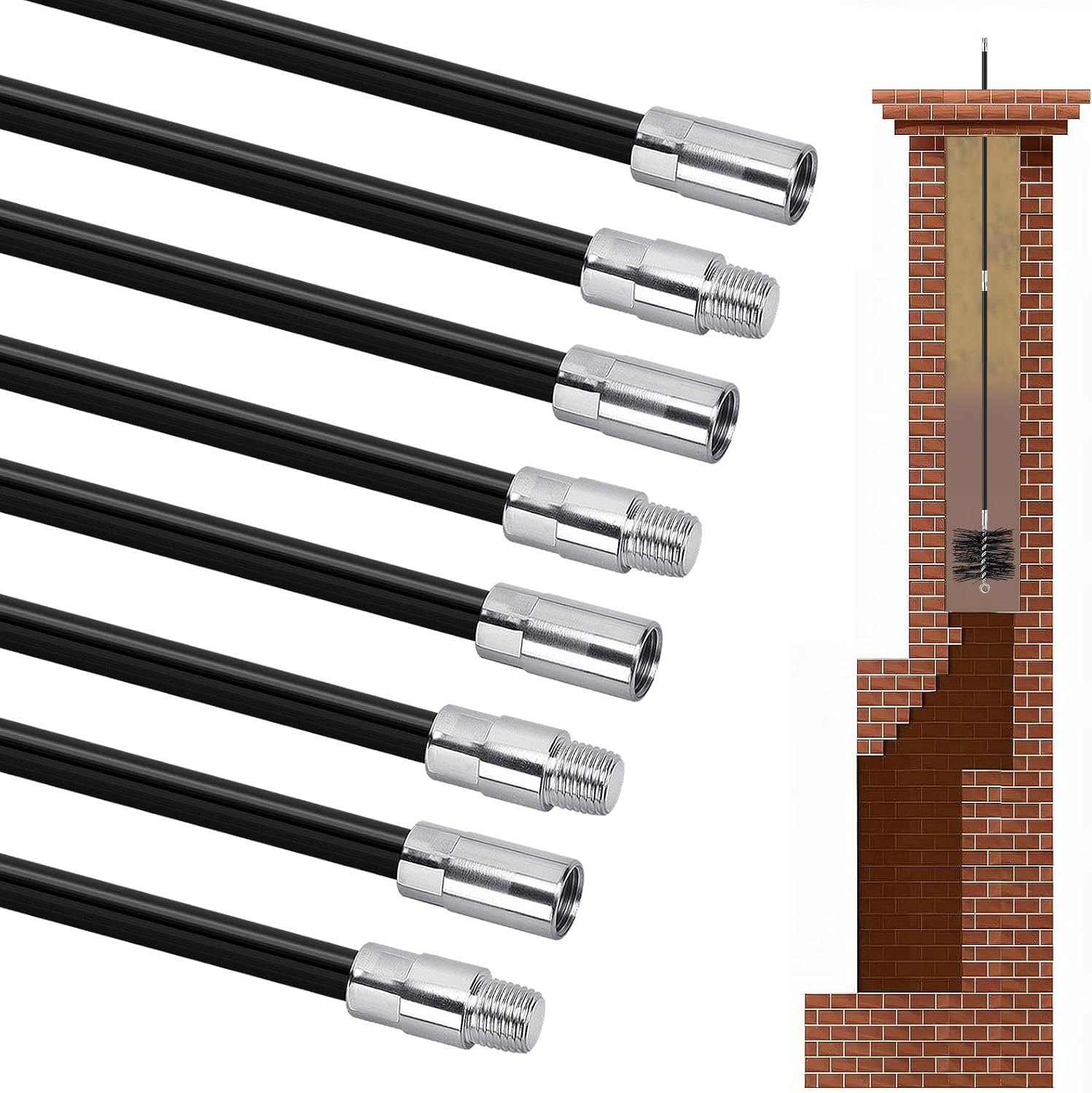
MADHOLLY 24FT Fiberglass Chimney Rods Review
Verdict: These eight rigid fiberglass extension rods make sense for a straight, manually swept flue when your brush has a matching 1/4-inch NPT thread. They are not a complete cleaning kit, are not intended for drill use, and should not be forced through offsets or heavy deposits.
Best for: homeowners or maintenance professionals who already own a compatible 1/4-inch NPT brush and need up to 24 feet of straight manual reach.
Check on AmazonAs an Amazon Associate, Chimney Insight earns from qualifying purchases.
Pros
- Eight separate 3-foot rods provide adjustable reach up to 24 feet
- Fiberglass construction gives firm manual pushing force
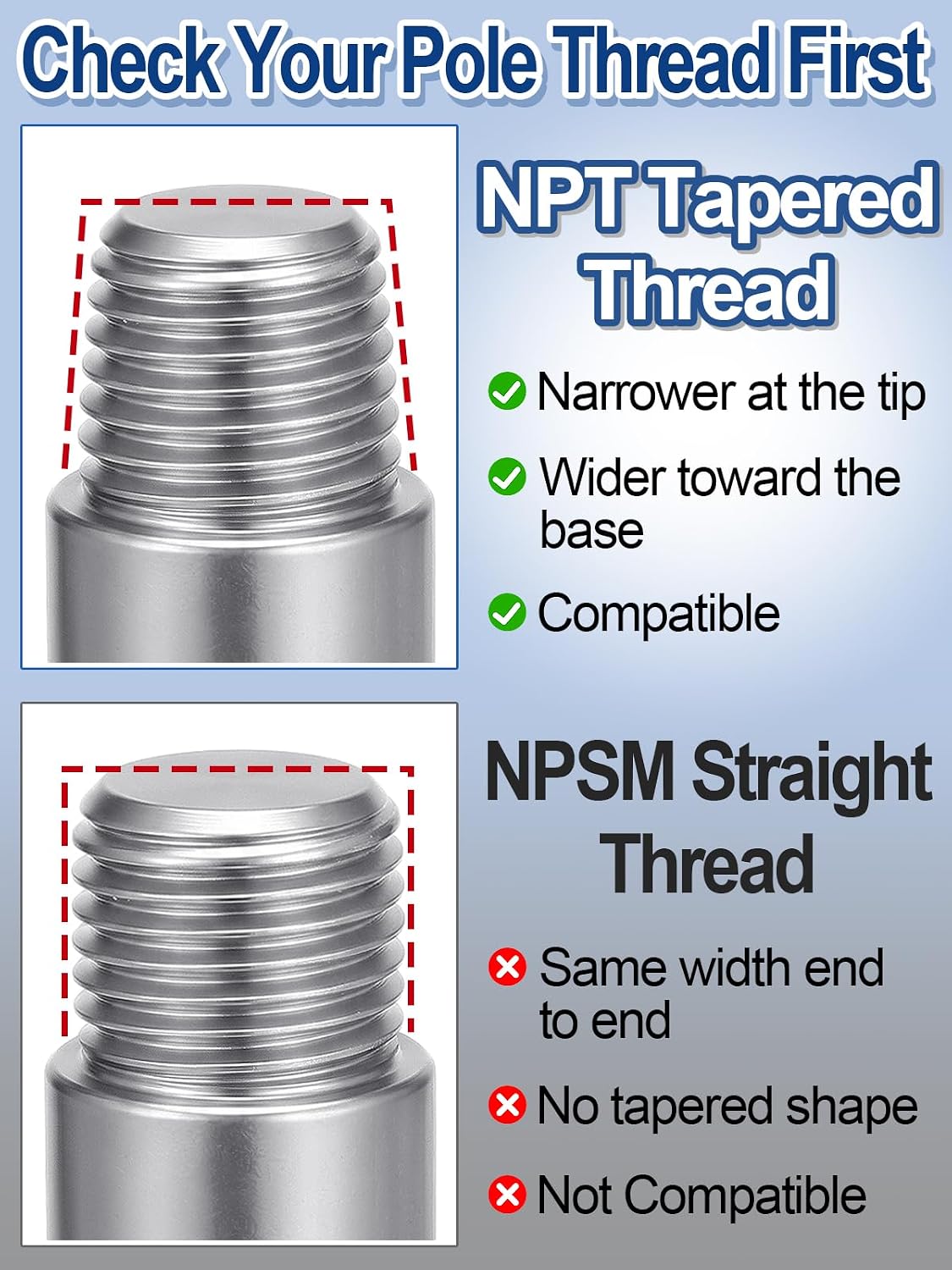
- Standard 1/4-inch NPT connection fits explicitly compatible brushes
- Rod-only format can avoid buying another brush when you already have the correct head
- Individual sections are easier to store than one continuous 24-foot pole
Limitations
- No chimney brush is included
- Manual use only; the listing says not to use the rods with a drill
- Not compatible with Midwest Hearth or other 1/4-inch NPSM fittings
- Rigid rods are less suitable for pronounced bends and offset flues
- The listing does not provide a model-specific manual, tested bend radius, or load rating
Verified specifications
Evidence note: Dimensions, compatibility and use method above come from the current manufacturer-supplied Amazon listing. Chimney Insight has not independently measured the rods, connection threads, stiffness or durability.
Rod set, not a complete sweep kit
The most important selection detail is what the package does not include. You receive eight extension rods but no brush head. Confirm that your existing brush uses 1/4-inch NPT threads and is correctly sized and made for the flue material.
Construction and practical handling
The manufacturer describes straight fiberglass rods intended to provide more thrust and less wobble during manual chimney cleaning. That makes the set more comparable to conventional push-pull sweep rods than to flexible nylon rotary rods. The firmer construction can help in a straight, accessible run, but it also means the operator should not assume the rods will follow sharp offsets.
Each section is three feet long. Start with only the sections needed for the accessible depth and add one rod at a time as work progresses. This reduces unnecessary leverage at the joint and makes it easier to maintain control. Thread every joint fully by hand without cross-threading. If a connector does not seat smoothly, stop and inspect it rather than applying extra force.
The listing calls the fiberglass durable and resistant to cracking, but that is a seller claim rather than a result measured by Chimney Insight. Before every use, look for splintering, white stress marks, loose fittings, damaged threads or a permanent bend. Wear gloves when inspecting fiberglass, and retire any rod that shows structural damage.
Compatibility: NPT and NPSM are not interchangeable assumptions
This set is advertised for a 1/4-inch NPT brush. The listing specifically excludes Midwest Hearth products and other 1/4-inch NPSM connections. Both names include “1/4 inch,” but their thread forms and sealing behavior are not the same. Do not force a brush onto the rod because it appears close.
Before ordering, identify the thread specification printed on the brush or in its documentation. Also verify the brush diameter and material against the actual flue. A fitting match does not make an oversized brush safe, and a brush that is too small may not contact the full inner surface. Metal-bristle, polypropylene and nylon heads have different compatibility considerations, especially with stainless-steel liners.
Setup and manual use
No model-specific instruction manual was available during this review, so this is a preparation checklist rather than an invented procedure. Confirm the flue route, access direction, brush material and diameter before beginning. Protect the fireplace or appliance opening, surrounding room and yourself from soot. Use eye protection, gloves and respiratory protection appropriate to the deposit and work area.
Connect the compatible brush to the first rod by hand. Guide it into the straight flue without striking the liner or forcing it through resistance. Add another clean rod only after the previous connection is secure. Keep every threaded joint turning in the tightening direction during manual cleaning so a section does not unscrew inside the chimney.
The Amazon listing says these rods are for manual cleaning and are not suitable for drills or other power tools. Respect that limit. Powered rotation can create torque and connection loads for which a manual rod set may not be designed. If your planned method requires a drill, choose a documented rotary system rather than adapting this one.
Where the 24-foot reach helps—and where it does not
Using all eight sections provides a nominal 24 feet of rod length. That figure is useful for comparing the set with the measured sweep path, but it does not guarantee that a brush can clean a 24-foot chimney. Access angle, firebox geometry, offsets, cap design and the amount of rod kept outside the flue all affect usable reach.
Rigid rods suit straighter runs. For a chimney with significant bends, an unknown obstruction, glazed creosote, damaged liner, bird nest or unsafe roof access, stop and use a qualified chimney professional. A tool that reaches the deposit is not evidence that the venting system is structurally sound.
Documented performance versus owner-feedback patterns
The seller claims that the straight fiberglass structure reduces flex and wobble, provides stronger manual thrust and remains reusable. We have not measured bending stiffness, connector pull strength or service life, so those claims should be treated as manufacturer statements.
Common decision points for this type of rod are thread accuracy, joint security, stiffness through the actual flue route and whether the package includes the expected brush. Those are buying and inspection patterns, not a claim that every owner experiences the same result. The safest choice comes from matching the rod, brush, flue and cleaning method before purchase.
Safety and maintenance
Mechanical sweeping does not replace inspection. The Chimney Safety Institute of America recommends annual inspection of solid-fuel venting systems and cleaning or repair as needed. Stop DIY work when deposits appear glazed, a blockage cannot be identified, components are damaged, or the chimney experienced a suspected fire.
After use, wipe the rods clean without grinding soot into the fiberglass. Let them dry, then store them straight in a protected location away from heat, sunlight, moisture and impact. Keep grit out of the threads. Before the next use, confirm that each connector engages fully and that no section has split or splintered.
Who should buy it?
Choose this set when you already have a correctly sized 1/4-inch NPT chimney brush, the sweep route is straight enough for firm fiberglass rods, and up to eight three-foot sections provide the measured manual reach you need.
Who should avoid it?
Skip it if you need a brush in the package, own a 1/4-inch NPSM system, plan to use a drill, have substantial offsets, or cannot confidently identify the flue material and deposit condition.
A practical alternative already reviewed
The Sealegend 30FT Chimney Sweep Kit review covers a different format: flexible rods, a brush head and rotary-cleaning accessories. It may be more suitable when you need a documented kit rather than extension rods alone. Do not choose between them on total length alone; compare connector type, brush material, flue geometry and whether the manufacturer permits powered rotation.
Final decision
Recommendation: The MADHOLLY 24FT rod set is a focused purchase for manual cleaning with an existing 1/4-inch NPT brush. Its eight-section format offers useful reach control, but compatibility and a straight sweep path matter more than the headline length.
Consider it if
You need up to 24 feet of firm manual reach and have already verified the brush thread and flue geometry.
Consider another option if
You require a complete kit, flexible rotary rods, a drill-rated system or an NPSM connection.
Three checks before buying
- Confirm the brush is 1/4-inch NPT, not NPSM.
- Confirm that a brush is already available and correctly sized for the flue.
- Measure the actual sweep path and identify offsets before selecting reach.
As an Amazon Associate, Chimney Insight earns from qualifying purchases.
Frequently asked questions
Does the MADHOLLY 24FT set include a chimney brush?
No. The current 24-foot listing is for eight fiberglass extension rods only. A compatible brush must be purchased or owned separately.
Can these rods be used with a drill?
No. The listing specifies manual cleaning only and says the rods are not suitable for drills or other power tools.
What brush connection fits?
The rods are listed for a 1/4-inch NPT brush. The seller specifically says they are not compatible with Midwest Hearth products or other 1/4-inch NPSM fittings.
How many rods are included?
Eight rods are included. Each is listed as three feet long, providing up to 24 feet of assembled rod length.
Can rigid fiberglass rods pass through chimney bends?
Do not assume they can. This product is described as straight and firm. Significant offsets, unknown blockages or heavy deposits are reasons to stop and seek professional assessment.
Do the rods replace an annual chimney inspection?
No. Cleaning tools remove accessible deposits; they do not verify the structural condition, clearances or hidden parts of the venting system. CSIA recommends annual inspection and cleaning or repair as needed.