Sealegend 30FT Chimney Sweep Kit Review
By Chimney Insight Editorial Team
Posted on October 23, 2026
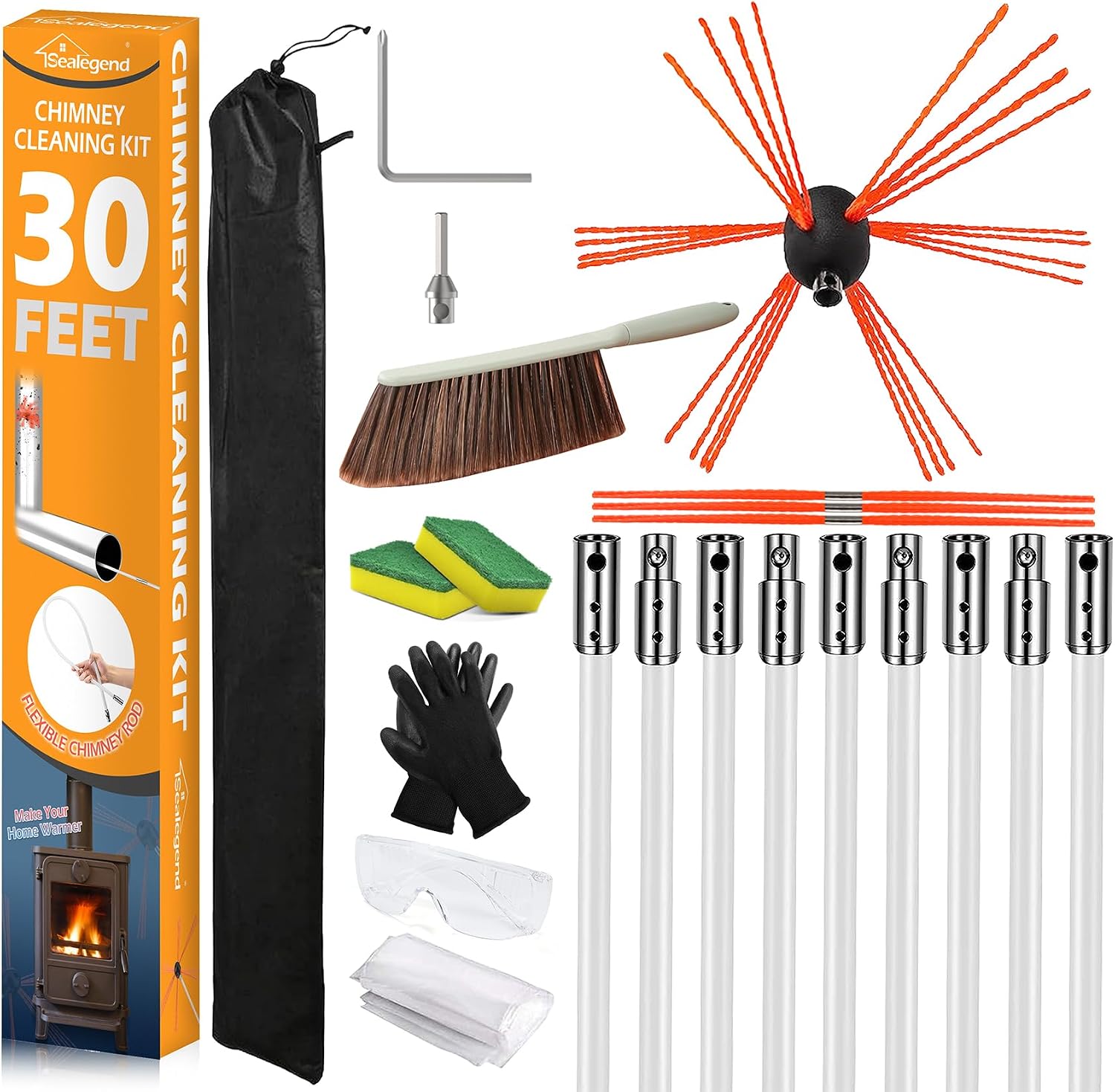 Click the large image to view full size
Short verdict: This is a well-equipped rotary cleaning kit for routine bottom-up removal of loose soot and brushable creosote where a 30-foot reach is sufficient. Its nine button-lock rods and broad accessory bundle are practical; they do not replace a chimney inspection or professional removal of glazed deposits.
Best for: prepared homeowners maintaining a known, accessible flue with light-to-moderate brushable deposits.
As an Amazon Associate, Chimney Insight earns from qualifying purchases.
Pros and limitations
Pros
- Nine 39.3-inch flexible rods create the manufacturer-listed 30-foot configuration.
- Button locks are designed to keep connected rods from loosening while rotating.
- Nylon brush material is intended to clean without scratching the flue surface.
- The package includes useful containment, eye, hand, storage, and cleaning accessories.
- A drill adapter supports bottom-up rotary cleaning without automatically requiring roof access.
Limitations
- A 30-foot nominal reach is not enough for every chimney, especially after route changes.
- Marketing images show flexibility, but actual bends, dampers, offsets, and obstructions determine access.
- It cannot diagnose cracked liners, missing mortar, cap damage, or hidden combustible-clearance problems.
- Rotary nylon bristles are not a safe substitute for professional treatment of hard glazed creosote.
- The exact drill speed and rotation procedure must come from the supplied manual, not guesswork.
Verified specifications
Evidence note: Specifications above come from Sealegend’s current product documentation and the exact Amazon listing. Performance statements are manufacturer claims; Chimney Insight has not measured this kit in a controlled test.
What the kit is designed to do
The Sealegend system turns a drill into a rotary sweeping tool. The connected rods carry a flexible nylon head upward from the appliance or fireplace opening. Rotation spreads the bristles against the flue surface while the user advances and withdraws the assembly. The intended job is mechanical removal of loose soot and brushable creosote—not structural inspection, repair, or chemical treatment.
The 30-foot package is more complete than a brush-and-rods-only bundle. It includes a plastic containment sheet, goggles, gloves, a collection bag, a hand brush, cleaning sponges, a hex key, and replacement bristles. That reduces the number of preparation items a buyer must source separately, although an appropriate fine-dust vacuum and additional floor protection may still be needed.
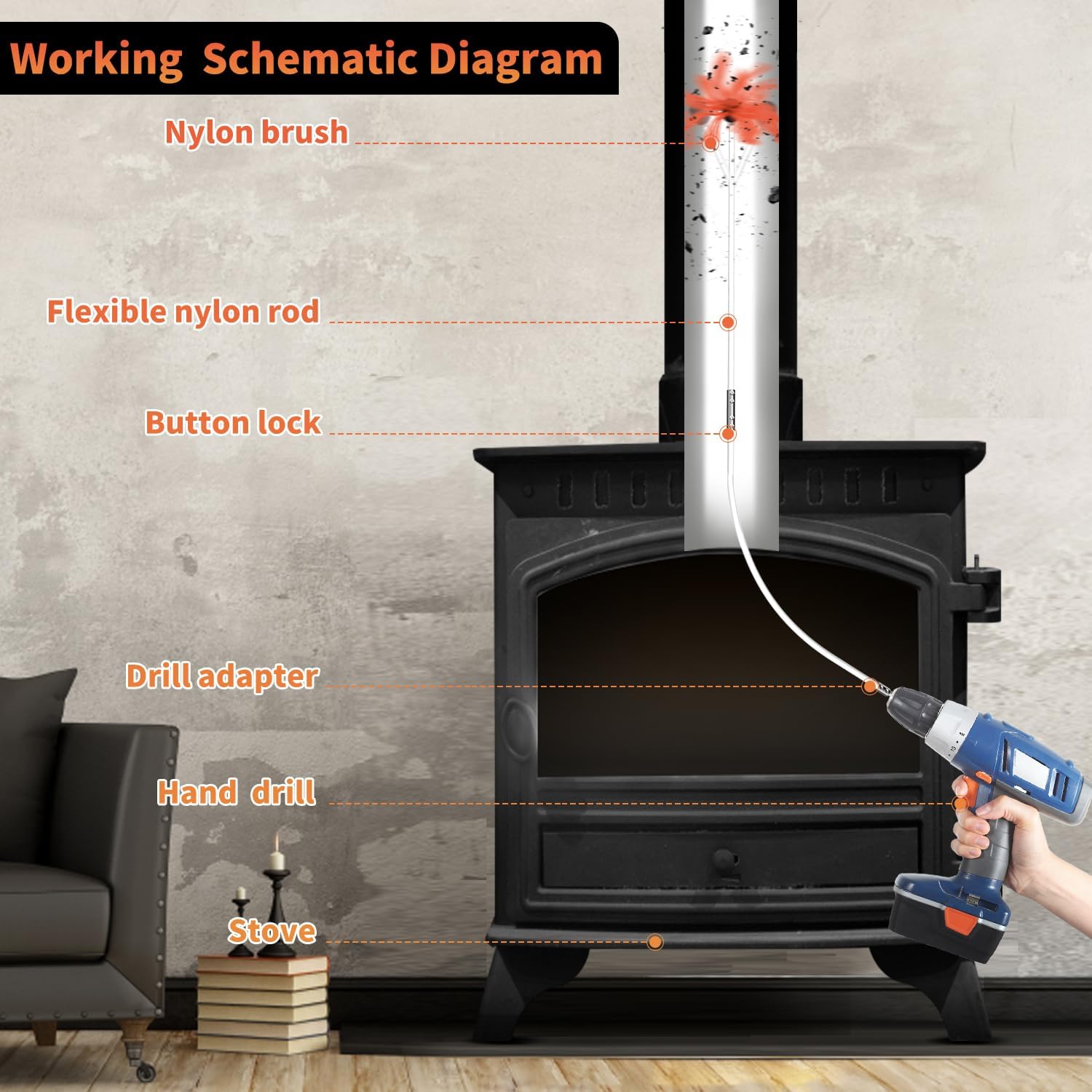
Construction and connection system
Each approximately 39.3-inch nylon rod has a stainless-steel head and a push-button connection. Sealegend says the locking design helps prevent loosening during rotation. Before use, inspect every rod, button, socket, brush attachment, and drill adapter; a damaged or incompletely locked connection can separate inside the flue.
Preparation and setup
Start with a completely cold appliance and a clear work area. Confirm the chimney type, liner material, internal dimensions, approximate height, and route. Look for known offsets, a damper, appliance baffles, or a cap that may stop the brush. If those basics are unknown, inspection comes before sweeping.
- Inspect first. Do not proceed if there are signs of a chimney fire, cracked components, loose masonry, water damage, animals, a lodged object, or thick shiny glaze.
- Read the supplied manual. Use its specified assembly, drill direction, speed, and sequence. Do not infer operating details from promotional images.
- Contain the debris. Protect the hearth and room, seal the opening around the rod path, wear eye and hand protection, and keep people and pets away.
- Measure the route. Nine rods provide the listed 30-foot configuration, but usable reach can be reduced by bends and the working position.
- Test every lock. Join components with the drill stopped, verify the button has fully engaged, and never reverse or force the system contrary to the manual.
A bottom-up approach can avoid climbing onto the roof, but it does not inspect or clean every cap and termination from ground level. Any roof work introduces fall hazards and belongs with a properly equipped professional.
Documented performance and realistic expectations
Sealegend states that the flexible nylon head can rotate at high speed to remove soot and creosote while avoiding scratches on the inner flue surface. That is a manufacturer claim, not an independent measurement. Results depend on deposit type, flue geometry, brush contact, drill control, and how thoroughly debris is contained and collected.
Rotary bristles are most credible for routine deposits that can be mechanically brushed. Hard, shiny, tar-like glaze is a different problem. Forcing rods or increasing drill power is not an appropriate response: glazed creosote and suspected damage call for a certified chimney professional.
Compatibility and selection checks
The product is marketed for chimney and dryer-vent cleaning. For a chimney, confirm that nylon bristles are accepted for your specific liner and appliance manufacturer. A flexible rod can negotiate some changes in direction, but “flexible” does not mean compatible with every elbow, tight offset, smoke shelf, damaged tile, or narrow passage.
Measure from the actual access point to the termination rather than relying on building height. Also verify that the brush head can enter the access opening and pass the appliance’s internal components without damage. If parts must be removed, follow the appliance manual or hire a qualified technician.
Safety, cleaning, and storage
Never sweep while a fire is burning or while the system is warm. Creosote dust is dirty and potentially irritating, so use suitable eye, respiratory, hand, and room protection. Keep the drill under control and stop immediately if resistance changes sharply; a blockage or snag should be investigated, not powered through.
After use, remove soot from the brush and rods according to the manual, allow every component to dry, and inspect the bristles, rod shafts, metal ends, locks, and adapter. Store the straightened, dry components in the supplied bag away from heat, moisture, and direct sun. Replace damaged parts rather than trusting them inside a flue.
Who should buy it?
Buy it if you already understand your chimney system, need up to 30 feet of bottom-up reach, and want a rotary nylon kit with containment and personal-protection accessories included. It makes the most sense for planned routine maintenance between professional inspections—not as a first response to smoke spillage, a chimney-fire event, or an unknown obstruction.
Who should avoid it?
Avoid DIY sweeping if the flue has not been inspected, the system is damaged, the deposit is glazed, the route contains difficult or unknown offsets, or you cannot safely contain the debris. It is also the wrong purchase if your measured route exceeds the kit’s reach or your liner/appliance documentation requires a different cleaning method.
Frequently asked questions
Does the 30FT kit really include nine rods?
Yes. Sealegend lists nine nylon rods at approximately 39.3 inches each for the 30-foot configuration.
Can it be used from the bottom of the chimney?
The manufacturer describes bottom-up drill-assisted use. Access and compatibility still depend on the appliance, damper, baffles, offsets, and liner condition.
Will the nylon brush clean glazed creosote?
Do not assume so. Hard shiny glaze is a high-risk deposit that commonly requires professional evaluation and specialized treatment.
Is it safe for every stainless-steel liner?
The maker describes the nylon head as non-scratch, but the liner manufacturer’s cleaning instructions control. Confirm the accepted brush material and method for your exact system.
Does the kit replace an annual chimney inspection?
No. Sweeping removes accessible deposits; it does not confirm structural integrity, clearances, moisture condition, cap condition, or safe appliance venting.
Final verdict
The Sealegend 30FT Chimney Sweep Kit is a thoughtfully bundled option for routine rotary maintenance when its reach, brush material, and access path are already confirmed. Consider it if you want nine locking rods plus useful containment and safety accessories. Consider another option—or a professional—if the flue is longer, damaged, unknown, or coated with glaze.
Three checks before buying: measure the access-to-cap route; confirm nylon-brush compatibility; identify the deposit and any offsets or obstructions.
As an Amazon Associate, Chimney Insight earns from qualifying purchases.