Chimney Pulling Away From House: Identifying the Problem and Comprehensive Fixes
Introduction: The Alarming Sign of a Disconnecting Chimney
Few sights are as alarming to a homeowner as discovering their chimney is pulling away from the house. This isn’t merely a cosmetic issue; it’s a critical structural problem that demands immediate attention. A chimney separating from the main structure of your home can indicate severe foundation issues, masonry failure, or other underlying problems that compromise the safety and integrity of your entire property. Ignoring this warning sign can lead to widespread structural damage, significant water intrusion, and even complete chimney collapse, posing a serious threat to your family and your investment.
This comprehensive guide will delve into the complex issue of a chimney pulling away from the house. We’ll explore the various causes behind this concerning phenomenon, outline the significant risks it presents, and, most importantly, provide a detailed breakdown of how to properly diagnose and effectively fix the problem. From understanding the different types of structural movement to exploring professional repair methods, our goal is to equip you with the knowledge needed to address this critical home repair with confidence and ensure the long-term stability of your chimney and home.
Understanding the Problem: What Does a Chimney Pulling Away Mean?
When a chimney appears to be pulling away from the house, it signifies a fundamental disconnect in its structural integrity relative to the main dwelling. This separation can manifest in several ways:
- Visible Gaps: The most obvious sign is a widening gap between the chimney masonry and the adjacent wall of the house. This gap might be uniform or wider at the top or bottom.
- Cracks: Diagonal, horizontal, or vertical cracks may appear in the mortar joints or bricks of the chimney itself, or in the wall of the house near the chimney.
- Leaning: The entire chimney structure might visibly lean away from the house, indicating severe foundation or structural compromise.
- Damaged Flashing: The flashing, which provides a watertight seal where the chimney meets the roof, will often tear, buckle, or pull away, leading to leaks. Learn more about preventing this with best chimney flashing sealant.
- Interior Damage: Cracks in interior walls or ceilings near the chimney, often mirroring external movement, are a strong indicator of structural distress.
Why is My Chimney Pulling Away? Common Causes Explored
The root causes of a chimney separating from a house are almost always related to foundation issues or structural weaknesses. Here are the most common culprits:
1. Inadequate or Failing Chimney Foundation
This is by far the most prevalent reason. Unlike the main house, which sits on a broad, deep foundation, older chimneys (especially exterior ones) were sometimes built on shallower or smaller foundations. Over time, these foundations can:
- Settle Unevenly: If the soil beneath the chimney’s foundation compacts or shifts more than the soil under the main house, the chimney will sink or tilt independently.
- Erode: Water runoff can erode the soil around and under the foundation, causing it to lose support.
- Freeze-Thaw Cycles: In colder climates, repeated freezing and thawing of moisture in the soil can cause the ground to heave and settle, stressing the foundation.
2. Lack of Proper Connection to the House Structure
Ideally, a chimney should be properly integrated and tied into the main house structure, particularly at floor levels and the roofline, using metal ties or anchors. In older homes, these ties might be inadequate, rusted, or simply missing. If the chimney is freestanding or poorly anchored, it’s more susceptible to independent movement caused by:
- Wind Loads: Strong winds can exert significant force on a tall chimney, especially if it’s not adequately braced.
- Seismic Activity: Even minor tremors can cause poorly connected structures to separate.
3. Water Damage and Masonry Deterioration
While not a primary cause of pulling away, extensive water damage can exacerbate existing issues and accelerate structural failure:
- Mortar Erosion: Constant exposure to rain and moisture erodes mortar joints, weakening the chimney’s integrity. Water penetration can also lead to efflorescence and spalling. Knowing best mortar for chimney repair can help.
- Freeze-Thaw Damage: Moisture trapped within porous bricks and mortar expands when frozen, causing cracking and crumbling (spalling). This weakens the overall structure, making it more prone to shifting. This can lead to needing a full cost to rebuild a chimney stack.
- Rusting Metal Components: If metal components within the chimney (like rebar or anchors) rust due to water ingress, they expand, further cracking masonry and accelerating separation. You might need the best rust remover for metal for minor issues.
4. House Settling
While less common for the chimney to pull away if its foundation is sound, general house settling can sometimes put differential stress on the chimney if it’s attached. However, in these cases, the house itself would likely show widespread foundation issues.

The Grave Risks: Why a Separating Chimney is a Major Concern
A chimney pulling away from your house is more than just a structural defect; it’s a cascade of potential hazards that can compromise the safety of your home and family. Understanding these risks underscores the urgency of professional intervention.
1. Structural Collapse
This is the most immediate and catastrophic risk. A chimney, especially a tall masonry one, is incredibly heavy. As it separates, its structural integrity is severely weakened, increasing the risk of partial or complete collapse. A collapsing chimney can cause extensive damage to the roof, walls, and interior of your home, and poses a direct threat of injury or fatality to anyone nearby.
2. Water Intrusion and Extensive Damage
The gap created when a chimney pulls away from the house acts as a direct pathway for water. Rain, snow, and ice can easily penetrate this opening, leading to a host of costly issues:
- Rot and Mold: Water seeping into wall cavities will cause wood framing to rot and promote dangerous mold growth, impacting indoor air quality and structural components.
- Interior Damage: Stains on ceilings and walls, peeling paint, and damaged drywall are common indicators of water leaks.
- Compromised Insulation: Wet insulation loses its effectiveness, leading to higher energy bills.
- Pest Infestation: The gaps can become entry points for rodents, insects, and other pests, including raccoons (how do I get a raccoon out of my chimney?) or birds (bird stuck in chimney who to call?).
Even if the chimney itself is waterproofed, the new gap nullifies those efforts. For general waterproofing measures, see how to waterproof a chimney and consider the best chimney waterproofing products.
3. Fire Hazards
A separating chimney can also pose significant fire risks:
- Compromised Flue Liner: The movement can crack or dislodge the flue liner, which is designed to contain heat, smoke, and embers. A damaged liner allows extreme heat to escape into combustible wall materials, drastically increasing the risk of a house fire.
- Improper Venting: A misaligned or damaged flue can lead to inefficient venting, causing smoke and potentially dangerous carbon monoxide to spill back into the home (fireplace smoke coming into house). This underscores the need for a best carbon monoxide detector.
4. Reduced Home Value
A structurally compromised chimney is a major red flag for potential buyers and significantly diminishes your property’s market value. Addressing the problem before selling is almost always necessary and will likely involve substantial repair costs.
5. Energy Inefficiency
Gaps around the chimney create drafts and air leaks, leading to heat loss in winter and air conditioning loss in summer. This compromises your home’s thermal envelope and increases energy bills. Improving home comfort can also be achieved with winter home car comfort tips, but addressing chimney issues is fundamental.
6. Secondary Structural Damage to the House
The weight of a leaning chimney can exert pressure on the adjacent wall of the house, potentially causing cracks in the wall itself, or even stressing the roof structure. This means the problem can extend beyond the chimney to affect the integrity of your entire home.

Step-by-Step: Diagnosing and Fixing a Chimney Pulling Away from the House
Addressing a chimney that’s pulling away requires a methodical approach, starting with accurate diagnosis and leading to specialized repairs. This is not a DIY project; professional expertise is essential.
Step 1: Professional Assessment and Diagnosis
This is the most crucial first step. You’ll need to engage several professionals:
- Certified Chimney Sweep/Technician: For a comprehensive Level 2 chimney inspection. They will assess the chimney’s structural integrity, flue liner condition, masonry, and flashing. They can identify obvious signs of pulling away and help determine if the problem originates with the chimney itself. For the best chimney services, look for CSIA-certified professionals.
- Structural Engineer: Absolutely essential. An engineer will conduct a thorough investigation of your home’s foundation and the chimney’s foundation to pinpoint the exact cause of the movement. They use specialized tools to measure deflection and settlement and will provide a detailed report and repair recommendations.
- Foundation Repair Specialist: Often consulted after the engineer, these specialists can implement the recommended foundation stabilization techniques.
What the Professionals Look For:
- Foundation Cracks: In the chimney’s base or the house’s foundation nearby.
- Differential Settlement: Measuring how much the chimney has settled compared to the house.
- Flashing Condition: Tears or buckling in the flashing indicate movement. Knowing how to fix a leaky chimney starts here.
- Interior Damage: Cracks in drywall, uneven floors near the chimney.
- Chimney Plumbness: Using a plumb bob to see if the chimney is leaning.
Step 2: Addressing the Root Cause (Foundation Repair)
Once the structural engineer identifies the cause of differential settlement, the primary repair will focus on stabilizing the foundation. Common methods include:
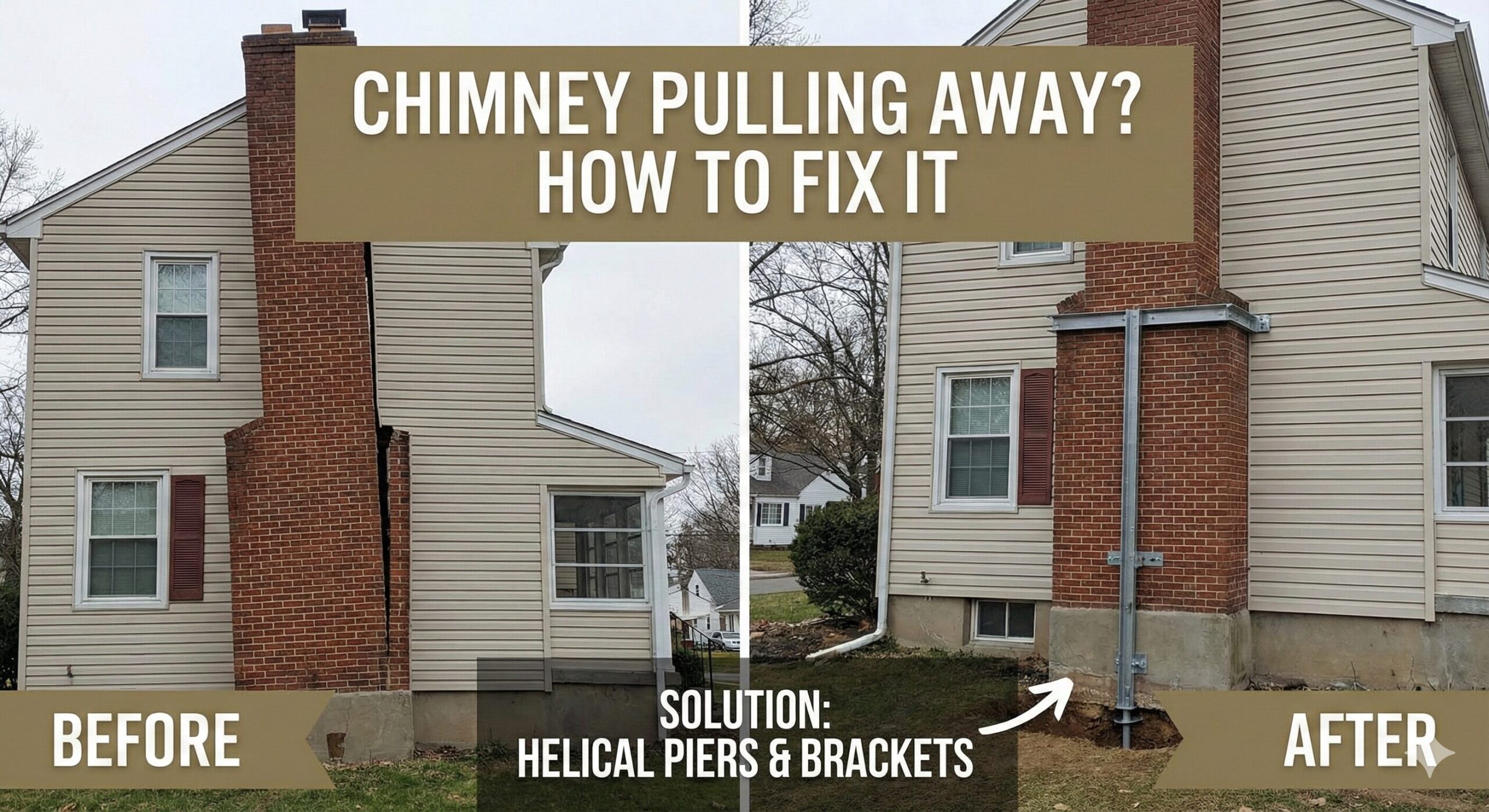
- Piering/Piling: This involves installing steel or concrete piers deep into stable soil below the shifting foundation. These piers are then used to lift and stabilize the chimney’s foundation. This is a common and highly effective solution for significant settlement.
- Underpinning: Extending the existing foundation deeper into the ground to reach more stable soil. This can be done with concrete footings.
- Slab Jacking / Polyurethane Injection: For less severe cases of settlement in slab foundations, a material (cementitious grout or expanding polyurethane foam) is injected beneath the foundation to lift and level it.
- Drainage Improvements: If poor drainage is contributing to soil saturation and settlement, grading around the foundation may be improved, and French drains or other water management systems installed.
This is a complex process that must be performed by experienced foundation repair companies. The goal is to stop further movement and, if possible, carefully bring the chimney back into alignment.
Step 3: Reconnecting the Chimney to the House
After the foundation is stabilized, the chimney needs to be securely re-attached to the main house structure. This typically involves:
- Installing Steel Helical Ties or Anchors: These specialized ties are drilled through the chimney masonry and into the house’s structural framing (studs or joists). They are designed to create a strong, flexible connection that allows for slight, normal building movement without causing separation.
- Masonry Reconstruction: If significant gaps have formed, the existing mortar in the gap will be removed, and the gap will be repointed with new, strong mortar (best mortar for chimney). In some severe cases, sections of masonry may need to be carefully removed and rebuilt to close the gap and properly integrate the chimney.
Step 4: Repairing Related Chimney and House Damage
Once the structural issues are resolved, attention turns to repairing secondary damage:
- Flashing Replacement: The old, torn, or buckled flashing must be removed and new, custom-fabricated flashing installed to create a watertight seal. This is crucial for preventing future leaks. Ensure the best chimney flashing sealant is used.
- Chimney Masonry Repair/Rebuild: Any cracked or spalled bricks on the chimney stack will need to be replaced, and deteriorated mortar joints repointed. If the stack is severely damaged due to the movement, a partial or full chimney stack rebuild (cost to rebuild a chimney stack) may be necessary.
- Flue Liner Repair/Replacement: The flue liner must be inspected for cracks or damage caused by the chimney’s movement. If compromised, it needs to be repaired or replaced with a new clay, stainless steel, or cast-in-place liner to ensure safe operation.
- Interior Wall Repair: Any cracks or damage to interior drywall, plaster, or trim near the chimney will need patching and repainting.
Step 5: Post-Repair Monitoring
After all repairs are complete, it’s advisable to monitor the chimney and surrounding areas for any signs of continued movement. Some professionals might recommend installing crack monitors to track any future settlement over time. Regular how often should you clean a chimney cleanings and inspections will also help in monitoring.

Understanding Different Scenarios of Chimney Separation and Their Fixes
A chimney pulling away isn’t a one-size-fits-all problem; the manifestation of the issue can vary, and each scenario often points to a specific underlying cause and requires a tailored repair approach. Recognizing these distinctions is key to effective remediation.
Scenario 1: Uniform Gap Top to Bottom (Minimal Leaning)
Description: The chimney has created a relatively even gap along its entire height where it meets the house wall, but it doesn’t appear to be leaning significantly.
Likely Cause: This often indicates a chimney foundation that is settling uniformly but independently from the main house foundation. The house’s foundation might be deeper or on more stable ground, causing the chimney to sink slowly but steadily, creating the gap.
How to Fix:
- Foundation Stabilization: The primary fix will involve stabilizing the chimney’s foundation, likely through piering (helical piers or push piers) to support and potentially lift the foundation to prevent further settlement.
- Reconnection: Once stable, the chimney needs to be securely anchored to the main house structure using helical ties or heavy-duty masonry anchors.
- Masonry Infill/Repointing: The gap will then be carefully filled with new mortar or a compatible masonry infill, ensuring a weather-tight seal and aesthetic continuity.
- Flashing Replacement: The flashing will need to be completely replaced to accommodate the new position and ensure a watertight seal. Using best chimney flashing sealant is recommended.
Scenario 2: Widening Gap at the Top (Chimney Leaning Outward)
Description: The chimney is visibly leaning away from the house, with the gap between the chimney and the wall becoming progressively wider towards the top.
Likely Cause: This typically points to a rotational failure of the chimney’s foundation. The foundation is settling unevenly, often sinking more on the side furthest from the house, causing the entire chimney structure to tilt outward. Severe wind loads on a poorly connected chimney can also contribute.
How to Fix:
- Advanced Foundation Repair: This scenario often requires more aggressive foundation repair, potentially involving multiple piers strategically placed to halt rotation and gently push the chimney back into plumb. This is a complex engineering task.
- Structural Reconnection: Robust anchoring to the house structure is critical after stabilization to prevent future outward movement.
- Partial Chimney Rebuild (Stack): If the lean has caused significant stress cracks or brick failure in the chimney stack, a partial or even full rebuild of the chimney stack from the roofline up may be necessary after the foundation is stable.
- Flue Liner Inspection/Repair: The severe movement will almost certainly have damaged the flue liner, requiring inspection and likely replacement for safety.
Scenario 3: Gap at the Bottom, House Cracking Above (Chimney Settling More Than House)
Description: A gap or crack appears at the base of the chimney where it meets the ground or lower wall, while the house structure above appears stressed, possibly with cracking in the adjacent wall or ceiling.
Likely Cause: This indicates that the main house foundation is settling more rapidly or significantly than the chimney’s foundation. The chimney, if well-founded, is essentially holding firm while the house is sinking around it. This is less common than chimney-specific settlement.
How to Fix:
- House Foundation Repair: The primary focus shifts to stabilizing the house’s foundation, typically through piering or underpinning of the main structure adjacent to the chimney.
- Structural Analysis: A structural engineer will be crucial to determine if the chimney is genuinely stable or if it’s merely appearing so because the house is moving around it.
- Masonry Repair: Once both foundations are stabilized and movement has ceased, the cracks in the house walls and any minor chimney masonry damage can be repaired.
- Flashing Inspection: While the chimney itself might not be “pulling away,” the relative movement can still stress flashing, requiring inspection and potential replacement.
Scenario 4: Gaps at Flashing Level Only (Minimal Overall Movement)
Description: Visible separation or tearing of the flashing where the chimney meets the roof, but minimal discernible gaps along the chimney’s full height, and no significant lean.
Likely Cause: This could indicate minor differential movement between the chimney and the roof structure, or more commonly, simply deteriorated, poorly installed, or improperly sealed flashing. It might not be a foundational issue but rather a flashing failure exacerbated by slight normal building movement.
How to Fix:
- Flashing Replacement: The existing flashing should be completely removed and replaced with new, properly installed step and counter-flashing, ensuring robust weatherproofing. The best chimney flashing sealant should be used.
- Thorough Inspection: Although the visual signs point to flashing, a comprehensive chimney inspection is still warranted to rule out any subtle underlying structural issues before assuming it’s a simple flashing fix. This type of leak often causes homeowners to want to know how to fix a leaky chimney.
In all these scenarios, early detection and expert assessment are paramount. The longer the problem persists, the more extensive and costly the repairs become.

Advantages and Disadvantages of Fixing a Separating Chimney
Advantages of Repairing a Separating Chimney:
- Restored Safety: Eliminates the immediate danger of chimney collapse and significantly reduces fire hazards and carbon monoxide risks associated with a compromised flue.
- Structural Integrity: Realigns and secures the chimney, preventing further damage to your home’s roof, walls, and foundation.
- Prevents Water Damage: Closes gaps, allowing proper flashing installation to prevent costly water intrusion that leads to rot, mold, and interior damage.
- Increased Home Value: A structurally sound chimney and home are essential for maintaining property value and marketability.
- Energy Efficiency: Eliminates air leaks and drafts around the chimney, contributing to better insulation and lower energy bills.
- Long-Term Peace of Mind: Addresses the root cause, providing a lasting solution and alleviating the anxiety of a collapsing structure.
Disadvantages of Repairing a Separating Chimney:
- Significant Cost: Foundation repair and structural integration are among the most expensive home repairs, potentially costing tens of thousands of dollars, if not more.
- Disruptive Process: The repair work involves heavy machinery, extensive excavation (for foundation work), scaffolding, and interior disruption, which can be noisy and messy.
- Time-Consuming: Depending on the severity and method of repair, the project can take weeks or even months from initial assessment to completion.
- Complexity and Specialization: Requires multiple expert trades (structural engineers, foundation specialists, masons), making coordination and finding reputable contractors challenging.
- Potential for Unexpected Discoveries: During excavation or demolition, unforeseen issues (e.g., deeper foundation problems, extensive hidden water damage, or severely compromised flue liners) can be uncovered, leading to increased costs and timelines.

Expert Insights: Navigating the Complexities of a Separating Chimney Repair
Dealing with a chimney that’s pulling away from your house requires more than just a quick patch. It necessitates a deep understanding of structural dynamics and a collaborative approach with multiple specialists. Here’s what seasoned experts emphasize.
The Indispensable Role of the Structural Engineer
“Do not, under any circumstances, proceed with repairs without a thorough assessment from a qualified structural engineer,” stresses Dr. Eleanor Vance, a civil engineer specializing in residential structures. “A mason can fix the brickwork, but only an engineer can correctly diagnose *why* the chimney is moving. They’ll pinpoint if it’s differential settlement, an inadequate foundation, or another underlying issue. Without that diagnosis, you’re just putting a band-aid on a broken bone.” This initial assessment is even more detailed than a Level 2 chimney inspection, though both are crucial.
Foundation Repair is Primary, Not Masonry Repair
“Many homeowners see the gap and think it’s a brick problem. It’s usually a foundation problem,” explains Marcus Thorne, owner of a regional foundation repair company. “You have to stabilize the foundation first. Attempting to bridge the gap with new mortar or even rebuild the stack without addressing the unstable base is a waste of money and potentially dangerous. The chimney will just continue to move, and the repairs will fail.”
Beware of “Quick Fix” Solutions
“I’ve seen so many cases where homeowners or inexperienced contractors try to simply fill the gap with caulk or tuckpointing,” warns veteran chimney professional, Sarah Jenkins. “This provides zero structural support and only masks the problem, often leading to more extensive and expensive repairs down the line. It traps water, too, accelerating deterioration. There are no shortcuts with a separating chimney.” Learning best mortar for chimney repair can help for appropriate fixes.
The Importance of Proper Reconnection
“Once the foundation is stable, the reconnection to the main house is critical,” says roofing and building envelope specialist, David Lee. “Modern helical ties or approved masonry anchors are designed to properly secure the chimney to the framing of the house. This prevents future independent movement and ensures the chimney moves cohesively with the rest of the structure. This is often an overlooked but vital step.”
Don’t Forget About the Flue Liner and Flashing
“Any significant chimney movement will inevitably impact the flue liner,” emphasizes certified chimney sweep, Lisa Chen. “Cracked or dislodged flue tiles are a serious fire and carbon monoxide hazard. A Level 2 internal inspection is critical to ensure safety. Similarly, the old flashing will be compromised, so new, robust flashing (best chimney flashing sealant) must be installed to prevent water intrusion into your now-stable home.” Understanding how to fix a leaky chimney properly involves addressing the flashing.
Consider Your Homeowner’s Insurance Policy
“While gradual settlement isn’t usually covered, if the separation was caused by a sudden event like an earthquake, severe storm, or burst pipe impacting the foundation, your homeowner’s insurance might offer some coverage,” advises insurance claims specialist, Robert Miller. “It’s always worth having your policy reviewed by a professional and documenting everything thoroughly with photos and expert reports. Find out if homeowners insurance covers chimney repair for your situation.”
Long-Term Maintenance and Monitoring
“After such a significant repair, annual chimney inspections and periodic foundation checks become even more important,” notes home inspector, Brenda Suarez. “Look for any new cracks, changes in the gap, or signs of water intrusion. Proactive maintenance, including ensuring good drainage around your foundation, can help prevent future issues.” Maintaining chimney health also includes knowing how often you should clean a chimney.
Frequently Asked Questions About a Chimney Pulling Away From House
What are the first signs that my chimney is pulling away from the house?
The most common signs include visible gaps between the chimney masonry and the adjacent exterior wall of the house. You might also notice diagonal or vertical cracks in the chimney itself or the wall near it, a leaning chimney, torn or buckling flashing where the chimney meets the roof, and even interior cracks in drywall or plaster near the chimney structure. Promptly investigating these can help avoid major damage.
Is a chimney pulling away always a foundation problem?
In the vast majority of cases, yes, a chimney pulling away from the house indicates differential settlement of its foundation compared to the main house foundation. The chimney’s foundation may be shallower or on less stable soil, causing it to sink or tilt independently. While poor anchoring or water damage can contribute, they typically exacerbate a foundational issue rather than being the sole cause of significant separation.
What professionals should I contact if my chimney is separating?
You should immediately contact a qualified structural engineer for a full assessment. They will diagnose the root cause of the movement. Additionally, a certified chimney sweep or technician should perform a Level 2 chimney inspection to assess the chimney’s internal and external condition. Based on the engineer’s report, you’ll then need to consult with reputable foundation repair specialists and experienced masons/chimney repair companies.
Can I fix a separating chimney myself?
No, a chimney pulling away from the house is a severe structural issue that absolutely requires professional expertise. Attempting DIY repairs without addressing the underlying cause can be incredibly dangerous, lead to further damage, and will not provide a lasting solution. Incorrect repairs can compromise the safety of your home and family. Always consult with structural engineers and specialized contractors.
How much does it cost to fix a chimney pulling away from the house?
The cost varies significantly based on the severity of the problem and the necessary repairs. Foundation repair alone (e.g., piering) can range from $5,000 to $20,000 or more. Additional costs will include engineering reports, re-anchoring the chimney, masonry repairs or a partial/full chimney stack rebuild, flue liner work, and flashing replacement. Total costs can easily be in the range of $10,000 to $30,000+, depending on the extent. Always get multiple detailed quotes.
Will my homeowner’s insurance cover the cost of repair?
Homeowner’s insurance typically covers sudden and accidental damage (e.g., from storms, fire, or certain pipe bursts) but generally excludes damage from gradual settlement, neglect, or wear and tear. If the separation is due to a covered peril, a portion of the repair might be covered. It is crucial to review your specific policy and speak directly with your insurance provider. You can find more details on does homeowners insurance cover chimney repair.
How long does the repair process take?
From initial inspection to completion, the process can take several weeks to a few months. The structural engineering assessment, permitting, foundation repair (which often involves excavation), allowing foundation materials to cure, and then subsequent masonry and flashing work all contribute to the timeline. It’s not a quick fix due to the critical nature of the structural work.
What can happen if I ignore a chimney pulling away from the house?
Ignoring this problem leads to increased risks of complete chimney collapse, severe water intrusion into your home (leading to rot, mold, and interior damage), significant fire hazards due to a compromised flue, and potential carbon monoxide leaks (fireplace smoke coming into house). It will also drastically reduce your home’s value and can lead to more extensive and expensive structural damage to the entire house over time. Safety should be the top priority, making a best carbon monoxide detector essential.
Can proper maintenance prevent my chimney from pulling away?
While proper maintenance, such as annual inspections, repointing mortar, and ensuring good flashing, can prolong your chimney’s life and prevent water damage (how to waterproof a chimney), it often cannot prevent a chimney from pulling away if the underlying cause is a failing foundation. However, good maintenance can help detect early signs of movement and prevent water from exacerbating existing foundational issues. Regular inspections for early detection are key.
Should I use mortar or caulk to fill the gap?
Neither should be used as a primary structural fix for a chimney pulling away. These are cosmetic solutions at best. Once the chimney’s foundation is stabilized and it’s re-anchored to the house, professional masons will use appropriate mortar or a specialized expansion joint material to seal the gap. Using the wrong material can trap moisture and worsen the problem. Always rely on expert recommendations for gap filling after structural repairs are complete.
Conclusion: Prioritizing Safety and Structural Integrity
The discovery of a chimney pulling away from your house is a serious structural concern that should never be ignored. It serves as a clear indicator of fundamental issues, most commonly related to the chimney’s foundation, which can have far-reaching and dangerous consequences for your entire home. From the imminent threat of structural collapse and extensive water damage to serious fire and carbon monoxide hazards, the risks associated with a separating chimney demand immediate and professional attention.
While the repair process is complex and often costly, requiring the expertise of structural engineers, foundation specialists, and seasoned masons, it is an investment in the safety and longevity of your property. There are no safe shortcuts when addressing such a critical structural defect. By acting promptly, thoroughly diagnosing the root cause, and employing the correct repair methods, you can stabilize your chimney, secure your home, prevent future damage, and restore your peace of mind. Prioritizing these repairs ensures that your chimney remains a safe and functional component of your home for decades to come.
