Chimney Balloon vs Wool Fireplace Plug: Which Is Better?
By Chimney Insight Editorial Team
Posted on October 1, 2026
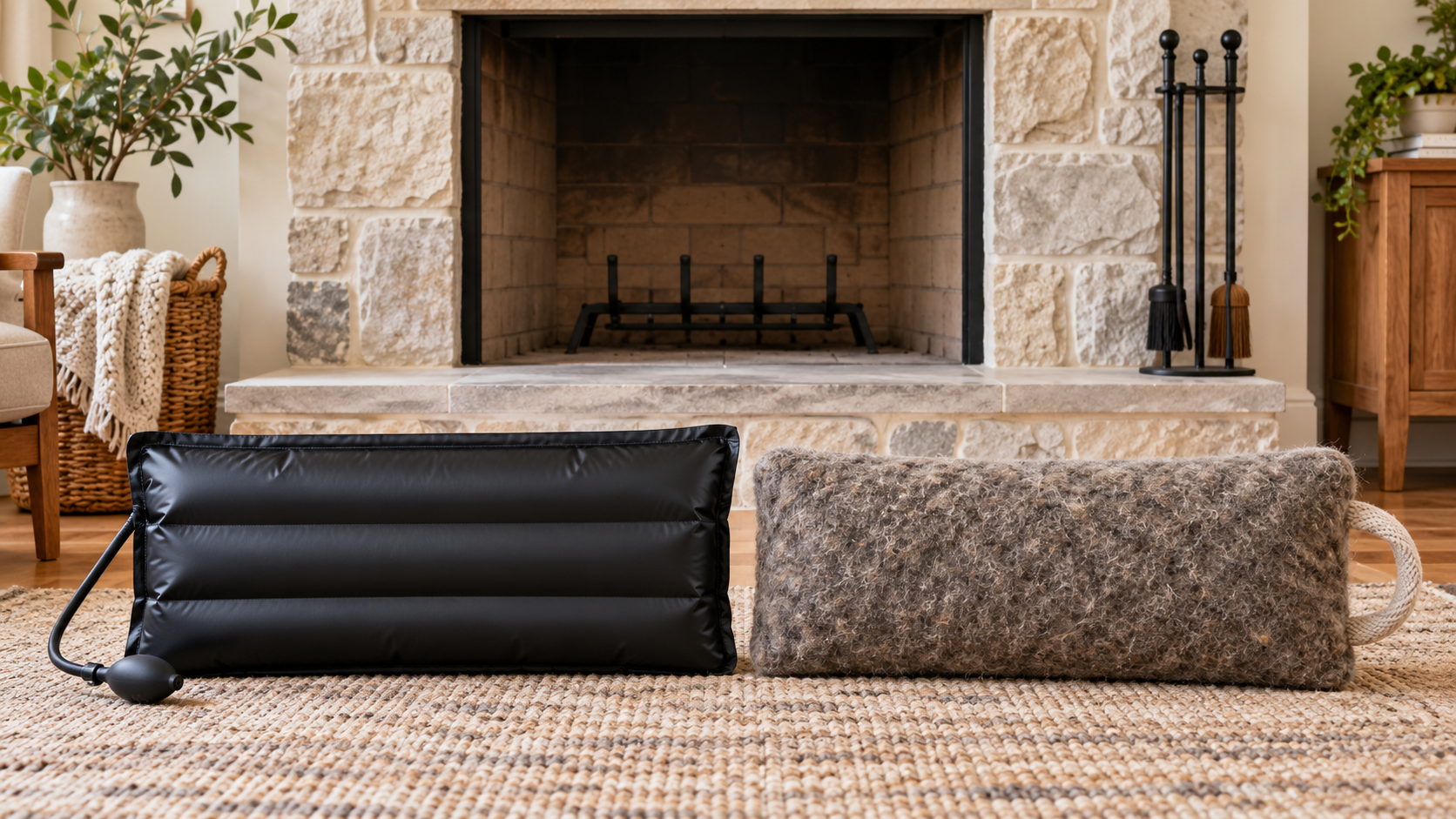
A chimney balloon and a wool fireplace plug are two different ways to block drafts in a completely unused fireplace. An inflatable balloon expands against the flue or fireplace throat, while a wool plug pressure-fits into a correctly measured opening. The better choice depends on the opening’s shape, the available size, puncture risk, and how often you plan to remove the stopper.
Both products are temporary draft stoppers for a fireplace that is completely cool and not in use. They can reduce the cold-air drop, warm-air loss, odors, and dust that pass through a poorly sealing throat damper. Neither product repairs a damaged damper, fixes a blocked flue, or makes an unsafe fireplace safe.
Chimney Balloon vs Wool Fireplace Plug at a Glance
| Comparison point | Inflatable chimney balloon | Wool fireplace plug |
|---|---|---|
| How it seals | Inflates against the sides of the flue or fireplace throat | Pressure-fits dense wool against the sides of the opening |
| Best fit | Irregular or tapered openings within the product’s stated size range | Measured openings that match the plug’s published dimensions |
| Installation | Position, inflate gradually, and check that it is stable | Press the correctly sized wool plug into place according to its instructions |
| Routine removal | Usually requires deflation before removal | Pulls free without an inflation valve or deflation step |
| Main limitation | Can leak if underinflated and may be vulnerable to puncture | Can leave gaps when the dimensions or shape do not match |
| Best use pattern | Adjustable sealing for an irregular opening | Reusable non-inflatable sealing when an appropriate size is available |
The practical winner is the product that seals your specific opening without contacting sharp metal, creating false confidence, or becoming difficult to remove. If the existing damper is warped or leaky, also compare a professional damper repair or top-sealing damper rather than treating a removable stopper as a permanent solution.
What a Fireplace Draft Stopper Actually Does
An open or poorly sealed flue becomes an air path between the house and outdoors. Temperature and pressure differences can move conditioned indoor air up the chimney or pull cold air, soot odors, and outdoor air downward. Our guide to the chimney effect and household airflow explains why the direction can change with weather, house pressure, and appliance use.
A temporary stopper reduces airflow at the fireplace throat or lower flue. The U.S. Department of Energy advises closing the flue when a fireplace is not in use and notes that an inflatable flue stopper can help reduce air leakage in a rarely used fireplace or during summer. That is the right expectation: air-leakage control during an off period, not an upgrade to the fireplace’s combustion performance.
If smoke enters the room while a fire is burning, do not install a stopper and assume the problem is solved. Smoke spillage can point to negative pressure, an obstructed flue, a closed damper, poor draft, or a venting defect. Start with our fireplace draft problem checklist and stop using the fireplace if the cause is unclear.
Product options for this comparison
Two Fireplace Draft Stoppers to Consider
Start with your opening’s exact width, depth, shape, and permitted installation point. Then choose the design that matches those measurements.
Affiliate disclosure: As an Amazon Associate, ChimneyInsight may earn from qualifying purchases made through the links below, at no extra cost to you.
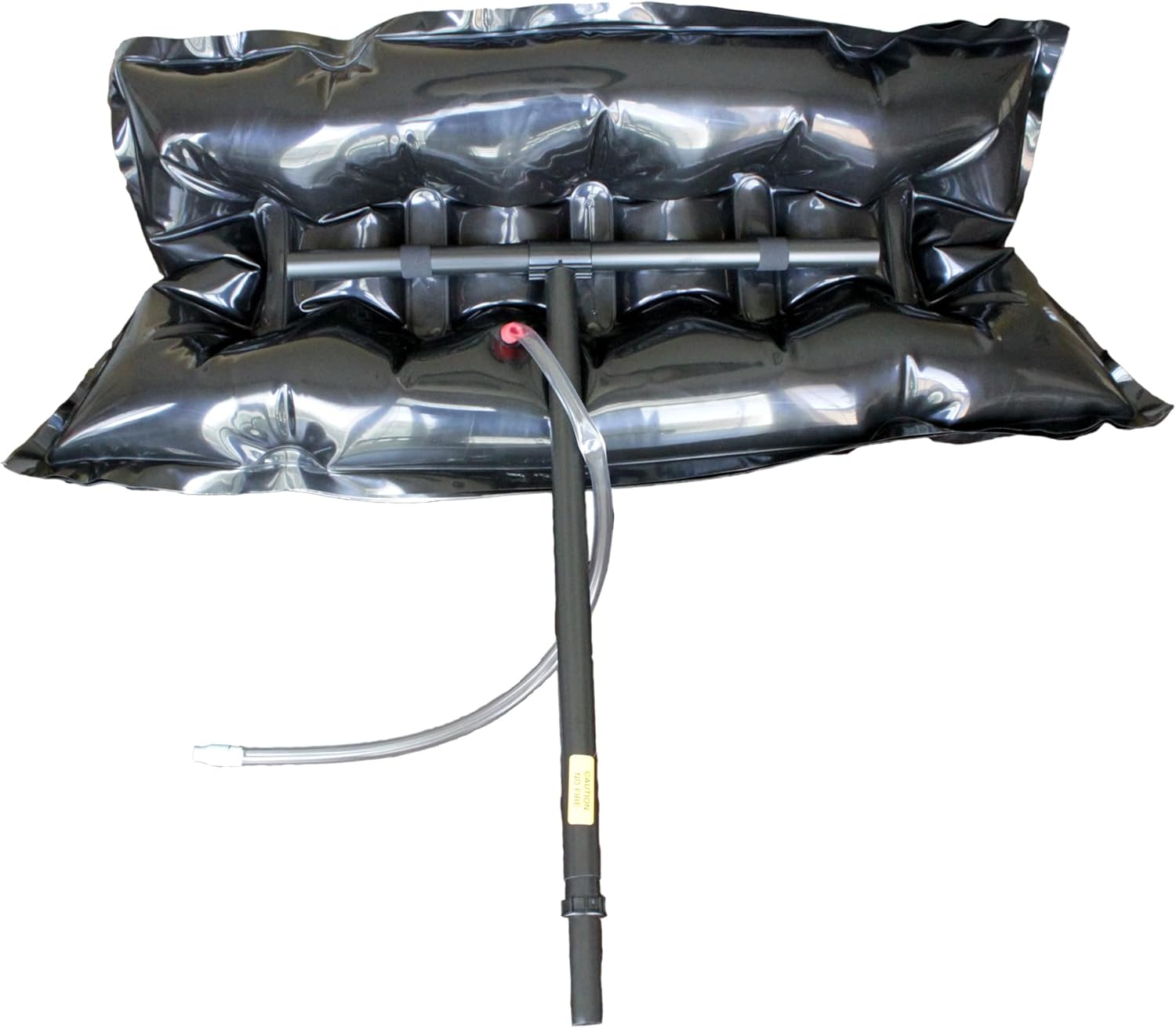
Battic Door Fireplace Plug (inflatable)
Best for: Irregular or tapered masonry fireplace openings that fall within the manufacturer’s stated fit range.
Main benefit: The inflatable design offers adjustable contact around an uneven opening.
Before buying: Check for sharp damper parts, confirm the listed fit range, and remember that the plug must be completely removed before any fire or pilot is used.
Check the Battic Door plug on AmazonNon-inflatable option
Wool fireplace plug (Flueblocker or equivalent)
Best for: A measured flue opening that matches an available wool plug size.
Main benefit: A reusable pressure fit with no valve, inflation step, or gradual air loss.
Before buying: Size matching is critical; a plug that is too small may leave gaps. Remove it completely before any fire or pilot is used.
Check the wool plug on AmazonSafety first: These are temporary draft stoppers for a completely cool, unused fireplace. Do not install either product in a flue serving an active appliance or standing pilot.
When a Chimney Balloon Is the Better Choice
An inflatable balloon works by expanding until its sides press against the surrounding surface. This adjustability can help in a masonry fireplace throat that is tapered, slightly uneven, or difficult to match with a rigid shape. Gradual inflation lets you stop when the balloon is stable rather than forcing an oversized plug into place.
Choose an inflatable design when:
- The opening is irregular but still falls within the manufacturer’s published fit range.
- The fireplace will remain unused for weeks or months.
- You can reach the installation point safely from the hearth without climbing.
- The surrounding surface is clean enough to support a seal and has no sharp edges.
- You want an adjustable fit rather than a fixed plug dimension.
The tradeoff is handling. A balloon may need to be partly or fully deflated before removal. Too little inflation can leave leakage paths, while too much can stress seams or make removal harder. Sooty masonry, screws, damper edges, and rough liner surfaces can also damage thin material. Follow the specific product instructions rather than choosing an inflation pressure by guesswork.
When a Wool Fireplace Plug Is Better
A wool fireplace plug uses dense fiber and a pressure fit instead of an air valve. It is pushed into a correctly measured opening so the material presses against the sides. It can be a useful alternative when you want a reusable stopper that cannot puncture or slowly lose inflation.
Choose a wool plug when:
- The opening matches one of the manufacturer’s published sizes.
- You want a non-inflatable design with no valve or air-loss concern.
- You expect to remove and reinstall the stopper during the heating season.
- The surrounding surfaces can hold the plug without forcing it against sharp hardware.
- You can keep a visible reminder that the flue is blocked.
The limitation is fit. A wool plug that is too small can leave gaps, while one that is too large may buckle, slip, or be difficult to seat. Wool can also collect soot and fireplace odor over time. If the opening is strongly tapered or no suitable plug size is available, an inflatable design may be easier to fit.
How to Measure Before You Buy
Measure only when the fireplace is completely cold and the ashes have been removed safely. Use a flashlight and work from the hearth. Do not climb into the firebox or reach above a sharp damper assembly. If the throat is heavily sooted, damaged, or difficult to access, have it inspected before installing anything.
- Find the intended sealing location. This may be just above the throat damper or at another point allowed by the stopper manufacturer.
- Measure the width. Record the narrowest usable width and note protruding hardware.
- Measure the depth. Take the front-to-back dimension at the same height.
- Check the shape. Sketch whether the opening is rectangular, arched, tapered, or irregular.
- Inspect contact surfaces. Look for sharp screws, corroded damper parts, crumbling mortar, or wet masonry.
- Compare the actual dimensions with the published fit range. Do not assume that “standard fireplace” is a size.
Take two sets of measurements before ordering. If the opening changes size over a few inches of height, record both the narrowest and widest points. The useful size is the one at the exact location where the product will sit.
Safe Installation and Removal Checklist
Never install a balloon or wool plug in a flue serving an active appliance, a fireplace with a standing pilot, or a system the manufacturer says must remain vented. This includes many gas log and gas fireplace arrangements. If you are unsure how a gas unit vents, read whether a gas fireplace needs a chimney and have the appliance identified by a qualified technician.
- Confirm that the fire is out, the ashes are cold, and no pilot or appliance is operating.
- Read the manufacturer’s permitted placement and size range.
- Leave the removal handle, cord, or reminder tag clearly visible in the firebox.
- Tell every household member that the flue is blocked.
- Remove the stopper completely before opening fuel, lighting a pilot, or starting any fire.
- Open the damper and confirm the flue is unobstructed before use.
- Inspect the stopper for punctures, tears, deformation, soot saturation, or moisture before reinstalling.
- Keep working carbon monoxide alarms on the home’s levels and outside sleeping areas.
The EPA’s Burn Wise guidance points homeowners to annual professional inspections of fuel-burning appliances and recommends carbon monoxide alarms. A stopper does not replace that inspection. If the fireplace has not been inspected since a change in appliance, a chimney fire, water intrusion, or a long period of nonuse, review the three chimney inspection levels before the next burn.
Common Problems After Installation
The room still feels drafty
Check for a visible gap around the stopper and confirm that it has not shifted. Then consider other leakage paths around the fireplace surround, ash dump, glass doors, exterior wall, or chimney chase. An infrared thermometer can help compare surface temperatures, but it cannot prove that a flue is safe or clear.
Odors become stronger
A stopper may reduce incoming odor, but changing airflow can also concentrate an existing smell in the firebox. Creosote, wet masonry, animal debris, or a contaminated smoke chamber needs correction at the source. Use our guide to fireplace smoke odors in the house to separate cleaning, moisture, and pressure problems.
Condensation appears
Remove the stopper and let the area dry. Persistent moisture can come from rain entry, masonry absorption, a flashing leak, or condensation in a cold flue. Do not trap water behind a temporary seal. A wet chimney needs diagnosis before another stopper is installed.
Ready to choose?
Match the Product to the Opening
Do not order by the words “standard fireplace.” Measure at the exact installation point, compare that result with the listing, and choose the style that fits the way you will use the fireplace.
Battic Door Fireplace Plug (inflatable)
An inflatable option makes the most sense when the opening is uneven and its measurements fit the product’s stated range. Inspect for sharp edges before installation.
View the inflatable option on AmazonWool fireplace plug (Flueblocker or equivalent)
A wool plug is the simpler non-inflatable choice when your measured opening matches an available size and you want straightforward removal and reinstallation.
View the wool option on AmazonBefore lighting: Remove the stopper completely, open the damper, and confirm that the flue is unobstructed.
Which One Should You Choose?
Choose a chimney balloon when adjustability matters most or the opening is irregular. Choose a wool fireplace plug when a suitable size is available and you prefer a reusable non-inflatable design. In both cases, correct sizing and a visible removal reminder matter more than marketing claims.
Skip both options when the fireplace or flue serves an active appliance, has a pilot light, contains sharp or damaged components, shows moisture, or has an unresolved draft or odor problem. A repaired throat damper or professionally installed top-sealing damper may be the more durable answer for a fireplace that leaks year after year.
Frequently Asked Questions
Is a chimney balloon the same as a wool fireplace plug?
No. A chimney balloon is inflated inside the opening, while a wool fireplace plug uses dense fiber and pressure to create a seal. Both are removable draft stoppers, but they use different materials and installation methods.
Can I leave a chimney balloon installed all winter?
Only if the fireplace will remain completely unused, the product permits long-term installation, and no active appliance or pilot uses the flue. Inspect it periodically and remove it immediately if moisture, damage, or odor develops.
What happens if I forget to remove the stopper?
A blocked flue can send smoke and combustion gases into the home and create a serious fire and carbon monoxide hazard. Keep the product’s handle, cord, or warning tag visible and remove the stopper before opening fuel or lighting any flame.
Can I use a wool fireplace plug with gas logs?
Do not use one unless the gas appliance manufacturer and a qualified technician confirm that the flue may be blocked when the appliance is off. Many vented gas logs require the damper to remain open, and a standing pilot produces combustion gases.
Will a draft stopper cure fireplace smoke smell?
It may reduce odor carried by downdraft, but it will not remove creosote, animal debris, water intrusion, or pressure problems. Diagnose and correct the odor source instead of sealing a wet or contaminated flue.