How to Light a Gas Fireplace Pilot Light: The Ultimate Troubleshooting & Safety Guide
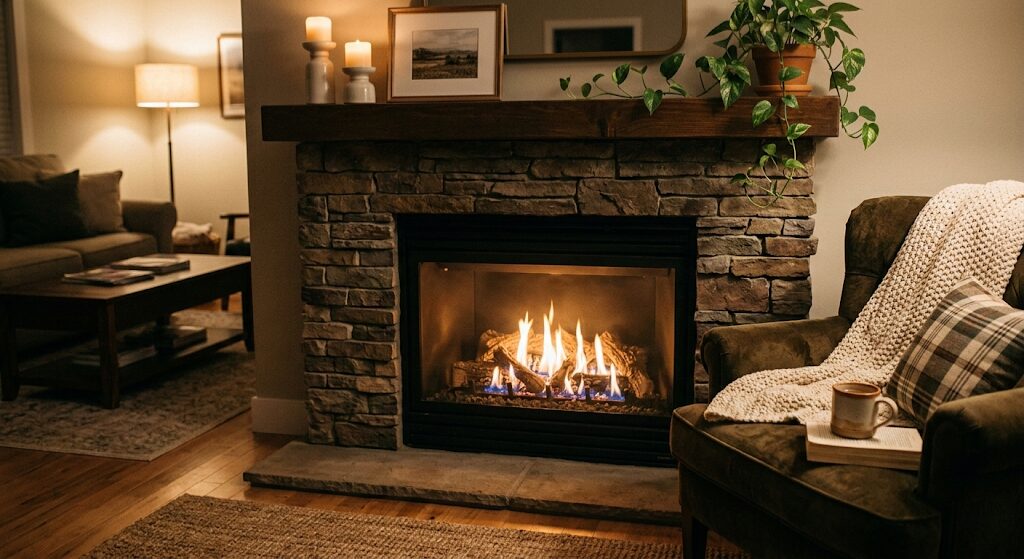
There are few things as frustrating as an uncooperative gas fireplace on the first frigid evening of winter. You flip the wall switch, grab your blanket, and wait for the ambient heat—only to be met with cold ceramic logs and silence. The culprit, in the vast majority of cases, is a dormant pilot light.
For many homeowners, the control panel of a gas fireplace looks like the cockpit of an airplane. The combination of gas lines, red spark buttons, and mechanical valves can be highly intimidating. The fear of “doing something wrong with gas” paralyzes people, leading to expensive, unnecessary service calls to a local HVAC or chimney technician for a fix that takes less than two minutes.
In this comprehensive, expert-led guide, we are going to demystify the mechanics of your gas fireplace. We will break down exactly how to identify your system, the step-by-step process to safely ignite a standing pilot light, what to do if your push-button igniter fails, and the most common mechanical reasons why your pilot light refuses to stay lit. Empower yourself with this knowledge, and you will never be left in the cold again.
1. Identifying Your Gas Fireplace System: What Are You Working With?
Before you start pushing buttons or turning knobs, you must identify what type of ignition system your fireplace utilizes. Gas fireplaces generally fall into two distinct categories, and the lighting procedures are entirely different.
The Standing Pilot System (Millivolt Valve)
This is the traditional, older style of gas fireplace, and it is the primary focus of this guide. A standing pilot system features a tiny, continuous blue flame (the pilot) that burns 24/7, 365 days a year (unless you manually turn it off). This tiny flame generates a micro-voltage of electricity by heating a sensor called a thermocouple. This micro-voltage tells the main gas valve, “It is safe to open; I am here to ignite the gas.” If you have a control panel hidden behind the bottom louvers with a knob labeled “OFF / PILOT / ON,” you have a standing pilot.
Intermittent Pilot Ignition (IPI / Electronic Ignition)
Modern, high-efficiency gas fireplaces often feature an IPI system. These fireplaces do not have a continuous pilot light. Instead, they rely on an electronic control module. When you flip the wall switch or press a button on your remote, the module sends a spark to ignite a temporary pilot light, which then immediately ignites the main burner. If you do not see a control knob with a “PILOT” setting, and instead just see a battery pack and a switch, you have an electronic ignition. If you are researching direct-vent vs. ventless gas fireplace efficiency, you’ll note that almost all top-tier efficiency models now use IPI systems to save gas.
2. Pre-Lighting Safety Checklist: Do Not Skip This
Working with natural gas or liquid propane (LP) is incredibly safe when proper protocols are followed, but it is deeply unforgiving of negligence. Before attempting to light your pilot, run through this mandatory safety checklist.
- Locate the Main Gas Shutoff: Know where the main gas shutoff valve to the fireplace is located. It is usually a red or yellow handled lever on the gas pipe next to or directly under the fireplace. The valve is OPEN when the handle is parallel to the pipe, and CLOSED when the handle is perpendicular (making a cross or ‘T’ shape) with the pipe.
- Clear the Area: Ensure no combustible materials (papers, blankets, holiday decorations) are sitting near the glass or the louvers of the fireplace.
- Verify Carbon Monoxide Detectors: Gas fireplaces burn incredibly cleanly, but mechanical failures can produce carbon monoxide. Ensure you have functioning, unexpired detectors installed nearby. If you are unsure of your current alarm’s age, it is highly recommended to upgrade to one of the best modern carbon monoxide detectors for home safety before heating season begins.
3. Step-by-Step: How to Light a Standing Pilot Light
If you have verified it is safe to proceed and you have located your control panel (usually behind a drop-down metal louver at the very bottom of the fireplace), follow these steps precisely.
-
Locate the Control Knob and the Igniter
Look for a prominent round dial. It will have three words written on it: OFF, PILOT, and ON. Nearby, you will see a red or black push-button. This is the Piezo igniter (it works just like the spark button on a gas BBQ grill).
-
Turn the Knob to the “OFF” Position
Turn the control knob so that the indicator line points to “OFF”. Note: If the knob is currently stuck on “ON”, you usually have to push the knob in slightly to turn it back to “OFF”. Wait a full 5 minutes. This waiting period is critical. It allows any residual, unburned gas that may have settled in the firebox to safely dissipate up the chimney.
-
Turn the Knob to “PILOT”
After the 5-minute wait, turn the dial so the indicator points directly to the word “PILOT”.
-
Push the Knob In and Hold It
With the dial pointing to PILOT, push the entire control knob inwards toward the valve body. It should depress about half an inch. You must keep this knob pushed in tightly. Pushing the knob manually overrides the safety valve, allowing a tiny stream of gas to flow through the pilot tube.
-
Strike the Igniter Button
While still holding the control knob in with one hand, use your other hand to press the Piezo igniter button. Press it firmly once every second. You will hear a loud *clack* and should see a small blue spark jump near the pilot assembly inside the firebox. Keep striking until the small blue pilot flame ignites.
-
Continue Holding the Knob (The Crucial Step)
Once the flame lights, DO NOT let go of the control knob! You must continue holding the knob pushed in for at least 30 to 60 seconds. The pilot flame needs time to physically heat up the thermocouple. If you let go too early, the thermocouple remains cold, assumes the flame went out, and slams the safety valve shut, killing the flame.
-
Release the Knob and Turn to “ON”
Slowly release the pressure on the control knob. It should pop back out. Look at the pilot light—it should remain lit on its own. Finally, turn the control dial from “PILOT” to the “ON” position. Your fireplace is now ready to be operated by the wall switch or remote control.

Failing Igniter? Keep a Long-Reach Lighter Handy
Piezo igniters are mechanical and can fail over time. If your button clicks but produces no spark, you can still light your pilot manually. A flexible, long-reach butane BBQ lighter allows you to reach deep into the firebox to ignite the gas while keeping your hands safely away from the burner pan.
View Long-Reach Lighters on Amazon4. Lighting Without an Igniter (The Manual Method)
If you press the red Piezo button repeatedly and do not see a spark, the igniter wire may be disconnected, or the mechanical striker may be broken. Do not panic; you can easily light the pilot manually using a long match or a long-necked butane lighter.
The process is identical to the steps above. Turn the knob to OFF, wait 5 minutes, turn to PILOT, and push the knob in. However, instead of hitting the spark button, simply reach into the firebox with your long lighter, position the flame directly over the pilot hood (the small metal tube where the spark normally jumps), and hold it there while keeping the control knob depressed. Once the pilot ignites, remove the lighter, but remember to continue holding the control knob in for the required 30 to 60 seconds.
5. Troubleshooting: Why Won’t My Pilot Light Stay Lit?
You followed the steps perfectly. The flame lights while you hold the knob in, but the exact second you let go, the flame dies with a quiet *click*. This is the most common mechanical issue with gas fireplaces. Here is how to diagnose it.
The Thermocouple is Dirty or Failing
The thermocouple is a small metal rod sitting directly in the path of the pilot flame. When heated, it creates a tiny electrical current (millivolts) that holds the gas valve open via a magnet. Over time, this rod builds up a layer of white soot or carbon oxidation, which acts as an insulator, preventing the heat from penetrating the metal.
The Fix: Turn the gas off and let the unit cool completely. Take a piece of very fine grit sandpaper or emery cloth and gently rub the thermocouple rod until the metal is shiny and clean again. If cleaning it does not solve the issue, the thermocouple has likely burned out internally and must be replaced (a cheap and relatively easy DIY part swap).
The Pilot Tube is Clogged
Sometimes, the pilot flame lights, but it is weak, yellow, and struggling, barely touching the thermocouple. This indicates a restriction in gas flow. Spiders, dust, and even pet hair can easily clog the microscopic orifice inside the pilot tube.
The Fix: Use a can of compressed air (like you use for computer keyboards) and blast short bursts of air directly into the pilot assembly to clear the orifice. Never stick a needle or wire into the pilot orifice, as you can easily widen the hole and ruin the gas calibration.
Drafting and Venting Issues
If your pilot light blows out randomly on windy days, you may have a downdraft issue. While assessing if a gas fireplace needs a chimney or direct vent, it’s important to understand that wind can sometimes travel down B-vent systems or poorly capped direct vents, extinguishing the weak pilot flame. Ensure your exterior termination cap is securely attached and not damaged.
6. Handling Electronic Ignition (IPI) Systems
If your fireplace does not have a standing pilot, it uses an electronic module. Generally, these systems require zero interaction. You hit the wall switch, you hear rapid clicking (the igniter), the pilot lights, and then the main burner erupts. However, they can still experience issues.
If an IPI system refuses to spark, the first step is to perform a system reset. Much like a computer, the module can get “confused.” Locate the control module under the fireplace, unplug it from the wall outlet, wait 60 seconds, and plug it back in. If it still fails, the electronic module itself may need replacement by a certified technician during your next Level 1 or Level 2 chimney inspection.
7. Seasonal Maintenance: Summer On or Off?
One of the most heavily debated topics among fireplace owners is whether to leave the standing pilot light running during the hot summer months. There are distinct pros and cons to both approaches.
Leaving the Pilot ON During Summer
- Prevents Moisture Damage: The constant heat from the pilot flame keeps the firebox dry, preventing high summer humidity from causing rust on the burners or valves.
- Repels Insects: Spiders famously love the smell of the chemical mercaptan in natural gas and will build webs inside dormant pilot tubes. The flame keeps them away.
- Instant Gratification: On the first cold night of fall, your fireplace is ready to go at the flip of a switch.
Turning the Pilot OFF During Summer
- Saves Gas & Money: A continuous pilot light burns roughly 600 to 800 BTUs per hour. Turning it off can save you $5 to $15 a month on your gas bill.
- Reduces Heat Load: The pilot generates heat. While small, this heat radiates into your living room, forcing your air conditioner to work slightly harder to cool the space.
- Conserves the Thermocouple: The thermocouple has a finite lifespan of hours it can withstand heat. Turning it off for 5 months extends its life significantly.
Expert Recommendation: If your fireplace is located in a damp basement, leave the pilot on to prevent rust. If it is in a dry, main-level living room, turn it off to save money, but cover the pilot assembly with a small plastic baggie to prevent spiders from nesting (just don’t forget to remove the baggie in the fall!).
Frequently Asked Questions (FAQs)
Final Safety Thoughts
Lighting a gas fireplace pilot light is a fundamental homeowner skill that saves money, ensures comfort during winter storms, and eliminates the anxiety associated with gas appliances. By understanding the simple mechanics of the control knob, the crucial role of the thermocouple, and the necessity of patience while purging the gas line, you are now equipped to master your hearth.
Remember, if you ever feel uncomfortable, smell strong gas, or find that the controls are stiff or jammed, the safest tool you have is your phone. Turn off the main gas line and contact a certified hearth professional. Stay warm, burn responsibly, and enjoy the instant ambiance of your perfectly lit gas fireplace.