
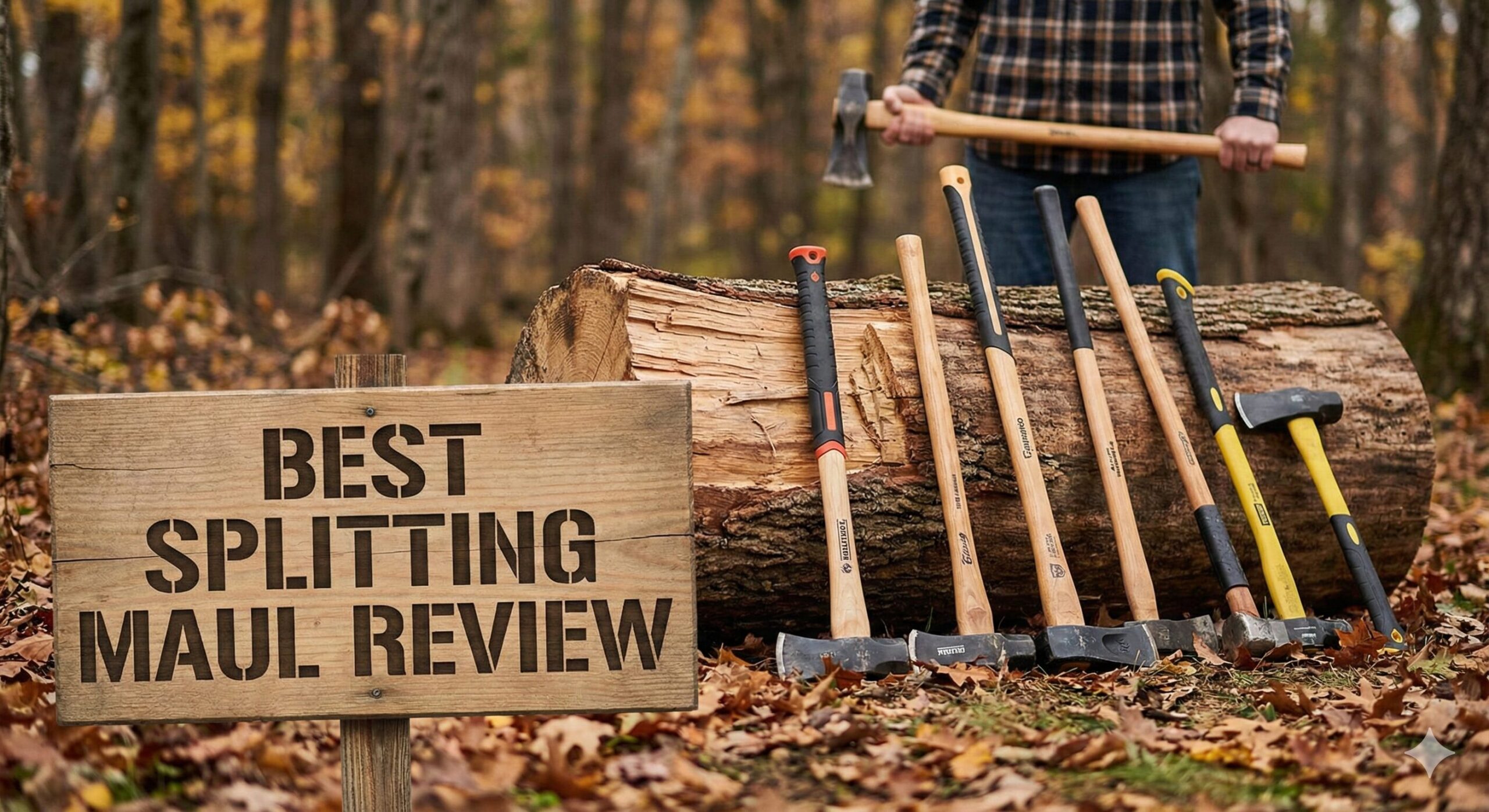
7 Best Splitting Mauls Reviewed: The Ultimate Tools for Tough Wood
Sometimes, technology can’t beat physics. When you need to bust through knotty rounds, nothing rivals the raw power of a high-quality splitting maul. We tested the heaviest hitters to find the ones that won’t break.
There is something primal and satisfying about splitting wood by hand. It’s the ultimate workout and the most reliable way to heat your home. But if you are using a standard felling axe to split seasoned oak, you are working harder, not smarter.
A splitting maul is the sledgehammer of the woods. Designed with a fat, wedge-shaped head and significant weight (usually 6 to 8 lbs), it forces wood fibers apart rather than cutting them. While machinery has its place—check out our guide to the best gas log splitters if you have a massive pile—a trusty maul is essential for every wood burner’s toolkit.
We’ve analyzed durability, handle vibration, and head geometry to bring you the best splitting mauls.
⚡ Quick Decision Guide
Need to start swinging immediately? Here are our top recommendations based on how you work.
| Category | Model | Why We Chose It |
|---|---|---|
| 🏆 Best Overall | Fiskars IsoCore 8lb | Incredible vibration dampening, lifetime warranty, and destructive power. |
| 🛡️ Most Durable | Wilton B.A.S.H 8lb | Steel core handle technology makes it virtually impossible to break. |
| 🌲 Best Traditional | Helko Werk Vario 2000 | German engineering with an interchangeable head system. A tool for life. |
Maul vs. Axe: What Do You Need?
Before buying, ensure you are looking for a maul, not an axe.
- Splitting Axe: Lighter (3-5 lbs), sharper, designed to slice. Great for small to medium logs and straight grain.
- Splitting Maul: Heavier (6-8+ lbs), blunt wedge shape, designed to crush and force fibers apart. Essential for large, knotty, or stubborn rounds.
If you prefer mechanical assistance but want to keep it quiet, you might consider manual hydraulic log splitters instead of swinging a heavy hammer.
1. Fiskars IsoCore 8lb Maul (Top Pick)
Editor’s ChoiceThe Fiskars IsoCore 8lb Maul has revolutionized the market. Its claim to fame is the IsoCore Shock Control System, which absorbs strike shock and vibration, reducing the punishment your body takes by 2X compared to wood handles.
The head features a unique geometry that drives wood apart efficiently, and the handle is virtually unbreakable. We also love the “driving face” on the back of the head, allowing you to use it as a sledgehammer to drive wedges into massive rounds.
Pros
- Superior shock absorption (saves your elbows).
- Indestructible composite handle.
- Driving face allows wedge striking.
- Lifetime warranty.
Cons
- Heavy (8lb head means 10lb+ total weight).
- Not traditional (looks modern/synthetic).

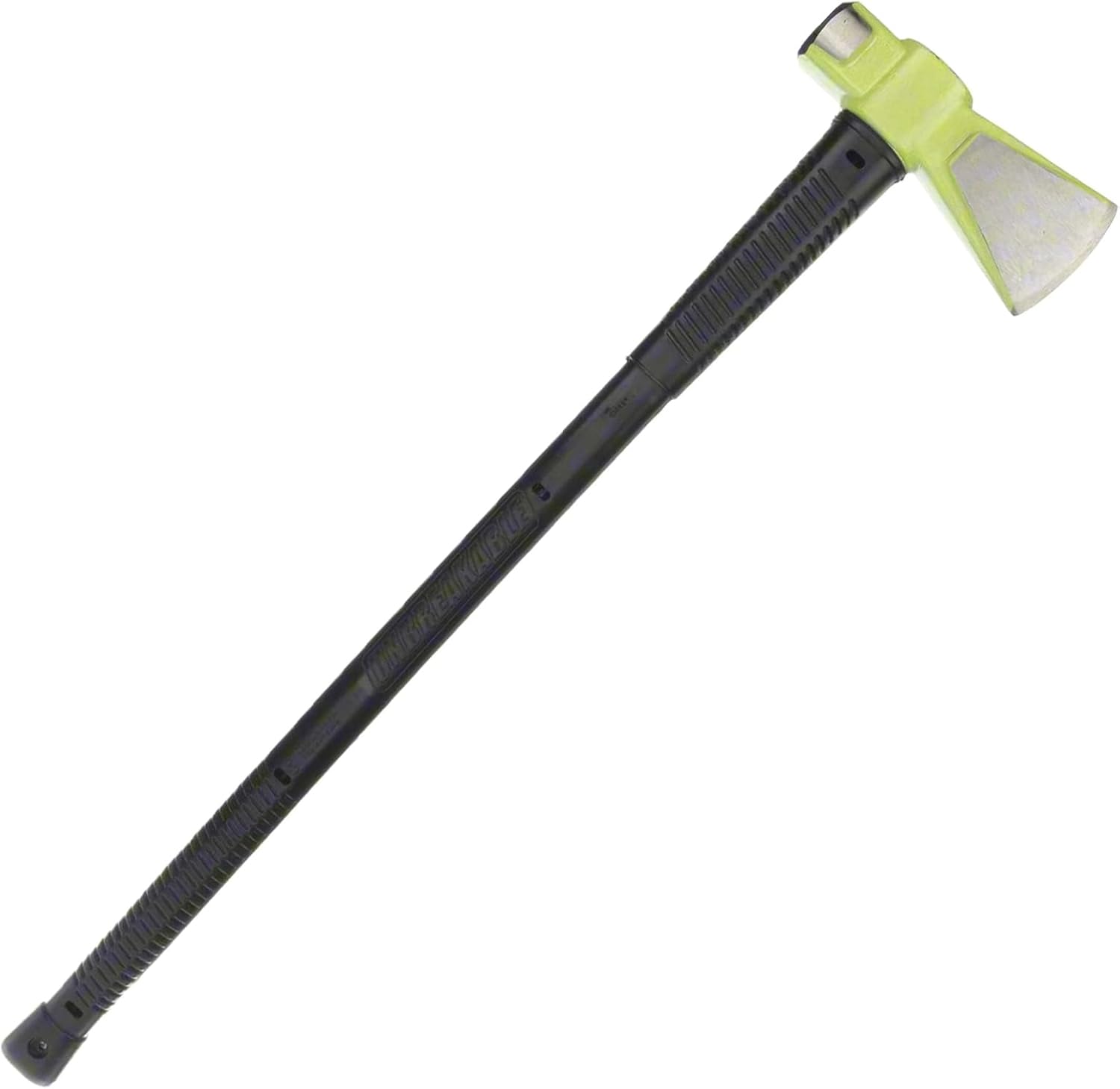
2. Wilton B.A.S.H 8lb Splitting Maul (Indestructible)
Most DurableWilton is famous for their B.A.S.H (Bad Ass Sledge Hammer) technology, and they applied it to this maul. The handle contains a steel core that eliminates the risk of snapping during an overstrike—the most common way mauls die.
It also features a “safety plate” that secures the head to the handle, ensuring it never flies off. If you are known for breaking tools, this is the last maul you will ever buy. The anti-vibration neck is thick and reassuringly solid.
Pros
- Unbreakable Steel Core technology.
- Safety plate prevents head separation.
- High-visibility green head.
- Stand-up feature for easy grabbing.
Cons
- Handle is shorter (30″) than some prefer.
- Expensive compared to generic brands.
3. Helko Werk 1844 Heavy Log Splitter
Premium PickFor the purist who values craftsmanship, the German-made Helko 1844 is a masterpiece. It features a unique interchangeable head system. If you damage the blade or break the handle, everything is bolted together and replaceable with a hex key.
The head is forged from C50 high-grade carbon steel and creates an incredible wedge effect. The handle is crafted from Swiss hickory, offering that warm, traditional feel that fiberglass just can’t match.
Pros
- Fully interchangeable parts (Heads/Handles).
- Superior German C50 Steel.
- Deep wedge shape explodes wood apart.
- Beautiful craftsmanship.
Cons
- Very expensive.
- Requires maintenance (oiling the handle/head).

4. Estwing Fireside Friend
Sometimes you don’t need a monster maul; you just need to split kindling or smaller logs for the wood stove. The Estwing Fireside Friend is a 4lb, one-handed maul forged in a single piece of steel.
Because the head and handle are one solid piece, it is impossible to break. The shock reduction grip is comfortable, and the weight is perfect for driving with one hand while stabilizing the log with the other (carefully!).
Pros
- One-piece forged steel (indestructible).
- Perfect size for camping or kindling.
- Made in the USA.
Cons
- Too short for splitting large rounds on the ground.
- Handle grip can get slippery when wet.

5. Husqvarna 32″ Wooden Splitting Maul
Husqvarna is a legend in forestry, and their 32-inch maul is a solid, no-nonsense tool. It combines a hand-forged Swedish steel head with a hickory handle. The head is designed with a “splitting wedge” geometry that prevents it from getting stuck in the wood.
It features a steel collar below the head to protect the handle from overstrike damage, addressing the biggest weakness of wooden-handled tools.
Pros
- Steel neck guard protection.
- Excellent Swedish steel holds an edge.
- Classic hickory feel and balance.
Cons
- Wood handles can break if abused.
- Head finish can be rough on some units.
Classic Swedish quality with essential handle protection.
Check Price on Amazon6. Gransfors Bruk Splitting Maul
This is the “Ferrari” of splitting mauls. Hand-forged in Sweden, each axe bears the initials of the smith who made it. The Gransfors Bruk maul is lighter than most (5.5 lbs head), relying on superior sharpness and head geometry rather than brute weight.
It is razor sharp out of the box and features a protective steel collar. If you appreciate tools as art, this is the one you hang above the fireplace (after using it, of course).
Pros
- Unmatched sharpness and finish.
- Hand-forged uniqueness.
- Light enough to swing all day.
Cons
- Extremely expensive.
- Hard to find in stock due to demand.
Heirloom quality for the true connoisseur.
Check Price on Amazon7. Fiskars X27 Super Splitting Axe
Technically, the X27 is an axe, not a maul. But it is so effective that it deserves a spot on this list. For 80% of splitting tasks, the lighter X27 generates faster head speed, exploding wood apart with less effort than an 8lb maul.
If you are smaller in stature or just have a lot of straight-grained wood to process, the X27 is often a better choice than a heavy maul. However, for gnarly, knotty crotches, you will still want the 8lb IsoCore.
Pros
- Incredibly lightweight and fast.
- Unbreakable FiberComp handle.
- Less fatigue over long sessions.
Cons
- Lacks the mass to bust through tough knots.
- No poll for hammering wedges.

📚 Buyer’s Guide: How to Choose
Buying a maul seems simple, but the wrong choice can lead to back pain or broken handles.
1. Handle Material: Wood vs. Composite
- Composite (Fiberglass/Plastic): Like the Fiskars or Wilton. They are virtually unbreakable, weather-resistant, and absorb vibration well. Best for utility.
- Wood (Hickory/Ash): Traditional feel, replaceable, and warm to the touch. However, they can snap if you overstrike (hit the handle against the log).
2. Weight
Most mauls are 6 or 8 lbs. * 8 lb: The standard. Maximum crushing power for big logs. * 6 lb: Easier to swing for longer periods but might require two hits for tough logs.
3. Head Geometry
You want a head with a wide “cheek” or wedge shape. This forces the wood apart quickly. Thin heads (like an axe) can get stuck in the wood, forcing you to wrestle it out.
If the physical toll of a maul is too much, consider switching to electric log splitters for a quieter, plug-and-play experience.
⚖️ Splitting Maul Weight Guide: Which is Right for You?
One of the most searched questions about splitting mauls is simply: how heavy should my maul be? The honest answer is that it depends on your body size, the type of wood you split, and how long your sessions typically run. Getting this wrong costs you energy—and potentially your joints.
A heavier head generates more crushing force on impact, which is critical for dense hardwoods like oak and elm. But a maul that’s too heavy for the operator leads to poor swing mechanics, glancing blows, and accelerated fatigue. The sweet spot is a head weight that lets you swing with control and speed while still carrying enough mass to crack a 16-inch round in one hit most of the time.
| Head Weight | Best For | Typical User Profile | Recommended Pick |
|---|---|---|---|
| 4–5 lb | Kindling, softwoods, small rounds | Lighter users, casual users, camping | Estwing Fireside Friend |
| 5.5–6 lb | Mixed wood, medium rounds, long sessions | Average adults, those prone to fatigue | Gransfors Bruk, Fiskars X27 |
| 7–8 lb | Hardwoods, knotty wood, large rounds | Most adults, experienced splitters | Fiskars IsoCore, Wilton B.A.S.H |
| 8+ lb | Very large crotches, professional use | Strong, experienced users only | Heavy-duty commercial mauls |
💡 Pro Tip: Total Tool Weight vs. Head Weight
Always check the total tool weight, not just the head weight. An 8 lb head on a 36-inch handle can weigh 10–11 lbs total. The handle length also affects swing arc and leverage, so a longer handle at 6 lb can feel harder to control than a shorter handle at 8 lb.
Handle Length and Its Role in Power
Handle length directly affects swing arc and therefore the speed your head achieves at the point of impact. More speed translates to more energy transferred into the wood—this is the physics of splitting. A 36-inch handle on a medium-weight maul can outperform a 30-inch handle on a heavier maul because of the greater arc.
Most full-size splitting mauls run between 30 and 36 inches. For users under 5’8″, a 32-inch handle is generally the ideal compromise between arc length and control. Taller users benefit from the full 36 inches, which keeps the back straighter and reduces lumbar fatigue over a long session. The Husqvarna 32″ hits the middle of the road well.
💰 Best Splitting Mauls by Budget
Not everyone needs to spend $200 on a Gransfors Bruk. Here’s how to think about your splitting maul budget honestly, with no fluff.
| Budget Range | What to Expect | Best Pick in Category |
|---|---|---|
| Under $50 | Basic wood handle, decent steel, functional but not exceptional. Handle breakage is a realistic risk. Acceptable for light, occasional use. | Council Tool 8lb Splitting Maul (hickory handle) |
| $50–$120 | This is the best value zone. You get composite handles, quality steel geometry, and warranties. The Fiskars IsoCore and Husqvarna 32″ live here. | Fiskars IsoCore 8lb |
| $120–$250+ | Heirloom quality. Hand-forged steel, premium hickory or replaceable systems. You’re paying for longevity and craftsmanship, not incremental splitting power. | Gransfors Bruk or Helko Werk |
The honest truth is that the $50–$120 range is where the best practical value lives. A Fiskars IsoCore will split just as much wood as a $200 Gransfors Bruk. The premium brands earn their price in longevity, repairability, aesthetics, and the pleasure of using a finely crafted tool—not in raw splitting efficiency.
If you split more than 3 cords per year, investing in a higher-end maul pays off over a decade. If you split one cord per winter for personal use, a mid-range composite maul is the smart economic choice.
🌲 Best Wood to Split: Hardwood vs. Softwood Guide
Your maul choice is directly influenced by the wood you’re splitting. Knowing your wood species—and how they split—will save you from buying more maul than you need, or buying too little and going home frustrated.
Hardwood vs. Softwood: The Core Difference
Hardwoods (deciduous trees like oak, ash, hickory, and maple) are denser and burn longer with more heat output per cord. They are also considerably harder to split, especially when green (freshly cut). Softwoods (conifers like pine, fir, spruce, and cedar) split easily, even when green, but burn faster and produce more creosote—making them better for shoulder-season fires than main winter heating.
As a general rule, the denser the wood species, the heavier the maul you want. An 8lb maul is ideal for oak and elm. A 6lb maul or even the Fiskars X27 handles pine and spruce with ease.
🌳 Oak
Dense and heavy. Splits well when dry. Knotty sections need a wedge or the Wilton B.A.S.H. Top-tier firewood for heat output.
🌳 Ash
One of the best firewood species. Splits cleanly along the grain—even when green. An 8lb maul handles it with ease.
🌳 Hickory
Extremely dense. Slow-burning and hot. Requires a heavy maul and patience. Often benefits from a steel wedge assist.
🌳 Maple
Good heat value. Splits reasonably well when dry. Knotty sections require extra effort. An 8lb maul works best.
🌲 Pine
Splits easily—even a 6lb maul or X27 is overkill. Burns fast. Good for kindling and starting fires, not main heat.
🌲 Cedar
Very easy to split. Aromatic and splits with almost no effort. Light maul or splitting axe is all you need.
🌳 Elm
The nightmare wood. Stringy, interlocked fibers that refuse to separate. A wedge and sledge combination is often more effective than a maul alone.
🌳 Birch
Splits easily and burns well. One of the most satisfying woods to split by hand. A 6lb maul or splitting axe handles it well.
⚠️ Always Split Dry Wood When Possible
Green (freshly cut) wood contains moisture that makes it spongy and resistant to splitting. Hardwoods like elm and oak are significantly harder to split when green. If you must split green wood, use a heavier maul and aim for the outer edges of the round first (a technique called “slabbing”) rather than striking the center.
🪓 How to Split Wood Properly: Step-by-Step Technique
A splitting maul is only as good as the person swinging it. Poor form wastes energy, creates glancing blows, and puts stress on your back and elbows. Mastering a few fundamentals will double your efficiency and let you split for much longer before fatigue sets in.
Setting Up Your Splitting Station
Before you ever swing, your setup matters. Always split on a sturdy chopping block—ideally a thick, low round of a dense wood like elm or beech. Splitting on bare ground means you lose energy to the soil on each stroke. The block should bring the top of your log to roughly mid-thigh height, allowing a full arc without your maul striking the ground.
Position yourself with feet shoulder-width apart. If you are right-handed, stagger your left foot slightly forward. This creates a stable base and naturally aligns your swing. Give yourself enough room that a glancing blow won’t strike your legs or feet.
The Proper Swing Technique
-
Grip and Starting Position Hold the maul handle near the end (the “knob”) with your dominant hand, and place your other hand near the head. This is your starting position. Starting with both hands close to the head reduces the arc but gives you control as you begin the swing.
-
The Lift and Arc Raise the maul overhead in a smooth arc. As you bring it up, your non-dominant hand slides toward the knob to meet your dominant hand. Both hands should be together at the end of the handle at the top of the arc. This is the most common beginner mistake—keeping hands split the whole swing loses you massive power.
-
Driving Down: Let Gravity Help Don’t muscle the maul down. Let gravity do the work. Relax your shoulders and let the weight of the head fall. Your job is to guide the arc and ensure accuracy, not to force speed. Just before impact, squeeze the grip firmly. This brief tightening transfers your body’s rotation into the head.
-
Where to Strike: Aim for the Edges, Not the Center Many beginners aim for the dead center of a round. This is wrong for large logs. The wood grain radiates outward from the center, meaning the fibers are under the most tension at the edges. Strike off-center, toward the outside edge of the log, and the round will often split open with much less force. Work your way around the log, “slabbing” off pieces, until the remaining center splits easily.
-
Following Through After impact, let the maul drive through the log rather than stopping at the surface. If the log doesn’t split, don’t wrestle the maul out—flip the log over with the maul still embedded and strike the block. The impact usually pops the split open.
-
Pacing Yourself Take a short break every 15–20 minutes of heavy splitting. Fatigue causes poor aim, glancing blows, and injury. A consistent, controlled rhythm beats a frenetic start followed by exhaustion. Experienced splitters aim for around 30–40 clean strokes per minute on average-sized rounds.
🎯 The Slabbing Technique
For large rounds (18″+ diameter), never strike the center first. Work around the outside edge, splitting off “slabs” until only a manageable center remains. This is especially effective for dense hardwoods like hickory and oak.
🔄 The Flip Technique
When the maul gets embedded, don’t wrestle it out. Flip the entire log over (with the maul still in it) and strike the block. Gravity and momentum will pop most stubborn rounds open instantly.
⚡ The Grain-Following Technique
Look for the natural grain lines running down the end-grain of a round. Aim your strike to align with these lines. Splitting with the grain requires far less force than splitting across it.
🌡️ Cold Weather Bonus
Wood is actually easier to split in freezing temperatures. The moisture inside wood cells freezes and expands, pre-stressing the fibers. A very cold round often cracks in one swing that would require two or three in warm weather.
🪨 How to Split Knotty Wood and Frozen Logs
Dealing with Knotty Wood
Knots are where branches once emerged from the trunk. The grain spirals and interlocks around them, creating a zone of wood that actively resists splitting. No amount of maul weight alone will cleanly split a log right through a large knot in a single swing.
The right approach is to avoid the knot entirely if possible. Study the end-grain of the round and identify the knot’s position. Then slab around it—split off pieces from the sides of the knot using the edge-slabbing technique described above. This isolates the knotty section into a smaller, more manageable chunk.
When a knot is unavoidable, reach for a steel splitting wedge and a sledgehammer (or the poll of a maul rated for striking). Drive the wedge into the log on one side of the knot, not through it. The wedge’s mechanical advantage gives you much greater splitting force than any single maul swing can deliver. This is when a Fiskars IsoCore with its hardened poll—or the Wilton B.A.S.H with its striking plate—becomes especially valuable.
💡 Two-Wedge Strategy for Massive Knotty Rounds
For very large, knotty crotch sections (from tree forks), professional splitters use two wedges simultaneously. Drive the first wedge partway to start the crack, then position the second wedge along the crack and drive it deeper. This leapfrog technique conquers rounds that would frustrate even the most powerful electric log splitter.
How to Split Frozen Wood
Frozen wood is actually your friend, not your enemy. As we mentioned in the technique section, the water in wood cells freezes and expands below 32°F (0°C), which puts the fibers under tension. A hard freeze often makes splitting dramatically easier. Many experienced woodcutters deliberately wait for a deep cold snap to tackle their toughest rounds.
However, there are some nuances. Very fresh green wood that is also frozen can still be problematic—the frozen moisture makes it spongy but doesn’t necessarily help split it cleanly. The best scenario is well-dried (seasoned or at least partly seasoned) wood that has also frozen: these rounds often crack like glass with one well-placed strike.
One caution: working in extreme cold stiffens your own muscles and reduces reaction time. Wear appropriate clothing and take more frequent breaks. Fatigue and cold weather are a dangerous combination with any striking tool.
🆚 Splitting Maul vs. Log Splitter: Which Should You Choose?
This is one of the most common questions asked by people preparing for their first heating season with a wood-burning stove or fireplace. Both tools accomplish the same job, but in very different ways and for very different users.
| Factor | Splitting Maul | Log Splitter (Electric or Gas) |
|---|---|---|
| Upfront Cost | $50–$250 | $300–$2,000+ |
| Physical Demand | High – full-body workout | Low – primarily setup and feeding |
| Throughput | 1–2 cords per day (experienced) | 3–6 cords per day (depending on machine) |
| Portability | Excellent – carry anywhere | Gas: portable with trailer. Electric: limited by cord. |
| Maintenance | Minimal – occasional oiling | Moderate – engine/hydraulic servicing |
| Best For | 1–3 cords per year, fitness, occasional splitting | 4+ cords per year, mobility issues, commercial use |
| Noise | Low (just the strike) | Moderate (electric) to High (gas engine) |
The straightforward answer: if you split fewer than 3 cords per year and are physically able, a splitting maul is the smarter choice. It costs a fraction of the price, requires no fuel or maintenance, provides excellent exercise, and gives you a tool that will last a lifetime. If you split more than 4 cords annually, have physical limitations, or are splitting wood commercially, a log splitter pays for itself in time and labor savings.
Many serious wood burners own both. They use the maul for cleaning up smaller rounds, off-cuts, and the satisfying work of a relaxed afternoon session. The log splitter handles the bulk production work on the big rounds.
🔩 Splitting Maul vs. Splitting Wedge: When to Use Each
A splitting wedge is simply a piece of hardened steel shaped like a blunt V. You place it in a crack or on the grain of a log and drive it with a sledgehammer. Understanding when to switch from your maul to a wedge can save you enormous time and frustration.
When to Use a Splitting Maul
The maul is faster and better for the vast majority of splitting work. Any round under 18 inches in diameter with reasonably straight grain will fall to a well-swung maul. The maul’s advantage is speed: one tool, one swing, and you’re done. For a typical cord of mixed firewood, 80–85% of rounds can be handled with the maul alone.
When to Switch to a Splitting Wedge
Reach for your wedge when you encounter any of these situations: rounds larger than 20 inches in diameter; wood with heavily interlocked or spiral grain (elm, knotty oak); green wood of very dense species; or crotch sections where two trunks join (these are often the most challenging pieces in any pile).
The wedge’s mechanical advantage is significant. A 5 lb wedge driven into a log with a 10 lb sledgehammer generates far more splitting force than any hand-swung maul can produce. The trade-off is time—you need to position and drive the wedge, then retrieve it. But for those stubborn rounds that would take a dozen maul swings, the wedge solves the problem in seconds.
Types of Splitting Wedges
Grenade-style wedges have curved flutes that force the wood apart laterally as the wedge sinks deeper. They require fewer blows to achieve a full split than a standard flat wedge. For the average woodcutter, a set of two 5–6 lb grenade wedges is the ideal complement to an 8 lb splitting maul.
💡 Safety: Never Strike Steel on Steel Without Eye Protection
When driving a splitting wedge with a maul’s poll, always wear certified safety glasses. Hardened steel striking hardened steel can throw metal fragments. This risk is highest when the wedge or poll is damaged or chipped. Inspect both before use.
🔧 How to Replace a Splitting Maul Handle
If you own a traditional wooden-handled maul, handle replacement is an inevitable part of ownership. A broken handle doesn’t mean a broken maul—the head, which is the expensive and highest-quality component, often outlasts multiple handles. Replacing a handle yourself is a straightforward process that takes about 30–45 minutes and costs $15–$35 for a quality replacement handle.
What You’ll Need
You’ll need a replacement hickory or ash handle sized to your head’s eye (the hole), a drill with a large bit, a punch or chisel, a hammer, a wood wedge (usually included with the replacement handle), and optionally, a steel wedge and some linseed oil.
-
Remove the Old Handle Clamp the maul head securely in a vise. Use a drill to bore out as much of the old handle wood from the eye as possible. Then use a punch or chisel to knock out the remaining wood. Work patiently—forcing this step can damage the eye of the head.
-
Prepare the New Handle If the handle is oversized for the eye (common), use a rasp or coarse sandpaper to reduce the shoulder of the handle until it fits snugly into the eye but still requires effort to drive in fully. The fit should be very tight—this is what holds the head secure.
-
Drive the Head Onto the Handle Stand the handle vertically, handle-end up, on a hard surface. Place the head’s eye over the handle end and drive it down using a wooden mallet or by striking the top of the handle against a hard surface. The goal is for the head to be seated firmly, with the handle extending 1–2 inches above the top of the eye.
-
Set the Wood Wedge Saw a kerf (slot) into the top of the handle where it protrudes above the head. Drive the wooden wedge (usually a hardwood wedge included with the replacement handle) firmly into this kerf. This expands the handle wood inside the eye, locking the head in place.
-
Add Steel Wedges for Security Drive one or two small steel wedges into the handle wood at 90 degrees to the wood wedge. This creates a cross-locked system that is very secure. Trim any protruding handle with a saw.
-
Oil the Handle Apply boiled linseed oil to the entire handle and let it soak in. This seals the wood against moisture and prevents the handle from drying, shrinking, and loosening in the eye over time. Repeat once per season.
⚠️ Always Test Before Full Use
After rehanging a maul, perform a few light test splits at low effort before using full power. Listen and feel for any looseness or movement in the head. A head that flies off during a swing is extremely dangerous. If any looseness is detected, re-drive the wedges or start the hanging process over.
🪵 How Long Does Firewood Need to Season?
Understanding firewood seasoning is essential for anyone who splits their own wood. Even the most efficient splitting setup and the best maul in the world can’t fix the problem of wet firewood. Burning unseasoned wood produces significantly less heat, creates far more creosote (the tar-like buildup that causes chimney fires), and generates excessive smoke.
Seasoning is simply the process of allowing freshly cut (green) wood to dry out. During this time, the free moisture in the wood cells evaporates, dropping the moisture content from a typical 50–60% in green wood to a usable 20% or below.
| Wood Type | Minimum Seasoning Time | Optimal Seasoning Time | Notes |
|---|---|---|---|
| Softwoods (Pine, Fir, Spruce) | 6 months | 6–12 months | Seasons faster due to lower density. Still produces more creosote than hardwood. |
| Light Hardwoods (Birch, Maple) | 6–12 months | 12 months | Birch seasons relatively quickly for a hardwood. Maple takes a full year to peak. |
| Dense Hardwoods (Oak, Hickory) | 12 months | 18–24 months | Oak burns best after 2 years. Many experienced wood burners split 2 years ahead of use. |
| Elm | 18 months | 24+ months | Very high moisture content when green. Elm notoriously slow to season fully. |
Tips to Speed Up Seasoning
The single most important factor in seasoning speed is airflow. Stack your wood in a single-row stack (not a crisscross pile) with the cut ends facing the prevailing wind. Leave a gap at the bottom of the stack—raised on pallets or rails—to allow air circulation from below. Cover the top of the stack with a tarp or metal roofing but leave the sides open. This setup can reduce seasoning time by 30–40% compared to a tightly packed, unventilated pile.
Splitting wood before stacking also dramatically accelerates seasoning. A whole round dries from the end-grain primarily; split sections expose far more surface area, allowing moisture to escape from the sides as well.
💡 How to Test If Wood Is Seasoned
A moisture meter is the most accurate method—look for readings below 20% for ideal burning wood. Without a meter, well-seasoned wood will have visible end-grain cracks radiating from the center (called checking), will feel light for its size, have a slightly grayish color at the cut ends, and produce a sharp, ringing “clack” when two pieces are knocked together rather than a dull thud.
🎓 Splitting Maul Guide for Beginners: Everything You Need to Know
If you’re new to splitting wood by hand, the process can seem physically intimidating. A heavy maul, a towering stack of rounds—where do you begin? The good news is that splitting wood is a skill that improves quickly, and within a single afternoon you’ll develop an instinct for grain lines, strike angles, and log assessment that makes the work feel almost meditative.
Beginner’s Starter Kit
For someone starting out, you do not need the most expensive maul on this list. A mid-range composite-handled maul is ideal: it’s forgiving of beginner technique (no broken handles), absorbs vibration well (protecting your joints as your form develops), and will last long enough that you’ll outgrow the learning phase before the tool needs replacement.
Our recommendation for beginners is the Fiskars IsoCore 8lb if you’re splitting hardwoods and have average or above-average upper body strength, or the Fiskars X27 if you’re smaller in frame or splitting mostly softwoods. Both tools are genuinely hard to misuse.
Common Beginner Mistakes to Avoid
The most common mistake is swinging too hard without focusing on accuracy. A glancing blow—even with an 8lb maul—will often just bury the head in the wood without splitting it. Focus first on hitting the same spot twice in a row before worrying about power. Accuracy builds power, not the other way around.
The second common mistake is ignoring the chopping block setup. Splitting on the ground is inefficient and dangerous—the log can roll, and you waste swing energy in the soft ground. A proper splitting block at the right height transforms the experience.
Third: don’t start with your hardest pieces. Begin each session with straight-grained, smaller rounds to warm up your muscles and get your eye in. Work up to the big knotty rounds once you’ve found your rhythm. You’ll split more wood in less time with this approach.
Personal Protective Equipment (PPE) for Beginners
Always wear steel-toed boots when splitting wood—a misaimed swing or a rolling log can cause serious foot injury. Cut-resistant gloves are highly recommended; beyond protecting against splinters and rough wood, they give better grip on a sweat-dampened handle. Safety glasses are essential when driving wedges. And don’t overlook hearing protection for long sessions—the repetitive impact is louder than it seems, especially in an enclosed space like a woodshed.
💪 Lightweight Splitting Mauls: Options for All Body Types
The traditional image of wood splitting involves a large, muscular person swinging an 8lb maul overhead. But this image excludes a large portion of wood burners, including smaller-framed adults, older users, those returning from injury, and many women who heat their homes with firewood entirely on their own.
The great news is that head weight is not the only variable that determines splitting power. Swing speed, handle length, and head geometry all contribute to impact energy. A lighter user with excellent technique and a well-designed lighter tool can often outperform a stronger user with poor form and a heavier maul.
Key Specs to Look For in a Lighter-Weight Maul
Look for a total tool weight under 5–6 lbs, a handle length of 30–34 inches, and wide, convex head geometry (sometimes called a “splitting profile”). The goal is a head that is light enough to swing with speed and control, but still shaped to force wood apart rather than cut it.
| Tool | Head Weight | Total Weight | Best For |
|---|---|---|---|
| Fiskars X27 Super Splitting Axe | N/A (axe) | ~5.3 lbs | Straight-grain wood, softwoods, medium rounds |
| Gransfors Bruk Splitting Maul | 5.5 lbs | ~6.5 lbs | Mixed wood, excellent geometry compensates for lighter weight |
| Helko Werk Club Splitter | 6 lbs | ~7 lbs | Interchangeable system; can switch to lighter head |
| Estwing Fireside Friend | 4 lbs (total) | 4 lbs | Kindling, small rounds, one-handed use |
The Fiskars X27 deserves special mention here. Its long handle (36 inches) creates exceptional arc length, meaning a lighter person can generate significant impact energy despite the lower overall weight. Many users—regardless of gender or body size—find they can split more wood per hour with the X27 than with a heavier traditional maul, simply because fatigue sets in later and swing accuracy remains higher throughout the session.
For anyone who regularly splits more than 1 cord per year but finds the 8lb maul physically taxing, the X27 or Gransfors Bruk 5.5lb maul is the right direction. The slight compromise in power against the toughest rounds is more than compensated for by the ability to work longer, more comfortably, with less recovery time between sessions.
🦺 Wood Splitting Safety: 10 Rules You Cannot Skip
Splitting wood is inherently safe when done correctly. It becomes dangerous through carelessness, fatigue, or skipping basic precautions. These ten rules cover the situations that cause most splitting injuries.
| # | Safety Rule | Why It Matters |
|---|---|---|
| 1 | Always wear steel-toed boots | Misaimed swings and rolling rounds are the most common causes of foot injury. |
| 2 | Inspect the tool before every session | Check for cracks in the handle, loose head, or damage to the eye. A flying head is deadly. |
| 3 | Clear the swing zone before every strike | Children, pets, and bystanders must stay at least 10 feet clear of the splitter at all times. |
| 4 | Use a chopping block, not bare ground | Bare ground causes unpredictable log rolling and wastes swing energy. |
| 5 | Never split toward your body | Always ensure the splitting line is directed away from your legs and feet. |
| 6 | Wear eye protection when using wedges | Steel-on-steel impact can throw fragments at significant velocity. |
| 7 | Stop splitting when fatigued | Most injuries happen when accuracy drops due to tiredness. Take breaks. Walk away. |
| 8 | Never use a dull or chipped maul head | Damage creates unpredictable deflection. Sharpen before the next session. |
| 9 | Stand round logs upright, don’t hold them | Never hold a round in place with your hand. Stand it on the chopping block. Fingers are not replaceable. |
| 10 | Store mauls head-down when not in use | A maul stored handle-up can fall and cause injury. Head-down or horizontal is safer. |
🛠️ Maintenance & Safety
A maul requires less care than a chainsaw, but don’t neglect it.
| Task | Tip |
|---|---|
| Sharpening | Mauls don’t need to be razor sharp. A duller edge actually helps split rather than cut. Use a file to remove burrs. |
| Handle Care (Wood) | Oil hickory handles with boiled linseed oil once a season to prevent drying and cracking. |
| Storage | Keep indoors. Moisture causes rust on the head and rot in wooden handles. |
Frequently Asked Questions
Is an 8lb maul too heavy?
For most average-sized adults splitting hardwoods, 8lb is manageable and necessary. The weight does the work. If you are smaller or splitting softwood, a 6lb maul or the Fiskars X27 might be better.
Can I hit a splitting maul with a sledgehammer?
It depends. Check the manufacturer’s rating. The Fiskars IsoCore has a hardened poll designed for this. However, hitting a hardened steel hammer against a hardened steel maul can cause dangerous metal shards to fly off. Always wear safety glasses.
Why does my maul get stuck?
This usually happens if the head geometry is too thin or the wood is green (wet). Green wood acts like a sponge. Try striking the edges of the log (slabbing) rather than the center.
What is the difference between a splitting maul and a splitting wedge?
A maul has a handle; a wedge is just a piece of metal you drive into the wood with a sledgehammer. A maul is generally faster, but wedges are useful for massive trunks.
How do I know when my maul handle needs replacing?
Replace a wooden handle when you see cracks running lengthwise through the wood (not surface checks), when the head wobbles or feels loose even after re-wedging, or if the handle has been struck by the log at the shoulder area (below the head) and the wood fibers are visibly crushed or split. A fiberglass or composite handle rarely needs replacing—but check for cracks near the eye area where the handle meets the head after any hard overstrike.
What maul weight is best for splitting oak?
Oak is one of the denser, more stubborn hardwoods, especially when green. An 8lb maul is the right choice for oak. If your oak rounds are larger than 18 inches in diameter, combine your 8lb maul with a pair of steel splitting wedges for the toughest sections. Well-seasoned oak (18–24 months dried) splits significantly more easily and can sometimes be handled with a 6lb maul or even a quality splitting axe.
Is it better to split wood green or dry?
This is a surprisingly nuanced question. Most dense hardwoods—particularly oak, hickory, and elm—are actually easier to split when green because the fibers are still supple and haven’t set into their final dry state. However, very fresh-cut green wood can also be spongy and difficult. Softwoods like pine and birch split well at almost any moisture level. The ideal is wood that has been cut and allowed to sit for 2–4 weeks (partially dried surface but still flexible inside). Fully seasoned hardwood is harder to split than green hardwood in many cases, but burns far better.
Can I use a splitting maul to fell trees?
No. A splitting maul is not designed for felling or limbing. The blunt wedge geometry that makes it excellent for splitting makes it extremely poor at cutting across wood grain. Using a splitting maul to attempt felling is dangerous, inefficient, and will damage the tool. Use a felling axe or chainsaw for that work.
Final Verdict
If you want the best all-around performer that absorbs shock and won’t break, get the Fiskars IsoCore 8lb Maul. It is the modern standard for manual splitting.
For those who value tradition and craftsmanship, the Helko Werk Vario 2000 is a tool you will pass down to your grandchildren.
Shop Top Picks on Amazon