Why Is Howard Han Called “Chimney” in 9-1-1?
By Chimney Insight Editorial Team
Posted on April 26, 2025
Disclosure: This page contains affiliate links. We may earn a commission from qualifying purchases at no extra cost to you. As an Amazon Associate I earn from qualifying purchases.
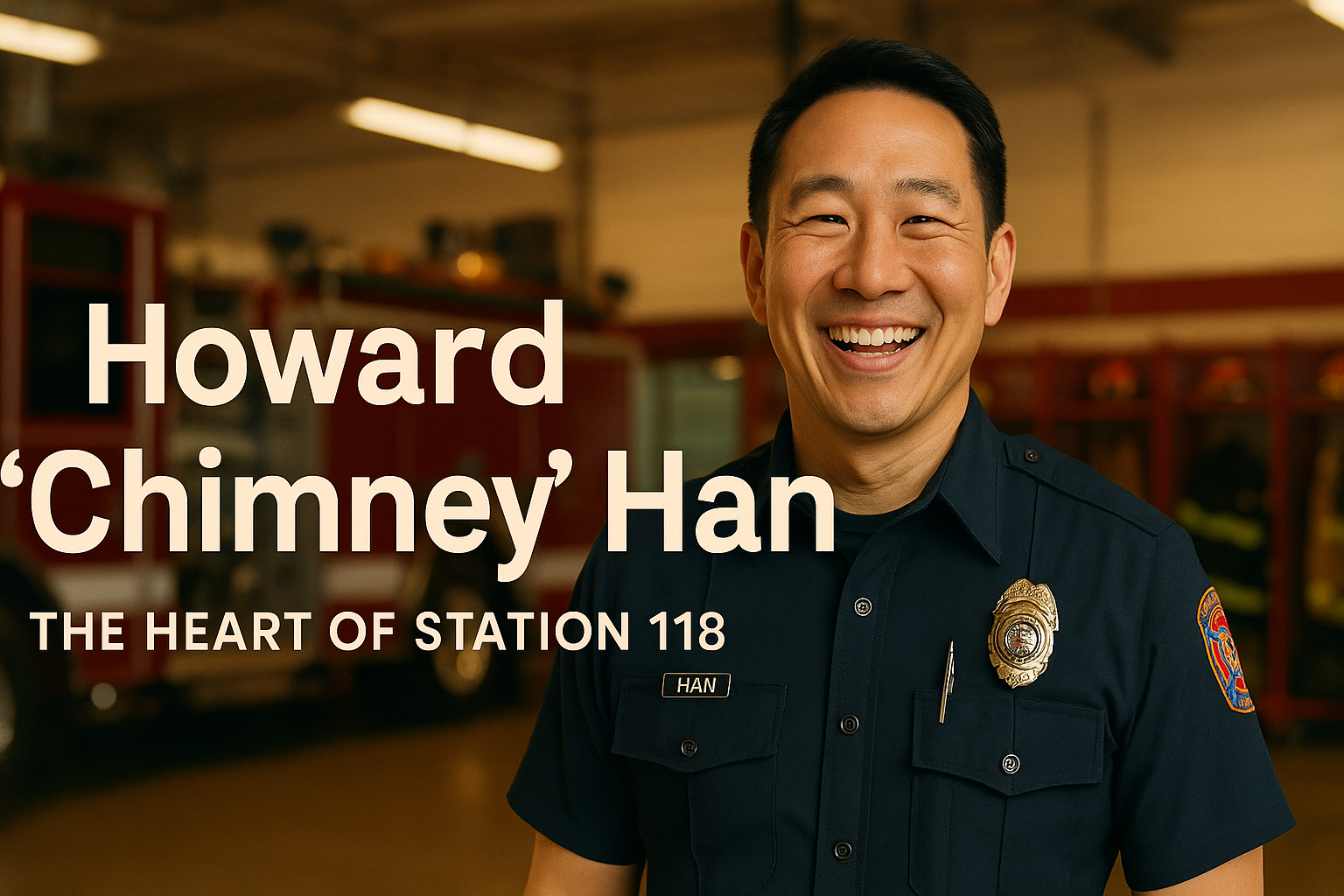
If you’re a fan of the hit drama 9-1-1, you know the crew of Station 118 by their first names, their last names, and in one very unique case, a nickname that seems completely out of left field. We’re talking, of course, about Howard Han, the beloved firefighter-paramedic everyone calls “Chimney.”
It’s a question that brings many new viewers to Google: “Why do they call him Chimney?” The name is so distinct and seemingly random that it begs for an explanation. It doesn’t fit the typical firefighter nickname mold like “Cap” or “Probie.” It’s quirky, it’s memorable, and as it turns out, it’s tied to something far more layered and deliberately mysterious than most fans realize—touching on character history, real-world casting choices, and one of TV’s most beloved running jokes.
In this deep dive, we’ll explore the true nature of Chimney’s iconic nickname—including the real reason why the show has never officially revealed it—analyze the character’s incredible journey of survival, dig into the fan theories, and look at the real-world culture of nicknames among first responders. Let’s get into it!
The Real Answer: Chimney’s Nickname Is Deliberately Never Explained
Here is the thing that surprises many fans who come looking for a neat, definitive answer: the show has never officially revealed the origin of Chimney’s nickname. This is not a gap in your viewing history. It is not explained in a season you missed. It is one of the most deliberately guarded mysteries in the series—and one of its most beloved running jokes.
The nickname “Chimney” has been used by every member of Station 118 since the very first episode. It has been the subject of repeated teasing, interrupted explanations, and knowing smirks across multiple seasons. Characters have tried to tell the story. Howard has desperately changed the subject. The implication is always that the real explanation is either too embarrassing, too inappropriate for on-screen dialogue, or—according to one character’s memorable line—simply “not one you can tell on TV.”
The Central Mystery
Despite running for multiple seasons, 9-1-1 has never given an official, on-screen explanation for why Howard Han is called “Chimney.” The mystery is an intentional creative choice that has become one of the show’s most cherished long-running jokes. Every time a character appears on the verge of explaining it, the scene cuts away, Howard interrupts, or the explanation is deemed too explicit for broadcast television.
This deliberate withholding is a masterpiece of character writing. The absence of an explanation is more entertaining than any explanation could be, because it invites perpetual speculation. Every viewer who wonders builds their own theory, and the show encourages this. The nickname functions as an open question that keeps Chimney perpetually interesting—a mystery that rewards close attention and repeated viewing.
What We Know: The Origin Story and the Running Gag
While the full explanation remains deliberately off-screen, the show has given fans a series of delicious near-misses and meaningful fragments across its run. Understanding the history of these moments is essential to appreciating just how carefully the writers have constructed this particular piece of the Chimney mythology.
The First Tease: “Stuck” (Season 2)
The nickname gag gets its first serious play in the Season 2 episode “Stuck.” In this episode, Hen is on the verge of telling young Christopher Diaz the story behind Chimney’s nickname. Before she can get to the good part, Howard frantically intervenes and shuts the conversation down. His desperation to stop Hen tells the audience everything they need to know: whatever the reason is, Chimney finds it deeply embarrassing. He is not proud of the nickname’s origin, even if he has come to wear it as a badge of identity.
“Dosed” and the Key Line
In another memorable moment, journalist Taylor Kelly asks Hen about the nickname. Hen’s response has become one of the most-quoted lines in the entire series regarding this mystery: “It’s not one you can tell on TV.” This single line reframes the entire joke. It isn’t just embarrassing—it is apparently so explicit, so adult, or so outrageous that it cannot be broadcast on a network drama. This pushed the fan theories in a decidedly more colorful direction.
“Seize the Day” (Season 3)
Chimney’s newly discovered half-brother Albert asks, with all the innocence of someone new to the 118 family: “So how did he get the nickname Chimney?” It’s a perfect setup. The audience leans forward. Hen is about to answer—and then the scene cuts away without an explanation. This episode deliberately mirrors the pattern established in “Stuck,” confirming that the running gag is fully intentional and will continue.
“Alone Together” — The Best Misdirect
Perhaps the cleverest use of the mystery comes in “Alone Together,” where Buck and Chimney must navigate the aftermath of a landslide. They need to search a buried house, and the only viable entry point turns out to be the chimney. As Buck prepares to lower Chimney down headfirst into the chimney opening, Chimney tells Buck: “In the future, if anybody asks, this is how I got my name.” The brilliant implication? Whatever the real origin story is, getting lowered into a chimney on a rescue call would be a perfectly respectable explanation—which means the real origin is apparently considerably less dignified than that.
The Coma Dream Revelation
In one of the show’s most emotionally resonant sequences, Buck enters a coma dream in which he encounters Howard. To gain access to where Howard is, Buck tells him: “I know why they call you Chimney.” The words work as a key. This moment is deeply significant: the real explanation of the nickname is framed as privileged knowledge, something so specific and personal that knowing it proves a genuine, intimate connection to Howard as a person. It elevates the mystery from a running joke to something almost sacred within the show’s emotional language.
Kenneth Choi’s Own Theory and the “Breadcrumbs”
The mystery extends beyond the fictional world of Station 118 into the real world of the production—because it turns out that even the actor who plays Chimney does not have a definitive official answer from the show’s creators.
Kenneth Choi has spoken publicly about this in interviews, and his comments are fascinating. He has confirmed that the show’s original creators—Ryan Murphy, Brad Falchuk, and Tim Minear—shared a specific reason with him for why the character would be called Chimney, and that he has developed his own personal theory about it. But he has kept that theory private, while simultaneously claiming he has been leaving clues about it throughout his performance.
“I have my own back story of why he is called Chimney, and I believe it’s the same back story that was created by the original creators. They’ve never told me for sure… I’ve taken that on and, without divulging what it is, some of my behaviors and actions as Chimney could tell somebody who’s watching very closely, ‘Oh, this is why he was called Chimney.’ It’s a thing that I imbued in Chimney that if you watch carefully you can lead yourself to realize. I’ve left breadcrumbs—but nobody has ever picked them up.”
— Kenneth Choi, interview with HELLO! Magazine
This statement transforms the mystery into an interactive experience for dedicated viewers. Choi is actively inviting fans to watch his physical performance—his mannerisms, habits, and physical quirks—for clues that might reveal the nickname’s origin. He calls these clues “physical manifestations” and “breadcrumbs.” He has expressed mild frustration that, despite years of deliberate embedding, no viewer has yet publicly cracked the code to his satisfaction.
What might these physical breadcrumbs be? Fans have noted several recurring Chimney behaviors: his tendency to talk a lot and to exhaust a room with words (a chimney releases smoke/hot air); his habit of acting as the team’s emotional “conduit” or channel for information; certain physical gestures around his nose and mouth area. None of these theories have been confirmed, but they illustrate the level of engagement that Choi’s comments have inspired.
The Character’s Complicated Original Conception
One of the most revealing pieces of information about the Chimney nickname mystery comes from Choi’s explanation of the character’s origins. When he was cast in the role, he was told something significant: the character had originally been conceived as a Latino man, and there was a specific, logical reason why that version of the character would have been called “Chimney.”
When the character was rewritten as Howard Han—a Korean-American man from a first-generation immigrant family—the creative team kept the cool, distinctive nickname but did not update its origin story for the character’s new cultural context. This creates a fascinating situation: the original explanation may have relied on a Spanish-language pun, a piece of Latino cultural slang, or a reference that simply does not map onto Howard Han’s identity as viewers know him.
In other words, the reason the nickname is never explained on screen may not be purely a creative choice to maintain mystery—it may be that there simply is no explanation that makes coherent sense for the character as he currently exists. The name “Chimney” is what researchers of narrative construction might call a “narrative artifact”: a remnant of an earlier version of the character that has been retained because it sounds good and works dramatically, even though its original logic no longer applies.
This theory actually makes the mystery richer, not poorer. The joke is that the characters know the reason—but they exist in a world where that reason makes sense. We, the viewers, can never access it, because we are watching a different version of Howard Han than the one the nickname was originally designed for. The irony and the in-joke are baked into the very fabric of the show’s production history.
Every Episode Where the Nickname Gag Appears: A Complete Guide
For fans who want to experience the full arc of this running joke, here is a comprehensive guide to the key episodes and moments where the mystery of Chimney’s nickname is addressed, teased, or used as a plot element.
| Episode | The Moment | Who Almost Explains It | How It’s Cut Off |
|---|---|---|---|
| “Stuck” (S2) | Hen is about to tell Christopher Diaz the story | Hen Wilson | Chimney frantically intervenes and changes the subject |
| “Dosed” (S2+) | Taylor Kelly asks Hen about the nickname | Hen Wilson | Hen’s explanation: “Not one you can tell on TV” |
| “Seize the Day” (S3, Ep 11) | Albert Han (Chim’s half-brother) asks how he got the nickname | Hen Wilson | Scene cuts to black before any explanation is given |
| “Alone Together” | Chimney is lowered head-first down a chimney on a rescue | Chimney himself | Chim says this rescue is how he’d explain the name “in the future”—implying the real origin is worse |
| Buck’s Coma Dream | Buck uses the nickname’s true origin as a “key” to reach Howard | Implied Buck knows | The explanation is never shared with the audience; it is treated as private, intimate knowledge |
| “There Goes the Groom” (S7, Ep 6) | In the final scene, Chimney himself asks: “Why do they call me Chimney?” | Chimney himself | The question is left unanswered, functioning as a meta-commentary on the mystery |
Viewer Tip
Each of these moments rewards close rewatching. Pay particular attention to Chimney’s physical reactions—his body language, his eyes, the specific way he changes the subject. Kenneth Choi has said he embeds clues in these moments deliberately. You may spot something others have missed.
Fan Theories: What Do We Think It Means?
In the absence of an official explanation, the 9-1-1 fandom has developed a rich ecosystem of theories. These range from the plausible to the wildly creative, and they reflect the incredible investment fans have in this character. Here are the most prominent theories circulating in the fan community.
Theory 1: The NSFW Origin
The most popular theory, supported by Hen’s “not one you can tell on TV” line, is that the nickname derives from a sexual or explicitly adult incident or behavior. Fans speculate it could reference a very specific, vulgar slang term or a profoundly embarrassing situation of a personal nature. This theory is intentionally left vague by the show to maximize audience imagination.
Theory 2: The Fire Academy Incident
Some fans believe the original article’s theory—that he literally got stuck headfirst in a chimney during a training exercise—is broadly correct, even if the specific details are more embarrassing than a simple fall. The “Alone Together” episode, where Chimney says the chimney rescue could be his cover story, lends this theory support by implying that the original incident involved a chimney in some form.
Theory 3: The Hot Air Theory
A gentler fan theory: “Chimney” refers to Howard’s tendency to talk constantly, filling every room with words the way a chimney fills it with smoke. His teammates nicknamed him for his verbal ventilation. Choi’s breadcrumbs around his expressive face and mouth might support this. It’s the most affectionate interpretation and the one that most fits a term of endearment.
Theory 4: The Smoking Habit
A smaller contingent of fans believe the name came from a heavy smoking habit Howard had before joining the fire service—an ironic nickname for a firefighter-paramedic who once used his body like a chimney. This would explain why he’s reluctant to discuss it (embarrassing given his profession) but doesn’t necessarily require an off-color explanation.
Theory 5: The Original Latino Context
Based on Choi’s interview comments, some analytically-minded fans have tried to work backward from Spanish language and Latino culture to find a pun or slang term related to “chimney” (chimenea) that could serve as a comedic nickname origin. These theories remain highly speculative but reflect genuine linguistic creativity.
Theory 6: A Childhood Story
Given Howard’s complicated family history, some fans believe the nickname predates his firefighter career entirely—that it came from a childhood incident involving a chimney, perhaps related to his family’s immigration story or an early embarrassing experience that followed him into adulthood and the firehouse.
What is beautiful about all of these theories is that they all work. The show is specifically crafted so that no theory can be definitively ruled out. The mystery’s power lies entirely in its openness. Chimney’s nickname is a Rorschach test—what you believe it means says as much about you as it does about the character.
More Than a Name: Chimney’s Unbreakable Spirit
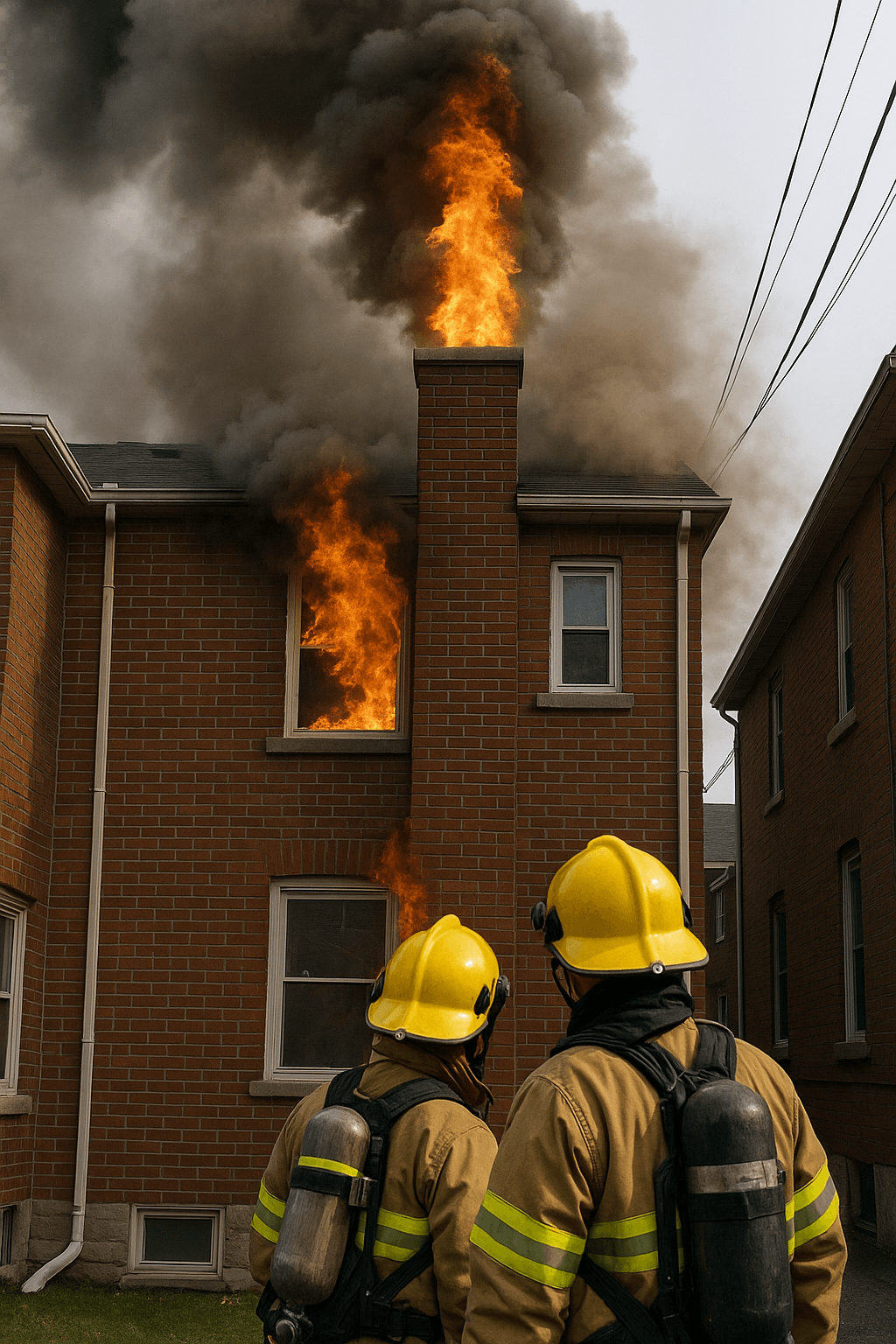
Whatever the origin of the name, it has become ironically perfect over the course of the show, as the character has survived an almost supernatural quantity of trauma and hardship—much like a real chimney withstands fire, smoke, and storms season after season.
Let’s recap some of Chimney’s most harrowing near-death experiences:
- The Rebar Incident (Season 1): In one of the show’s most shocking moments, a car accident sends a piece of rebar straight through Chimney’s skull. He miraculously survives after complex brain surgery, though he later admits to lying to his doctor about lingering memory effects. The accident occurred partly because of an impulsive, reckless drive home after a relationship crisis—a detail that adds painful human complexity to the incident.
- The Stabbing (Season 2): He is brutally stabbed and left for dead by the abusive ex-husband of Maddie Buckley, on what was intended to be their first date. Again, he pulls through against all odds. The incident, which begins as a romantic outing and ends as a survival nightmare, is central to Chimney and Maddie’s bond.
- The Warehouse Fire (Season 4): He’s caught in a dangerous structure fire and suffers from smoke inhalation and dehydration, adding yet another entry to his improbable catalogue of physical ordeals.
His resilience is legendary among fans and characters alike. The name “Chimney,” born from whatever the real story is, now symbolizes his incredible ability to endure. A real chimney needs solid construction to last, with every brick held together by the best mortar for chimney work; similarly, Howard Han is held together by an unbreakable will to live and protect those he loves.
This level of wear and tear, both physical and emotional, brings up a crucial real-world question: what happens when the “chimney” of your own home starts to crack? Knowing if homeowners insurance covers chimney repair is vital for any homeowner, as unexpected damage can be a huge financial burden.

Fan Essential: Adventure Medical Kits Trauma Pak
Be prepared like a first responder. While you might not face Chimney’s level of danger, having a comprehensive trauma kit with QuikClot in your car or home is a smart move for any emergency. It’s a practical piece of gear inspired by the show’s heroes.
The Full Character Arc: From Donkey Work to Captain
Understanding why Chimney’s nickname resonates so deeply requires understanding the full arc of the character—one that spans more seasons and shows more growth than many casual viewers realize.
The Early Days: Struggling for Respect
When Howard Han arrives at Station 118, he is not immediately treated as a hero. He is assigned the “donkey work”—the unglamorous, essential tasks that keep the firehouse running but don’t offer the heroic moments he craves. Early episodes show him as frustrated, eager to prove himself, and compensating for insecurity through embellished stories and bravado. His early relationship is built on performance rather than authenticity—he tells his girlfriend what he thinks she wants to hear rather than being genuinely himself.
His true breakthrough moment comes during a particularly dangerous building fire, when he identifies a gas leak that others have missed, alerting the crew and saving countless lives. It is an act of professional skill and calm judgment under pressure—exactly the kind of quiet heroism that doesn’t get staged for a calendar photo but absolutely defines what it means to be a good firefighter.
The Turning Point: Rebar and Transformation
The rebar incident at the end of Season 1 is a narrative inflection point for Howard. The accident, which occurs because he is driving recklessly after a relationship crisis, forces him to confront a central question: he nearly died, and was anything better for it? When his ex-girlfriend—who refused to visit him in the hospital—appears healthy and pregnant and remarried, he is confronted with the possibility that his near-death experience changed nothing. This existential confrontation is what ultimately drives him toward authenticity. He stops telling stories about himself and starts being himself.
The Firefighter Calendar Moment: Asian Representation
One of the show’s most quietly significant moments involves the Station 118 firefighter charity calendar. When asked to participate, Chimney initially submits a photo—then withdraws it, convinced that Buck and Eddie are more conventionally photogenic and that he will be overlooked. His insecurity speaks to something larger: the experience of being Asian-American in a profession that has not historically centered people who look like him. Behind his back, Hen submits a photograph taken by a news outlet that shows Chimney carrying a child to safety. He wins. When Hen explains why, she tells him she didn’t send a picture of him trying to be a hero—she sent a picture of him actually being one.
Interim Chief and Leadership
When Captain Bobby Nash is suspended in Season 2, Chimney is elevated to interim Chief of Station 118. What is telling about this arc is not that he takes command—it is how he handles it. Rather than seizing the moment as personal validation, he continually emphasizes that Bobby should still be there and that his own authority is temporary. Critics have noted this as a missed opportunity for character growth; Chimney’s selfless loyalty is admirable but may have held back his professional advancement. He has earned leadership through tenure and skill—he joined the 118 in 2005, making him one of the crew’s longest-serving members—but the show has historically not given him commensurate recognition for that fact.
Station 118 Captain
By Season 9, Howard Han has reached the position of Captain at Station 118—a culmination of the entire arc that began with him doing donkey work and being overlooked. The journey from frustrated rookie to commanding officer is one of the show’s most quietly satisfying progressions. It is also deeply meaningful in the context of Asian-American representation in positions of authority in mainstream television, a topic we explore in more depth below.
Key Relationships: Maddie, Hen, Albert, and Building a Family
Chimney’s character is defined as much by his relationships as by his professional journey. The people he loves—and who love him back—are what give his resilience its meaning.
Chimney and Maddie: A Love Story Built on Surviving the Worst
Howard’s relationship with Maddie Buckley (Jennifer Love Hewitt) is the emotional core of his personal arc. They meet when Chimney helps Maddie move into a new apartment, and their mutual attraction is immediate and genuine. Their relationship is then almost immediately tested in the most violent way possible: Maddie’s abusive ex-husband Doug tracks her down, introduces himself to Chimney under a false name, and eventually stabs Chimney and kidnaps Maddie on what was intended to be their first date.
That Chimney and Maddie come back from this—that their relationship deepens rather than fractures—is a testament to both characters. Their journey together includes Maddie’s struggle with her trauma, Chimney’s recovery and fear, and ultimately the birth of their daughter, Jee-Yun Buckley-Han. Jee-Yun is named after Chimney’s late mother, a detail that connects his family of origin—complicated and painful—to the new family he has built with intention and love.
The Bond with Hen Wilson: Best Friendship as Family
Chimney’s friendship with Hen Wilson is one of the most genuinely depicted workplace best friendships on television. They call each other “best friend” openly and without irony. Their bond was formed in the early days at Station 118—Hen has recalled that when she joined the crew, Chimney was the first person to show her genuine compassion and friendship, without agenda. They later deepened their bond through shared experiences as paramedics navigating both the demands of emergency medicine and the experience of being individuals from marginalized communities working in a predominantly white, male profession.
The nickname gag is also a reflection of this friendship: it is Hen who holds the key to the explanation. She is the one other characters go to when they want to know. That she consistently protects Howard’s secret—even as she teases him about it—is a perfect expression of how genuine best friends operate. She knows everything, and she uses that knowledge to protect, not to wound.
Albert Han: The Unexpected Half-Brother
One of the more surprising storylines in Howard’s personal arc is the arrival of Albert Han, his half-brother from his estranged father’s second family. Albert’s introduction is a disruption—both to Howard’s sense of self and to his carefully constructed identity as someone who overcame a difficult family history. Albert’s arrival in Los Angeles and his subsequent interest in becoming a firefighter forces Howard to reckon with his father’s legacy and with what it means to be a brother to someone who shares your blood but not your formative experiences.
Albert’s question in “Seize the Day”—”How did he get the nickname Chimney?”—is particularly poignant in retrospect. It is the question of someone who doesn’t yet know Howard, trying to find the thread that will give him access to his brother’s history. That the answer is withheld even from him reinforces how deeply personal the nickname’s origin truly is.
Daughter Jee-Yun and the Meaning of Fatherhood
The birth of Jee-Yun is one of the most significant events in Howard’s arc. For a character who grew up with a distant, emotionally unavailable father—a man who prioritized work over family and who ultimately abandoned the family entirely—becoming a father himself was always going to be a complex moment. Howard’s approach to fatherhood is characterized by deliberate presence, open affection, and the kind of emotional availability he never received. His daughter’s name—honoring his late mother—completes a circle of grief and love that has quietly threaded through the entire character arc.
Chimney as an Icon of Asian-American Representation in Emergency Services TV
Howard “Chimney” Han occupies a unique and important space in the landscape of American television. He is one of the very few Asian-American leads in a major network procedural drama—and not just a supporting character, but a fully realized protagonist with a rich inner life, complex relationships, and a multi-season arc that culminates in a position of command and leadership.
The Representation Gap He Fills
The show itself acknowledges the significance of this directly, in the calendar episode. When Chimney tells Hen that he is turning in his photo for the firefighter calendar, he explains his reasoning in a line that is brief but profound: he wants people to see an Asian man as a hero, because he had very few heroes who looked like him growing up. This is not just character color—it is an explicit statement about the function of representation in media, delivered by a character who embodies that function.
Asian-American men have historically been underrepresented in roles defined by physical heroism, authority, and romantic desirability on American network television. Chimney, as a character who is simultaneously the team’s paramedic, a genuinely courageous firefighter, a devoted partner, and eventually a captain, challenges and counters each of these representational deficits deliberately.
Kenneth Choi: The Actor Behind the Icon
Kenneth Choi brings layers to Howard Han that extend beyond what is written on the page. A veteran character actor with a background in both drama and comedy, Choi is known for his ability to balance the comedic and the deeply serious within a single scene—a quality that is absolutely essential for Chimney, who is simultaneously the show’s comic relief and one of its most emotionally resonant figures. Choi’s performance creates a character who earns both laughter and tears, often within the same episode.
His approach to the nickname mystery—developing and performing a personal theory about its origin while declining to share it—is an example of the deep craft he brings to the role. He is not merely delivering lines; he is constructing a layered, internally consistent human being and inviting viewers to work to know that person. The breadcrumbs he leaves are not a gimmick. They are an actor’s invitation to truly pay attention.
The Real Culture of Nicknames in Emergency Services
The concept of a quirky, story-based nickname is deeply rooted in the real-world culture of firefighters, police, and paramedics. These are high-stress jobs where camaraderie and trust are essential for survival. Nicknames serve several important functions:
- Building Bonds: A shared nickname, often born from a shared experience, creates an instant bond and a sense of belonging. It’s an inside joke that solidifies the team and marks you as someone who has been through something together.
- Easing Tension: Humor is a critical coping mechanism in jobs where personnel witness trauma daily. A funny nickname can lighten the mood and make the unbearable a little more bearable. The ability to laugh at yourself—and to let your team laugh with you—is a genuine survival skill in high-stress emergency services environments.
- Efficiency in Communication: In a chaotic emergency scene, shouting a unique, single-word nickname is often faster and clearer than a first or last name. A distinctive call-sign can cut through noise and confusion in a way that a common name cannot.
- Marking Rites of Passage: In many firehouses, the moment you acquire your nickname is informally understood as the moment you are truly accepted by the crew. It is an initiation ritual—often based on something embarrassing—that transforms an outsider into a member of the family.
| Nickname Origin Type | Example | Function in Firehouse Culture |
|---|---|---|
| Embarrassing Incident | “Chimney” (allegedly), “Crash,” “Stumbles” | Bonds the team through shared knowledge of a vulnerable moment; transforms embarrassment into identity |
| Physical Attribute | “Tiny” (for a large person), “Stretch,” “Red” | Affectionate teasing that signals comfort and acceptance; often ironic |
| Heroic Act or Rescue | “Doc,” “Snake,” “Bear” | Commemorates a specific moment of excellence; a badge of honor |
| Hometown or Background | “Jersey,” “Tex,” “Country” | Marks identity and background; creates easy conversational shorthand |
| Personality Trait | “Motor” (talks a lot), “Ghost” (very quiet) | Affectionate observation that becomes a defining characteristic |
These nicknames often outlast the incident or attribute that inspired them. What begins as teasing can become a term of profound endearment—the word that signals you are known, valued, and impossible to replace. “Chimney” functions exactly this way for Howard Han. Whatever it originally meant, what it means now is: you are one of us. You belong here. You survived.
The everyday calls these teams face aren’t always life-or-death dramas. Sometimes it’s about helping citizens with more unusual problems. Knowing how to get a raccoon out of a chimney is a real skill, and animal rescue calls are genuinely part of a fire department’s workload. Your local firehouse might be figuring out what to do about a bird, wondering how long for a bird stuck in a chimney before it becomes a bigger issue.
Chimney Maintenance as a Metaphor for Self-Care
A chimney is a structure that requires constant upkeep to function safely. If you neglect it, creosote builds up, bricks can crack, and it can become a fire hazard. Chimney’s personal journey on the show is a powerful metaphor for this truth about human beings as well.
After each traumatic event, he has to go through a period of physical and emotional recovery. He has to “clean out the flue” and “repair the cracks” in his own life, often with the help of his found family at Station 118. It’s a reminder that resilience isn’t just about surviving; it’s about the hard work of healing afterward. Chimney is not a man who bounces back effortlessly—he carries his wounds visibly and works through them with honesty.
Just as a homeowner needs the best chimney sweep vacuum to maintain their fireplace, Chimney relies on his support system—Hen, Maddie, his crew—to clear away the emotional debris left by his experiences. And just as you might need to check your roof for a solid place to install equipment using the best chimney antenna mount, he has to ensure his own foundations are secure before he can help others.

For the Fans: Firefighter Funko Pop!
Show your appreciation for the heroes of Station 118 and real-life firefighters everywhere with a collectible vinyl figure. It’s a perfect desk accessory for any fan of the show, celebrating the bravery and spirit of first responders.
Ultimately, Chimney isn’t just the comic relief or the guy who gets hurt a lot. He’s the heart of the show for many fans—a testament to the idea that no matter how many times you get knocked down, you can always get back up. And perhaps more importantly: you don’t have to get back up alone. The found family of Station 118 is always there to pull him out—whether from a burning building, a hospital bed, or, metaphorically speaking, a chimney.
He proves that the only visitor who should be coming down the chimney is Santa Claus—though we all know there are clever ways to handle that if you’re wondering how does Santa get in without a chimney.
Frequently Asked Questions (FAQ)
What is Chimney’s real name on 9-1-1?
His real name is Howard Han, though he sometimes goes by “Howie.” He is played by the actor Kenneth Choi.
Has the show ever officially revealed why Chimney is called Chimney?
No. Despite multiple seasons and numerous teases, the show has never given an official, on-screen explanation. This is a deliberate creative choice by the writers. The mystery is one of 9-1-1‘s most famous and beloved running gags, and the show has actively maintained it across its run.
What episode reveals Chimney’s backstory?
Season 2, Episode 12, titled “Chimney Begins,” explores Howard’s backstory—including how he came to join the fire department and key formative events in his life. However, despite its title, this episode does not reveal the origin of the nickname itself. The nickname mystery is specifically and conspicuously excluded from this origin story, which many critics note is itself a clue that the nickname’s origin is unrelated to his professional journey.
Does Kenneth Choi know why Chimney is called Chimney?
He has a theory—one he believes aligns with the original creators’ intent—but he has kept it private. He has said he was told a specific reason when he was cast, and that he has been leaving physical “breadcrumbs” in his performance for years that could point a careful viewer to the answer. As of his most recent public interviews, he has noted that no viewer has yet publicly identified the clues to his satisfaction.
Is “Chimney” a realistic nickname for a firefighter?
Yes. The culture of giving nicknames based on embarrassing or memorable moments is very authentic to real-world firehouses and emergency services. Many real first responders carry a nickname that tells an inside story. The difference with Chimney is that his story is never told—which is itself realistic, as some firehouse nicknames carry stories their owners prefer to keep private.
Who is Chimney in a relationship with on the show?
Chimney’s primary romantic relationship throughout the series is with Maddie Buckley (played by Jennifer Love Hewitt), a 9-1-1 dispatcher and the sister of his fellow firefighter, Evan “Buck” Buckley. They have a daughter together named Jee-Yun Buckley-Han, named after Chimney’s late mother.
When did 9-1-1 move from Fox to ABC?
The show aired on Fox from its premiere through Season 6. It then moved to ABC beginning with Season 7, where it has continued under the same creative direction and with its core cast intact.
Is Chimney the captain of Station 118?
Yes. By Season 9, Howard “Chimney” Han has achieved the rank of Captain at Station 118 of the Los Angeles Fire Department—a significant milestone in a character arc that began with him being assigned the unglamorous “donkey work” when he first joined the crew.
What do fans think is the real reason for the nickname?
The most popular fan theory, supported by a character’s in-show comment that the explanation is “not one you can tell on TV,” is that the nickname derives from an adult or explicitly sexual situation or behavior. Other popular theories include: a fire academy incident involving a literal chimney; a reference to him being a heavy talker (like a chimney releasing hot air); or a past smoking habit. None of these theories has been officially confirmed or denied.
About the Author
As a long-time TV critic and pop culture analyst, I’ve spent over a decade dissecting the characters and stories that capture the public’s imagination. I have a special interest in the authentic portrayal of professions on screen, from the emergency rooms of medical dramas to the firehouses of shows like 9-1-1. My goal is to bridge the gap between fiction and reality, providing fans with deeper insights into the shows they love.