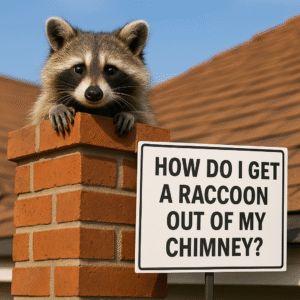
Raccoon in Your Chimney? A Step-by-Step Expert Guide to Safe Removal
You hear it at night. A strange scratching, chittering, or maybe even a sound like a purring growl coming from your fireplace. Your first thought might be birds or a squirrel. But when the sounds get louder and more deliberate, a more unsettling reality dawns: you might have a raccoon in your chimney.
Discovering an uninvited wildlife guest in your home can be stressful. Your mind races with questions: Is it stuck? Is it dangerous? How do I get it out? Before you panic, take a deep breath. In my years of experience with home maintenance and safe wildlife exclusion, I can assure you that this is a common problem with straightforward, humane solutions. The goal is to get the raccoon out safely—for both your family and the animal—and ensure it doesn’t happen again.
This comprehensive guide will walk you through every step, from confirming your suspicions to making your chimney an impenetrable fortress against future furry intruders. After all, the only guest who should be using your chimney is a certain jolly fellow in a red suit, and we all know how does Santa get in without a chimney these days anyway!
📋 Table of Contents
- Why Raccoons Are Drawn to Chimneys
- Identifying Your Chimney Intruder: Raccoon vs. Other Animals
- Step 1: Confirmation and Critical Safety Assessment
- Step 2: Humane Eviction — Sensory Harassment Methods
- Step 3: The Power of Raccoon Eviction Fluid
- Step 4: The “Helping Hand” Rope Method for Stuck Raccoons
- Step 5: One-Way Exclusion Door
- Step 6: Live Trap Placement and Baiting
- Step 7: When to Call a Professional
- If the Raccoon Gets Into Your Living Space
- Health Risks: Raccoon Roundworm, Rabies, and Distemper
- Cleanup, Odor Removal, and Decontamination
- Assessing and Repairing Raccoon Damage
- Long-Term Prevention: Making Your Home Raccoon-Proof
- Legal Considerations by State
- Does Homeowners Insurance Cover Raccoon Chimney Damage?
- How Much Does Professional Raccoon Removal Cost?
- Frequently Asked Questions

Why Raccoons Are Drawn to Chimneys: Understanding the Behavior
Before you can effectively deal with a raccoon in your chimney, it helps to understand why it chose your chimney in the first place. This isn’t random—raccoon behavior is highly intelligent and driven by survival instinct, and your chimney ticks nearly every box on a raccoon’s wish list for a perfect den site.
Chimneys Mimic Hollow Trees
In the wild, raccoons are den animals that primarily nest in the hollow cavities of large, mature trees. As urban sprawl has eliminated much of their natural habitat, raccoons have adapted brilliantly, and they’ve figured out that a masonry chimney is essentially a hollow tree made of brick. It offers the same dark, enclosed, protected space they would seek in nature. The tall, vertical structure even mimics the experience of climbing a tree trunk.
Warmth and Retained Heat
Chimneys that serve active fireplaces retain residual warmth from combustion gases. Even a fireplace used only occasionally creates a slightly warmer microclimate inside the flue compared to the outdoor air. For a pregnant female raccoon or a mother with newborn kits, this warmth can be a decisive factor in choosing a den site—warm young survive better than cold ones, and a raccoon mother’s primary instinct is the survival of her offspring.
Safety From Predators
Raccoons face threats from coyotes, foxes, owls, and domestic dogs. The vertical, enclosed nature of a chimney is almost impenetrable to ground-based predators, making it an ideal safe haven. A mother raccoon instinctively selects den sites that minimize the chances of a predator reaching her young, and a chimney scores extremely high by this measure.
Proximity to Food
Raccoons are opportunistic omnivores that travel up to six miles per night in search of food. Urban and suburban environments offer an extraordinary bounty: unsecured garbage cans, compost bins, outdoor pet food, fallen fruit, garden vegetables, and bird feeders. A chimney near a house—with all these food resources nearby—is prime real estate. Once a raccoon establishes a comfortable den close to reliable food sources, it has little incentive to move unless pressured to do so.
The Breeding Season Factor
The timing of raccoon intrusions is not coincidental. Most chimney invasions happen in late winter through early summer, coinciding directly with raccoon breeding season and the birth of kits. A pregnant female raccoon in the final weeks of gestation becomes intensely motivated to secure a safe, warm, enclosed den. She will actively investigate and sometimes forcibly access potential sites—including removing loose chimney caps or squeezing through damaged crown edges—to find the right spot. Understanding this seasonal pattern is key to both removal strategy and prevention timing.
Identifying Your Chimney Intruder: Raccoon vs. Other Animals
Not every chimney noise is a raccoon. Before you begin any removal effort, it’s important to correctly identify what you’re dealing with, as different animals require different approaches—and some are legally protected regardless of which approach you’d prefer to use.
| Animal | Sound Characteristics | Activity Pattern | Key Indicators | Special Note |
|---|---|---|---|---|
| Raccoon | Chittering, purring growl, heavy thumping; baby kits produce high-pitched chirping | Nocturnal; most active dusk to dawn | Heavy movement; dark, dog-like droppings on smoke shelf; oily smear marks on flue | Almost always a female with kits in breeding season |
| Squirrel | Light, rapid scratching and scurrying; may chatter if alarmed | Diurnal; active during daylight hours | Fast, light-footed movement; small, pellet-like droppings; easier to hear in daytime | Often enters through damaged cap or crown gaps |
| Bird (general) | Flapping, pecking, occasional chirping | Diurnal; active during the day | Frantic flapping; may flutter toward light from damper opening; feathers visible | Usually accidentally fallen in; open damper to let it escape into the room, then out a window |
| Chimney Swift | Distinctive, rapid chattering “chitter-chitter” in groups | Active from spring through early fall; migratory | Multiple birds; sound like a waterfall of chattering | FEDERALLY PROTECTED under the Migratory Bird Treaty Act. Do not disturb. Must wait until birds migrate in fall. |
| Opossum | Hissing, clicking; slower, heavier movement than a squirrel | Nocturnal | Musky odor; slow, deliberate movement sounds | Less common than raccoons; similar removal approach |
| Mouse / Rat | Light scratching, gnawing sounds, often in walls near the chimney | Nocturnal; can be heard at any time | Very light, rapid movement; small droppings; gnaw marks | May not be in the flue itself but in the chimney chase or adjacent walls |
Step 1: Confirmation and Critical Safety Assessment
Before taking any action, you need to be sure of two things: that it is indeed a raccoon, and that there isn’t an immediate fire hazard. Guesswork can lead to dangerous mistakes.
How to Confirm It’s a Raccoon
Raccoons have distinct sounds and signs. Listen closely, especially at dusk and dawn when they are most active.
- Vocalizations: You may hear chittering, purring, growling, snarling, or the high-pitched chirps and squeals of baby raccoons (kits).
- Scratching and Thumping: Unlike the light skittering of a squirrel, a raccoon’s movements will sound heavier and more deliberate.
- Visual Confirmation: At night, carefully open the damper (if it’s safe and you’re sure the animal can’t immediately get into the room) and shine a powerful flashlight up the flue. You might see two shining eyes looking back at you.
- Odor: A mother raccoon’s den will develop a musky, ammonia-like scent from droppings and urine. If you notice an unusual animal smell near your fireplace, that’s a strong indicator.
- Visible Damage: Check the roof from the ground using binoculars. A knocked-off chimney cap, scratched brick near the chimney top, or torn flashing are all signs that something has been accessing your chimney from the outside.
Check for Babies (Kits)
This is the most important factor in determining your next steps. Raccoon birthing season runs from late winter through early summer in most parts of the U.S. If it’s during this period, you should assume a mother raccoon has built a nest for her kits.
Listen for faint, high-pitched chattering or squealing sounds. They are often described as sounding like a nest of baby birds. If you hear these sounds, you are dealing with a family. This changes everything. Removing a mother and leaving her babies to starve is inhumane and will create a much worse problem of odor and decay in your chimney. In this scenario, your best options are to either wait for them to move out on their own or call a professional immediately.
Step 2: The Humane Eviction Plan — Encouraging Raccoons to Leave Willingly
If you’ve confirmed it’s a single adult raccoon or you wish to encourage a mother with kits to relocate on her own terms, the best strategy is to make the chimney an unpleasant place to be. Raccoons choose chimneys because they are dark, quiet, and safe. Your job is to take away those comforts using mild, non-harmful deterrents.
Method 1: Sensory Overload
Combine these tactics for the best effect, starting them just before dusk when the raccoon would normally begin to stir.
- Introduce Sound: Place a portable radio in the fireplace, tune it to a talk radio station with constant human voices, and turn the volume up. The constant chatter of human speech signals that the space is occupied and unsafe. Avoid music—human speech is specifically threatening to wildlife in a way that background music is not.
- Introduce Light: Raccoons are nocturnal and seek darkness. Position a bright work light or a mechanic’s trouble light to shine up the flue from the fireplace. A clamp light works perfectly for this. The combination of light and noise removes the “dark and quiet” qualities that made your chimney attractive in the first place.
- Introduce Scent: Raccoons have a highly sensitive sense of smell. Place a bowl of ammonia or a container with ammonia-soaked rags in the fireplace. The fumes will rise and make the enclosed space unbearable. Safety Note: Ammonia fumes can be irritating to humans too. Ensure the room is well-ventilated and never mix ammonia with bleach, which creates toxic chloramine gas.
Give these methods 24–48 hours before reassessing. Often, the raccoon will take the hint and leave on its own during the night to find a more peaceful home. With a mother and young kits, it may take several days—she needs to be confident enough in her new destination before moving her babies one by one.

Expert Pick: DEWALT 20V MAX LED Work Light
A powerful, portable, and adjustable LED light is perfect for safely illuminating the entire chimney flue from below. Its brightness is a major deterrent for nocturnal animals like raccoons.
Check Price on AmazonStep 3: The Power of Raccoon Eviction Fluid
If sensory harassment alone isn’t doing the trick—particularly when you’re dealing with a mother raccoon and her kits—there is a highly effective, wildlife-professional-grade tool you should know about: raccoon eviction fluid.
What Is Raccoon Eviction Fluid?
Raccoon eviction fluid is a specially formulated biological deterrent derived from the glandular secretions and urine of a dominant male raccoon. To understand why this works so powerfully, you need to understand raccoon social behavior. A mother raccoon’s most powerful biological drive is protecting her kits from harm. In raccoon society, dominant males are known to kill young kits that are not their own—a behavior called infanticide. The scent of an unfamiliar adult male in her den triggers an immediate, instinctive alarm response in a nursing female: this place is no longer safe for my babies, and we must leave immediately.
How to Use Eviction Fluid
- Purchase commercial raccoon eviction fluid from a wildlife supply company. It typically comes in a small bottle and is extremely concentrated.
- Soak a cloth or a small cotton ball in the fluid.
- Attach it to a long stick or tie it to a string, then carefully lower it down the flue from the top of the chimney, or place it in the fireplace near the damper opening.
- Leave it in place for 24–72 hours. In many cases, the mother raccoon will relocate her kits within one or two nights.
Important Caveat
Eviction fluid works best on nursing females with kits. It is less effective—though still useful—on a single adult raccoon without young. Also note that “raccoon eviction fluid” should not be confused with general “raccoon repellent.” Many commercially available repellents contain ingredients like peppermint oil or cayenne pepper, which have limited effectiveness against raccoons. Look specifically for products marketed as eviction fluid, containing actual male raccoon secretions, for this method to work reliably.
Step 4: The “Helping Hand” Method for Stuck Raccoons
Sometimes a raccoon, especially a younger one, can get down a chimney flue but can’t get back up. Modern metal flue liners are often too slick for them to get a good grip. If you suspect the animal is truly stuck and not just nesting, you can provide a way out.
You will need a thick rope, at least 1 inch in diameter (like a heavy-duty sisal rope), that is long enough to reach from the top of your chimney down into the fireplace.
- Secure the Rope: Tie one end of the rope securely to the top of the chimney. Ensure it cannot come loose.
- Lower the Rope: Carefully lower the other end all the way down the flue until it reaches the bottom.
- Leave it Alone: Leave the area and give the raccoon peace and quiet. It will use the rope to climb out, usually after nightfall.
- Confirm Departure: After 24 hours, check if the raccoon is gone. You can stuff a piece of newspaper lightly into the top of the flue. If it’s undisturbed for 24 more hours, the raccoon has likely left.
A natural-fiber rope like sisal or manila works better than a synthetic rope because it gives the raccoon’s claws more to grip. Alternatively, a knotted rope provides even better purchase. Whatever you use, it needs to be sturdy enough to hold the weight of a full-grown raccoon (8–20 lbs).
Step 5: The Professional Solution — The One-Way Exclusion Door
If gentle harassment doesn’t work, a one-way exclusion door is a highly effective, professional-grade solution. This device is installed at the top of the chimney flue. It has a spring-loaded door that allows the raccoon to push its way out but prevents it from getting back in.
This is the most foolproof DIY method if you are comfortable working on your roof, but it’s often best left to wildlife control experts who have the right equipment and experience. It’s especially critical to use this only when you are 100% certain there are no babies inside. Installing an exclusion door and trapping babies inside to die is a common and tragic mistake that creates an even worse problem—dead animals decomposing in your flue.

Professional Tool: Raccoon One-Way Chimney Door
This heavy-duty steel door allows raccoons to exit the chimney flue humanely without allowing re-entry. It’s the same tool the pros use for guaranteed removal when babies aren’t present.
Check Price on AmazonHow to Install and Monitor a One-Way Door
The door should be attached to the top of the chimney flue opening using hardware cloth or screws, covering the entire opening with only the one-way flap accessible. Leave the door in place for a minimum of 3–5 days to ensure the animal has had multiple opportunities to exit. After you’re confident the raccoon is gone (no sounds for 48+ hours), remove the door and install a permanent chimney cap before the exclusion door is removed.
Step 6: Live Trap Placement and Baiting
Live cage trapping is sometimes used as a removal method, but it comes with important caveats—particularly around the mother-with-kits scenario. If you trap a nursing female and remove her while babies are still in the chimney, those kits will die. Always check a trapped raccoon’s belly for nipples before transporting it. If you see nipples, it is a nursing mother and the kits must also be found and removed together with her.
Why Trapping Inside the Fireplace Doesn’t Work
A common mistake is placing a live trap inside the firebox. This almost never works. A trap-shy raccoon won’t enter an unfamiliar metal cage in a strange location, and even one that is curious might not be enticed. Traps set on the ground outside are similarly ineffective for chimney raccoons because the entry and exit point of the animal is the chimney top—ground-level traps simply aren’t positioned where the animal travels.
Effective Trap Placement
If you are committed to live trapping, the most effective placement is on the roof, directly at the chimney opening. This requires mounting the trap so that the chimney opening is the only way in or out—the trap becomes the funnel that the raccoon must pass through to exit. This is technically demanding work that requires proper ladder safety, the right mounting hardware, and experience with cage traps. For most homeowners, this step is best handled by a licensed wildlife control operator.
Best Baits for Raccoon Trapping
Raccoons are attracted to a wide variety of foods. Effective baits include canned cat food (the strong-smelling variety), sardines or tuna packed in oil, fresh corn, marshmallows, and watermelon. Place the bait at the far back of the trap behind the trigger plate. Note: food-based baits can also attract neighborhood cats and dogs, non-target wildlife like opossums, and other animals. Be prepared to deal with unintended catches.
After the Raccoon Is Caught
Once you’ve caught a raccoon, you must know your state’s laws before transporting it. Many states prohibit the relocation of trapped raccoons more than a certain distance from the capture site (often 10 miles), and some states require a permit to trap and relocate raccoons at all. Contact your state wildlife agency or a licensed wildlife control operator to understand your legal obligations before you set a trap.
Step 7: When to Call a Professional Wildlife Removal Service
While DIY methods can work in many cases, there are situations where calling a professional is the safest, most effective, and most humane option. You should call an expert if:
- You suspect there are babies. Professionals have the tools and expertise to safely remove the mother and her kits and keep them together.
- The raccoon appears sick, injured, or is behaving strangely. Do not approach an animal acting disoriented, lethargic, or unusually aggressive during daytime hours.
- You are not comfortable with any of the DIY methods. Your safety comes first.
- The animal has gotten into your living space. Close the door to the room and call for immediate help.
- Your efforts have failed after 48–72 hours. A professional can diagnose the issue and implement a more effective plan.
Wildlife Rehabilitators as a Resource
If you encounter a litter of baby raccoon kits that have been separated from their mother, wildlife rehabilitators are an invaluable resource. These licensed professionals can accept orphaned or injured wild animals, provide proper care, and ultimately return them to the wild when appropriate. Contact your state’s Department of Fish and Wildlife for a list of licensed rehabilitators in your area. Never attempt to raise wild raccoons yourself—it is illegal in most states and rarely ends well for the animal.
If the Raccoon Gets Into Your Living Space
In rare cases—typically when an animal is startled, the damper is accidentally opened, or a trapped animal forces its way through—a raccoon may enter your living space. This is a high-stress situation that requires calm, methodical action.
Don’t Corner It
A cornered raccoon will become aggressive. Back away slowly and give it space. Do not make sudden movements or loud noises.
Close Interior Doors
Confine the animal to one room if possible. This limits the potential damage and makes eventual removal easier.
Open an Exit
Open a window or an exterior door in the room where the raccoon is confined, then leave the room and close the interior door behind you.
Call Animal Control
If the raccoon won’t leave on its own within 30 minutes, call your local animal control or a wildlife removal service for immediate assistance.
Do Not Touch It
Never attempt to pick up or physically handle a wild raccoon with bare hands. If the animal scratches or bites you, seek medical attention immediately and report the incident to your local health department.
Sanitize Afterward
After the raccoon has left the space, thoroughly clean and disinfect all surfaces it may have contacted, as raccoons carry parasites and bacteria.
Health Risks: Raccoon Roundworm, Rabies, and Distemper
Raccoons are one of the most significant wildlife reservoirs for several serious diseases. Understanding these risks will underscore the importance of proper protective gear, professional cleanup, and not handling raccoons directly.
Baylisascaris procyonis (Raccoon Roundworm)
This is arguably the most significant health risk associated with raccoon feces, and it is frequently underestimated by homeowners. Raccoon roundworm is a parasitic nematode that lives in the intestines of raccoons without harming the host animal. Raccoons shed roundworm eggs in their feces, and these eggs are extraordinarily hardy—capable of surviving in soil or organic material for years under the right conditions.
If humans accidentally ingest these eggs (typically through contamination of hands that then touch the mouth, or through inhaling dust containing dried feces), the larvae can migrate through the body’s tissues, potentially affecting the brain, eyes, and other organs. Raccoon roundworm infection in humans is rare but can be devastating, potentially causing permanent neurological damage or blindness. This is why cleanup of raccoon latrines—areas where raccoons repeatedly deposit feces—requires respiratory protection (at minimum an N95 mask), heavy gloves, and proper disposal of all contaminated material.
Rabies
Raccoons are one of the primary wildlife reservoirs for rabies in North America. The majority of raccoons do not have rabies, but the disease is present in raccoon populations across most of the eastern United States and parts of the Midwest. A rabid raccoon may display several behavioral changes: unusual aggression or fearlessness toward humans, disorientation or staggering, making strange vocalizations, being active during daytime hours (when they are normally nocturnal), or appearing confused or lethargic. If you observe any of these signs, do not approach the animal and call Animal Control or your local health department immediately.
If you are bitten or scratched by a raccoon and cannot confirm the animal’s rabies status, seek medical attention immediately. Post-exposure prophylaxis (a series of rabies vaccinations) is highly effective when administered promptly but must begin quickly after exposure.
Raccoon Distemper
Canine distemper is another common raccoon disease. Unlike rabies, distemper is not transmissible to humans, but it can be fatal to dogs. A raccoon with distemper may appear disoriented, lose fear of humans, and show neurological symptoms. While distemper-infected raccoons are not dangerous to humans, they should still be avoided and reported to animal control. If you have dogs, ensure their distemper vaccinations (part of the standard DHPP vaccine) are current.
Leptospirosis
Raccoons can carry leptospira bacteria in their urine. This bacterial infection can be transmitted to humans and pets through contact with contaminated water or soil. Symptoms in humans can range from mild flu-like illness to severe kidney and liver damage. Avoid contact with any water or damp surfaces that may have been contaminated by raccoon urine, and always wear gloves when cleaning up raccoon waste.
Cleanup, Odor Removal, and Decontamination
Once the raccoon is confirmed gone, thorough cleanup is not optional—it’s a health necessity. Raccoon latrines (sites where they repeatedly defecate) in chimneys can harbor significant amounts of roundworm eggs and bacteria.
Personal Protective Equipment (PPE)
- Heavy-duty rubber or nitrile gloves (not thin latex)
- N95 or higher respirator mask (not just a dust mask or cloth face covering)
- Safety goggles or glasses
- Disposable coveralls or clothes you can wash immediately at high heat
- Shoe covers if working in the firebox
Removal of Nesting Material and Feces
Work carefully to remove all nesting material, feces, and debris from the firebox and the smoke shelf (the ledge just above the damper opening). Place all material in heavy-duty garbage bags and seal them immediately. Do not shake or sweep the material in a way that creates dust clouds, as airborne roundworm eggs are a respiratory hazard. Use a light misting of water to dampen material before removal to minimize dust.
Sanitizing the Area
Standard household disinfectants do not kill raccoon roundworm eggs. The most effective solution for killing roundworm eggs is boiling water or steam, which can be applied to hard surfaces. For the firebox and adjacent surfaces, an enzyme-based cleaner applied generously will break down biological waste and neutralize odors. Allow the product to dwell for the manufacturer’s recommended time before wiping.
Odor Removal
Even after physical cleanup, a persistent musky odor is common after a raccoon has nested in a chimney. The smell comes from urine, feces, and glandular secretions that have soaked into porous masonry surfaces. Effective odor control involves:
- Applying an enzyme-based odor eliminator specifically formulated for pet/animal waste to all affected surfaces
- Allowing maximum airflow through the chimney for several days with the damper open
- For severe cases, a professional chimney sweep with specialized equipment can apply odor-neutralizing treatments to the entire flue
- Activated charcoal placed in the firebox can help absorb residual odors over several days
Professional Chimney Sweep After Wildlife Intrusion
A Level 2 chimney inspection is strongly recommended after any animal intrusion. Not only does this provide a thorough cleaning of the entire flue, but the video inspection component can confirm whether any damage to the flue liner has occurred, whether nesting materials are lodged in inaccessible areas, and whether the chimney is structurally sound and safe to use. After an animal intrusion, using one of the best chimney sweep vacuums with HEPA filtration is critical to contain hazardous dust.
Assessing and Repairing Raccoon Damage
A raccoon’s stay in your chimney can leave more than just a mess. These strong, dexterous animals can cause genuine structural damage that, if left unaddressed, will invite the next intruder and accelerate chimney deterioration.
Common Types of Raccoon Damage
- Damaged or Removed Chimney Cap: Raccoons can pry off, bend, or completely remove a lightweight or poorly secured cap. This is the most common entry point and must be addressed first.
- Cracked or Chipped Crown: Heavy raccoons, especially mothers who repeatedly access the chimney over several weeks, can crack the chimney crown—the concrete slab at the top of the chimney—through repeated impact and claw activity.
- Damaged Flue Tiles: While less common, raccoons can dislodge or crack clay flue tiles inside the chimney, particularly if they fell or if babies were scratching against the liner during their early weeks.
- Damaged Flashing: Raccoons climbing up and down the exterior of the chimney can pull or tear at the metal flashing where the chimney meets the roof.
- Mortar Joint Damage: Raccoons often sharpen their claws on brick surfaces, which can accelerate the deterioration of mortar joints.
- Smoke Shelf Fouling: The smoke shelf above the damper can become deeply contaminated with feces, urine, and nesting materials and may require professional cleaning to prevent odor and blockage issues.
Masonry Repair
Raccoons can claw at mortar joints, and the weight and activity of a nesting family over several weeks can accelerate existing deterioration. Inspect your chimney crown and brickwork for any cracks or holes. Using the best mortar for chimney repair will ensure a durable, long-lasting seal.
Checking Other Fixtures
While you’re inspecting the chimney top, ensure other items are secure. For instance, a wobbly antenna can be a problem, so check that you’re using one of the best chimney antenna mounts available to prevent future issues.
When to Call a Structural Professional
If your inspection reveals cracked flue tiles, a significantly damaged crown, or visible movement of the chimney structure (leaning, pulling away from the house), consult a CSIA-certified chimney professional before using the fireplace again. A cracked flue liner is a fire and carbon monoxide hazard, not merely a cosmetic issue.
Long-Term Prevention: Making Your Home Raccoon-Proof
Getting the raccoon out is only half the battle. The most important step—the one that prevents you from reading this guide again in two years—is implementing comprehensive, long-term prevention measures.
The Ultimate Solution: Install a Chimney Cap
This is the single most effective way to prevent animals from getting into your chimney. A sturdy, professionally installed chimney cap is a permanent solution. It’s a metal cage that covers the top of the flue, allowing smoke to escape while keeping rain, debris, and all types of animals out. While you might sometimes wonder about a bird stuck in the chimney, a cap solves that problem for good.

Must-Have Prevention: Shelter Bolt-On Chimney Cap
This is your permanent solution. Made of heavy-gauge steel with a powder-coat finish, this cap bolts directly to the flue liner, providing a secure barrier against raccoons, birds, squirrels, and rain. Measure your flue before ordering!
Check Price on AmazonChoosing the Right Chimney Cap
Not all chimney caps are created equal when it comes to keeping out a determined adult raccoon. Here’s what to look for:
- Material: Choose stainless steel or copper over galvanized steel. Galvanized caps rust within a few years, weakening the frame and mesh. Stainless steel caps can last for decades.
- Mesh Size: The wire mesh openings on a raccoon-proof cap should be no larger than ½ inch square. This is smaller than standard bird-exclusion mesh and is necessary to keep young raccoons out.
- Mounting Method: Bolt-on caps that attach to the top of the flue liner with screws are far more secure than slip-on or friction-fit caps. A strong raccoon can remove a loose-fitting cap.
- Multi-Flue Caps: If your chimney has multiple flues, a full-coverage multi-flue cap that spans the entire chimney top is preferable to individual single-flue caps, as it eliminates any gaps between caps.
Trim Overhanging Trees and Branches
Raccoons are exceptional climbers, but they prefer using trees as a highway to your roof. Survey your property and identify any trees whose branches extend within 8–10 feet of your roofline. Trimming these branches back removes the primary access route for raccoons, squirrels, and other wildlife. This is also beneficial for preventing storm damage to your roof and reducing leaf and debris accumulation in your gutters.
Secure Other Potential Den Sites Near the Chimney
While you’re addressing the chimney, take stock of other potential entry points that a resourceful raccoon might exploit if the chimney is no longer accessible:
- Attic vents and soffit vents (cover with heavy-gauge hardware cloth)
- Gaps where the chimney meets the roofline (seal with appropriate caulk and flashing)
- Uncapped plumbing vents on the roof
- Loose or missing fascia boards
- Crawl space vents with damaged or missing screens
- Pet doors (use microchip-activated pet doors if raccoons are accessing pet food through them)
Eliminate Attractants Around Your Home
A raccoon that has found a reliable food source near your home is far more motivated to persist in finding a den site nearby. Reducing food attractants in your yard is an important part of the overall deterrence strategy:
- Use wildlife-proof garbage cans with locking lids, or store garbage cans in a garage or locked enclosure until collection day
- Never leave pet food outdoors overnight
- Clean up fallen fruit from trees promptly
- Use baffled bird feeders that prevent raccoons from reaching the seed, or bring bird feeders in at night
- Secure compost bins with wildlife-proof lids or hardware cloth
- Harvest garden vegetables promptly rather than leaving them on the vine past ripeness
Motion-Activated Deterrents
For persistent raccoons that have learned to navigate around other deterrents, motion-activated devices can provide an additional layer of discouragement. Motion-activated sprinklers deliver an unexpected burst of water that startles raccoons without harming them. Motion-activated lights make the area near your chimney less inviting after dark. These are best used in conjunction with physical exclusion methods rather than as standalone solutions.
Legal Considerations When Dealing With Raccoons
Wildlife laws in the United States are not uniform—they vary significantly by state, and in some cases by county or municipality. Before trapping, transporting, or in any way physically handling raccoons, you need to understand the laws that apply in your area.
| Action | Typical Legal Status | Varies By State? |
|---|---|---|
| Harassing raccoon to leave (noise, light, scent) | Generally legal as “humane exclusion” | Low variation; almost universally permitted |
| Installing one-way exclusion door | Generally legal as exclusion technique | Some states require a nuisance wildlife permit |
| Live trapping on your property | Legal in most states with restrictions | Yes — some states require a permit |
| Relocating trapped raccoon off-site | Restricted in many states | Yes — maximum relocation distance varies; some states prohibit it entirely |
| Lethal removal (killing raccoon) | Legal in some states with permit; illegal in others | Yes — requires research of your specific state’s regulations |
| Keeping a raccoon as a pet | Illegal without specific permit in most states | Yes — varies significantly |
The safest course of action is to contact your state’s Department of Fish and Wildlife or the equivalent agency before trapping or relocating any raccoon. Many states maintain a list of licensed nuisance wildlife control operators (NWCOs) who are trained, equipped, and legally authorized to handle raccoon removal. Hiring a licensed NWCO is often the most legally straightforward path and typically comes with the assurance that the removal is being handled in compliance with all applicable laws.
Does Homeowners Insurance Cover Raccoon Chimney Damage?
This is a question many homeowners ask after discovering a raccoon has been living in their chimney for weeks. The short answer: probably not, but it depends on your specific policy and the nature of the damage.
Standard homeowners insurance policies (HO-3 and similar) explicitly exclude damage caused by birds, rodents, and other animals from coverage under most circumstances. This exclusion is based on the rationale that animal intrusions are preventable through proper maintenance—specifically, installing a chimney cap. If you had a cap in place and a raccoon somehow still breached it, you may have a stronger argument for coverage, but it is still far from guaranteed.
There are situations where coverage may apply. If a raccoon’s presence led to a chimney fire (for example, nesting materials caught fire), the resulting structural damage from that fire would likely be covered as a fire peril. Similarly, if a storm damaged your chimney cap and a raccoon entered through the resulting opening, the storm damage itself would be a covered peril—though the raccoon-related damage (cleanup, nesting material removal) would not be.
For a detailed breakdown of homeowners insurance and chimney coverage, including what is and isn’t typically covered, see our comprehensive guide on whether homeowners insurance covers chimney repair.
How Much Does Professional Raccoon Removal Cost?
If you decide to hire a professional wildlife removal service—which is often the wisest choice, especially when babies are involved—it helps to understand the typical cost range so you can budget accordingly and evaluate quotes from multiple providers.
| Service | Typical Cost Range | Notes |
|---|---|---|
| Inspection / Assessment | $0 – $150 | Many companies include a free inspection in their quote; others charge a service call fee |
| Single Adult Raccoon Removal | $150 – $400 | One-time visit; trapping and removal from chimney |
| Mother with Kits (Family Removal) | $300 – $700+ | More complex; requires multiple visits; price increases with litter size |
| One-Way Exclusion Door (Installation) | $150 – $350 | Includes hardware and labor; removed and replaced with cap once raccoon exits |
| Chimney Cap Installation | $200 – $600 | Including professional chimney cap; price varies by chimney size and cap type |
| Cleanup / Decontamination | $200 – $600+ | Highly variable depending on extent of contamination; may include smoke shelf cleaning |
| Chimney Inspection (Level 2, post-intrusion) | $250 – $600 | Includes video scan; recommended after any wildlife intrusion |
| Full Package (Removal + Exclusion + Cleanup) | $500 – $1,500+ | All-inclusive; price varies by region and severity |
Regional pricing varies significantly. Urban and suburban markets in high cost-of-living areas will typically be at the higher end of these ranges. Always get at least two quotes from licensed wildlife control operators and confirm that the company is insured and, where applicable, licensed by your state’s wildlife agency.
DIY methods (eviction fluid, exclusion door, chimney cap) can cost as little as $50–$200 in materials. However, if a DIY attempt goes wrong—babies left behind, raccoon entering the living space, or improper cleanup leading to roundworm exposure—the downstream costs can be far higher than the professional fee. For straightforward single-adult raccoon situations, DIY can be entirely appropriate. For mother-and-kits scenarios, professional help is almost always the better value.
Frequently Asked Questions (FAQ)
How long will a raccoon stay in my chimney?
If it’s a mother with babies, she will typically stay for 8–10 weeks until the kits are old enough to travel with her. A single raccoon seeking temporary shelter may only stay for a day or two, but if it finds the spot comfortable, it could stay indefinitely until encouraged to leave.
Will a raccoon in the chimney have rabies?
While raccoons are a primary carrier of rabies in the U.S., the vast majority do not have the disease. However, you should never take the risk. A rabid raccoon may act unusually aggressive, disoriented, or lethargic—or may be active during daylight hours when raccoons are normally nocturnal. If you see any of these signs, do not approach it and call Animal Control or a wildlife professional immediately.
What time of day are raccoons most active in a chimney?
Raccoons are nocturnal, so they are most active from dusk until dawn. You’ll hear the most movement as they leave for the night to forage for food and again when they return in the early morning hours to sleep. If you hear significant activity during the day, it may be a mother raccoon tending to her young or, more concerningly, an animal that may be ill.
Is it illegal to remove a raccoon from my chimney?
Wildlife laws vary significantly by state and even municipality. In many areas, raccoons are protected furbearers, and there may be regulations about trapping or relocating them. Generally, humane harassment to make them leave your property is legal. If you plan to trap or physically remove an animal, you must check with your state’s Department of Fish and Wildlife first.
Can a raccoon in my chimney cause a carbon monoxide problem?
Yes, this is a serious and underappreciated risk. A large nesting mass—sticks, leaves, insulation, and other materials a mother raccoon assembles over several weeks—can partially or fully block the flue. A blocked or restricted flue can cause combustion gases including carbon monoxide to back-draft into your living space instead of exhausting safely. Never operate your fireplace if you suspect there is an animal or a nest in the chimney, and always have a working carbon monoxide detector on every floor of your home.
How do I know the raccoon is actually gone before I cap the chimney?
The “newspaper test” is the standard field method: lightly stuff newspaper into the top of the flue opening. Leave it undisturbed for 48 hours. If the paper is unmoved and you hear no sounds, the chimney is very likely vacant. For absolute certainty before installing a permanent cap, a professional chimney inspection with a camera confirms the flue is clear and shows whether any nesting material remains.
What should I do if I find baby raccoon kits that have fallen into the firebox?
Do not attempt to handle baby raccoon kits with bare hands. Wear heavy gloves. Place the kits in a box with air holes and cover them loosely with a cloth to keep them warm. Do not feed them. The mother will often return for her young if given the chance—leave the kits in a secure location near the chimney exterior after dark. If she does not retrieve them within several hours, or if you cannot safely coordinate a reunion, contact a licensed wildlife rehabilitator immediately.
My dog was near the fireplace when I discovered the raccoon. Should I be worried about distemper?
If your dog is current on its DHPP vaccination (which includes distemper), the risk is very low. However, if your dog made direct contact with the raccoon or its waste, it’s wise to contact your veterinarian. Raccoons can also carry rabies, so any physical contact between your pet and a wild raccoon warrants a call to your vet to discuss whether a rabies booster is recommended.
Final Thoughts: Your Chimney is for Smoke, Not Squatters
Dealing with a raccoon in your chimney is a startling experience, but it’s a manageable one. By staying calm, prioritizing safety, and using humane methods—starting with sensory harassment and escalating to eviction fluid, exclusion devices, or professional help as needed—you can guide your unwanted guest out the way it came in.
The key takeaway is this: eviction is temporary, but prevention is permanent. Once your raccoon problem is solved, make installing a high-quality, securely mounted chimney cap your number one priority. Follow it up by trimming accessible tree branches and eliminating food attractants around your property. Together, these measures create a genuinely raccoon-resistant home environment.
It’s a small investment that provides total peace of mind and ensures your fireplace remains a source of warmth and comfort, not a revolving door for local wildlife. Take the time to do it right the first time, and you won’t be troubleshooting this situation again.