Best Inspection Camera for Chimneys, Walls & Tight Spaces: Buying Guide
By Chimney Insight Editorial Team
Posted on December 15, 2025
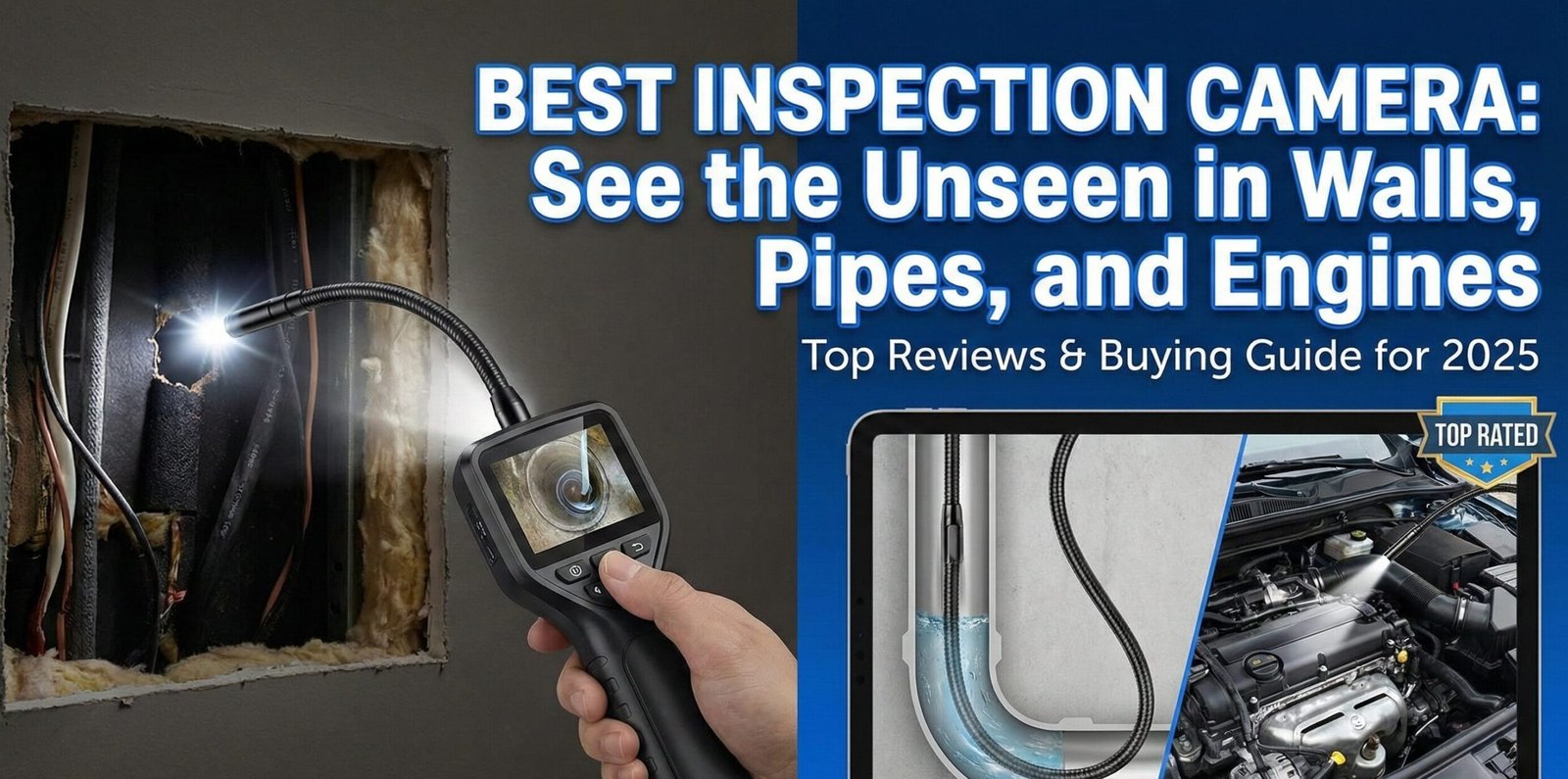
An inspection camera (often called a borescope or endoscope camera) can help homeowners look into tight, dark, or inaccessible spaces such as wall cavities, drains, appliance compartments, and some accessible chimney areas. The most useful camera is not simply the one with the highest advertised resolution—it is the one whose probe size, cable design, lighting, viewing angle, and durability match the job.
Important: A consumer inspection camera can help you see an accessible area, but it does not replace a professional chimney inspection. Hidden flue defects, clearance problems, structural damage, or unsafe venting conditions can require specialized equipment and trained interpretation.
What to Look for in an Inspection Camera
1. Probe Diameter
A smaller probe can fit into tighter openings, but a very small camera may trade off image quality, lighting, or durability. Measure the access point before buying and leave enough room for the probe to turn or move without becoming wedged.
2. Cable Type: Semi-Rigid vs Flexible
Semi-rigid cables are easier to push and position through cavities because they hold their shape. Very flexible cables can navigate curves more easily but may be harder to control in vertical shafts or open spaces. For general home inspection work, a semi-rigid cable is often the more versatile starting point.
3. Camera Resolution and Screen Quality
Resolution matters, but sharp focus, good lighting, sensor quality, and a clear display matter just as much. A camera advertised with a high pixel count can still produce a poor image if the lens cannot focus at the distance you need.
4. Adjustable LED Lighting
Dark cavities require built-in lighting. Adjustable LEDs are useful because too much light can create glare on metal flues, pipes, or wet surfaces, while too little light hides detail.
5. Focus Distance
Check the manufacturer’s stated focal range. Some cameras are designed for very close work, while others provide a clearer image several inches away. This is especially important when inspecting a wider cavity where the surface may not be directly in front of the lens.
6. Water and Dust Resistance
If you plan to use the camera around drains, damp masonry, or other dirty environments, look for a clearly stated ingress-protection rating for the probe and cable. Do not assume the handheld screen or charging port has the same protection as the camera tip.
7. Articulating Camera Head
More expensive inspection cameras may allow the camera head to rotate or articulate. This can be much more useful than simply pushing a fixed camera farther into a cavity because you can inspect side walls and joints without repeatedly withdrawing the probe.
Best Inspection-Camera Type by Use
| Use | Useful Features |
|---|---|
| General homeowner checks | Semi-rigid cable, adjustable LEDs, built-in screen |
| Tight wall cavities | Small probe diameter, shorter focus distance |
| Long pipe runs | Longer cable, water-resistant probe, good cable control |
| Chimney/flue viewing | Bright adjustable lighting, durable probe, wide viewing angle; professional inspection for safety decisions |
| Detailed professional work | Articulating head, image/video recording, higher-quality optics |
Using an Inspection Camera Around a Chimney
An inspection camera may help document visible deposits, debris, or an accessible section of a flue, but it should not be used to declare a chimney safe. A professional Level 2 chimney inspection can include examination of accessible areas and video scanning of the flue interior when the inspection level is appropriate.
Read more in our guide to chimney inspection Levels 1, 2 and 3.
Before You Buy
- Measure the smallest opening the camera must pass through.
- Check the actual focal range, not only the advertised resolution.
- Choose enough cable length without buying far more than you can control.
- Confirm which components are water-resistant.
- Check whether photos/video can be saved if documentation matters to you.
- For chimney safety decisions, use the camera as a visual aid—not as a replacement for a qualified inspection.