Best Rust Remover for Metal: Restoring Your Tools, Cars, and Home Hardware
Don’t let corrosion claim your prized possessions. We tested the top chemical solutions to find the safest, fastest, and most effective rust removers on the market today.
The Relentless Battle Against Corrosion
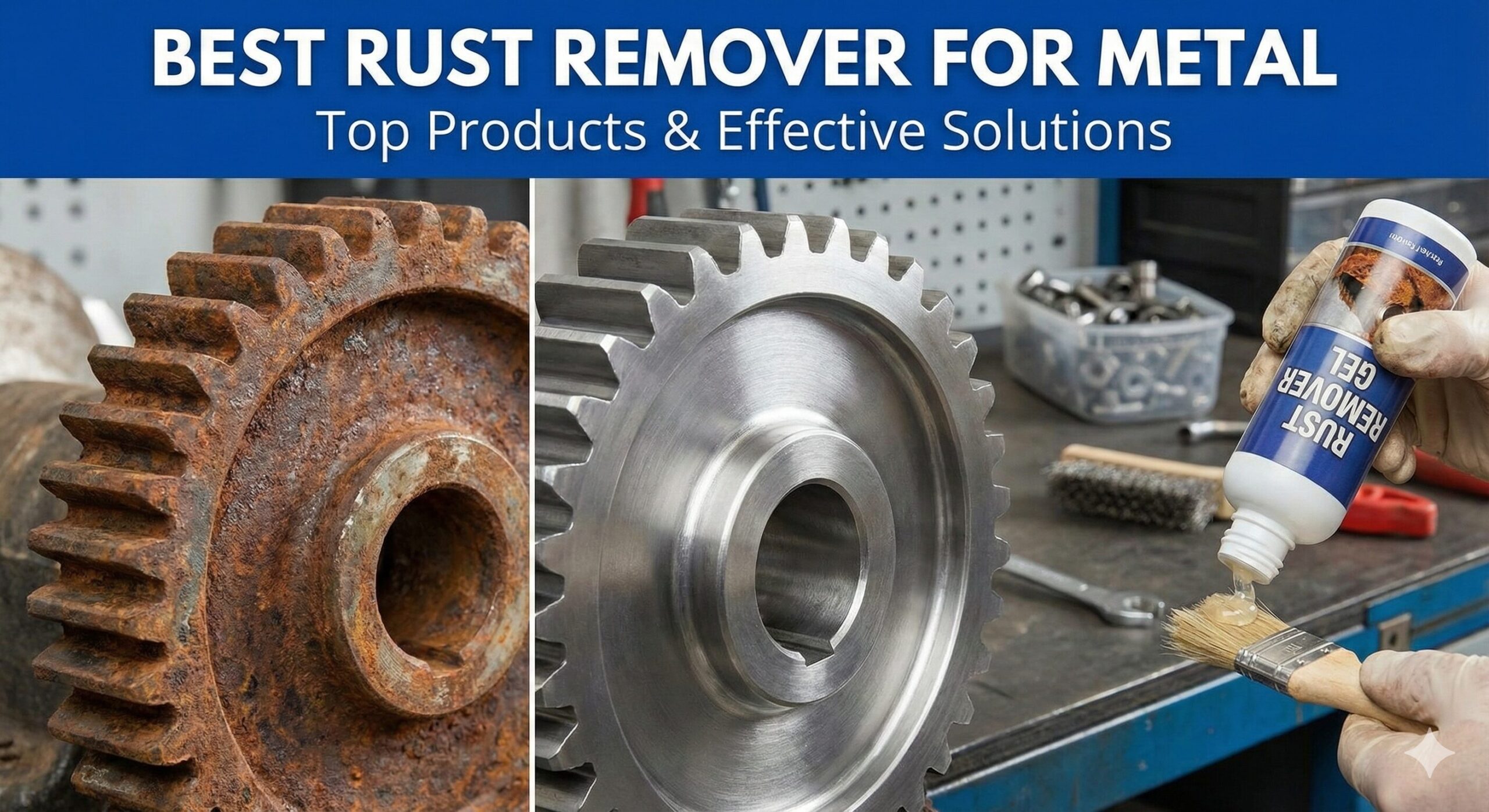
Rust is the silent, pervasive killer of metal. Whether it’s a vintage hand plane you found buried in an estate sale, the structural undercarriage of your daily driver, or the critical components of your home’s heating system, iron oxide is absolutely relentless. Left unchecked, it compromises structural integrity, seizes crucial bolts, and destroys the aesthetic value of your property.
In the past, removing rust meant resigning yourself to hours of back-breaking physical labor with wire brushes, heavy-duty sandpaper, and toxic, lung-burning acids. Today, advanced chemistry has given us a significantly better, safer way. The best rust remover for metal works by chemically breaking the molecular bond between the rust and the base metal, often dissolving it entirely or converting it into a paintable, stable surface.
The Science of Rust (Oxidation)
To defeat your enemy, you must first understand it. Rust is the common name for iron oxide. It forms through a natural electrochemical process called oxidation. When iron (or an alloy containing iron, like steel) is exposed to oxygen and moisture, a chemical reaction occurs. The iron surrenders electrons to the oxygen atoms, aided by the water which acts as an electrolyte.
The result is a flaky, reddish-brown compound that takes up more physical space than the original iron. This is why rust causes paint to bubble and flake off. Because iron oxide is structurally weak and porous, it traps even more water against the metal, accelerating the decay until the metal completely disintegrates.
Understanding this process is vital for home maintenance. For instance, if you are restoring an older home’s heating system, you know how vital it is to have clean, solid metal. Before applying the best paint for chimney brick or sealing metal roof flashing, the surface must be absolutely pristine. Similarly, keeping your specialized maintenance tools in top shape—like a heavy-duty chimney vacuum—requires fighting off the insidious rust caused by drawing in damp, acidic soot over the years.
Decoding the Chemistry: Types of Rust Removers
Not all rust removers are created equal. Walking down the hardware store aisle, you will be bombarded with different bottles, gels, and sprays. They generally fall into three distinct chemical categories, each with its own specific use cases, advantages, and safety requirements.
1. Chelating Agents (The Safe Soak)
Chelation (pronounced key-LAY-shun) is a modern chemical marvel. These water-based solutions contain synthetic molecules that are designed to exclusively bond with iron oxide. Think of them as microscopic claws that grab the rust molecules and pull them into the liquid suspension, leaving the un-rusted base metal completely untouched.
Pros: Non-toxic, acid-free, safe on bare skin, will not harm plastics, rubber, wood, or un-rusted paint. Environmentally friendly.
Cons: Generally slower than acids (can take 12-24 hours for heavy rust). Requires the item to be fully submerged in a bath.
2. Acid-Based Removers (The Aggressive Stripper)
These are the old-school heavy hitters. They typically utilize Phosphoric Acid, Hydrochloric Acid (Muriatic acid), or Oxalic Acid. Acids work by aggressively eating away the iron oxide. Phosphoric acid has a unique secondary benefit: as it eats the rust, it leaves behind a thin layer of iron phosphate, which provides temporary rust resistance.
Pros: Incredibly fast-acting (often working in 15-30 minutes). Can be formulated into thick gels that cling to vertical surfaces like fences, car doors, and large pipes.
Cons: Highly toxic. Requires heavy PPE (gloves, respirators, eye protection). If left on too long, acids will begin eating the healthy base metal, causing pitting. Requires thorough neutralization with baking soda and water.
3. Rust Converters (The Time Saver)
Converters do not actually remove rust; they transform it. Containing tannic acid and a polymer primer, they react with the iron oxide and turn it into iron tannate—a stable, hard, black polymeric coating.
Pros: Saves massive amounts of labor. You only need to knock off the loose, flaky scale before painting it on. It acts as an excellent primer.
Cons: Leaves a textured, black finish. Cannot be used on items where you want to restore the shiny, bare metal finish (like hand tools or decorative hardware).
Quick Comparison: Top Rated Rust Removers
| Product Name | Chemical Type | Best Application | Safety & Toxicity | Speed |
|---|---|---|---|---|
| Evapo-Rust Super Safe | Chelating Agent | Tools, antiques, small engine parts (Soak) | ⭐⭐⭐⭐⭐ (Non-Toxic) | Slow (1-24 Hrs) |
| WD-40 Specialist Soak | Chelating Soak | Heavy-duty automotive parts (Soak) | ⭐⭐⭐⭐ (Safe) | Moderate (1-12 Hrs) |
| Rust-Oleum Rust Dissolver | Phosphoric Acid Gel | Vertical surfaces, large panels, gates | ⭐⭐ (Use Heavy PPE) | Fast (15-30 Mins) |
| Corroseal Converter | Tannic Acid Converter | Structural steel, trailers, items to be painted | ⭐⭐⭐ (Low VOC) | Fast (Cures in 24h) |
| Jenolite Rust Remover | Liquid Phosphoric Acid | Deep corrosion on raw steel fabrication | ⭐⭐ (Strong Acid) | Very Fast (15 Mins) |
In-Depth Reviews of the Best Rust Removers

Evapo-Rust The Original Super Safe Rust Remover
The Undisputed Gold Standard for Restoration Enthusiasts
Evapo-Rust has fundamentally revolutionized the rust removal industry. Unlike traditional, terrifyingly harsh acid-based cleaners, it uses the highly advanced process of selective chelation mentioned earlier. Because it targets *only* rust, you cannot accidentally ruin a part by leaving it in the solution too long. You could forget a wrench in a bucket of Evapo-Rust for a week, and it would emerge perfectly safe, just devoid of rust.
We found this to be the absolute best choice for restoring antique hand tools, delicate clock parts, or expensive automotive hardware where preserving the original dimensions, threads, and manufacturer markings is strictly critical. You simply submerge the part, walk away, and return to clean metal. It produces absolutely no noxious fumes, making it safe to use indoors or in a basement workshop.
This is particularly useful for homeowners maintaining seasonal equipment. Whether you are cleaning up the intricate hardware for your chimney antenna mounts or restoring expensive cast iron damper mechanisms, Evapo-Rust makes the job an act of passive patience rather than active, sweating labor.
- 100% Non-toxic, non-corrosive, and safe if it touches bare skin.
- Reusable multiple times until the solution turns completely pitch black.
- Does not affect underlying plastic, PVC, glass, or rubber seals.
- Zero scrubbing required; simply soak, rinse with water, and dry.
- Strictly requires immersion (impossible to use on a large, immovable object like a truck frame).
- Slower process compared to harsh industrial acids.
- Can leave a dark carbon film on high-carbon steel (though this wipes off easily with a rag).

WD-40 Specialist Rust Remover Soak
Best for Heavy-Duty Automotive & Machine Shop Applications
From the iconic brand that lives in the corner of every garage in America comes a highly specialized rust removal soak. WD-40’s entry into this market is a direct, fierce competitor to Evapo-Rust. It is also biodegradable, non-toxic, and utilizes a similar chelating formula that safely spares the base metal.
In our head-to-head tests, the WD-40 Specialist formula seemed slightly more aggressive on heavy, thick pitting, working a bit faster on severely corroded automotive control arms and brake calipers. It is specifically formulated to leave a temporary anti-corrosion barrier on the metal after rinsing, which gives you a wider window of time to apply your permanent paint or oil coating before flash rust sets in.
This product is ideal for seizing bolts, gears, or hardware that has been mercilessly exposed to the elements for years. If you are dealing with a stuck chimney damper and need to know how to diagnose fireplace draft problems caused by rusted, seized mechanisms, soaking the disassembled iron parts in this solution can effortlessly restore full, smooth functionality.
- Industrial-strength chelating formula that remains biodegradable and safe.
- Safe to use on assembled parts containing gaskets and O-rings.
- Excellent at preventing immediate “flash rust” after the final rinse.
- Often available locally in larger 1-gallon and 5-gallon buckets.
- Slightly more expensive per fluid ounce than some of its direct competitors.
- Like all soaks, it requires a plastic container large enough to fully submerge the part.

Rust-Oleum Rust Dissolver Gel
The Ultimate Solution for Vertical Surfaces & Large Objects
The single biggest limitation of safe soaking agents is gravity. You simply cannot soak a car fender, a wrought iron fence, a heavy engine block, or chimney cap flashing that is already permanently installed on your roof. Enter Rust-Oleum Rust Dissolver Gel. This phosphoric acid-based thick gel is designed to aggressively cling to vertical and even inverted surfaces, allowing the harsh chemistry to work without dripping away and ruining your driveway.
This is a “brush on, wait, and rinse” product. It is significantly faster than chelating agents, typically melting away surface rust in 15 to 30 minutes. As the phosphoric acid works, it creates a microscopic iron phosphate layer that inhibits future rust, making it an excellent prep step before applying primer. If you are preparing to waterproof your exterior masonry and metalwork (see: compare chimney flashing sealants), using this gel to clean the metal flashing first is an absolutely essential prep step.
However, because it relies on active acid, you must treat it with respect. Wear thick nitrile gloves and safety goggles, and ensure you do not leave it on the metal for hours, or it will begin to pit the healthy steel.
- Thick gel consistency clings beautifully to vertical and inverted surfaces.
- Incredibly fast-acting (results seen in 10-30 minutes).
- Leaves a zinc/phosphate coating that inhibits rust return for up to 12 months if kept dry.
- Highly cost-effective for covering large surface areas.
- Acid-based formula: Strictly requires PPE (gloves/goggles) and careful handling.
- Will strip paint and damage certain plastics if not applied carefully.
- Needs thorough neutralizing and rinsing with water after application to stop the acid reaction.
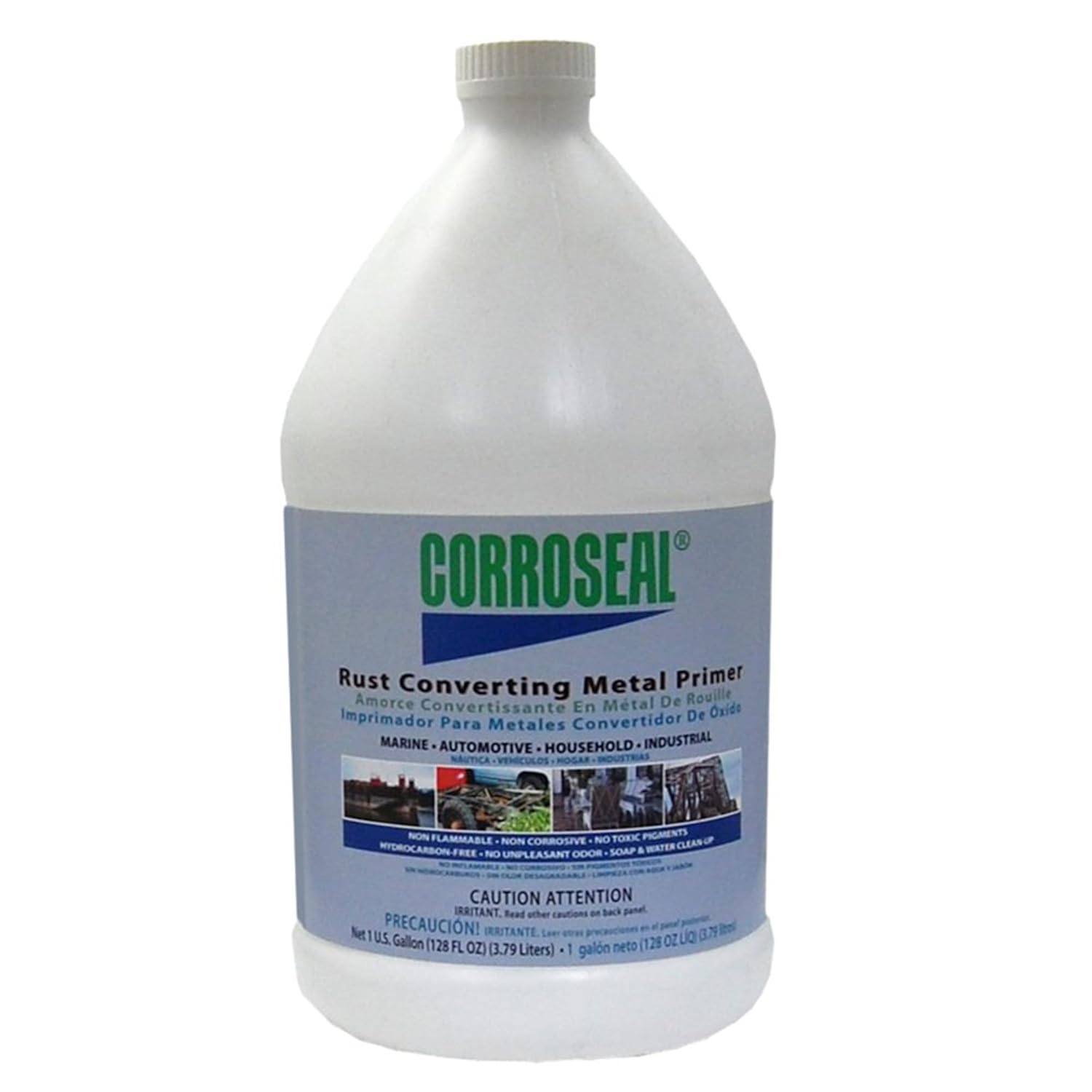
Corroseal Water-Based Rust Converter Metal Primer
Don’t Remove It—Convert It and Paint Over It
Sometimes, removing rust entirely down to bare, shiny metal is either impossible or structurally unnecessary. This is especially true for large structural I-beams, agricultural equipment, boat trailers, or heavily weathered outdoor fixtures. Corroseal takes an entirely different approach to the problem. Instead of stripping the rust away, it chemically converts the existing iron oxide into magnetite—a highly stable, rock-hard black substance that simultaneously acts as a top-tier paint primer.
This milky white liquid paints on easily with a standard brush or roller and turns black as it chemically reacts with the rust. Once it is fully cured (usually 24 hours), you can paint directly over it with your desired topcoat. Corroseal is the trusted industry standard for brutal marine environments and is excellent for home repairs where heavy sanding is difficult. For example, if you are maintaining the rusted metal housing of an external vent or exploring prefabricated fireplace structures involving older, rusted metal chases, Corroseal can extend the life of that metal by decades with minimal labor.
- Ultimate one-step process: Converts rust and primes the surface simultaneously.
- Water-based formula means easy cleanup with soap and water before it cures.
- Saves countless hours of miserable sanding and grinding labor.
- Trusted by the maritime industry for ship deck maintenance.
- Not for surfaces you want to leave as “bare metal” (always turns black).
- Strictly requires a top-coating (oil-based or enamel paint) to provide UV protection.
- The surface must be wire-brushed first to remove heavy, loose flaky rust (it cannot penetrate thick scale).
Jenolite Original Liquid Rust Remover
The Fast-Acting Liquid Acid for Heavy Fabrication
Jenolite is a legendary name in the UK and Europe, known for its no-nonsense approach to heavy corrosion. Unlike the thick Rust-Oleum gel, the original Jenolite is a thin, highly penetrating liquid based heavily on phosphoric acid. It is designed to seep deep into the microscopic pits and crevices of heavily textured rust that thicker gels might bridge over.
This product is ideal for mechanics and fabricators dealing with raw steel that needs to be cleaned quickly before welding or priming. Because it is a thin liquid, it acts incredibly fast, often turning rust into a wipeable grey sludge in under 15 minutes. It leaves a heavy phosphate coating that is ready to accept primer almost immediately after wiping down. If you are rebuilding a steel wood stove, applying Jenolite to the raw steel panels before applying high-heat paint ensures a permanent bond.
- Thin liquid penetrates deep, tight crevices and seized threads better than gels.
- Extremely aggressive and fast-acting on stubborn, aged rust.
- Leaves an excellent, paint-ready phosphated surface.
- Well-suited for pre-weld preparation on raw steel.
- Thin liquid easily runs off vertical surfaces; best used flat.
- Strong acid requires strict safety precautions, ventilation, and PPE.
- Can flash-rust quickly if not wiped and primed properly according to instructions.
Mechanical vs. Chemical Rust Removal: The Hybrid Approach
While modern chemicals are incredibly effective, throwing a severely corroded, crusty object directly into an expensive chemical bath is a waste of money. The most efficient way to remove rust is a hybrid approach: utilizing mechanical force to remove the bulk of the problem, followed by chemical removers to extract the rust from the microscopic pores of the metal.
The Mechanical Arsenal
Before opening your bottle of Evapo-Rust or Rust-Oleum, assess the metal. If the rust is bubbling up in thick flakes (scale rust), you must knock it down first.
- Wire Brushes & Cup Wheels: Attached to an angle grinder or power drill, a wire cup brush aggressively strips away scale rust and old, peeling paint in seconds. Always wear a face shield, as wire bristles can snap off at high speeds.
- Flap Discs: For flat surfaces where you don’t mind removing a tiny bit of the base metal, an 80-grit flap disc on an angle grinder will take steel down to a shiny finish almost instantly.
- Needle Scalers: A pneumatic tool that uses dozens of vibrating metal needles to chisel away extreme rust scale on heavy structural steel or ship hulls.
- Sandblasting (Media Blasting): The ultimate mechanical removal. Blasting media (sand, glass beads, or walnut shells) under high pressure strips rust from every crevice. However, it requires expensive equipment and can warp thin sheet metal if not done carefully.
Once you have reduced the rust to a fine surface layer or deep pitting, apply your chosen chemical remover to finish the job cleanly and preserve the remaining healthy metal.
Targeted Restoration: Specific Use Cases
Restoring Antique Hand Tools
Vintage hand planes, chisels, and axes are often made of high-carbon steel that holds an edge far better than modern cheap tools. For these, Evapo-Rust is mandatory. Mechanical removal (like a wire wheel) will destroy the maker’s marks, scratch the flat surfaces, and ruin the valuable “patina” (the darkened, aged look of the metal). A 24-hour soak in a chelating agent removes the active red rust while preserving the dark, historic finish.
Automotive Restoration (Frames and Panels)
When dealing with a car frame, immersion is impossible. Here, you must use a heavy mechanical approach (wire wheel) followed by a rust converter like Corroseal on the frame rails to encapsulate the remaining rust, topped with a tough chassis enamel. For exterior body panels where a smooth finish is required, use Rust-Oleum Gel to dissolve the rust completely before applying automotive primer.
Cast Iron Skillets and Cookware
Never use harsh acids, WD-40, or toxic converters on items that will touch food! To restore a rusted cast iron pan, soak it in a 50/50 mixture of white vinegar and water for a few hours, scrub with steel wool, wash thoroughly with dish soap, dry it immediately on the stove, and rub it with cooking oil to re-season it.
Step-by-Step: The Ultimate Process for Complete Rust Eradication
Regardless of the chemical product you choose, following a strict process ensures maximum effectiveness and prevents the rust from returning the next day.
- Mechanical Triage: Use a wire brush, steel wool, or a scraper to aggressively knock off the loose “scale” rust. Don’t waste expensive chemical power on flakes that can be brushed away.
- Degrease Thoroughly: Oil, grease, and dirt act as a barrier, preventing rust removers from reaching the metal. Clean the part meticulously with a heavy-duty degreaser or dish soap. Rinse and dry.
- Apply the Chemistry:
- For Soaks: Fully submerge the part in the liquid. If air bubbles are trapped inside a cavity, the rust won’t be removed in that specific spot. Agitate the part to release bubbles.
- For Gels: Apply a thick, generous coat using a disposable brush. Do not let the gel dry out; if it dries, it stops working and becomes difficult to remove. Mist it lightly with water if it begins to harden.
- The Waiting Game: Patience is critical. Chelating agents may need 12 to 24 hours for heavy rust. Acids might only need 20 minutes. Check the progress periodically.
- Rinse, Dry, and Protect (The Most Critical Step): Once the rust is gone, rinse the part thoroughly with water. Warning: Bare, unprotected steel will “flash rust” (turn orange with light rust) within 30 minutes of being exposed to air and moisture. You must dry the part immediately with compressed air or a heat gun, and immediately apply a protectant—paint, oil, wax, or a clear coat. For high-heat applications, ensure you use heat-resistant products (check our guide on best mortar for chimney repair for surrounding area heat resistance).
Post-Removal: Sealing the Metal
Removing rust is only half the battle; preventing its immediate return is the other. Once you have exposed bare metal, you must seal it from oxygen and moisture.
- Zinc-Rich Primers (Cold Galvanizing): For outdoor equipment, applying a primer with a high zinc content acts as a sacrificial anode. The environment will attack the zinc before it attacks the steel beneath it.
- Oiling and Waxing: For hand tools, table saw beds, and unpainted parts, applying a light machine oil (like 3-IN-ONE) or a hard paste wax (like Renaissance Wax) creates a moisture barrier without altering the look of the metal.
- Clear Coats: If you want to preserve the “bare metal” industrial look on a piece of furniture or motorcycle tank, use a specialized 2K clear coat designed to adhere directly to bare steel.
- Climate Control: In humid garage environments, condensation is the enemy. Utilizing winter home comfort techniques like installing a dedicated dehumidifier can significantly slow down rust formation on all your tools.
Frequently Asked Questions (FAQ)
Yes, standard white household vinegar contains roughly 5% acetic acid, which can slowly dissolve iron oxide. It is an excellent, incredibly cheap budget option for very light surface rust on small items. However, because it is so weak, it requires days of soaking for heavy rust and can leave the metal looking dull. It is highly inefficient for deep, structural corrosion compared to commercial products.
You must exercise extreme caution. Stainless steel resists rust due to a microscopic chromium oxide layer. Aggressive acids (like Muriatic or Hydrochloric) will violently attack and discolor stainless steel, and they will literally melt aluminum. Always check the manufacturer’s label. If you must clean light surface rust off a stainless steel appliance or a stainless chimney flue, use a product specifically rated for stainless to avoid destroying its protective properties.
Coca-Cola contains very small amounts of phosphoric acid, which is an active ingredient in commercial rust removers. While it will technically remove light rust if left to soak for a few days, the massive sugar content leaves behind a sticky, horrible mess that promotes bacterial growth. It is a fun novelty trick, but it is not a serious or efficient solution for actual metal restoration.
A rust remover (whether an acid or a chelating agent) strips the iron oxide entirely away from the object, leaving behind raw, bare, shiny metal that must be immediately protected. A rust converter chemically interacts with the existing rust, changing it into a hard, stable black compound (usually iron tannate or magnetite) that neutralizes the corrosion process and serves as an excellent, ready-to-paint primer layer.
Because Evapo-Rust is non-toxic and biodegradable, the solution itself is safe to pour down the drain in most municipalities. However, the iron it pulled from your tools, as well as any heavy metals, grease, or oil that was on the tools, is now suspended in that liquid. You must check your local environmental regulations regarding the disposal of liquids containing heavy metals or automotive grease.
Final Verdict: Reclaiming Your Metal
Restoring metal is arguably one of the most satisfying and visually rewarding DIY tasks you can undertake in your workshop. The dramatic transformation from a jagged, frozen, orange mess to gleaming, functional steel feels like nothing short of magic.
For the vast majority of users, home mechanics, and tool restorers, Evapo-Rust is the undisputed champion. Its flawless safety profile, lack of toxic fumes, combined with its unique chemical ability to preserve the healthy base metal perfectly, makes it the absolute best rust remover for hand tools, delicate car parts, and valuable antiques. It allows you to work stress-free without the persistent fear of chemical burns or accidentally destroying your expensive items by leaving them in the bath too long.
However, if you are tackling a massive, immovable project like a rusted boat trailer frame, a wrought iron fence, or a metal roof, the Corroseal Rust Converter is undoubtedly the smarter, labor-saving choice to prep the surface for fresh paint. And for those stubborn, localized vertical spots on your garden gate or automotive body panels, the clingy nature of Rust-Oleum’s Dissolver Gel is exactly the tool for the job.
Remember, the golden rule of rust removal is that the job isn’t finished when the rust is gone. The key to lasting success is the immediate protection you apply afterward. Do not let your hard work go to waste—seal that fresh metal up the moment it is dry!
Ready to Start Your Restoration Project?
Stop struggling with wire brushes and sandpaper. Browse the top-rated rust removal solutions and let modern chemistry do the hard work for you.
Shop All Top Rust Removers on Amazon