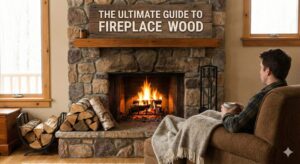
The Ultimate Guide to the Best Wood for Burning in Your Fireplace
Maximize Heat, Minimize Smoke, and Stay Safe This Winter
There is nothing quite like the crackle, the aroma, and the penetrating warmth of a real wood fire. It transforms a house into a home during the cold winter months. However, simply throwing any log you find in the backyard into your hearth is a recipe for disaster.
Choosing the right wood is the difference between a roaring, clean-burning fire that heats your home efficiently, and a smoky, smoldering mess that clogs your chimney with dangerous creosote. The wrong wood can damage your flue, fill your living room with smoke, and provide little to no heat.
In this comprehensive guide, we will break down the BTU ratings, burning characteristics, and availability of the most common firewood types. Whether you are splitting your own logs or buying by the cord, this guide ensures you get the best burn for your buck.
Hardwood vs. Softwood: The Density Debate
Before diving into specific species, it is crucial to understand the two main categories of firewood: hardwood and softwood. The difference lies in the density of the wood fiber.
Hardwoods (like Oak, Maple, and Ash) are dense. They contain more potential energy per log. They burn hotter, longer, and cleaner, leaving behind a nice bed of coals that radiates heat for hours.
Softwoods (like Pine, Cedar, and Spruce) are less dense and full of resin. They ignite very quickly and burn hot and fast, but they fizzle out quickly and produce significantly more smoke and creosote.

Don’t guess if your wood is dry enough. Wet wood doesn’t burn, it smolders. This tool tells you instantly if your firewood is under the recommended 20% moisture content.
Check Price on AmazonTop Tier Firewoods (The Gold Standard)
If you want the most heat output (measured in British Thermal Units, or BTUs) and the longest burn times, these are the species you should prioritize.
1. Oak
Oak is widely considered the king of firewood. It is incredibly dense and burns very slowly, providing a steady, high heat. It requires a long seasoning time (often 1-2 years), but the payoff is a fire that lasts all night.
2. Ash
Ash is unique because it has a naturally low moisture content even when “green.” It splits easily and burns with a steady flame and good heat output. It is one of the most user-friendly hardwoods available.
3. Maple (Hard/Sugar)
Sugar Maple is a high-density wood that produces excellent heat and a pleasant aroma. It is often more available in northern climates and is a favorite for wood stoves due to its coal-bed retention.
4. Hickory
Hickory actually burns hotter than Oak. It is dense, tough to split, but rewards the effort with massive heat output. It is also famous for its distinct, savory smell (often used for smoking meat).

Processing hardwood like Oak and Hickory requires the right tool. The X27 is legendary for its ability to split medium-to-large logs with a single strike, thanks to its advanced geometry.
Check Price on AmazonMid-Tier Woods (Good Alternatives)
These woods are excellent for shoulder seasons (Spring/Fall) when you want a fire to take the chill off but don’t need a blast furnace.
- Birch: Recognizable by its peeling bark. It burns relatively fast but produces a beautiful bright flame. The bark is a natural firestarter.
- Cherry: Burns at a medium heat and doesn’t last as long as Oak, but it is prized for its sweet, non-sparking aroma. Great for open fireplaces.
- Elm: Dense and decent heat, but notoriously difficult to split due to its stringy grain. Only worth it if you have a hydraulic splitter.

Managing a fire requires the right poker and tongs. This wrought iron set is durable, stylish, and essential for adjusting logs to keep the airflow optimal.
Check Price on AmazonThe Role of Softwoods
Should you ever burn Pine or Cedar? Yes, but only as kindling. Because softwoods contain resins, they ignite instantly and burn hot and fast. This makes them perfect for getting the fire started.
However, avoid burning full logs of pine. The high sap content creates excessive creosote buildup in your chimney, which significantly increases the risk of a chimney fire.
What NOT to Burn
Never burn trash, colored paper, or treated lumber. Specifically, pressure-treated wood contains chemicals like arsenic and copper, which release toxic fumes when burned. Also, avoid driftwood (the salt corrodes metal fireplaces) and green wood.
The Science of Seasoning
Even the best Oak log is useless if it is “green” (freshly cut). Fresh wood contains up to 50% water. Burning it is like trying to burn a wet sponge; all the heat energy is wasted boiling off the water rather than heating your room.
Seasoned Wood has a moisture content below 20%. It is lighter in weight, has cracks (checks) in the ends, and makes a hollow sound when two logs are banged together.

To season wood, it needs airflow and protection from rain. This rack keeps wood off the ground and covered, accelerating the drying process significantly.
Check Price on AmazonStorage & Safety
Store your firewood off the ground and cover the top (but not the sides) to allow airflow. Keep the stack a few feet away from your home to prevent termite or mouse infestations from migrating into your walls.
Always maintain your chimney. Burning even the best wood produces some soot. If you neglect cleaning, you risk a dangerous chimney fire.