The 5 Best Fireplace Fans to Instantly Distribute Heat Without Electricity
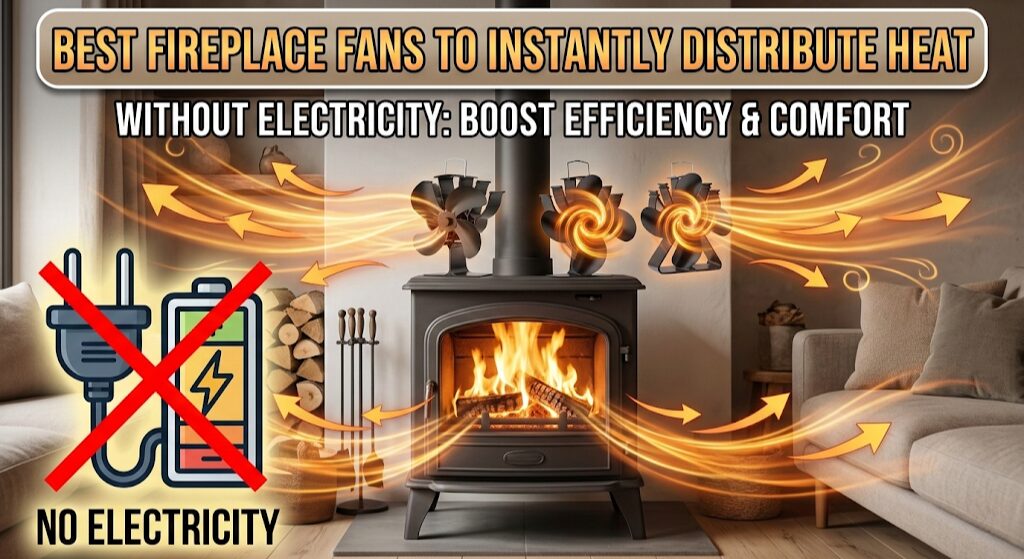
If you rely on a wood stove or a freestanding fireplace to heat your home, you are likely familiar with a frustrating reality of physics: heat rises. Without intervention, the intense warmth generated by your fire gathers at the ceiling, leaving the actual living area where you sit feeling chilly. You end up burning more wood just to feel the effects on the couch.
This is where finding the best fireplace fans (often called heat-powered stove fans) becomes an absolute game-changer. Unlike traditional electric blowers that require an outlet and add to your utility bill, these ingenious devices use the Seebeck effect. They generate their own electricity from the heat of the stove itself. The hotter the fire, the faster the blades spin, quietly pushing warm air horizontally across the room instead of letting it escape to the ceiling.
Whether you are comparing wood stove vs. pellet stove efficiency, or simply trying to optimize your current setup, adding a heat-powered fan is arguably the most cost-effective upgrade you can make. It transforms a localized heat source into a whole-room heating solution.
In this guide, we have rigorously evaluated the market to bring you the five absolute best heat-powered fireplace fans available. We looked at cubic feet per minute (CFM) output, starting temperatures, durability, and operational noise to ensure you get the maximum warmth out of every log you burn.
Top 5 Fireplace Fans at a Glance
Short on time? Here is a quick breakdown of our top selections designed to push warm air through your home efficiently and silently.
- Best Overall: Caframo Ecofan AirMax 812
- Best Budget: Voda 4-Blade Heat Powered Stove Fan
- Best for Low Temperatures: Valiant Premium 4-Blade
- Best for Large Rooms: Tomersun Twin Motor 8-Blade Fan
- Best for Wood Inserts: CWLAKON Magnetic Fireplace Fan
1. Caframo Ecofan AirMax 812

When discussing heat-powered stove fans, Caframo is the gold standard. Designed and manufactured in Canada—a country that knows a thing or two about surviving brutal winters—the Ecofan AirMax 812 is the undisputed king of moving air without electricity. While it carries a premium price tag, its performance, longevity, and engineering justify every penny.
The AirMax boasts an impressive 175 CFM (Cubic Feet per Minute) rating. It is independently tested to warm up a room up to 38% faster than a stove operating without a fan. Furthermore, it operates incredibly quietly, ensuring your peaceful evening by the fire isn’t ruined by the whirring of a cheap motor. If you are serious about winter home comfort and efficient heat retention, the AirMax is the ultimate companion to your wood stove.
Key Features:
- Airflow: Pushes up to 175 CFM
- Operating Temp: 185°F to 650°F (85°C to 345°C)
- Design: 2-blade aerodynamic design optimized for maximum push
- Warranty: 2-year limited warranty (rare in this product category)
Pros
- Highest verified airflow on the market
- Exceptional build quality and durability
- Whisper-quiet operation
- Reduces fuel consumption by up to 18%
Cons
- One of the most expensive models available
- 2-blade design looks less modern than 4-blade alternatives
2. Voda 4-Blade Heat Powered Stove Fan

Not everyone wants to spend over a hundred dollars on a fireplace accessory. For those seeking excellent value, the Voda 4-Blade Stove Fan delivers highly respectable performance at a fraction of the cost of premium brands. It is an excellent entry-level fan that will dramatically improve your heating situation without breaking the bank.
Constructed from anodized aluminum, the Voda fan is resistant to high temperatures and will not rust or corrode. It features a built-in bi-metallic strip at the base; if the surface temperature exceeds 660°F, this strip gently elevates the edge of the fan, protecting the Peltier module and motor from heat damage. This built-in safety feature is incredible for a budget fan.
Key Features:
- Airflow: Approximately 130 – 150 CFM
- Starting Temp: 185°F (85°C)
- Material: Anodized Aluminum
- Safety: Built-in overheat protection strip
Pros
- Extremely affordable
- Built-in thermal protection to prevent motor burn-out
- Lightweight and easy to position
- Start-up temperature is relatively low
Cons
- Airflow isn’t as forceful as premium 2-blade designs
- Motor lifespan may be shorter under heavy, continuous use
3. Valiant Premium 4-Blade Stove Fan

Gas stoves, pellet stoves, and newer, highly-efficient soapstone wood stoves often have cooler surface temperatures compared to traditional cast-iron radiants. If your stove doesn’t get blazing hot on top, many standard fans simply won’t spin. Enter the Valiant Premium 4-Blade, engineered specifically with an ultra-low starting temperature.
This fan begins to rotate and push air at an incredible 122°F (50°C). This means you start feeling the benefits of circulated warm air much earlier in the fire-building process, and the fan continues to work long after the fire has died down to mere embers. If you are comparing electric fireplace vs wood fireplace efficiency, utilizing a low-temp fan on your wood unit helps bridge the convenience gap by ensuring immediate, sustained heat distribution.
Key Features:
- Starting Temp: Ultra-low 122°F (50°C)
- Max Temp: 644°F (340°C)
- Design: Compact, low-profile design fits in tighter spaces
- Airflow: Surprisingly strong for its compact size
Pros
- Perfect for gas, pellet, or soapstone stoves
- Starts spinning almost immediately as the fire builds
- Very compact; fits under low fireplace lintels
Cons
- Total CFM output is lower than larger, high-temp models
- Can be damaged if placed on traditional, blazing-hot steel stoves
4. Tomersun Twin Motor 8-Blade Fan

If you have a massive open-concept living area, a small 4-blade fan might struggle to push the warm air all the way to the back of the room. The Tomersun Twin Motor 8-Blade Fan attacks this problem with brute force. By utilizing two separate thermal motors driving two distinct 4-blade fans on a single base, it moves a massive volume of air.
Despite its intimidating appearance, it relies on the exact same heat-powered technology as the smaller models—no batteries or electricity required. Its elongated shape makes it perfect for the wide tops of large cast-iron stoves. Just be mindful of your chimney setup; if you are currently battling fireplace draft problems or negative airflow, getting the hot air circulating into the room faster with a twin motor can help stabilize the room’s temperature profile.
Key Features:
- Design: Twin motors, 8 total blades
- Airflow Capacity: Significantly higher horizontal spread than single-motor units
- Material: Premium Anodized Aluminum
- Operating Temp: 131°F to 653°F (55°C to 345°C)
Pros
- Unmatched air volume spread for large spaces
- Relatively low starting temperature
- Sturdy, wide base prevents accidental tipping
Cons
- Requires a large, flat stove surface to sit on
- Two motors mean twice the potential points of mechanical failure
5. CWLAKON Magnetic Thermometer Fireplace Fan

What if you have a fireplace insert, or your freestanding stove has a rounded top or a built-in warming shelf that leaves no room for a fan to sit? The CWLAKON Magnetic Fireplace Fan is an ingenious solution. Instead of resting on top of the stove, it uses high-temperature resistant magnets to clamp securely onto the iron stove pipe itself.
Because the flue pipe often gets incredibly hot, this fan is highly efficient. It also comes with an iron ring for securing it to stainless steel pipes (which are not magnetic). As a bonus, it features a built-in stove thermometer right on the face, allowing you to monitor your burn temperatures to prevent creosote buildup while simultaneously enjoying distributed heat.
Key Features:
- Mounting: High-heat magnets grip directly to the flue/stove pipe
- Extras: Integrated stove pipe thermometer
- Space-Saving: Frees up the entire top of your stove
- Blades: 4-blade aluminum design
Pros
- Perfect for stoves with no flat top space
- Integrated thermometer is incredibly useful for safe burning
- Included clamp ring allows use on non-magnetic pipes
Cons
- Can be tricky to position correctly without touching the wall behind the pipe
- Magnets can lose strength if exposed to extreme, prolonged overheating
Quick Comparison Table
Use this technical breakdown to compare the specifications of our top 5 fireplace fans and choose the perfect match for your heating setup.
| Fireplace Fan Model | Best For | Blades | Starting Temp | Placement |
|---|---|---|---|---|
| Caframo Ecofan AirMax | Maximum Airflow & Quality | 2 | 185°F (85°C) | Stove Top |
| Voda 4-Blade | Budget-Conscious Buyers | 4 | 185°F (85°C) | Stove Top |
| Valiant Premium | Gas/Pellet/Low Temp Stoves | 4 | 122°F (50°C) | Stove Top |
| Tomersun Twin Motor | Large Open-Concept Rooms | 8 (Twin) | 131°F (55°C) | Stove Top (Wide) |
| CWLAKON Magnetic | Inserts / No Flat Space | 4 | 176°F (80°C) | Stove Pipe Mount |
The Ultimate Buyer’s Guide: How to Choose the Best Fireplace Fan
Understanding how these fascinating devices work and what metrics matter will ensure you don’t end up with a novelty desk ornament instead of a viable heating tool. Here is what you need to know.
1. How Do Heat-Powered Stove Fans Work?
These fans operate on the Seebeck effect (via a thermoelectric Peltier module). The base of the fan absorbs intense heat from the stove, while the top cooling fins remain relatively cool. This temperature differential across the module generates a small electrical current, which powers a tiny motor to spin the blades. No batteries, no cords—just thermal physics in action.
2. Understanding Starting vs. Maximum Temperatures
Pay close attention to the temperature range of the fan and the type of stove you own:
- Starting Temperature: This is the temperature the stove surface must reach before the blades begin to turn. If you have a soapstone, gas, or pellet stove, you need a fan with a low starting temperature (around 120°F). Cast iron wood stoves heat up much more, so a standard 185°F start is fine.
- Maximum Temperature: Most thermoelectric modules will burn out if the base exceeds 650°F (345°C). Ensure your fan has a built-in bi-metallic safety strip that lifts the base slightly off the stove if it gets too hot.
3. Blade Count and CFM (Cubic Feet per Minute)
It is a common misconception that more blades equal more airflow. While a 4-blade fan looks modern, the 2-blade design of the premium Caframo Ecofan actually pushes higher CFM because the blades have a steeper pitch and encounter less aerodynamic drag. Look at the manufacturer’s stated CFM rather than just counting the blades.
4. Proper Fan Placement
Where you put the fan is critical. Do not place it directly in front of the flue pipe. The fan relies on the back of the device pulling cooler air from behind it over the cooling fins. If you place it in front of the chimney pipe, it draws blazing hot air over the cooling fins, destroying the temperature differential and stopping the motor. Always place the fan near the back edge of the stove, off to either the left or right side of the stove pipe.
Ready to stop wasting heat and start warming your room?
Shop All Top-Rated Fireplace Fans on AmazonFrequently Asked Questions (FAQs)
Still curious about thermal stove fans? Here are the clear, expert answers to the most commonly asked questions.
Conclusion & Final Verdict
If you have a freestanding wood, gas, or pellet stove, operating it without a thermal fan is simply leaving comfort—and firewood—on the table. By investing in one of the best fireplace fans, you reclaim the heat trapped at your ceiling and push it exactly where you need it: right into your living space.
For those who want an absolute powerhouse that is guaranteed to last for years, the Canadian-made Caframo Ecofan AirMax 812 remains our undisputed top pick. If you are outfitting a massive room and want maximum air disruption, the Tomersun Twin Motor is a beast of an option. Finally, for budget-conscious buyers looking to dip their toes into thermal fans, the Voda 4-Blade is a reliable and safe entry point.
Choose the model that fits your stove type and room size, position it correctly away from the direct front of the flue pipe, and enjoy a noticeably warmer, cozier winter.
Don’t Let Your Heat Escape to the Ceiling!
Enhance your stove’s efficiency and slash your heating bills. Find the perfect fan for your hearth today.
Click Here to Browse Top Fireplace Fans on Amazon