How to Find the Best Chimney Services Near You: A Complete Vetting Guide
Your chimney is more than just a charming architectural feature; it’s a critical component of your home’s heating system and overall safety. Yet, for most homeowners, it’s an “out of sight, out of mind” utility—until something goes wrong. Whether you’re due for an annual inspection, noticing a smell, suspecting a water leak, or facing a major repair, finding a qualified and trustworthy chimney professional can feel like searching for a needle in a haystack.
The industry, unfortunately, has its share of undertrained operators and outright scammers. Choosing the wrong company can lead to shoddy work, unnecessary “repairs,” and a dangerously false sense of security. As a homeowner who has navigated this process for over two decades, I’ve learned that a little knowledge and a solid vetting process are your best defense.
This guide is your complete roadmap to hiring the best chimney service. We’ll break down every type of service offered, the certification bodies you need to know, a non-negotiable checklist for vetting any company, the red flags that reveal scammers, how to read online reviews intelligently, pricing you should expect, and exactly what to do before and during your appointment.
📋 Table of Contents
- The Full Scope of Chimney Services
- The Three Major Certification Bodies Explained
- Chimney Liner Types: What You Need to Know Before Calling
- Your 7-Point Checklist for Vetting Any Chimney Professional
- Red Flags: How to Spot a Chimney Scam
- HomeAdvisor, Angi, and Thumbtack: How These Platforms Work
- How to Read Online Reviews for Chimney Companies
- Complete Chimney Service Pricing Guide
- What Happens During a Professional Chimney Service
- How to Prepare for Your Appointment
- Emergency Chimney Services: When to Call Immediately
- Common Problems: Odors, Leaks, and Smoke
- Dryer Vent Cleaning: The Overlooked Service
- Special Considerations for Older Homes
- Do New Construction Homes Need Chimney Inspections?
- Homeowner Preparedness: Safety Between Professional Visits
- Frequently Asked Questions
More Than Just Sweeping: Understanding the Full Scope of Chimney Services
The term “chimney sweep” often conjures up a simple image of brushes and soot. But a modern, certified chimney professional offers a wide range of services crucial for the health and safety of your home. Understanding what services exist helps you communicate clearly with potential contractors and identify companies whose scope of expertise matches your specific needs.
Annual Inspections
The National Fire Protection Association (NFPA) Standard 211 requires that chimneys be inspected at least annually. A certified professional will identify which of the three inspection levels is appropriate for your situation:
- Level 1: A visual examination of all readily accessible portions of the chimney exterior and interior. This is the standard inspection performed during an annual sweep when the appliance and venting have not changed and there are no reported problems.
- Level 2: Includes all of Level 1 plus examination of accessible portions of the attic, crawl space, and basement, and a video scan of the full flue interior. Required when selling or purchasing a home, after any chimney fire, or after any changes to the appliance or fuel type. This is the minimum inspection after any suspected chimney fire.
- Level 3: The most invasive inspection, potentially requiring removal of chimney or building components. Required when a serious hazard is suspected that cannot be fully assessed with a Level 2 inspection.
During a thorough inspection, a professional will examine every aspect of the structure—even ensuring external attachments like the best chimney antenna mount are secure and not causing masonry damage.
Chimney Sweeping
The primary goal is physical removal of flammable creosote deposits from the flue liner, smoke chamber, smoke shelf, and firebox, dramatically reducing the risk of a chimney fire. A quality sweep also includes removal of debris, nesting materials, leaves, and any other blockage material.
Gas Fireplace and Gas Appliance Servicing
This is one of the most important—and most overlooked—categories. Gas fireplaces and gas log sets require entirely different servicing than wood-burning appliances, and many chimney companies specialize in or explicitly exclude this work. Gas appliance servicing involves cleaning burner components, inspecting the ignition system and thermocouple/thermopile, cleaning the glass front with appropriate ceramic glass cleaner, inspecting the sealed firebox and venting for integrity, and verifying correct combustion. For this work specifically, look for an NFI-certified Gas Specialist (explained below) rather than just a CSIA sweep.
🧹 Chimney Sweeping
Removal of creosote, soot, and debris from flue, smoke chamber, and firebox. The baseline annual service.
🔍 Video Flue Inspection
Camera scan of the full flue interior. Essential for home purchase/sale, after chimney fires, or when problems are suspected.
🔧 Tuckpointing / Repointing
Replacing deteriorated mortar joints. Critical structural maintenance that prevents water intrusion and masonry failure.
💧 Waterproofing
Application of penetrating water repellent to masonry. Dramatically reduces water intrusion damage over time.
🔥 Gas Appliance Service
Specialized cleaning and inspection of gas fireplaces, inserts, and log sets. Requires NFI Gas Specialist credentials.
🏗️ Relining
Installation of stainless steel, cast-in-place, or clay tile liner. Required after certain damage or appliance changes.
🚨 Crown Repair
Repair or rebuild of the concrete crown at the chimney top. A cracked crown is the leading entry point for water damage.
🐦 Animal & Blockage Removal
Safe removal of nests, trapped animals, and debris. Requires knowledge of wildlife regulations for protected species.
Chimney Repair and Restoration Services
Over time, the masonry and components of your chimney degrade. A full-service company handles:
- Tuckpointing/Repointing: Replacing old, crumbling mortar joints with the best mortar for chimney applications to ensure structural integrity and prevent water intrusion. This is one of the most important preventive maintenance services for brick chimneys.
- Crown Repair and Rebuilding: The chimney crown is the concrete or mortar cap that covers the top of the chimney, directing water away from the flue and masonry. A cracked crown is the most common entry point for water damage. Repair typically uses a specialized elastomeric crown coating; severe damage requires a complete rebuild.
- Smoke Chamber Parging: The smoke chamber is the funnel-shaped area between the damper and the flue. Its interior should be coated smooth for optimal draft and to prevent creosote accumulation in rough corbeled brick surfaces. Parging applies a refractory mortar coating to create a smooth, sealed interior.
- Flashing Repair: Addressing leaks where the chimney penetrates the roofline. Failing flashing is one of the top causes of water intrusion into chimney systems and surrounding roof structures.
- Waterproofing: Application of a penetrating water repellent (not a surface paint or sealer) to the masonry exterior. Quality waterproofing products are vapor-permeable—they allow moisture vapor to escape from inside the masonry while preventing liquid water from entering. Properly applied, waterproofing can dramatically extend the life of a masonry chimney.
- Relining: Installing a new flue liner when the existing one is cracked, damaged, or incompatible with the connected appliance. Many homeowners wonder if homeowners insurance covers chimney repair—this is a critical question when facing relining costs, which can run from $1,500 to $10,000+.
Blockage and Animal Removal
Your chimney is an inviting space for birds, squirrels, raccoons, and other wildlife. Professionals are equipped to safely and humanely remove nests and animals while remaining compliant with wildlife regulations—some species, like Chimney Swifts, are federally protected and cannot be disturbed while nesting. This is a common issue, and knowing how to handle it is important whether you’re dealing with how to get a raccoon out of your chimney or the sad reality of a bird stuck in your chimney that creates blockage and odor problems if left unaddressed.
The Three Major Certification Bodies: CSIA, NFI, and NCSG Explained
One of the most confusing aspects of hiring chimney professionals is the alphabet soup of credentials you’ll encounter. There are three major certification bodies in the U.S. chimney and hearth industry, and understanding what each one covers—and which one matters for your specific need—is essential.
CSIA — Chimney Safety Institute of America
The most widely recognized credential for chimney sweeps. A CSIA Certified Chimney Sweep has passed exams covering fire codes, NFPA standards, creosote removal, and chimney inspection. This is the credential to look for when hiring for sweeping, inspection, and masonry work on wood-burning systems. Verify certification status at csia.org.
NFI — National Fireplace Institute
The primary credentialing body for hearth product installation and service. NFI offers Gas Specialist, Wood Specialist, and Pellet Specialist certifications. An NFI Gas Specialist is the credential to require for anyone servicing, installing, or inspecting gas fireplaces, gas inserts, and gas log sets. Verify at nficertified.org.
NCSG — National Chimney Sweep Guild
The professional trade association for the chimney industry. NCSG membership indicates a commitment to professional standards and ethics and provides access to continuing education. Many CSIA-certified sweeps are also NCSG members. Membership alone is not a substitute for certification, but it is a positive professional indicator.
- Wood-burning fireplace or stove sweeping and inspection: Require CSIA Certified Chimney Sweep
- Gas fireplace servicing: Require NFI Gas Specialist
- New gas fireplace or stove installation: Require NFI Gas or Wood Specialist plus applicable contractor license
- Major masonry repair/rebuild: CSIA certification plus verify masonry contractor licensing in your state
- All of the above: Many full-service chimney companies hold both CSIA and NFI credentials—ask specifically
Chimney Liner Types: What You Should Know Before Making the Call
If your service call involves relining, repair discussion, or a Level 2 inspection, understanding the three types of flue liners helps you have an informed conversation with any contractor and evaluate their recommendations intelligently.
| Liner Type | Material | Typical Lifespan | Best Application | Approx. Cost (Installed) |
|---|---|---|---|---|
| Clay Tile | Fired clay tile sections | 50+ years (if undamaged) | Original construction in wood-burning masonry chimneys | $2,500–$10,000+ (full replacement, including opening chimney) |
| Stainless Steel | 316L or 304 SS flexible or rigid liner | 20–30 years; lifetime warranty from some brands | Relining existing chimneys; gas and wood appliances; the most common remediation liner | $1,500–$5,000 (depending on length, diameter, and appliance type) |
| Cast-in-Place | Poured refractory cement | 50+ years | Chimneys with severe structural damage; creates new seamless liner within existing structure | $2,500–$7,000+ |
A critical note: a stainless steel liner must be matched to the specific fuel type and appliance. A liner rated for a gas appliance (typically 316L stainless) is different from one rated for a wood-burning stove (typically 304 stainless or heavier grade). A contractor who proposes installing a gas-rated liner on a wood appliance is either inexperienced or cutting costs at your expense—and it’s a code violation. Always ask what grade and rating the proposed liner is and why it’s appropriate for your specific appliance.
Your 7-Point Checklist for Vetting Any Chimney Professional
Never hire a chimney company without putting them through this vetting process. A true professional will have no problem providing answers and documentation for every single point on this list.
- Verify Certification for Your Specific Service For wood-burning systems, require CSIA certification and verify it at csia.org. For gas appliance service, require NFI Gas Specialist certification and verify at nficertified.org. Do not accept verbal assurances—verify directly on the certifying body’s website, as certifications expire and must be renewed. A certificate pinned to a website could be years out of date.
- Require Proof of Insurance — Both Kinds The company must carry both General Liability Insurance (covering damage to your property) and, just as importantly, Workers’ Compensation Insurance (covering their employees if injured on your property). Without Workers’ Comp, you could be held personally liable for an injury on your roof or in your home. Request a current Certificate of Insurance and, if the job is substantial, call the insurance carrier directly to confirm the policy is active and the coverage amounts are adequate.
- Check Their Local Reputation Across Multiple Platforms Look for consistent, positive reviews across Google, Yelp, and the Better Business Bureau. Pay attention to how the company responds to negative reviews—professional, solution-oriented responses to complaints are a strong positive indicator. A company that argues with unhappy customers in public reviews is a warning sign. Ask the company for references from recent customers in your area and actually call them.
- Demand a Detailed, Written Estimate Before Work Begins A professional estimate clearly outlines the scope of work, specific materials to be used (including liner grade if applicable), and the total cost with no hidden fees. For any repair work, obtain at least two to three written estimates. Be appropriately skeptical of a quote dramatically lower than competitors—it often means they are planning to use inferior materials or perform incomplete work—and equally skeptical of a dramatically higher quote that cannot be justified by the scope of work.
- They Use Zero Scare Tactics or High-Pressure Sales A common and well-documented scam involves a sweep claiming your chimney is on the verge of collapse and requires thousands in immediate repairs—often supported by photos of someone else’s damaged chimney. A true professional provides a detailed written report, often with video documentation of actual findings, explains your options clearly, gives you time to make an informed decision, and never pressures you for same-day authorization. If you feel pressured, thank them for their time and get a second opinion from another certified company.
- Professional Equipment, Appearance, and Work Practices A reputable company invests in its business. Look for a clearly marked company vehicle, uniformed employees, and modern equipment including video inspection cameras and powerful specialized vacuums. They should bring drop cloths to protect your flooring and furniture, and should use a chimney sweep vacuum system with HEPA filtration that prevents soot from escaping into your living space. Their work area should look cleaner when they leave than when they arrived.
- They Are Knowledgeable About Local Codes and Permit Requirements Chimney work is subject to local and national building codes. A professional will know which types of work require permits in your jurisdiction, will pull those permits themselves rather than asking you to do it, and will ensure all repairs and installations are inspected and documented. Be very wary of any contractor who suggests skipping the permit process to save money—unpermitted chimney work can void your homeowner’s insurance, create liability when you sell the home, and leave you with no recourse if the work is defective.
Red Flags: How to Spot a Chimney Scam
The chimney industry is unfortunately one of the most scam-prone home services categories. The Consumer Product Safety Commission and the Better Business Bureau regularly issue consumer alerts about chimney scams, particularly in the fall and early winter when homeowners are suddenly motivated to get their fireplace ready. Here’s what to watch for:
- Unsolicited Door-to-Door or Phone Offers: Reputable companies are typically booked in advance through referrals and repeat customers. Unsolicited contact—especially with a “limited time” discount—is a classic scam entry point.
- “$49 Chimney Sweep” Bait-and-Switch: This is the most well-documented chimney scam. The lowball price gets them in the door; once inside, they manufacture alarming “findings” to justify $1,000–$5,000 in unnecessary repairs. Never hire based on a price alone.
- Vague, Verbal-Only Estimates: Professional work comes with written documentation. If they won’t put it in writing with specific details, walk away.
- Extreme Urgency Tactics: Statements like “Your house could burn down tonight!” or “We can’t allow you to use this fireplace—it’s a safety hazard” without clear written documentation of the specific hazard are pressure tactics designed to override your rational judgment. A real safety hazard results in a detailed written report, not verbal panic.
- Cash Only: Legitimate businesses accept credit cards and provide receipts. Cash-only transactions leave you with no recourse if the work is defective or never completed.
- Unable to Verify Certification: If the certification they claim cannot be verified on the issuing organization’s website, it may be fabricated or expired.
- No Physical Business Address: A company with only a phone number and no verifiable local address is a major red flag. Check for a real street address you can verify on Google Maps.
HomeAdvisor, Angi, and Thumbtack: How These Platforms Work (and Their Limitations)
Lead generation platforms like HomeAdvisor (now merged with Angi), Thumbtack, and similar services have become major entry points for homeowners searching for local service contractors. Understanding how these platforms actually work—and their specific limitations for chimney services—helps you use them intelligently rather than uncritically.
How Lead Generation Platforms Work
These platforms are not directories of vetted, recommended professionals. They are lead marketplaces. Contractors pay per lead or per month for placement, and your submitted service request is typically sold to multiple contractors simultaneously (often 3–5). The contractors who contact you have paid for the privilege—their appearance on the platform says nothing about their quality, experience, or whether they hold the certifications your job requires.
What Background Checks on These Platforms Cover (and Don’t Cover)
Most platforms do perform some level of background check on listed contractors, but these checks are typically limited to identity verification and a criminal background screen. They do not verify industry certifications, insurance currency, or technical competence. A contractor can have a clean criminal record, pass the background check, and still have no CSIA certification, expired insurance, or no real experience with the specific type of chimney work you need.
How to Use These Platforms Safely
- Treat them as a starting point for discovering local contractors, not as an endorsement of quality.
- For every contractor you connect with through these platforms, run them through the full 7-point vetting checklist above—verify certification independently, ask for proof of insurance, and check Google and BBB reviews separately.
- Be aware that reviews on these platforms can sometimes be manipulated. Cross-reference with Google reviews, which are harder to manipulate.
- Confirm that the contractor who shows up is the same company (and holds the same credentials) as the profile you evaluated—lead-selling means you may be contacted by a subcontractor or affiliate rather than the company whose profile impressed you.
How to Read Online Reviews for Chimney Companies
Online reviews are an essential research tool—but only if you know how to read them critically. Chimney companies are a category where reviews deserve more scrutiny than average, because the stakes of a bad hire are genuinely high and the scam problem is well-documented.
What to Look For in Positive Reviews
- Specificity: Genuine reviews mention specific details—the sweep’s name, what was found during the inspection, how the technician handled a particular problem. Generic five-star reviews that say only “great service, highly recommend!” are less meaningful than a detailed account of the actual experience.
- Consistency Across Time: Scroll back through the review history. A company that has maintained consistently positive reviews over multiple years is more reliable than one with a sudden burst of five-star reviews in the last 30 days.
- Mention of Certifications: When reviewers mention the technician’s credentials or professional knowledge, it’s a strong indicator of legitimacy.
How to Evaluate Negative Reviews
Don’t dismiss a company for having a small number of negative reviews—even excellent companies occasionally have a bad experience. What matters is: how did the company respond? A professional response that acknowledges the concern and describes the steps taken to resolve it speaks well of the company. An angry, defensive, or blaming response to a negative review is a red flag that tells you a great deal about how the company handles problems.
Signs of Potentially Fake Reviews
- Multiple reviews posted within a very short time window
- Reviewers with no other review history on their accounts
- Reviews that use suspiciously similar language or phrasing
- An unusually high proportion of five-star reviews with no detailed content
Complete Chimney Service Pricing Guide
One of the most common frustrations homeowners express is not knowing whether the price they’re being quoted is fair. The following cost ranges represent national averages, with regional variation—prices are higher in major metropolitan areas and lower in rural regions.
| Service | Typical Cost Range | Notes |
|---|---|---|
| Level 1 Inspection + Sweep (Wood-Burning) | $175 – $400 | National average; higher for complex systems or severe creosote |
| Level 2 Video Inspection | +$150 – $300 | Adds to the base sweep cost; always require when buying/selling a home |
| Gas Fireplace Annual Service | $100 – $250 | Cleaning, pilot/ignition check, glass cleaning; requires NFI Gas Specialist |
| Chimney Cap Installation | $150 – $600 | Varies by cap type (single flue vs. full-coverage multi-flue) and chimney height |
| Chimney Crown Repair (Coating) | $200 – $500 | Elastomeric crown repair product applied to existing crown |
| Chimney Crown Rebuild | $800 – $3,000+ | Full demolition and rebuild in cast refractory mortar |
| Tuckpointing (per linear foot) | $5 – $25 per LF | Full chimney tuckpointing typically runs $500–$2,500+ |
| Waterproofing | $150 – $400 | Penetrating water repellent application; highly recommended preventive maintenance |
| Smoke Chamber Parging | $300 – $800 | Refractory mortar coating applied to rough smoke chamber surfaces |
| Stainless Steel Liner Installation | $1,500 – $5,000 | Varies significantly by liner length, diameter, and whether a stove connector is included |
| Cast-in-Place Liner | $2,500 – $7,000+ | For severely damaged chimneys; poured refractory cement inside existing structure |
| Flashing Repair | $200 – $500 | Re-sealing or partial replacement; full flashing replacement can reach $1,000+ |
| Dryer Vent Cleaning | $80 – $200 | Often available as an add-on service; see section below |
| Animal/Nest Removal | $100 – $400 | Depends on species, location, and season; may require wildlife permit compliance |
What Actually Happens During a Professional Chimney Service
Many homeowners have never watched a chimney service from start to finish. Understanding what a proper service involves helps you identify whether the technician is doing the job correctly—or cutting corners.
Setup and Protection
A professional sweep arrives with drop cloths and covers the area around the fireplace and any adjacent furniture. The firebox opening is sealed with a plastic sheeting and tape or a specialized dust barrier to prevent soot from entering the room during cleaning from above.
Preliminary Visual Assessment
The technician inspects the firebox, damper, smoke shelf, and smoke chamber from below with a flashlight. They check for visible cracks, debris, animal evidence, and damper operation before beginning the cleaning work.
Brushing the Flue
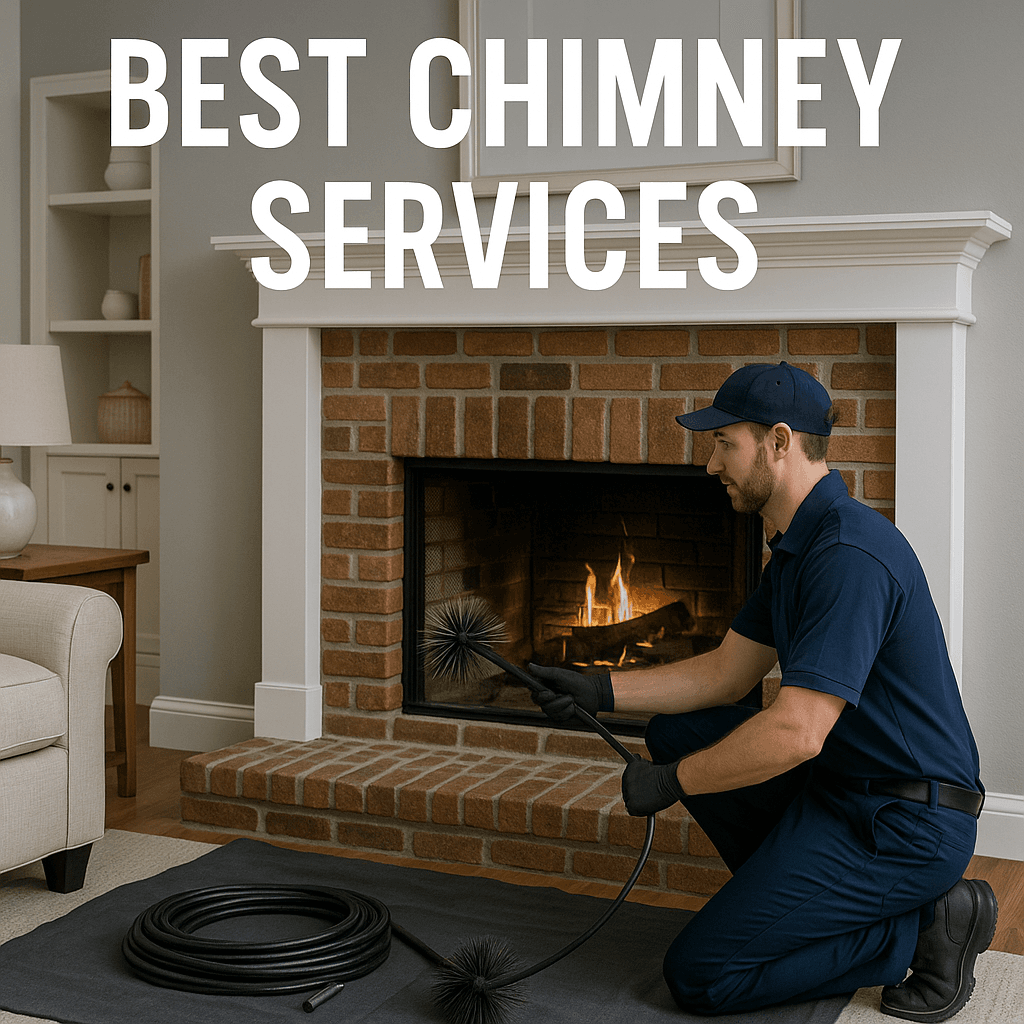
Using chimney brushes sized to the specific flue dimensions and rigid or flexible rods, the technician works from the firebox upward (or from the roof downward) to physically remove creosote and soot from the flue liner walls. A high-suction vacuum system collects falling debris to prevent contamination of the room.
Smoke Chamber and Firebox Cleaning
After the flue is brushed, the smoke shelf and chamber are cleaned. The firebox is vacuumed and inspected. All protective sheeting is removed, and the area is cleaned.
Formal Inspection and Documentation
For a Level 1 service, the sweep performs a final visual inspection and provides a written report of findings. For Level 2, a video camera is deployed through the entire flue length and the footage is reviewed and documented. Any issues found are explained and documented with photos or video, not just verbal summaries.
Exterior Check
A thorough service includes an external examination from the ground of the chimney cap, crown, visible masonry joints, and flashing—or from the roof for a more detailed view. Observations are included in the written report.
Review of Findings
The technician walks you through their findings—ideally while showing you the video footage if a Level 2 was performed. Any recommended repairs should come with a clear explanation of the safety or functional reason for the recommendation, a written estimate, and no pressure to decide immediately.
How to Prepare for Your Chimney Appointment
A few simple preparation steps on your end make the appointment go more smoothly and help ensure a thorough, accurate inspection.
- Do not burn anything for at least 24 hours before the appointment. The technician needs to work in the firebox, and hot ash and residual heat are a safety hazard. A cold, ash-free firebox also makes inspection easier and more accurate.
- Clear the area around the fireplace. Remove decorative items from the mantel, clear the hearth, and move furniture away from the firebox opening so the technician has easy working room.
- Remove any existing glass doors or fireplace screens. Or at least confirm with the company beforehand whether they want these in place or removed.
- Make a list of any concerns or observations in advance. If you’ve noticed odors, smoke spillage, unusual sounds, or draft problems, write them down so you can communicate them clearly to the technician.
- Know when the chimney was last serviced. Even an approximate date is helpful, as is the name of the last company if you have it. The technician can look for signs of previous work quality.
- Plan to be present for the entire appointment. This allows you to see any video footage, ask questions in real time, and receive the full verbal briefing at the end. Understanding the report while the technician is still present is far more valuable than reading it later.
Emergency Chimney Services: When to Call Immediately
Some chimney situations cannot wait for a scheduled appointment. Knowing when a situation requires emergency response rather than a routine booking can prevent serious harm to your home and family.
Call Emergency Services Immediately If:
- You suspect an active chimney fire: Loud roaring or rumbling from the chimney, visible flames or sparks from the chimney top, or intense radiant heat from the chimney walls. Close all air inlets and call 911 immediately. Do not use the fireplace until a Level 2 inspection has been completed.
- You smell a strong, acrid odor from the chimney with the fireplace not in use: This can indicate a slow-burn chimney fire that occurred without your awareness, or a blockage causing backdraft from other appliances.
- Your carbon monoxide detector activates: Evacuate immediately and call 911. A CO alarm with a functioning chimney-connected appliance in the home is an emergency, not a false alarm to be investigated casually.
- You hear sounds indicating a live animal is trapped: A distressed animal creating sounds in the flue can cause panic-driven movement that dislodges debris into the firebox or—worst case—the animal enters the living space. Call a chimney professional with wildlife removal experience promptly.
- Water is actively entering your home through the chimney area: Significant active water intrusion during a rain event indicates structural failure that can rapidly worsen and may affect adjacent roof systems.
Common Problems: Chimney Odors, Leaks, and Smoke — Diagnosis Guide
When homeowners call a chimney company, it is often because of a specific symptom rather than a scheduled maintenance call. Understanding what common symptoms indicate helps you describe the problem accurately and evaluate whether the diagnosis you receive makes sense.
Chimney Odors
A chimney that smells even when not in use is one of the most common complaints. The smell is usually one of two types: a campfire or burning smell (creosote odor, typically worse in summer when hot, humid air draws the chimney draft downward into the home—a condition called negative pressure or “stack effect”), or a musty, damp smell (water intrusion with organic material decomposing in the chimney). A strong sulfurous or animal decay odor may indicate a dead animal in the flue or on the smoke shelf. Each type of odor points to a different underlying cause and different remedies.
Water Leaks and Staining
Water staining on interior walls or ceilings near the chimney, or visible water in the firebox after rain, indicates water intrusion. The source could be a cracked chimney crown, failed flashing, deteriorating mortar joints, a missing or damaged chimney cap, or porous masonry allowing water to seep through. Diagnosis requires identifying exactly where the water is entering—not just treating symptoms—which is why a thorough inspection matters more than immediate patchwork repair.
Smoke Entering the Room
Smoke spillage into the living space during use indicates a draft problem. Common causes include a cold flue (warm the flue with a burning newspaper torch before lighting the main fire), a blocked or closed damper, a chimney that is too short relative to adjacent roof features, competition with other exhaust fans in the home creating negative pressure, or a flue that is incorrectly sized for the firebox opening. A certified sweep can diagnose the specific cause—which matters, because a smoke problem caused by negative pressure won’t be solved by relining, even though relining might be what a dishonest contractor recommends.
Dryer Vent Cleaning: The Overlooked Safety Service
Many professional chimney companies also offer dryer vent cleaning as an add-on service, and if yours does, you should strongly consider taking them up on it. This is a critically important but severely underappreciated home safety service.
The U.S. Fire Administration attributes approximately 2,900 residential fires per year to clothes dryers, with failure to clean the vent being the leading contributing factor. A clogged dryer vent restricts airflow, causes the dryer to overheat, and in the worst case ignites the accumulated lint. Unlike a chimney fire, which is usually contained within the flue, a dryer vent fire can spread rapidly into the wall cavities of the home.
Dryer vent cleaning should be performed annually for most households—more frequently if you do large volumes of laundry, have a long or complex vent run, or use the dryer daily. Signs that your vent needs attention include: clothes taking longer than normal to dry, the dryer or its housing feeling unusually hot after a cycle, a burning smell during operation, and visible lint accumulation near the exterior vent termination.
When scheduling your annual chimney service, ask whether dryer vent cleaning is available. Bundling both services often comes with a modest discount, and the technician’s equipment is appropriate for both tasks.
Special Considerations for Older Homes
Homeowners of older houses face unique chimney challenges that differ from modern construction in important ways. If your home was built before 1975, the following considerations apply.
Unlined or Under-Sized Flues
Many chimneys built before the mid-20th century were constructed without flue liners or with clay tile liners that were sized for coal-burning appliances rather than wood stoves or modern gas inserts. An unlined masonry chimney is considered unsafe by current standards for any wood-burning or gas appliance. A Level 2 inspection will identify whether your flue is lined, what condition the liner is in, and whether it is appropriately sized for your current appliance.
Lead Flashing
Some very old homes use lead flashing at the chimney/roof junction. Lead flashing is extremely durable and long-lasting—many lead flashings from the early 20th century are still intact today. However, any disturbance of lead flashing requires handling as a hazardous material by appropriately equipped contractors. Be sure to mention your home’s age to any contractor before work begins so they can assess the flashing material.
Asbestos
Insulation materials, pipe wrap, and some floor and ceiling tile products in homes built before 1980 may contain asbestos. While the chimney flue liner itself is not typically an asbestos-containing material, asbestos-based pipe insulation may be present on connector pipes between wood stoves or furnaces and the flue. Any contractor performing liner work in an older home should be aware of this possibility and know when to stop work and call for asbestos assessment.
Do New Construction Homes Need Chimney Inspections?
A common misconception among buyers of newly built homes is that a new chimney does not need inspection. This assumption is worth correcting directly.
Factory-built (prefabricated) fireplace systems in new construction are assembled and installed on-site by general contractors or subcontractors who may have limited specific training in hearth system installation. Installation errors—incorrect clearances, improper venting connections, missing components—do occur in new construction. A pre-occupancy Level 1 inspection by a CSIA-certified sweep confirms the system was installed correctly before you use it.
Additionally, new home buyers who are purchasing a home with a fireplace as part of a real estate transaction should always require a Level 2 inspection as part of the due diligence process. This is specifically called for under NFPA 211 for real estate transfer situations, and it protects you from inheriting an undisclosed chimney problem that the previous owner may or may not have known about.
Homeowner Preparedness: Safety Between Professional Visits
While professionals handle the heavy lifting, your role in chimney safety is year-round. Investing in a few key items can make your home safer and help you monitor your fireplace’s performance.

Must-Have Safety: Combination Smoke & CO Detector
Every home with a fireplace must have working carbon monoxide detectors. This combination unit provides dual protection against fire and odorless, deadly CO gas. Place one on every level of your home and within 15 feet of all sleeping areas. Test monthly and replace the unit according to the manufacturer’s schedule—typically every 5–7 years.
Check Price on Amazon
For Easy Cleanup: PowerSmith Ash Vacuum
A regular household vacuum can be destroyed by fine ash and is not fire-safe. An ash vacuum with a metal-lined hose and a HEPA filter is specifically designed to safely remove cool ashes from your firebox between uses. Never vacuum ashes within 48 hours of a fire—embers can remain live for over 24 hours even when they appear cold.
Check Price on AmazonFrequently Asked Questions (FAQ)
How much should a chimney sweep cost?
The national average for a standard Level 1 inspection and sweep is typically between $175 and $400. Costs are higher in major metropolitan areas or for complex systems like wood stoves with long connector pipes. A Level 2 video inspection usually adds another $150–$300 to the base service cost. Be very skeptical of any offer below $100—it is almost certainly a bait-and-switch setup.
Can I sweep my own chimney?
While DIY rod-and-brush kits are available, it’s generally not recommended as a substitute for professional service. A homeowner can rarely match the effectiveness of a professional’s equipment, and DIY cleaning entirely misses the most critical component: the professional safety inspection. You cannot see hairline cracks in your flue liner from the bottom or evaluate the condition of the crown, flashing, and smoke chamber with the accuracy of a trained sweep. DIY brushing between professional visits, for homeowners who burn frequently, is acceptable for Stage 1 soot removal in straight flues—but not as a replacement for the annual professional service.
What is the best time of year to get my chimney serviced?
The best time is late spring or summer—after the heating season has ended. Scheduling in April, May, or June means your appointment is not competing with the fall rush, wait times are shorter, and any repairs identified can be completed and inspected well before you need the fireplace again. The worst time to try to schedule is October and November, when certified sweeps are fully booked for months in most areas.
Do I need to be home for the service?
Yes, and strongly recommended. You must provide access to the interior. More importantly, being present allows you to watch the video inspection footage, ask questions in real time, receive a proper walkthrough of all findings, and fully understand the written report before signing anything. Understanding the findings while the technician is present is far more valuable than reading a report cold afterward.
What is the difference between CSIA and NFI certification?
CSIA (Chimney Safety Institute of America) certifies chimney sweeps for inspection, cleaning, and chimney system maintenance—primarily focused on wood-burning systems and masonry chimneys. NFI (National Fireplace Institute) certifies hearth product specialists in Gas, Wood, and Pellet categories—focused on the appliance itself (fireplaces, stoves, inserts) rather than the chimney structure. For gas fireplace servicing, NFI Gas Specialist is the more relevant credential. For wood chimney sweeping and inspection, CSIA is the primary standard. Many full-service companies hold both certifications.
How do I know if a chimney company found a real problem or is trying to scam me?
Request specific documentation. A genuine problem should come with a written report, photos or video footage of the specific issue, a clear explanation of what the safety or functional risk is, a written estimate for repair with specific materials listed, and time to consider your options. A company that refuses to provide video documentation of a “serious” problem, insists you authorize repair before they leave, or cannot name the specific NFPA 211 code the condition violates should be met with skepticism. When in doubt, get a second opinion from a different CSIA-certified company before authorizing any repair over $500.
Do chimney companies also clean dryer vents?
Many do, and it’s worth asking. Dryer vent cleaning is one of the most important but underperformed home maintenance services, with clogged dryer vents being a leading cause of residential fires. Bundling dryer vent cleaning with your annual chimney service is convenient and often available at a modest discount from companies that offer both services.
My house was just built—does the chimney still need an inspection?
Yes. New construction fireplaces are installed by general subcontractors who may not have specialized hearth installation training. Installation errors do occur, and a pre-occupancy inspection confirms the system was installed correctly before you use it. If you’re purchasing a home with a fireplace during a real estate transaction—new or existing—NFPA 211 specifically calls for a Level 2 inspection as appropriate due diligence.
Conclusion: Your Partner in Home Safety
Choosing a chimney service is a decision that directly impacts the safety of your home and family. By treating it with the seriousness it deserves and using the vetting checklist and guidance in this article, you can confidently filter out the amateurs and scammers and find a true professional. Look for CSIA certification for your wood-burning system, NFI Gas Specialist credentials for your gas appliance, verify their insurance, cross-reference their reviews, and trust your instincts when something feels like a pressure tactic.
A great chimney professional isn’t just a service provider—they are your long-term partner in maintaining a safe and warm home. After all, you want your chimney to be clean and clear for the only visitor who’s supposed to use it, and we all know there are clever theories on how Santa gets in without a chimney these days anyway!