How to Identify Chimney Flashing Leaks: Signs & Inspection
By Chimney Insight Editorial Team
Posted on January 20, 2026
Disclosure: This page contains affiliate links. We may earn a commission from qualifying purchases at no extra cost to you. As an Amazon Associate I earn from qualifying purchases.
Water is the universal solvent, and nowhere is this more evident than on your roof. Among all the potential entry points for water in a home, the chimney is the most notorious offender. It is a large, heavy structure penetrating your roof, creating seams and angles that are difficult to seal perfectly.
The metal barrier designed to protect this vulnerable intersection is called flashing. When flashing fails, water doesn’t just drip; it pours into your attic, rots your roof deck, and ruins your drywall. The problem is, identifying a flashing leak is rarely straightforward. Is it the bricks? The cap? Or that thin strip of metal?
In this comprehensive guide, we will walk you through exactly how to identify chimney flashing leaks. We will cover the anatomy of a proper flashing system, the subtle interior signs of trouble, and how to perform a safe exterior inspection to catch the problem before it becomes a structural nightmare.
One crucial and often overlooked point: by the time most homeowners notice a chimney leak, significant hidden damage has already occurred. Water takes the path of least resistance, and a tiny gap in flashing at the roofline can travel along rafters and roof sheathing for several feet before finally dripping onto drywall or saturating insulation. This is why understanding the full diagnostic process—not just looking for obvious ceiling stains—is so important. A leak that looks small from inside your living room may represent weeks or months of steady moisture infiltration into your roof structure.
Understanding Chimney Flashing Anatomy
To identify a failure, you must first understand what “correct” looks like. A proper chimney flashing system is not just a single piece of metal; it is a layered system designed to shed water like shingles do. If your chimney lacks any of these components, it is likely the source of your leak.
1. Base Flashing
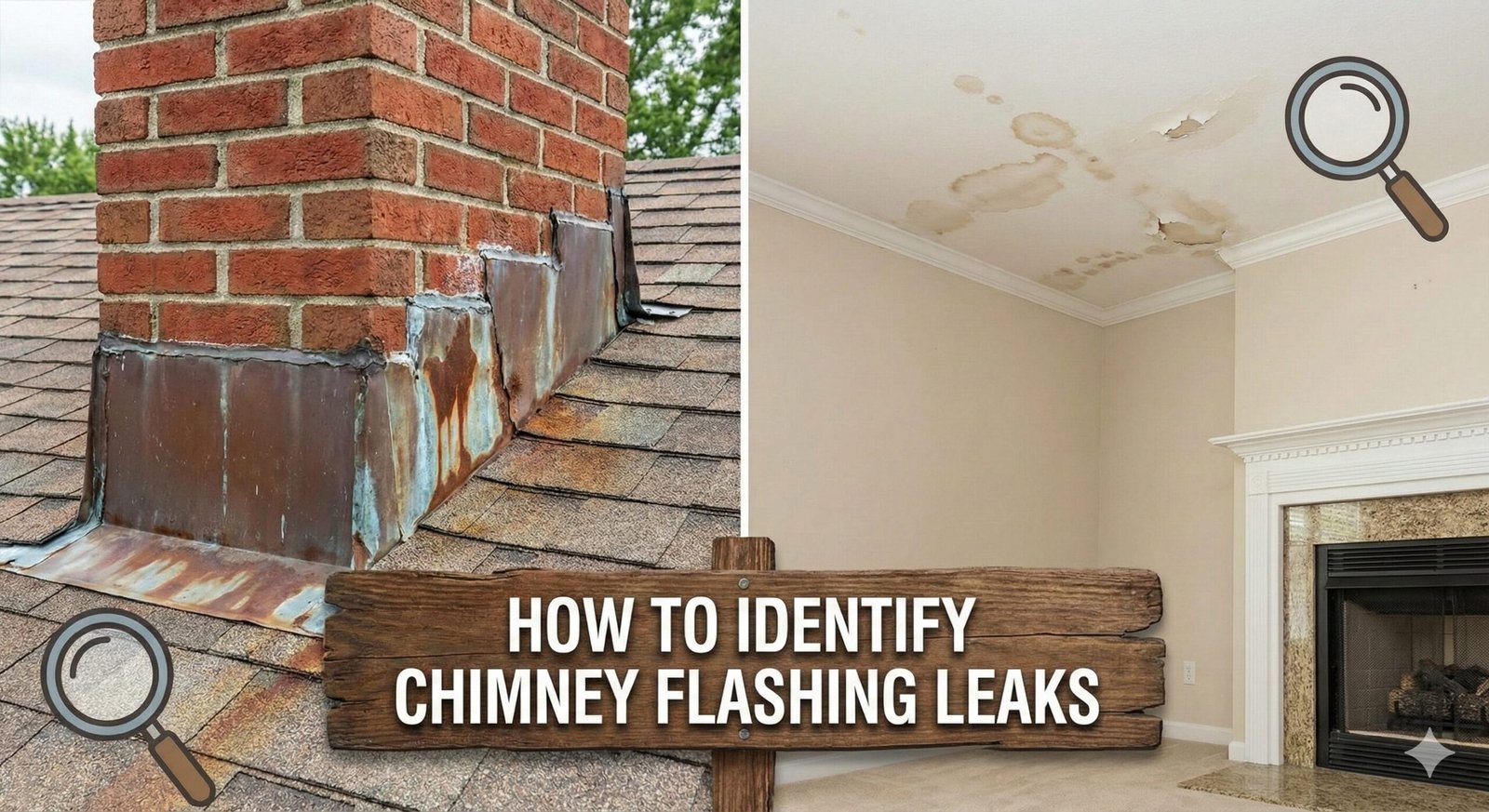
This is the L-shaped metal piece at the bottom of the chimney. One side extends under the shingles, and the other side bends up against the vertical brick face. It handles the water running down the roof slope and channels it onto the shingles below. Base flashing is the foundational layer of the entire system, and damage here directly causes water to enter at the lowest point of the chimney-roof intersection—an area that is extremely difficult to dry out once it becomes saturated.
2. Step Flashing
Used on the sides of the chimney that run parallel to the roof slope. These are individual L-shaped pieces of metal installed with each course of shingles. They are woven into the roof, ensuring water is directed on top of the shingle below it. Each individual piece of step flashing overlaps the one below it by at least two inches. The key principle is that step flashing creates many small, overlapping barriers rather than one continuous piece—so even if one joint develops a minor gap, the next piece below should still catch the water. When step flashing is installed as a single continuous piece (a shortcut some roofers use), there is no redundancy, and a single failure point can allow water to travel freely behind the entire flashing run.
3. Counter Flashing (Cap Flashing)
This is the most visible part. It is embedded into the mortar joints of the chimney and hangs down over the base and step flashing. Its job is to prevent water from running behind the base flashing. Counter flashing is typically cut into a mortar joint (called “reglet cutting”) at least three-quarters of an inch deep and then sealed with polyurethane sealant or lead wedges. This embedded installation is what allows the counter flashing to move slightly with the chimney’s independent thermal expansion without tearing the underlying step or base flashing away from the roof deck. If counter flashing was simply caulked to the brick face rather than embedded, it is effectively already a failing installation—it’s only a matter of time before the caulk separates.
4. The Cricket (Saddle)
If your chimney is wider than 30 inches, code requires a “cricket”—a small peaked roof built behind the chimney to divert water around it. Without a cricket, water pools behind the chimney, inevitably causing leaks. The cricket must be covered with its own flashing system and roofing membrane before shingles are installed. A cricket that was built but not properly waterproofed is just as problematic as no cricket at all, since the valley where the cricket meets the chimney is an extremely vulnerable water collection point.
5. Apron Flashing
On the downhill side of the chimney—the side facing down the roof slope—an apron of flashing covers the joint where the chimney meets the roof at its lowest point. This piece is sometimes confused with base flashing, but it serves the specific purpose of preventing water that runs off the front face of the chimney from backing up under the shingles immediately below. A missing or damaged apron is one of the most common reasons water appears in the firebox during rain, because the leak point is directly above the firebox opening.
The Key Principle: Layering
A properly installed flashing system is designed so that every component directs water onto the component below it, never underneath it. When one layer fails, the next layer should still provide protection. When you see thick tar or caulk filling a gap, it almost always means this layering principle was never achieved or has broken down—and the entire system is compromised.
Interior Signs of a Flashing Leak
You don’t always need a ladder to find a leak. Your home’s interior often tells the story long before you climb on the roof. Grab a flashlight and look carefully for these tell-tale signs.
The Ceiling Stain
The classic sign. Look for yellow or brown concentric rings on the ceiling directly near the fireplace. However, water travels. A stain three feet away from the chimney could still be from the flashing, as water runs along rafters before dripping. Critically, a dry stain (one that has a crisp, clearly defined edge and feels dry to the touch) may represent a leak that has already been repaired, or one that only occurs under specific weather conditions such as wind-driven rain. A stain with a soft, blurry edge and that feels damp or cool to the touch is actively wet and warrants immediate investigation.
Never assume a ceiling stain near a chimney is from a plumbing leak or condensation without specifically ruling out chimney flashing. The proximity to the chimney is almost always the key diagnostic indicator.
The Dripping Firebox
If you hear dripping noises inside the fireplace during heavy rain, or find puddles in the firebox, the water is entering the flue. While this often points to a chimney cap issue or a cracked chimney crown, it can also be flashing that has failed at the very top corners of the chimney where the roof slope meets the brick. Water entering at the top of the flashing and running down the back of the chimney interior often collects at the smoke shelf or in the firebox. If you also see efflorescence (white salt deposits) on the interior brick walls, that is a strong indicator that water has been infiltrating the masonry for an extended period.
Musty Odors
Damp soot smells terrible. If your fireplace smells like a wet campfire or mildew days after a rainstorm, moisture is trapped inside the masonry or the attic space surrounding the chimney. This odor is often more pronounced in hot, humid weather when the chimney has had no recent fire to dry it out, and when the ambient humidity causes existing moisture deposits in the masonry to off-gas. A persistent musty smell even in winter is a red flag that water intrusion is ongoing, not a one-time event.
Peeling Paint or Wallpaper
Look for bubbling, peeling, or discolored paint on walls adjacent to the fireplace. This is particularly common on the wall directly above the mantel or in a room directly above or beside the fireplace chase. Bubbling paint nearly always indicates moisture behind the drywall surface. Depending on how long the leak has been occurring, you may also see visible mold growth (black or greenish discoloration) at the edges of peeling sections. Do not attempt to repaint over these areas without addressing the moisture source—the new paint will fail just as quickly.
Warped or Stained Woodwork
Wooden mantels, trim boards, and flooring near the fireplace can warp, discolor, and delaminate when exposed to sustained moisture. A mantel that was perfectly flat when installed and is now bowing, cracking along the grain, or showing dark discoloration at the wall junction is telling you that moisture is wicking through the masonry and drywall into the wood. In severe cases, the structural framing inside the wall around the chimney chase can develop rot that compromises the integrity of the wall assembly.

General Tools Digital Moisture Meter
Don’t guess if a stain is old or new. A moisture meter allows you to touch drywall or masonry to detect active moisture content that isn’t visible to the naked eye. Essential for diagnosing hidden leaks. Press the probes into drywall near the chimney to confirm whether moisture is currently present—anything above 16% moisture content in drywall is a concern.
The Attic Inspection: Your Most Valuable Diagnostic Tool
Before you ever set foot on your roof, your attic can tell you everything you need to know about a chimney flashing leak. Most homeowners overlook this step entirely, but a careful attic inspection on a clear day—or better yet, during or immediately after heavy rain—can pinpoint the entry point with remarkable precision.
What You’re Looking For in the Attic
Bring a powerful flashlight and access the attic via the hatch during daylight hours. Move carefully, stepping only on joists, never on the insulation or drywall between them. Focus your inspection on the area surrounding the chimney where it passes through the roof structure:
- Dark staining on rafters and sheathing: Wood that has been repeatedly wet develops a characteristic gray-black staining pattern. This is different from the normal dark color of old wood—look for watermark lines and tide marks that indicate repeated cycles of wetting and drying.
- Damp or compressed insulation: Insulation near the chimney that is wet, compressed, or has pulled away from the roof sheathing has been repeatedly saturated. Wet fiberglass insulation loses most of its R-value and should be replaced after the leak is fixed.
- Shiny nail heads: Look at the nails driven through the roof sheathing. In a problem area, these nails will appear bright and shiny due to condensation forming on the cold metal—a clear sign of elevated moisture in that area of the attic.
- Visible daylight: On a bright day, turn off your flashlight and let your eyes adjust. Any points of light visible around the chimney penetration indicate gaps where water can enter.
- Active drips: During or shortly after heavy rain, you may be able to see or hear active water dripping in the attic. Trace the drip to its highest visible point—that is your closest approximation of the entry location.
Pro Tip: The Rainy Day Attic Check
The single most effective chimney leak diagnostic you can perform requires no special tools: go into your attic during a significant rainstorm and watch where water enters. The entry point will be visible as an active drip or wet streak on the roof sheathing or chimney structure. Mark the location with masking tape or a chalk line so you can reference it precisely when inspecting from the roof in dry conditions. Professionals use this method routinely and it eliminates most of the guesswork in leak diagnosis.
Distinguishing Condensation from Infiltration
One important caveat for attic inspections: not all moisture in an attic comes from the roof. Warm, humid air from the living space below can also rise into the attic through gaps in the ceiling plane and condense on cold surfaces, including the chimney structure. Condensation moisture tends to be widespread and general, while infiltration from a flashing leak tends to be concentrated in a specific area adjacent to the chimney. If you see generalized moisture across the entire attic—not just near the chimney—it may be a ventilation problem rather than a leak. A chimney-specific leak will show concentrated damage on the down-slope side of the chimney or on the side corresponding to the prevailing wind and rain direction for your area.
Exterior Visual Inspection
Safety Warning: Inspecting a roof is dangerous. If you are uncomfortable with heights or have a steep roof pitch, hire a professional. You can perform a preliminary inspection from the ground using high-powered binoculars or a zoom camera. Many modern smartphone cameras can capture sufficient detail from the ground.
1. The “Tar” Job
Look for thick black gobs of roofing tar or mastic slathered around the base of the chimney. This is the #1 sign of a previous DIY repair that has failed. Tar dries out, cracks, and pulls away from the brick, creating funnels for water. Proper flashing uses metal and caulk, not tar. The presence of tar also makes proper repair significantly more difficult, because all of the old tar must be completely removed before new flashing can be installed correctly.
2. Rust and Corrosion
Galvanized steel flashing eventually rusts. If you see reddish-brown stains or holes in the metal, the integrity is gone. Copper flashing turns green (patina), which is fine, but aluminum or steel should be painted or sealed. Pay particular attention to the corners, where metal must be cut and bent—these are the most stress-prone areas where corrosion and cracking typically begin first. Even small rust pinholes in step or counter flashing are enough to allow significant water intrusion under the right conditions.
3. Separated Caulk
Check the top edge of the counter flashing where it goes into the brick. The sealant there (often silicone or polyurethane) is the first line of defense. If you can stick a credit card into the gap between the metal and the brick, you have a leak path. Also check the corners carefully—the joint where the side counter flashing meets the front apron flashing is a complex three-dimensional seal that is particularly vulnerable to separation due to differential thermal movement.
4. Missing Pieces
High winds can rip loose flashing right off the chimney. Look for exposed wood, underlayment, or gaps where the roof meets the brick. Also look for flashing that is lifted or wavy rather than lying flat against the roof—this indicates that the fasteners have worked loose and the flashing is no longer providing a tight seal against the underlying surface.
5. Mortar Joint Deterioration Around Flashing
Counter flashing that is embedded into the chimney’s mortar joints can fail not because the metal itself has failed, but because the mortar holding it in place has crumbled. Inspect the horizontal mortar joints at the top edge of the counter flashing. If the mortar is powdery, cracked, or missing in sections, the counter flashing will rock slightly with wind and thermal movement, breaking the sealant bond and allowing water to enter behind it. This is an extremely common failure mode in older chimneys and is often the source of leaks in systems where the metal itself looks intact.
6. Roofing Material Condition Around the Chimney
Look at the shingles immediately surrounding the chimney. Shingles that are cracked, curled, missing granules, or missing entirely in this zone create direct water intrusion pathways that may mimic or compound a flashing failure. A roofer who replaces only the flashing without addressing deteriorated shingles in the immediate area is leaving a significant portion of the problem unaddressed.
How to Perform a Water Test
If visual inspection reveals nothing obvious but the leak persists, you can simulate rain to isolate the issue. You will need two people: one on the roof with a hose, and one in the attic or by the fireplace with a flashlight. This is the same method professional roofers and chimney specialists use when the source of an intermittent leak cannot be determined visually.
- Start Low: Do not just spray the whole chimney immediately. Start by running the hose on the roof shingles below the chimney. This rules out a roof leak further down the slope that is simply draining toward the chimney.
- Test the Base: Move the hose to the base flashing (where the roof meets the chimney). Run water gently for 5–10 minutes. The spotter inside should call out immediately if water appears.
- Test the Sides: Move to the step flashing on each side of the chimney, working from the bottom of the run upward. Pause at each section for a full five minutes before moving higher.
- Test the Counter Flashing Seam: Run water directly at the top edge where the counter flashing meets the brick. This is the point most likely to have failed caulk.
- Test the Masonry: Finally, spray the bricks themselves thoroughly. If the flashing tests produce no leak, but saturating the bricks causes water to enter, your issue is porous masonry absorption rather than a flashing failure—two very different repairs.
- Test the Crown: Run water over the very top of the chimney crown. Cracked crowns allow water to enter the top of the flue and run down the inside of the liner.
Important: Use a gentle shower or soaker setting on the hose nozzle, never a high-pressure jet. High pressure can force water under shingles and behind flashing even in a perfectly sealed system, creating false positives. You are simulating rainfall, not a pressure washer.

Heavy Duty Garden Hose Nozzle
Precision is key for water testing. A nozzle with an adjustable “soaker” or “shower” setting allows you to simulate rain without blasting water under the shingles with high pressure, which would give you false positives and potentially damage the shingles themselves.
Flashing Leak vs. Masonry Leak: How to Tell the Difference
A common diagnostic error is blaming the flashing when the bricks themselves are the problem. Bricks are like hard sponges; they absorb water. If the chimney lacks a waterproof coating, water can soak through the brick and bypass the flashing entirely. The repair for each is completely different, and misidentifying the cause leads to repeated failed repairs.
The Speed Clue: If the leak only happens during very long, wind-driven storms after sustained rainfall, it is likely absorption through the masonry itself—the brick needs time to become fully saturated before water begins to pass through. If it leaks quickly during even a short, heavy downpour, it is almost certainly a gap or failure in the flashing system, which requires no saturation time to allow water entry.
The Location Clue: Water from a masonry absorption leak tends to appear on the interior face of the chimney breast (the wall area where the chimney passes through the room) or on the ceiling directly around the chimney structure. Water from a flashing leak more often appears on the ceiling at some distance from the chimney, where it has traveled along roof framing before dripping.
The Wind Direction Clue: If you notice that leaks only occur when rain comes from a specific direction—say, from the northwest—that points toward wind-driven rain saturating one face of the chimney masonry, or toward a gap in the flashing on that specific side. Purely gravity-fed leaks (flashing failures at the base or step flashing) tend to occur regardless of wind direction as long as rainfall is significant.
Chimney Crown Problems: A Frequently Missed Leak Source
The chimney crown is the concrete or mortar cap that covers the entire top surface of the chimney structure, surrounding the flue liner opening(s). It is distinct from the chimney cap (which covers the flue opening itself) and from the flashing (which seals the chimney-to-roof junction). The crown is responsible for shedding rain away from the top of the chimney stack before it can penetrate the masonry below.
A properly built chimney crown has a pronounced overhang of at least two inches beyond the chimney face, a slight outward slope to direct water off the edge, and a flexible caulked joint where it meets the flue liner (to allow for independent thermal movement). Many chimneys, especially older ones, were built with flat, undersized crowns using regular mortar rather than poured concrete or specialized crown mix—these fail within years and are extremely common sources of moisture intrusion that is incorrectly attributed to flashing.
Signs of Crown Failure
- Horizontal cracks running across the crown surface, particularly near the center
- Crumbling or spalling concrete at the crown’s edges
- A gap between the crown and the flue liner tile
- Water appearing in the firebox even when the chimney cap is present and intact
- Efflorescence (white salt staining) on the upper exterior of the chimney below the crown
Crown Repair vs. Full Rebuild
Minor cracks in a structurally sound crown can be repaired with a flexible, waterproof crown coating or elastomeric crown repair product. These products bridge hairline to moderate cracks and restore a waterproof surface without requiring full crown demolition. However, a crown that is severely cracked, crumbling, flat (no overhang), or built from unsuitable materials should be completely removed and rebuilt by a mason. Applying sealant over a fundamentally poorly built crown delays the inevitable and allows hidden water damage to continue in the meantime.
Chimney Cap Failures and Water in the Firebox
The chimney cap—the cover that sits directly over the flue opening—is the simplest and most overlooked component in chimney water management. Without a cap, rain falls directly into the flue, saturates the flue liner and chimney smoke shelf, and eventually finds its way into the firebox or the surrounding masonry structure. In wet climates, an uncapped chimney can introduce hundreds of gallons of water per year into the chimney system.
But even a chimney with a cap can have water problems if the cap is the wrong size, incorrectly installed, or has developed physical damage. Look for:
- A cap that is obviously too small for the flue opening, leaving gaps around the edges
- A cap that has shifted or blown partially off the flue tile
- Mesh sides that are crushed, collapsed, or corroded—allowing rain to blow in horizontally
- A cracked or broken top plate that allows water to drip through
- A cap without mesh sides that allows wind-driven rain to enter from the sides
An improperly sized cap is a common post-reline problem: when a chimney is relined with a smaller-diameter liner, the original cap may no longer adequately cover the new liner’s flue opening, creating a gap around the liner that admits rain. Always verify that the cap is properly sized for the actual liner after any relining work.
Ice Dams, Winter Weather, and Chimney Flashing
In cold climates, chimney flashing faces a uniquely brutal challenge: ice dams. An ice dam forms when heat escaping from the house warms the roof deck enough to melt snow, which then flows down to the cold eaves and refreezes. The resulting ice ridge blocks further meltwater from draining, causing it to back up under the shingles. Where this backed-up water encounters chimney flashing, it forces itself into any available gap—even gaps that would not be penetrated by standard rainfall—and creates a leak that appears very different from a typical rain-driven flashing leak.
How Ice Dam Leaks Differ from Rain Leaks
Ice dam leaks have a characteristic seasonal pattern: they appear in late winter or early spring when temperatures cycle above and below freezing, and then seem to stop as temperatures warm and the ice dam melts. A homeowner who doesn’t connect the seasonal timing to the roof condition may spend years chasing the leak with interior repairs, never addressing the actual roof-level cause. Key identifiers of ice dam leaks near chimney flashing include:
- Leaks that occur only in late winter during periods of sunny days and below-freezing nights
- Water stains that appear on the ceiling at the uphill side of the chimney (where backed-up meltwater pools behind the dam)
- Icicles hanging from the chimney flashing or the lower edge of the chimney structure
- Visible ice buildup against the base of the chimney on the roof surface
Protecting Flashing from Ice Dam Damage
The best protection against ice dam infiltration at chimney flashing is installing an ice-and-water shield membrane in the area around the chimney during roofing installation or replacement. This self-adhering rubberized membrane is applied directly to the roof deck in the zones most vulnerable to ice dams and acts as a redundant waterproof layer beneath the flashing and shingles. If ice does penetrate the flashing, the membrane prevents it from reaching the roof sheathing and framing. The appropriate extent of ice-and-water shield coverage around a chimney varies by climate and roof pitch, and a professional roofer should specify the coverage area for your specific conditions.
The freeze-thaw cycle also directly damages flashing independent of ice dams. Metal expands and contracts with temperature changes, and the caulk and sealants used to seal flashing joints do the same—but at different rates. Over many cycles, these different expansion rates cause the sealant to fatigue and crack. Flashing fasteners work themselves loose. This is one reason why northern climates typically require more frequent flashing inspection and maintenance than warmer southern regions.
Common Causes of Flashing Failure
- House Settling: As your house foundation settles, the chimney and the house frame may move independently. Chimneys are massive masonry structures with their own foundations; they move at different rates than the wood framing of the house. This differential movement tears the flashing or breaks the sealant bond, even in systems that were originally installed correctly.
- Thermal Expansion: Metal expands in summer and contracts in winter. Over years, this cycle works nails loose and fatigues caulk. The problem is worse in climates with large temperature swings between seasons, and in systems where the metal was installed with too-tight fasteners that don’t allow any movement.
- Improper Installation: The most common cause. If the roofer used one solid piece of metal instead of step flashing, or relied on caulk instead of embedding the counter flashing into the mortar, it will fail. Relying on tar instead of proper metal work is the classic DIY mistake that creates more problems than it solves.
- Mortar Joint Deterioration: The mortar holding counter flashing into the chimney brick slowly erodes. As the mortar weakens, the flashing becomes loose and begins to rock with thermal movement and wind loading, eventually separating completely from the chimney face.
- Age: Even the best copper flashing eventually wears out. If your roof is 20+ years old, the flashing likely is too. Galvanized steel may last 15 to 20 years in moderate climates; aluminum somewhat less. Copper can last 50 or more years but is rarely found on standard residential construction due to cost.
- Storm Damage: High winds, hail, falling branches, and ice can physically damage or displace flashing in ways that are obvious from visual inspection. Any major storm event is a trigger to inspect your chimney flashing, even if no interior leak is apparent yet.
Flashing Materials Compared: Which is Best?
The material used for chimney flashing significantly affects both its longevity and its performance. When you hire a roofer or chimney professional, the material choice is often a tradeoff between upfront cost and long-term durability. Understanding these materials helps you have an informed conversation and make the right investment for your home.
| Material | Lifespan | Cost | Workability | Key Advantage | Key Weakness |
|---|---|---|---|---|---|
| Copper | 50–100+ years | Very High | Excellent (solderable) | Watertight soldered seams; extreme longevity | High cost; can stain masonry with patina runoff |
| Lead | 50+ years | High | Excellent (highly pliable) | Molds perfectly to irregular brickwork | Health/environmental concerns; restricted in some regions |
| Stainless Steel | 30–50 years | Medium-High | Good | Extremely corrosion-resistant; strong | Stiffer to bend; more expensive than galvanized |
| Galvanized Steel | 15–20 years | Low-Medium | Good | Widely available; cost-effective | Zinc coating eventually fails; rusts at cut edges and fastener holes |
| Aluminum | 20–30 years | Low | Very Good (very pliable) | Lightweight; corrosion resistant; easy to work | Cannot be used in contact with masonry mortar (alkali corrosion) |
| Zinc | 40–60 years | Medium-High | Good | Self-healing patina; good corrosion resistance | Less common; specialist installation required |
A critical point about aluminum flashing: while it is the most common material used in standard residential roofing due to its low cost and ease of installation, aluminum should never be in direct contact with uncured masonry mortar or concrete. The alkaline chemistry of Portland cement mortar causes rapid galvanic corrosion of aluminum, eating through the flashing from the back side where it is invisible. If aluminum step flashing is being installed on a brick chimney, it must be separated from the masonry with a protective membrane or sealant. This compatibility issue is frequently overlooked during installation and is a significant cause of premature aluminum flashing failure.
Essential Inspection Tools
To safely identify chimney leaks, you need the right gear. Don’t rely on guesswork or inadequate equipment that compromises either your safety or the quality of your inspection.
- Binoculars or zoom camera: For ground-level inspection before getting on the roof. A modern smartphone on maximum optical zoom can capture sufficient detail to identify obvious flashing problems from the ground.
- Ladder with Stabilizer: Never lean a ladder against the chimney itself. Use a stabilizer bar (standoff) to rest on the roof surface at least 18 inches either side of the chimney.
- Non-Slip Shoes: Roofing grit is slippery, especially when damp. Use soft-soled shoes or dedicated roofing boots with textured soles.
- Moisture meter: For confirming active moisture in drywall, wood framing, and insulation without destructive investigation.
- Flashlight: A high-lumen flashlight for attic and firebox inspection. Headlamps leave both hands free.
- Camera/Phone: Take pictures of everything during inspection. Zoom in later on a larger screen to spot hairline cracks and subtle damage that is easy to miss in the glare of outdoor light.
- Putty knife or credit card: For testing the gap between counter flashing and masonry, and for probing the condition of caulk and mortar around the flashing edges.

Telescoping Ladder with Stabilizer
Safety is paramount. A telescoping ladder is easy to store and transport, and models with integrated stabilizer bars prevent the ladder from sliding sideways while you’re on the roof. Never work on a roof without a secured, stable ladder—one hand should always be available to grip the ladder or a secure roof feature.
Assessing the Full Extent of Water Damage
Identifying the flashing leak is only the first step. Before any repair is undertaken, a thorough assessment of how far the water damage has spread is essential. Repairing the leak without addressing the existing damage leaves hidden problems that continue to compromise the structure—and can make a future inspector, buyer, or insurance adjuster very unhappy.
Roof Deck and Sheathing
The plywood or OSB sheathing immediately around the chimney penetration is the first structural component affected by a flashing leak. Once water breaches the flashing, it sits on the sheathing surface and causes it to swell, delaminate, or in severe cases develop rot. When your roofer pulls off the old flashing to install the new system, they should inspect the sheathing carefully. Any sheathing that is soft to the touch, visibly discolored, delaminated, or crumbling should be replaced before the new flashing is installed. Installing new flashing over rotted sheathing is a recipe for fastener failure and immediate re-leaking.
Rafters and Structural Framing
In long-standing leaks, water travels beyond the sheathing and reaches the rafters and structural framing. Rafters that have developed wood rot are significantly weakened—a rafter that looks intact on the surface can have lost a large percentage of its structural strength to interior decay. If your attic inspection shows significant water staining on rafters, have a contractor probe the wood with an awl or screwdriver to test for soft, punky wood that indicates rot. A structural engineer should be consulted if rafter damage is widespread or if load-bearing elements are involved.
Attic Insulation
Wet insulation must be removed and replaced after the leak is fixed. Fiberglass batts that have been saturated lose virtually all their R-value when wet and often do not recover it even after drying, because the batt structure is permanently compressed. Wet insulation also provides an ideal environment for mold growth. The appropriate disposal and replacement of damaged insulation is frequently underestimated in repair cost estimates—and omitting it creates ongoing air quality and energy efficiency problems.
Drywall and Interior Finishes
Drywall that has been wet is permanently weakened. The gypsum core absorbs water and loses rigidity, and the paper facings delaminate. Even drywall that appears dry after a leak has been repaired may harbor mold colonies behind the surface if the moisture content remained elevated for more than 24 to 48 hours. In areas with documented leak history, opening the wall or ceiling to inspect the back of the drywall and the stud cavities is strongly advisable. Mold remediation behind drywall requires professional-grade containment and air filtration to prevent spreading mold spores throughout the house.
Repair vs. Full Replacement
Once you identify the leak, you have a choice: patch it or replace it. The right answer depends on the age and overall condition of the flashing system, not just the severity of the immediate leak.
When to Repair (Seal)
If the metal is in good overall shape (no through-rust, no missing sections, correctly installed with step flashing rather than a single continuous piece) but the sealant at the counter flashing top edge has cracked and separated, you can simply remove the old caulk completely and apply a high-quality polyurethane or silicone-hybrid flashing sealant. This is a legitimate repair when the metal itself is sound, and it can provide many additional years of service life. The critical word is “completely”—any old, deteriorated caulk left in the joint will contaminate the bond of the new sealant and cause it to fail prematurely.
When to Replace
If the metal is rusted through, missing, physically damaged, or incorrectly installed (such as single-piece continuous flashing instead of proper step flashing, or counter flashing that was simply caulked to the brick face instead of being embedded in the mortar), no amount of caulk or tar will provide a lasting fix. You must hire a professional to remove the entire old system and install correctly detailed new flashing. This is the appropriate repair in the majority of cases where a chimney has been leaking for more than one season.
The “Roof Replacement Timing” Question
If your roof is within five years of needing full replacement, it is almost always more cost-effective to do the flashing replacement at the same time as the roof. Installing new chimney flashing requires lifting and re-laying shingles in the surrounding area; if those shingles are near end-of-life, doing this work twice within a few years wastes both materials and labor. A good roofer will be transparent about this timing consideration and give you an honest assessment of how much service life remains in the surrounding shingle field.
DIY vs. Hiring a Professional: Knowing Your Limits
Chimney flashing work sits at the intersection of masonry, roofing, and waterproofing—three distinct skilled trades. Understanding which parts of the job are within a capable homeowner’s reach, and which require professional expertise, prevents expensive mistakes.
| Task | DIY Feasibility | Notes |
|---|---|---|
| Ground-level visual inspection with binoculars | Yes | Safe, free, highly valuable first step |
| Attic inspection for moisture/staining | Yes | Safe if attic is accessible; wear appropriate PPE |
| Water testing with a garden hose | Yes (2 people) | Requires roof access for one person; use appropriate safety measures |
| Recaulking separated counter flashing seam | With caution | Feasible if comfortable on roof; use proper UV-stable sealant |
| Installing new chimney cap | With caution | Feasible on accessible chimneys; must ensure correct sizing |
| Applying chimney crown coating | With caution | Requires accessing chimney top; masonry prep critical for adhesion |
| Full flashing system removal and replacement | Professional only | Requires roofing skills, proper step flashing technique, mortar cutting |
| Rebuilding chimney crown from scratch | Professional only | Requires masonry expertise and proper mix design |
| Chimney relining | Professional only | Specialized equipment; CSIA certification required for proper inspection |
| Repointing deteriorated mortar joints | Professional recommended | Incorrect mortar mix causes long-term damage to historic brick |
One important point about DIY sealant repairs: using the wrong sealant is worse than using none at all in some cases. Standard interior caulk, basic silicone, and roofing tar all fail rapidly in outdoor UV exposure and thermal cycling conditions. The correct products for chimney flashing sealant are polyurethane-based (like NP1 or equivalent), elastomeric hybrid sealants specifically rated for roofing applications, or urethane roof cements. These products maintain flexibility through extreme temperatures and resist UV degradation for years rather than months.
Chimney Flashing Repair and Replacement Cost Guide
Understanding realistic cost ranges helps you evaluate contractor quotes and avoid both being overcharged and accepting suspiciously low bids that likely signal corner-cutting. All costs below are approximate ranges for reference; your actual costs will vary based on chimney size, roof pitch, material choice, and local labor rates.
| Service | Approximate Cost Range | Notes |
|---|---|---|
| Professional chimney inspection (Level 1) | $100 – $250 | Visual inspection of accessible areas |
| Professional inspection with video scan (Level 2) | $200 – $450 | Includes flue camera inspection |
| Recaulking counter flashing seam (DIY) | $20 – $50 materials | Appropriate only when metal is in good condition |
| Recaulking by professional | $150 – $400 | Includes proper surface prep and quality sealant |
| Chimney crown repair (coating) | $200 – $500 | For structurally sound crowns with cracks |
| Chimney crown rebuild | $500 – $1,500 | Full demolition and masonry rebuild |
| Full flashing replacement (galvanized steel) | $400 – $1,000 | Standard residential chimney; includes shingle lifting |
| Full flashing replacement (copper) | $1,000 – $3,000+ | Premium material; labor intensive; soldered seams |
| Cricket installation | $500 – $1,500 | Additional for larger chimneys; more with steep pitch |
| Roof deck sheathing repair (localized) | $200 – $600 | If water damage has compromised sheathing around chimney |
| Chimney repointing (mortar repair) | $300 – $1,000 | Varies greatly with amount of deteriorated mortar |
Get Three Quotes — and Ask the Right Questions
When getting quotes for chimney flashing repair, ask each contractor specifically what type of flashing material they will use, whether they will use proper step flashing or a single continuous piece, how they plan to secure the counter flashing to the chimney (embedded into mortar or caulked to face?), and whether they will inspect and repair the surrounding shingles. A contractor who can’t answer these questions specifically is not the right choice for this work.
Prevention and Ongoing Maintenance
The most cost-effective chimney flashing strategy is not reactive repair—it is a consistent maintenance routine that catches small problems before they become structural damage. A well-maintained flashing system can provide decades of leak-free service; a neglected one may fail within a few years of installation.
Annual Inspection Protocol
At minimum, your chimney flashing should be visually inspected every fall before the wet season begins and again in spring after the freeze-thaw cycle has done its worst. A ground-level inspection with binoculars takes only a few minutes and can identify obvious problems (missing pieces, visible rust, large caulk separations) without any ladder work. Supplement this with a periodic close-up inspection—every two to three years for most climates, annually in areas with severe winters—from the roof or via a professional service call.
Fall Check (Before Wet Season)
Inspect flashing and crown from the ground with binoculars. Clear debris from gutters, which if blocked can cause water to back up toward the chimney base. Test damper operation and check attic for any signs of summer moisture intrusion.
Winter Monitoring
After heavy snow events, check for ice buildup against the chimney base on the roof. Monitor ceilings near the chimney for any new stains appearing during freeze-thaw cycles. This is when ice dam-related leaks reveal themselves.
Spring Assessment
Conduct a close-up flashing inspection after winter. Look for caulk that cracked during freeze cycles, fasteners that have worked loose, and any rust development. This is the best time to address repairs before the next wet season.
Professional Service Trigger
Schedule a professional chimney inspection any time you notice a new interior stain, hear dripping in the firebox, notice changes in flashing appearance, experience a significant storm event, or the property changes ownership.
Chimney Waterproofing as a Preventive Measure
Applying a penetrating, vapor-permeable waterproofing sealer to the exterior masonry of the chimney every five to seven years dramatically reduces the moisture load on the entire chimney system, including the flashing. A properly applied chimney waterproofing product penetrates the brick and mortar, repelling liquid water while still allowing water vapor to escape from inside the masonry. This prevents the masonry saturation that drives “masonry absorption” leaks and also slows the deterioration of the mortar joints that anchor the counter flashing.
The key distinction is vapor permeability: products labeled as “breathable” or “vapor permeable” are appropriate for masonry. Film-forming sealants (like many exterior paints and non-specialized sealers) trap moisture inside the masonry, accelerating spalling and damage. Always use a product specifically rated for chimney or masonry waterproofing.
Gutter Maintenance
This connection is often overlooked: clogged gutters that overflow onto the roof create elevated moisture conditions that accelerate the deterioration of shingles and flashing sealants near the gutterline. On single-story sections of roof below a chimney, overflowing gutter water can also back up against base flashing and enter through gaps that would never be reached by normal rainfall. Keeping gutters clean and properly flowing is legitimate chimney flashing maintenance—not just a cosmetic task.
Homeowners Insurance and Chimney Flashing Leaks
The intersection of chimney flashing leaks and homeowners insurance is a source of significant confusion and frequent disputes. Understanding what is and isn’t typically covered—and how to document your claim properly—can make the difference between a covered repair and an out-of-pocket expense.
What Is Typically Covered
Standard homeowners insurance policies cover “sudden and accidental” damage. A strong wind event that tears a section of flashing off the chimney, a tree branch that physically damages the flashing during a storm, or hail that dents and punctures metal flashing—these are the types of events that are generally considered covered perils. To support a weather-related claim, document the specific storm event (date, weather reports), photograph the visible damage from a safe vantage point as soon as it is safely accessible, and call your insurance company before undertaking any repairs.
What Is Typically NOT Covered
The vast majority of chimney flashing failures are excluded from standard homeowners insurance coverage because they fall under the category of “gradual damage,” “wear and tear,” “deferred maintenance,” or “faulty installation.” An insurer’s position is that flashing that has slowly corroded over 15 years, or counter flashing caulk that has dried out and cracked through normal thermal cycling, represents a maintenance failure by the homeowner rather than a sudden covered event. The resulting interior water damage (stained drywall, mold, rotted sheathing) is also typically excluded when it results from a maintenance-related failure, even though that interior damage may be significant and costly.
If you discover a chimney leak and are considering an insurance claim, have your chimney and roof inspected by a qualified professional before contacting the insurer. Understanding whether the failure is maintenance-related or event-related determines your strategy—and filing a claim for a clearly maintenance-related issue can count against your claims history without resulting in payment.
Complete Chimney Flashing Inspection Checklist
- Ground-Level Visual Check: Use binoculars or zoom camera. Look for obvious rust, missing pieces, tar patches, lifted sections, and gaps.
- Attic Inspection: Check for dark staining on rafters/sheathing, damp insulation, shiny nails, visible daylight, or active drips near chimney.
- Interior Ceiling Check: Inspect for yellow/brown water stains, bubbling paint, or mold growth near the fireplace and chimney chase.
- Wall and Woodwork Check: Look for peeling paint, warped wood trim or mantel, and discoloration on walls adjacent to the fireplace.
- Firebox Inspection: Look for puddles, water stains, efflorescence (white salt deposits), and rust inside the firebox.
- Chimney Crown Inspection: Assess visible cracks, crumbling edges, flat profile (no overhang), and separation at the flue liner joint.
- Chimney Cap Inspection: Verify cap is correctly sized, fully seated on flue tile, has intact mesh, and is not cracked or corroded.
- Counter Flashing Sealant Test: Attempt to insert a credit card between counter flashing and brick. Any gap indicates failed or absent sealant.
- Mortar Joint Check: Inspect mortar joints around counter flashing for powdery, cracked, or missing mortar.
- Step Flashing Inspection: Verify individual L-shaped pieces are visible (not replaced by a single continuous piece) and none are lifted or corroded.
- Cricket Inspection: For chimneys wider than 30 inches, verify a cricket is present, properly covered with membrane, and its valley flashing is intact.
- Water Test: If no obvious visual cause found, perform systematic hose test from bottom to top of chimney with a spotter inside.
- Moisture Meter Test: Probe drywall and wood trim near chimney to confirm whether moisture is actively present.
- Call a Professional: If you’ve completed all above steps and cannot identify the source, schedule a professional inspection with video flue scan.
Frequently Asked Questions
How do I know if my chimney flashing is leaking?
Look for water stains on the ceiling near the fireplace, damp smells in the attic, peeling paint or wallpaper on walls near the chimney, or visible rust and gaps in the flashing metal on the roof. Inspect the attic for dark wood staining, damp insulation, or shiny nail heads near the chimney. A water test with a garden hose—working systematically from low to high—can confirm the specific entry point.
Can I use roofing tar to fix flashing?
It is not recommended as a permanent fix. Roofing tar (mastic) dries out, cracks, and traps water behind it—often accelerating rust on the underlying metal. It also makes proper future repairs significantly more difficult because it must be completely removed before any professional-grade repair can be properly bonded. Use a specialized polyurethane flashing sealant for minor repairs, or replace the metal entirely if the system has been incorrectly installed.
How much does it cost to replace chimney flashing?
On average, professional flashing replacement using galvanized steel costs between $400 and $1,000 for a standard residential chimney. Copper flashing runs $1,000 to $3,000 or more depending on chimney size and roof pitch. Costs increase significantly if the surrounding sheathing requires repair, a cricket needs to be installed, or if the chimney is tall and requires scaffolding. Always get three quotes and ask specifically what material and installation method will be used.
What is the best material for chimney flashing?
Copper is the gold standard because it can be soldered at the seams for a truly watertight joint and lasts 50 or more years. Lead is highly workable and long-lasting but carries health and environmental considerations. Stainless steel is extremely durable and a good mid-range choice. Galvanized steel is the most common residential material—cost-effective but with a 15 to 20 year lifespan. Avoid aluminum if any part of it will contact masonry mortar, as alkaline corrosion will destroy it from behind. The best choice for most homeowners is galvanized steel for its price point, or copper if the budget allows for a once-in-a-generation installation.
Does homeowners insurance cover flashing leaks?
It depends on the cause. Sudden storm damage—such as wind ripping off a section of flashing—is generally covered as a sudden and accidental event. Gradual failure due to age, corrosion, thermal cycling, or poor original installation is typically excluded as a maintenance issue. The resulting interior damage (water stains, mold, rotted wood) is also excluded if the cause is a maintenance failure. Consult a professional before making a claim to understand whether your situation meets the “sudden and accidental” threshold your policy requires.
Why does my chimney only leak when it rains for a long time, not during short showers?
This is the classic pattern of masonry absorption rather than a flashing failure. Bricks and mortar are porous—during short rain events, the masonry absorbs moisture without fully saturating. Only during extended or wind-driven rain does the masonry become saturated enough to pass water through to the interior. The fix is a waterproofing sealant applied to the exterior masonry, not a flashing repair. A water test can confirm this: spray the flashing joints with no leak, then spray the brick face and observe if water enters.
Can chimney flashing be repaired without replacing the roof shingles around it?
Sometimes, but not always. Recaulking the counter flashing seam can be done without disturbing shingles. However, replacing step flashing requires lifting and relaying the shingles that overlap each piece—there is no way around this. The shingles themselves are not necessarily replaced in this process, just carefully lifted and reset. If the shingles are brittle, cracked, or near end of life, attempting to lift them for flashing replacement will break them, and replacement will become necessary. A roofer will assess the shingle condition before committing to a repair-only approach.
How long does chimney flashing last?
Lifespan varies significantly by material and climate. Galvanized steel typically lasts 15 to 20 years in moderate climates. Aluminum is similar. Stainless steel can last 30 to 50 years. Copper can last 50 to 100 or more years. Lead is also very long-lasting at 50-plus years. In harsh climates with severe freeze-thaw cycles or heavy rainfall, all materials tend toward the lower end of their lifespan ranges. As a rule of thumb, chimney flashing should be inspected every time the roof is being replaced or when the roof reaches 15 years of age, whichever comes first.
Final Thoughts
Identifying a chimney flashing leak requires a bit of detective work, but catching it early is the single best way to protect your home’s structure. Whether it’s a simple recaulking job or a full metal replacement, addressing the issue promptly is far cheaper than replacing rotted roof decking, remedying mold in wall cavities, or dealing with compromised structural framing later.
The diagnostic process described in this guide—starting with the interior, moving to the attic, then the exterior, and using a systematic water test when needed—mirrors exactly the method a professional roofer or chimney specialist would use. Working through these steps methodically will either reveal the problem clearly enough for a targeted repair, or generate the precise documentation a professional needs to efficiently diagnose and fix what you couldn’t identify yourself.
Remember: if you are ever in doubt about the source of the water, uncomfortable accessing the roof, or facing a leak that has clearly been going on for more than one season, call a CSIA-certified chimney sweep or a licensed roofer with documented chimney experience. Your safety—and your dry, intact home—are worth the investment.