Transform Your Hearth: The Ultimate Guide to the Best Paint for Chimney Brick
Interior fireplace surround (not the firebox): Use a masonry-specific 100% acrylic latex with a stain-blocking primer, or the Giani Whitewash kit for a translucent farmhouse finish.
Metal firebox interior, damper, or metal trim: Use only high-heat enamel rated to 1200°F minimum — Rust-Oleum High Heat Enamel. Standard paint here is a fire and toxic-fume hazard.
Exterior chimney stack: Use a 100% breathable coating — elastomeric masonry paint or Romabio Classico Limewash. A non-breathable film traps moisture, which causes spalling and structural failure during freeze-thaw cycles.
📋 Table of Contents
- Interior Surround vs. Exterior Stack: Understanding the Zones
- The Moisture Science Behind Exterior Chimney Failure
- Decoding Paint Types for Chimney Brick
- Full Paint-Type Comparison Table
- Top 3 Product Reviews
- Side-by-Side Product Comparison
- The Masterclass: Step-by-Step Preparation & Application
- Primer Deep-Dive: Which Primer for Which Situation
- Tools & Materials Checklist
- Color & Style Guide
- Advanced Techniques: German Smear, Limewash & Whitewash
- Full Exterior Chimney Painting Guide
- Long-Term Maintenance & Cleaning
- 7 Costly Mistakes to Avoid
- Expert FAQs
- Conclusion
A brick chimney, with its classic and robust appeal, is often the architectural centerpiece of a living room or the defining exterior feature of a home’s roofline. However, time, harsh weather, deeply embedded soot, and rapidly changing interior design trends can leave natural brick looking distinctly dated, grimy, or out of place. A fresh coat of paint represents one of the most transformative, high-ROI, and cost-effective ways to revitalize your living space. But beware: throwing a leftover can of bedroom wall paint onto masonry is a recipe for peeling, bubbling, and hazardous fumes.
Chimney bricks — especially those surrounding the fireplace opening and those exposed to exterior elements — demand a highly specialized kind of chemical resilience. They must breathe to prevent structural damage from trapped moisture, and they must withstand extreme temperature fluctuations and aggressive soot staining. This guide is your definitive, expert-led resource for identifying the best paint for chimney brick, guaranteeing a finish that is structurally safe, visually stunning, and remarkably long-lasting.
1. The Great Divide: Interior Surrounds vs. Exterior Chimney Stacks
Before you ever dip a brush, you must understand the stark difference between an indoor fireplace surround and an outdoor chimney stack. The environmental stressors in these two zones are entirely different, and the chemical requirements for the coating are drastically opposed. Using the wrong product in the wrong zone is the single most common cause of chimney paint failure.
Battle Against Heat & Soot
Protected from weather but faces sustained radiant heat (200–300°F at the surround). Standard paint melts, bubbles, and peels. Soot bleeds through non-stain-blocking primer. Priority: heat resistance and stain lock-in.
Direct Flame Environment
Temperatures exceed 1200°F at direct flame contact. Only high-heat ceramic or silicone-resin enamel is safe. Standard paint here is a fire hazard and releases toxic VOCs when heated.
War on Moisture & Freeze-Thaw
Rain, UV, and winter freeze-thaw cycles create explosive internal pressure in porous brick. Film-forming paint traps moisture and causes spalling. Priority: vapor permeability above all else.
Interior Fireplace Surrounds: Heat and Soot
The brick inside your home is protected from rain and freezing temperatures, but it faces a much more intense enemy: localized, radiating heat. The bricks immediately adjacent to the firebox can easily reach 200°F to 300°F. If you use standard acrylic latex here, the heat will cause the paint’s binders to melt, bubble, and eventually peel off in unsightly sheets. Worse, non-heat-rated paints can off-gas toxic volatile organic compounds (VOCs) when heated. Soot and creosote are also incredibly greasy and will bleed right through cheap paint. You require a masonry-specific acrylic or a specialized fireplace paint formulated to lock in stains while withstanding thermal shock.
Exterior Chimneys: Moisture and Breathability
Painting an exterior chimney is a structurally different undertaking. The outdoor chimney stack is subjected to torrential rain, baking UV rays, and the devastating freeze-thaw cycle. Brick is inherently porous — it is designed to absorb rainwater and then “breathe” it back out as vapor. If you paint an exterior chimney with standard exterior house paint, you create an impermeable film over the brick. Moisture that enters through mortar joints becomes trapped behind the paint. When winter hits, this water freezes, expands 9%, and blows the face of the brick off — a process known as spalling. For exterior chimneys, vapor permeability is the non-negotiable priority.
2. The Moisture Science Behind Exterior Chimney Failure
Understanding why exterior chimney paint fails requires understanding the moisture cycle inside brick masonry — a cycle that never stops, regardless of weather conditions or the presence of a chimney cap.
Brick and mortar are both hygroscopic materials: they absorb moisture from rain, fog, dew, and even ambient humidity. This absorbed moisture migrates inward toward the dry interior of the building, and outward toward the drier exterior air, following vapor pressure gradients. On a warm, sunny day, moisture vapor moves outward rapidly. On a cold, damp day, it moves slowly and accumulates within the masonry core. A properly breathable coating — one with a high vapor permeance rating, measured in “perms” — allows this constant vapor movement without resistance. A film-forming paint with low permeance blocks vapor exit, causing it to accumulate behind the paint until the hydrostatic pressure exceeds the paint’s adhesion, causing blistering and peeling.
📐 What Is a Perm Rating and Why Does It Matter?
Vapor permeance is measured in “perms.” A rating above 10 perms is considered highly breathable (open to vapor movement). Standard exterior latex house paint typically rates 3–10 perms — marginal for masonry. Limewash rates 20+ perms. Silicate mineral paints rate 25–40 perms. For exterior chimney brick, always select a product with a manufacturer-stated perm rating above 10, or one specifically labeled as “breathable masonry coating.”
Efflorescence: The Visible Symptom of Trapped Moisture
If you have ever noticed white, chalky deposits blooming on the exterior of a brick chimney, you have seen efflorescence — soluble salts carried to the surface by migrating moisture and deposited as crystalline structures as the water evaporates. Efflorescence is diagnostic, not merely cosmetic: it tells you that water is actively moving through your masonry. Painting over efflorescence without addressing the moisture source guarantees rapid paint failure. The salt crystals actively push paint away from the substrate as they continue to form.
Spalling: The Final Stage of Moisture Damage
Spalling — the flaking or fracturing of the brick face — is the endpoint of repeated freeze-thaw cycling in moisture-saturated masonry. Once a brick begins to spall, painting alone cannot reverse the damage. Spalled bricks must be replaced before any coating is applied, as the fractured surface provides no stable substrate for adhesion and will continue to deteriorate regardless of the coating applied over it.
3. Decoding Paint Types: What Belongs on Your Brick?
Navigating the paint aisle for chimney applications is genuinely complex. Here is a definitive breakdown of coating formulations that are actually engineered for chimney brick — and critical warnings about those that are not.
- 100% Acrylic Latex (Masonry Formulated): Excellent for interior fireplace surrounds away from the firebox. Must be specifically labeled for masonry — these formulations contain additives to resist the high pH alkalinity inherent in mortar and concrete. Standard interior wall latex lacks these additives and will delaminate.
- Elastomeric Masonry Paint: The heavy-duty choice for exterior chimneys in wet climates. Elastomeric coatings are up to ten times thicker than standard paint, highly flexible, and can bridge small hairline cracks. They maintain a relatively high perm rating compared to standard exterior paints while providing excellent waterproofing.
- Limewash & Mineral Silicate Paint: Limewash (crushed limestone putty mixed with water) bonds chemically with the calcium carbonate in masonry, effectively becoming part of the substrate rather than sitting on top of it. Mineral silicate paints (Keim, Romabio) work similarly through a silicification process. Both offer perm ratings above 20 — the gold standard for breathable exterior masonry coatings. Neither will peel in the conventional sense because they are not a film coating.
- High-Heat Enamel (Firebox/Metal Only): The only coating that should ever be used on the metal firebox interior, metal damper, ash dump doors, or immediate metal trim. Formulated with ceramic or silicone resins, these products withstand direct temperatures of 1000°F to 1200°F without releasing toxic compounds. Never substitute any other product here.
- Silane-Siloxane Water Repellent (Not Paint): Penetrating silane-siloxane sealers are not paints — they are invisible water repellents that bond to the masonry at the molecular level without forming a surface film. They are vapor-permeable while repelling liquid water. Appropriate as an additional protective layer over unpainted exterior chimneys, or as a final topcoat over limewash to extend its weather resistance.
4. Full Paint-Type Comparison Table
| Paint Type | Interior Surround | Firebox / Metal | Exterior Stack | Breathability | Expected Life |
|---|---|---|---|---|---|
| Masonry Acrylic Latex | Excellent ✓ | Never ✖ | Marginal | Medium (3–8 perms) | 10–15 yrs interior |
| Elastomeric Masonry | Possible | Never ✖ | Very Good ✓ | Medium-High (8–12 perms) | 15–20 yrs exterior |
| Limewash (Romabio) | Excellent ✓ | Never ✖ | Excellent ✓ | Very High (20+ perms) | 10–20+ yrs |
| High-Heat Enamel | Overkill | Only safe choice ✓ | Never ✖ | N/A (metal surfaces) | 3–7 yrs (re-cure annually) |
| Standard Exterior Latex | Marginal | Never ✖ | Never ✖ | Low (1–4 perms) | 2–5 yrs (then spalling) |
| Mineral Silicate Paint | Good ✓ | Never ✖ | Excellent ✓ | Very High (25–40 perms) | 20–30+ yrs |
5. Top 3 Picks: Best Paint for Chimney Brick
Based on chemical formulation, contractor track records, and thousands of verified homeowner reviews, these are the standout products for transforming your chimney — matched to their specific zones of application.
Giani Brick Transformations Whitewash Paint Kit
Ideal for homeowners seeking to modernize a dark, overbearing red brick fireplace surround into a bright, rustic, farmhouse-chic centerpiece. The Giani Whitewash kit provides a complete, foolproof system to achieve a professional translucent finish that tones down brick color while allowing natural texture to show through. The variable opacity control is its defining feature — apply heavily for near-solid white, or dilute and wipe for a heavily distressed, aged patina that reveals random patches of original brick.
Pros
- Complete all-in-one kit with specialized rags and brushes
- Densely pigmented formula covers soot stains effectively
- Ultra-low VOC — practically odorless for indoor use
- Fully adjustable opacity from solid white to heavily distressed
- Formulated specifically for masonry — resists alkalinity
Cons
- Not designed for exterior, weather-facing chimney stacks
- For the surround only — cannot be used inside the high-heat firebox
Rust-Oleum High Heat Enamel Spray
When addressing the metal components of your chimney — the firebox walls, the iron damper, ash dump doors, or the immediate metal framing that endures direct flames — a standard paint is a fire hazard. Rust-Oleum’s High Heat Enamel is a critical safety product, utilizing a ceramic and rust-preventive resin formula capable of surviving up to 1200°F without releasing toxic compounds. The spray application reaches deep into textured metal surfaces and seams that a brush cannot penetrate effectively. Note that this product must be heat-cured by building a small burn fire to reach its maximum rated durability.
Pros
- Withstands extreme direct-flame temperatures up to 1200°F
- Prevents rust and corrosion on metal fireplace components
- Retains matte black finish through extreme thermal cycling
- Fast-drying spray reaches deep into textured metal seams
Cons
- Strong fumes during application — excellent ventilation mandatory
- Requires heat-cure (first fire) to reach maximum durability
Romabio Classico Limewash (Interior/Exterior)
For a truly authentic, architecturally sound, and historically accurate finish, Romabio Classico Limewash is in a category of its own. Sourced from Northern Italy, this slaked lime formula does not sit on the brick surface — it calcifies into it, creating a bond that becomes part of the masonry substrate rather than a coating applied over it. This is why it will never peel in the conventional sense. Its perm rating exceeds 20, making it ideal for both indoor surrounds and exterior chimney stacks. Its naturally high pH provides inherent mold and mildew resistance. The 5-day removable window gives hesitant homeowners a genuine safety net before the product permanently bonds.
Pros
- Unmatched breathability prevents exterior brick spalling
- Calcifies to brick — will never peel or blister like a film paint
- Stunning flat, chalky authentic European antique patina
- Naturally high pH: completely mold and mildew resistant
- Removable with pressure washer within the first 5 days
Cons
- Requires the “wash-off” application technique to achieve the distressed look
- Premium price compared to standard acrylic alternatives
6. Side-by-Side Product Comparison
| Product | Best Use Case | Visual Finish | Heat Resistance | Breathability | Standout Feature |
|---|---|---|---|---|---|
| Giani Brick Transformations | Interior Surround / Farmhouse Update | Translucent Whitewash (adjustable opacity) | Standard ambient | Medium | Foolproof all-in-one kit; beginner-safe |
| Rust-Oleum High Heat Enamel | Firebox / Metal Dampers / Doors | Matte Black Enamel | Extreme: 1200°F | N/A (metal) | Only safe coating for direct-flame metal |
| Romabio Classico Limewash | Exterior Stack / Historic Interiors | Flat, chalky antique patina | High (limestone) | 20+ perms | Calcifies to brick — cannot peel; removable within 5 days |
7. The Masterclass: Step-by-Step Preparation & Application
The secret to a flawless, enduring painted chimney is 80% preparation and 20% application. Rushing the prep work guarantees failure. Follow these uncompromising steps to execute a professional-grade finish.
-
Aggressive Cleaning and Degreasing
Brick acts like a soot magnet. For interior fireplace surrounds, use a stiff wire brush to knock off heavy soot deposits. Next, mix a strong solution of Trisodium Phosphate (TSP) with warm water. TSP is a heavy-duty degreaser that strips away oily creosote residue. Using a stiff bristle brush, scrub the bricks and mortar joints relentlessly. For exterior chimneys, a pressure washer on a low setting paired with a masonry cleaner removes algae, moss, and atmospheric dirt. Critical: Allow the brick to dry for at least 48 to 72 hours. Trapped moisture is the enemy of paint adhesion.
-
Address Efflorescence Completely
If you notice white, chalky powder on your bricks, this is efflorescence — salt deposits left behind by evaporating water. Paint will not adhere to it. Scrub thoroughly using a specialized efflorescence remover or a carefully diluted muriatic acid solution (wear heavy protective gear, gloves, and eye protection). Crucially, you must solve the underlying moisture issue causing the efflorescence before painting — otherwise it will continue to form beneath the new coating and push it off.
-
Structural Repairs: Tuckpointing and Spall Replacement
Inspect the mortar joints carefully. Crumbling, deeply recessed, or missing mortar must be repaired using a pre-mixed mortar repair compound or by formal tuckpointing with fresh mortar. Any spalled bricks — those with flaked or fractured faces — must be replaced entirely, as painted spalled brick will continue to deteriorate beneath the coating. Allow new mortar to cure completely (up to 30 days) before applying primer, as fresh mortar is highly alkaline and will chemically attack fresh paint through a process called saponification.
-
Tape, Tarp, and Protect Thoroughly
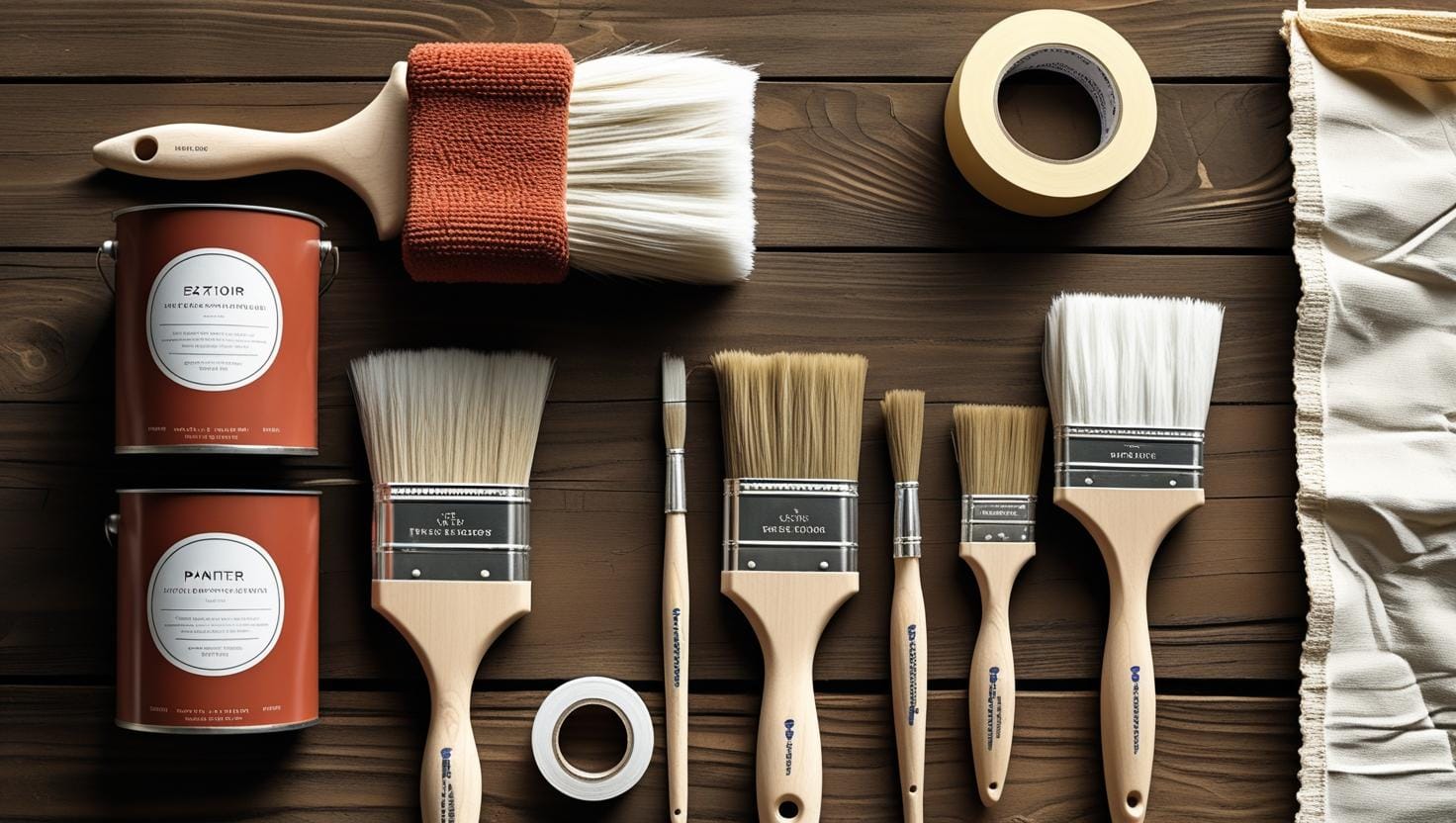
Masonry painting is notoriously messy due to the aggressive rolling required to push paint into pores. Use high-quality painter’s tape to protect the mantel, ceiling lines, surrounding drywall, and the metal firebox insert. Lay heavy-duty canvas drop cloths — not thin plastic, which tears and becomes a slipping hazard — over your floors, hearth, and any furniture within splash range.
-
The Critical Priming Phase
Never skip primer on bare brick. You need a high-quality 100% acrylic masonry primer or a “block-filling” primer. Block fillers are significantly thicker than standard primer and bridge the thousands of tiny pinholes in brick, providing a smooth, uniform surface for your topcoat. For heavy soot staining, use an oil-based, stain-blocking primer (such as Kilz Original) to permanently lock down creosote and tannins so they cannot bleed through your topcoat. Apply primer by stippling with a brush into mortar joints first, then rolling the brick faces with a thick-nap roller.
-
Executing the Topcoat
Use a quality nylon/polyester brush to cut in around edges and stipple paint into recessed mortar joints. For brick faces, use a roller with a thick nap (3/4-inch to 1-inch minimum) — a thick nap holds more paint and pushes the coating into rough masonry texture. Apply two thin, even coats rather than one heavy coat. Allow full drying between coats per the manufacturer’s specification — rushing this creates solvent-trap pockets beneath the surface that cause bubbling.
-
Respecting the Full Curing Period
Acrylic latex paint may feel dry to the touch within two hours but has not chemically cured. Full cure takes 14 to 30 days, during which the paint is still soft and vulnerable to abrasion, staining, and heat damage. Do not build a fire in a newly painted interior fireplace for at least 7 to 10 days to prevent fresh paint from bubbling and failing under thermal stress.
8. Primer Deep-Dive: Which Primer for Which Situation
Primer selection is where most DIY chimney painting projects succeed or fail silently — the problem only becomes visible six months later when the topcoat begins peeling. Here is a definitive reference for matching primer to situation.
| Situation | Primer Type | Reason |
|---|---|---|
| Previously unpainted brick (interior) | 100% Acrylic Masonry Primer | Seals pores, resists high pH alkalinity, provides paint adhesion surface |
| Heavy soot / creosote staining | Oil-Based Stain-Blocking Primer (Kilz Original) | Oil-based chemistry permanently encapsulates soot so it cannot bleed through topcoat |
| Previously unpainted brick (exterior) | Block-Fill Masonry Primer | Thicker formula fills surface porosity; provides weatherproof adhesion base |
| Limewash application (Romabio) | No primer — dampen brick with water only | Limewash calcifies directly to masonry; primer creates a barrier that prevents the bonding chemistry |
| New mortar (<30 days old) | Wait — do not prime yet | Fresh mortar is highly alkaline (pH 12–14) and will saponify oil-based primers and degrade acrylic ones |
| Previously painted brick (interior) | Bonding Primer (water-based) | Improves adhesion between old painted surface and new topcoat without requiring paint removal |
| Metal firebox / damper components | High-Heat Primer or none (per product spec) | Standard primers off-gas and fail under thermal shock; follow high-heat enamel’s specific primer guidance |
9. Tools & Materials Checklist
Gathering everything before you start prevents the single most common cause of rushed, botched chimney paint jobs: stopping mid-project to source materials. Here is the complete pre-project list.
Cleaning & Prep
- Trisodium Phosphate (TSP) cleaner and mixing bucket
- Stiff wire brush for heavy soot removal
- Stiff natural-bristle scrub brush for TSP application
- Efflorescence remover (if white deposits are present)
- Pre-mixed mortar repair tube for joint repointing
- Safety glasses, chemical-resistant gloves, and N95 dust mask
- Pressure washer with masonry nozzle (exterior projects)
Masking & Protection
- High-adhesion painter’s tape (2-inch width minimum for chimney work)
- Heavy canvas drop cloths — never thin plastic
- Plastic sheeting for large floor areas
- Ladder (stable, correctly rated for your weight)
Priming & Painting
- Masonry block-fill primer or oil-based stain-blocking primer (match to your situation — see Primer Guide above)
- Masonry-specific topcoat paint (match to zone: interior acrylic, elastomeric, or limewash)
- 3/4-inch to 1-inch nap roller covers (2+ minimum — they absorb heavily and wear fast on masonry)
- Roller frame and extension handle
- 2-inch to 3-inch nylon/polyester brush for mortar joint stippling and cut-in work
- Paint tray with liners
- Stir sticks (especially critical for limewash and thick elastomeric coatings)
10. Color & Style Guide: What Finish Fits Your Home?
Painting a prominent brick chimney dramatically alters the visual weight of a room or the curb appeal of a home’s roofline. Choosing the right color requires understanding both current design directions and the long-term maintenance implications of each choice.
Classic White & Off-White
The overwhelming favorite for modern farmhouse and transitional styles. Instantly brightens a dark room and makes a space feel larger. Requires the most diligent soot-cleaning maintenance. Warm off-whites (Navajo White, Swiss Coffee) read more antique; cool whites (Chantilly Lace) read modern.
Charcoal & Matte Black
Increasingly popular for modern, industrial, and minimalist interiors. Anchors the room, hides soot beautifully, and makes the orange flames of a fire visually pop with dramatic contrast. Significantly lower maintenance than white.
Warm Greiges & Taupes
The “safe” middle ground for homeowners uncertain about commitment. Warm greige tones (Agreeable Gray, Accessible Beige) blend harmoniously with existing furnishings and work across virtually every interior design style.
Sage Green & Muted Naturals
An emerging trend for biophilic and nature-inspired interiors. Muted sage, olive, and dusty blue-greens on brick create a surprisingly harmonious, organic effect that complements both wood accents and exposed natural materials.
11. Advanced Techniques: German Smear, Limewash & Whitewash Compared
Three finishing techniques frequently confused with standard painting produce significantly different visual results and require very different application processes. Understanding the distinctions before purchasing materials prevents expensive mistakes.
True Limewash (Romabio Classico)
Applied in diluted layers by brush, then partially wiped with a damp cloth while still wet. The dilution ratio and wipe timing control opacity — more dilution and earlier wiping leaves a heavily distressed, almost translucent finish. Later wiping or no wiping at all produces a denser, more opaque coverage. Once dry, the resulting surface has a flat, powdery appearance with natural color variation that cannot be replicated by any film-forming paint. Best applied in two to three thin layers rather than one heavy coat. The product continues to develop patina and depth over the first 3–6 months as it fully carbonates.
Whitewash (Giani Brick Transformations)
Applied with a brush in a thick, paint-like consistency, then rubbed back with a cloth while wet. Unlike true limewash, whitewash sits on the brick surface as a film coating rather than calcifying into it. This makes the result more uniform and controllable for beginners, but also means it is subject to conventional peeling and wear over time. The Giani kit’s formulation is specifically designed to resist soot bleed-through from heavily sooted fireplace surrounds — a key differentiator from simply diluting white latex paint.
German Smear (Mortar Technique — Not Paint)
The German Smear technique is not a paint application at all — it uses actual white mortar (pre-mixed mortar or Type S mortar diluted to a thick paste) applied directly to the brick face with a gloved hand or trowel and partially scraped away with a putty knife while still soft. The resulting texture is deeply dimensional — mortar fills the mortar joints flush and coats the brick face unevenly, leaving ridges and exposed brick patches that give a far more tactile, physically textured finish than any paint can achieve. It is permanent and cannot be removed once cured. Reserve this technique for chimneys where you are fully committed to a permanent rustic aesthetic.
✅ Choosing the Right Technique Summary
Uncertain about commitment? → Limewash (Romabio) — removable within 5 days. Want maximum soot coverage on a dark interior surround? → Whitewash kit (Giani). Want permanent, deeply textured, physical dimensionality? → German Smear (mortar technique). Want a solid opaque color? → Masonry acrylic with block-fill primer.
12. Full Exterior Chimney Painting Guide
Exterior chimney painting carries higher stakes than interior work because the consequences of using the wrong product — brick spalling, structural deterioration — are expensive and irreversible. This section covers the exterior process in full, beyond what the general step-by-step guide covers.
When NOT to Paint an Exterior Chimney
- Active water infiltration: If you have a known leak (from failed flashing, a cracked crown, or failed cap), painting will not fix it — it will trap the water. Fix the leak source first, always.
- New construction or new mortar: Mortar must cure a full 30 days before any primer or paint is applied. Fresh mortar’s high alkalinity destroys most paint chemistry.
- Visible spalling bricks: Spalled bricks cannot be stabilized by coating. Replace spalled bricks first.
- Temperatures below 50°F: Most masonry paints and primers require above 50°F ambient and surface temperature for at least 48 hours after application to form a proper cure. Painting in cold weather produces immediate failure.
The Correct Exterior Paint Sequence
-
Pressure Wash and Allow Full Drying
Low-pressure wash (500–800 PSI on brick, never high-pressure which blows out mortar) with masonry cleaner. Allow 72 hours minimum drying time in dry weather, longer in humid conditions. Test dryness: tape a piece of plastic sheeting to the brick overnight — if condensation forms beneath it the next morning, more drying time is needed.
-
Treat All Efflorescence and Staining
Apply efflorescence remover per manufacturer instructions. Scrub with a stiff brush. Rinse and allow to dry fully before proceeding. Any remaining efflorescence will push the coating off from beneath within one season.
-
Repair Mortar Joints and Replace Damaged Bricks
Rake out and replace any failing mortar joints. Replace spalled or structurally compromised bricks. Allow all repairs to cure 30 days before painting.
-
Apply Block-Fill Masonry Primer
Roll on a thick coat of block-fill primer, stippling aggressively into the mortar joints with a brush first. Allow to cure per manufacturer specification. This coat determines adhesion quality for everything that follows.
-
Apply Elastomeric or Limewash Topcoat in Two Coats
Roll on the first coat of breathable exterior masonry topcoat. Allow to dry completely (check the manufacturer’s recoat window — applying the second coat too soon or too late both cause adhesion problems). Apply the second coat. Total dry film thickness for elastomeric coatings should reach 20–25 mils for full crack-bridging performance.
13. Long-Term Maintenance & Cleaning
Painted brick requires fundamentally different maintenance than unpainted brick. Understanding the correct care routine extends the coating’s service life significantly and prevents premature deterioration.
Interior Fireplace Surround Maintenance
- Routine soot cleaning: Use a soft sponge and a mild warm-water-and-dish-soap solution for light soot deposits. For heavier staining, a fireplace-specific soot cleaner applied to a rag (not directly to the brick) works well without abrading the paint surface.
- Never use wire brushes on painted brick: Wire brushes will scratch through the paint and primer directly to the substrate, creating channels where soot can embed and where moisture can infiltrate.
- Annual inspection: Look for any areas of peeling or bubbling — these indicate moisture ingress or heat damage. Address these spots promptly with fresh primer and topcoat before they expand.
Exterior Chimney Stack Maintenance
- Annual wash: A low-pressure wash with a mild cleaner removes atmospheric dirt, biological growth (algae, moss), and mineral staining before it can penetrate the coating.
- Touch-up chips and cracks promptly: Any breach in the exterior coating is an entry point for water. Address chips, cracks, and peeling sections with fresh primer and topcoat within the same season they appear.
- Limewash maintenance: Romabio and similar limewash products can be touched up at any time by simply applying another diluted coat over the existing surface. The new layer calcifies into the existing one, producing no visible lap lines.
- Reapplication schedule: Quality elastomeric coatings typically require reapplication every 10–15 years. Limewash can last 10–20+ years on vertical surfaces with minimal maintenance.
14. Seven Costly Mistakes to Avoid
- Using standard exterior house paint on exterior brick. Its low perm rating traps moisture and causes spalling within one to three winter freeze-thaw cycles. The brick damage is permanent and expensive.
- Skipping the primer on interior brick. Bare brick will suck moisture out of latex topcoat before it can bond, causing rapid peeling. And soot bleeds through every non-stain-blocking topcoat without a dedicated primer layer.
- Painting over efflorescence. The salt crystals continue forming beneath the paint and physically push it off the substrate. The coating fails within months.
- Applying topcoat to uncured mortar repairs. Fresh mortar at pH 12–14 chemically degrades both acrylic and oil-based coatings through saponification. Wait the full 30 days.
- Using only one roller coat instead of two. A single heavy coat on porous masonry produces uneven coverage, drip lines, and insufficient film thickness for durability. Two thin coats are always superior to one thick coat.
- Building a fire too soon after painting the interior surround. Fresh acrylic paint needs 7–10 days minimum before heat exposure. Exposing fresh paint to fire heat causes immediate blistering and adhesion failure.
- Using any standard paint inside the firebox or on metal fireplace components. This is a genuine safety hazard — not just an aesthetic mistake. Standard paints off-gas toxic VOCs and can ignite when heated to firebox temperatures. Only certified high-heat enamel belongs here.
15. Expert FAQs: Troubleshooting Your Chimney Project
It is highly discouraged. Most exterior masonry paints and primers require consistent ambient and surface temperatures above 50°F for at least 48 hours post-application to cure properly. Applying paint to cold brick prevents the chemical binders from coalescing, leading to immediate peeling failure as soon as temperatures warm. Check both air temperature and brick surface temperature with an infrared thermometer before proceeding — north-facing chimney stacks can be significantly colder than ambient air temperature even on mild days.
Painted brick requires gentle maintenance. Never use harsh abrasive wire brushes on dried paint. To remove minor soot stains from a white painted surround, use a soft sponge and a mild mixture of warm water and dish soap, or a specialized fireplace glass cleaner applied to a rag. Scrubbing too aggressively with harsh chemicals removes the sheen and pigment of the topcoat, requiring a fresh recoat sooner than necessary. For heavy buildup, a cream-of-tartar paste left to sit on the stain for 20–30 minutes before gentle scrubbing is an effective low-abrasion option.
Yes, primer is non-negotiable for unpainted brick. Brick acts like an arid sponge. If you apply topcoat directly to bare brick, the masonry instantly draws the moisture out of the paint, causing it to dry too rapidly, shrink, and develop micro-fractures. Furthermore, soot, creosote, and tannins within the brick will bleed through any standard topcoat color, producing yellowing or brownish staining through even white paint. A masonry block-filling primer seals the pores and locks in stains, providing a stable, smooth canvas for your topcoat to properly bond to.
Yes, an airless paint sprayer is highly efficient for painting highly textured brick on large exterior chimney stacks. A sprayer forces paint deep into mortar joints far more effectively than a roller alone. However, you must “back-roll” immediately after spraying — rolling over the freshly sprayed surface with a dry or lightly loaded roller — to physically push the paint into the pores and ensure maximum mechanical adhesion. Spraying without back-rolling produces a coating that sits on top of the high points of the brick texture without penetrating the pores, severely reducing adhesion and durability.
Removing standard acrylic paint from porous brick is a significant undertaking. It requires harsh chemical strippers, intense wire brushing, and often media blasting (sandblasting or soda blasting), which can permanently etch or damage the face of the brick. If you are hesitant about commitment, use Romabio Classico Limewash — it is specifically designed to be washed off with a garden hose or pressure washer within the first 5 days before it permanently calcifies into the masonry. The Giani whitewash system, if applied very thinly, can be partially removed with TSP scrubbing within the first week, though full removal is difficult once it has fully dried.
White streaks appearing through painted brick are almost always efflorescence continuing to form beneath the coating — a sign that water is still actively migrating through the masonry and the underlying moisture source was not resolved before painting. White staining can also be caused by carbonation of lime compounds within the mortar bleeding through a thin topcoat if insufficient primer was applied. In both cases, the paint must be stripped back to the substrate, the moisture source identified and resolved, and the full prep-prime-topcoat sequence completed correctly from scratch.
16. Conclusion: Your Path to a Perfect Chimney Makeover
Choosing the best paint for chimney brick is a structural decision that pays dividends in both interior aesthetics and exterior longevity. By acknowledging the extreme environmental demands placed on each zone of a chimney — and selecting a coating specifically engineered for that zone — you can achieve a finish that is both visually stunning and structurally sound for years to come.
Whether you opt for the bright rustic charm of the Giani whitewash kit, the unmatched breathable patina of Romabio limewash, or the critical safety performance of Rust-Oleum High Heat Enamel on metal components, the ultimate key to success lies entirely in the preparation. Eradicate the soot, choose the correct primer, respect the curing times, and never compromise on vapor permeability for exterior applications. Your revitalized chimney will not only transform your living space but will stand as a durable testament to a project executed with real knowledge and care.