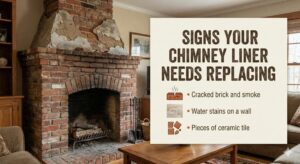
Signs Your Chimney Liner Needs Replacing
Don’t ignore the warning signs. A damaged liner puts your home at risk of fire and toxic gas leaks. Here is how to spot the trouble before it’s too late.
Most homeowners give very little thought to the inside of their chimney—until something goes wrong. We enjoy the warmth of the fire and the aesthetic of the hearth, but the heavy lifting is done by a component you rarely see: the chimney liner.
The liner is the engine of your chimney system. It channels toxic gases out of your home, protects the combustible framing of your house from extreme heat, and prevents creosote from eating away at the masonry. When a liner fails, the results can range from structural damage to catastrophic house fires.
But how do you know if this hidden hero is failing? You don’t have to wait for a disaster. Your chimney often gives subtle clues that it is time for a replacement. In this guide, we will walk you through the 7 critical signs that your liner is compromised and what you need to do about it.
What is a Chimney Liner and Why Does It Matter?
Before we dive into the symptoms of failure, it is crucial to understand what we are dealing with. A chimney liner is a conduit made of clay, ceramic, or metal installed inside the chimney flue. It serves three vital functions:
- Protection of House Structure: It stops heat from transferring to adjacent woodwork, which could catch fire.
- Masonry Protection: It prevents the acidic byproducts of combustion from eating away at the mortar joints of the chimney.
- Draft Efficiency: It provides a correctly sized flue for your appliance, ensuring smoke rises out rather than spilling into your room.
1. Shards of Clay in the Firebox
If you have an older home, you likely have a clay tile liner. Over time, the intense heat cycles of the fireplace can cause these tiles to crack and split. If you start finding reddish-orange shards of pottery or piles of granular dust in your firebox (the area where you burn the wood), this is a definitive sign your liner is collapsing.
This is often caused by thermal shock—rapid heating and cooling—or a previous chimney fire that went unnoticed. Once these tiles begin to spall (flake off), the liner is no longer gas-tight, and heat can escape into the walls of your home.

Holikme Chimney Brush Cleaning Kit
While you cannot fix a broken liner with a brush, keeping your flue clean prevents further damage. This kit helps you sweep away debris to inspect the condition of your tiles.
Check Price on Amazon2. Rapid Rusting of the Fireplace
Rust should never be a feature of your fireplace. If you notice your damper is hard to operate due to rust, or you see streaks of rust on the firebox walls, it indicates moisture is penetrating the flue.
A cracked liner allows condensation (which is acidic) and rainwater to seep into the chimney structure. This moisture attacks metal components. If your damper is rusting, it’s a strong indicator that the liner above it is failing to contain the moisture produced by combustion or leaking rain.
3. Smoke Filling the Room (Draft Issues)
A properly functioning liner creates a vacuum that pulls smoke up and out. If your liner is damaged, obstructed by collapsing tiles, or incorrectly sized, that vacuum breaks. The result? Smoke billowing back into your living room.
While smoke issues can sometimes be related to wind or air pressure, persistent smoking is often due to a liner that has lost its structural integrity or is coated in so much creosote that the airway is restricted.
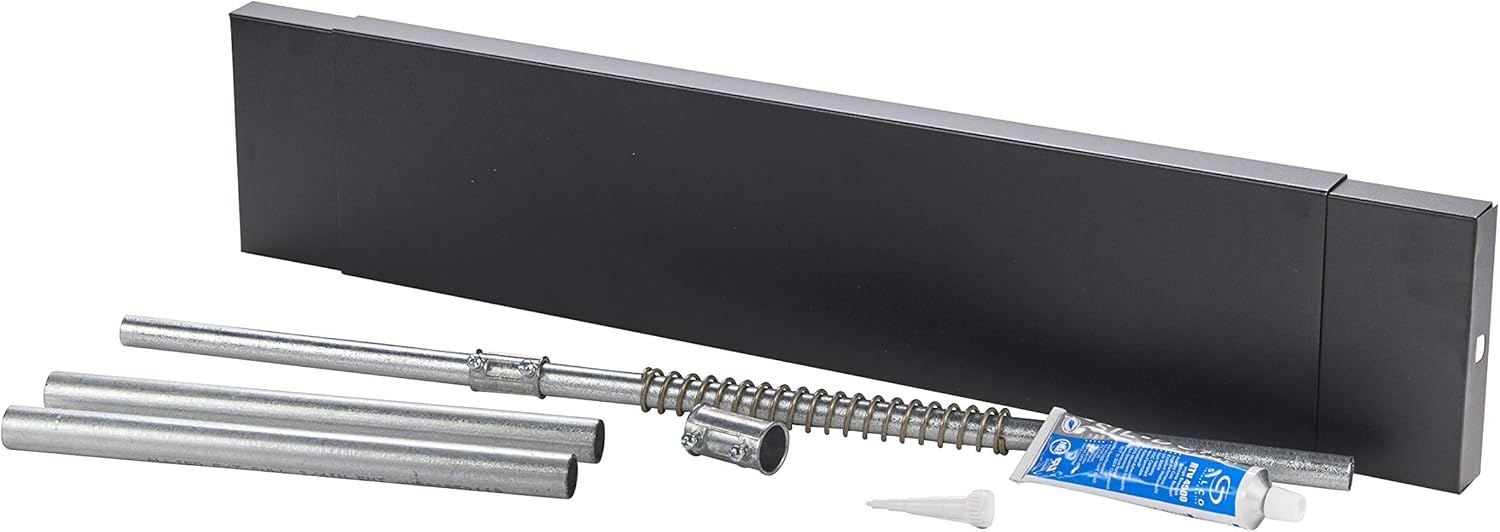
HY-C Smoke Guard
If you are waiting on a liner repair, a smoke guard can help reduce smoke rollback temporarily by correcting the ratio of the fireplace opening.
Check Price on Amazon4. Condensation and Damp Walls
Have you noticed wallpaper peeling near the chimney breast? Or perhaps damp patches on the drywall in the rooms upstairs where the chimney passes through? This is a classic sign of a liner failure, particularly with gas appliances.
Gas appliances produce a significant amount of water vapor. If the liner is cracked or uninsulated, this vapor cools down too quickly, turns into liquid water, and saturates the masonry. Eventually, this moisture bleeds through the bricks and ruins your interior walls.
5. Falling Mortar or Bricks
Walk outside and look at your chimney stack. Is the mortar crumbling? Are there gaps between the bricks? While this can be weather-related, it is often caused by the deterioration of the liner from the inside out.
When a liner breaches, the acidic flue gases attack the masonry mortar joints. This not only weakens the chimney structure but also creates pathways for dangerous gases to enter your attic or upper floors.
6. Difficulties Starting a Fire
If you have always been able to light a fire easily, but lately it seems impossible to get a draft going, your liner could be the culprit. A blockage caused by a collapsed liner section will choke the airflow. Without oxygen being pulled up the flue, the fire will smolder and die.
This is dangerous because a smoldering fire produces high levels of carbon monoxide.
7. Carbon Monoxide Detector Alerts
This is the most dangerous sign on this list. Carbon Monoxide (CO) is odorless, colorless, and deadly. A cracked liner allows CO to escape the chimney and seep into your bedrooms or living areas.
If your CO detector goes off, do not ignore it. Ventilate the house, evacuate, and call a professional immediately. It likely means your chimney is no longer venting exhaust gases to the outside world.

First Alert CO605 Carbon Monoxide Detector
Simple, reliable, and life-saving. This plugin unit with battery backup is essential for any home with a fireplace or gas appliance.
Check Price on AmazonThe Importance of Camera Inspections
Many of the signs listed above are visible to the naked eye, but the most dangerous cracks are often hidden deep within the flue. You cannot see the condition of your liner by just looking up from the fireplace or down from the roof.
A Level 2 Chimney Inspection involves lowering a specialized camera (scanning) system down the flue to record the entire length of the liner. This is the only way to definitively diagnose hairline cracks or gaps in the joints.
Types of Liners: Which is Best?
If you determine you need a replacement, you have three main options:
- Stainless Steel Liners: The most popular choice for retrofitting. They are durable, come in rigid or flexible kits, and usually carry a lifetime warranty. (Make sure to get 316Ti alloy for solid fuel/coal).
- Cast-in-Place Liners: A cement-like mixture is poured into the chimney, forming a seamless, insulated tube. This is excellent for structural reinforcement but is very expensive.
- Clay Tiles: While common in new construction, replacing clay tiles in an existing chimney is labor-intensive and requires breaking open the chimney walls. It is rarely done for repairs.
DIY vs. Professional Replacement
Installing a stainless steel liner is technically possible for a skilled DIYer, but it is high-risk. You must get the sizing calculation exactly right (based on your fireplace opening). An undersized liner will cause smoke issues; an oversized liner will cause creosote buildup.
Additionally, if you do not insulate the liner properly, you risk creating a cold flue that drafts poorly. For the sake of insurance compliance and safety, professional installation is highly recommended.