
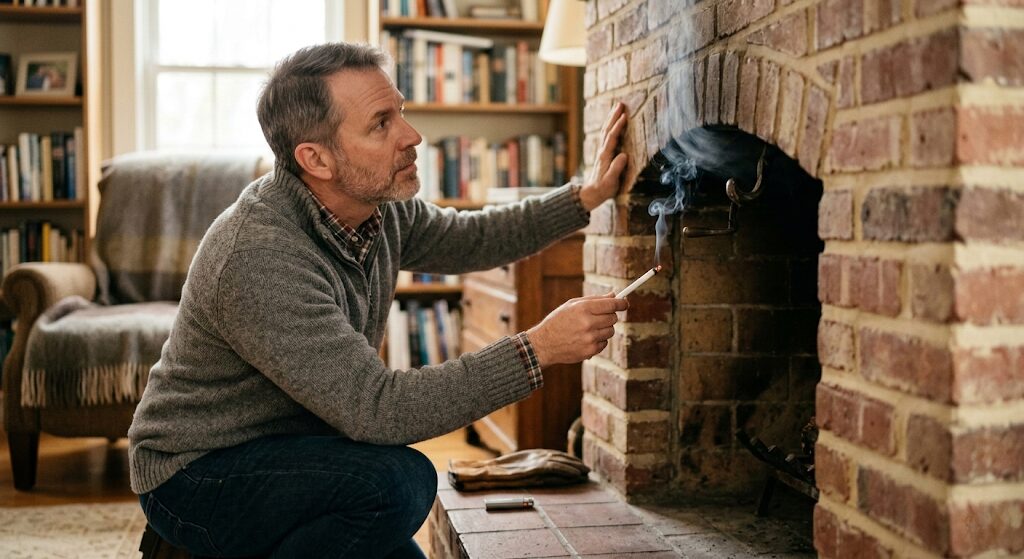
Mastering Your Hearth: A Step-by-Step Guide to Testing Chimney Draft and Airflow
By Chimney Insight Experts | Updated for 2026 Heating Season
Imagine this: It is a freezing winter evening. You have spent the last thirty minutes carefully stacking seasoned hardwood, rolling newspaper, and preparing for a cozy, roaring fire. You strike the match, light the kindling, and instead of smoke cheerfully dancing up the flue, a thick, acrid cloud billows directly into your living room, setting off smoke detectors and sending your family running for the doors.
If you have ever experienced this, you have encountered a chimney draft failure. A chimney is not just a hollow tube of bricks; it is an intricately balanced aerodynamic engine. It relies entirely on precise airflow mechanics to safely exhaust dangerous byproducts—including lethal carbon monoxide, fine particulate matter, and creosote vapors—out of your home. When that airflow fails, your fireplace transforms from a comforting amenity into an active health hazard.
Learning how to test chimney draft is one of the most vital, yet frequently overlooked, skills a homeowner can possess. Whether you are firing up your hearth for the first time this season, trying to diagnose a persistent smoke smell, or evaluating a newly purchased home, understanding your flue’s airflow dynamics is non-negotiable for safety and efficiency. In this incredibly comprehensive guide, we will break down the exact testing methods the professionals use, from simple visual smoke tests to advanced pressure diagnostics, ensuring your hearth is ready to burn safely all winter long.
The Science: What Exactly is Chimney Draft?
To test a draft effectively, you must first understand the physics that create it. Chimney draft is not created by a mechanical fan (unless you have a specific power-vented system). Instead, it relies on a principle of physics known as the “Stack Effect” or thermal buoyancy.
Hot air is less dense and lighter than cold air. When you build a fire, the extreme heat warms the gases inside the firebox. Because these heated gases are lighter than the denser, colder air outside your house, they naturally want to rise. As this hot air surges up the chimney column, it creates an area of low pressure (a vacuum) inside the firebox. This vacuum actively sucks fresh, oxygen-rich room air into the fire to feed the combustion process, which in turn creates more hot gas that rises up the chimney.
This continuous, self-sustaining loop of pulling fresh air in and pushing exhaust gases out is what we call the “draft.” If you want to dive deeper into the exact thermodynamic physics at play, we highly recommend reading our detailed breakdown of what the chimney effect is and how it influences your entire home’s HVAC system.
7 Symptoms of a Poor Chimney Draft
Before you run a formal test, your fireplace is likely already giving you warning signs that the airflow is compromised. Pay close attention to these common symptoms of negative pressure or draft failure:
- Smoke Spillage: The most obvious sign. Smoke rolls out from under the lintel (the top of the fireplace opening) and into the room upon lighting or as the fire burns down.
- Lingering Odors: If you constantly smell a campfire, damp ash, or pungent creosote in your living room even days after a fire is out, your chimney is likely flowing backward (downdrafting). You can learn more about how to permanently get rid of fireplace smoke smells in your house here.
- Sluggish Fires: You have dry, perfectly seasoned wood, but the fire refuses to roar. It smolders, burns weakly, and produces excessive smoke. This indicates the fire is starving for oxygen due to a lack of draft pulling fresh air in.
- Soot on the Glass: If you have a wood stove or an insert, a poor draft will fail to pull the combustion gases away fast enough, causing thick, black soot to rapidly coat the ceramic glass doors.
- Cold Drafts: When the fire is completely out, you can feel a distinct, chilling breeze blowing out of the fireplace into the room.
- Ghosting: Black soot stains forming on the walls or ceiling directly above the fireplace opening over time.
- CO Detector Alarms: The most dangerous symptom. If your carbon monoxide detectors sound while the fireplace is running, evacuate immediately. The draft has failed, and lethal exhaust is filling your home.
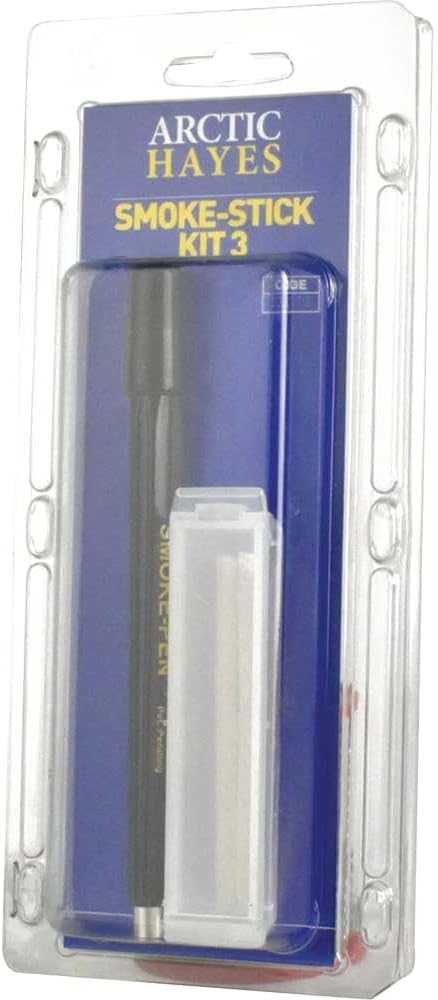
The Essential Tool: HVAC Smoke Pen Kit
Don’t rely on messy ashes or dangerous matches. A professional smoke pen produces a continuous, non-toxic, highly visible stream of white smoke that reacts to the slightest air currents. It is the absolute best tool for visually diagnosing updrafts, downdrafts, and tiny leaks around your fireplace doors or masonry.
Check Latest Price on AmazonMethod 1: The Smoke Pen Test (Visual Diagnostics)
This is the safest, most precise, and highly recommended DIY method for testing your chimney draft before you attempt to light a fire. It allows you to visualize invisible air currents with incredible accuracy.
-
Preparation
Ensure your fireplace is completely cold and free of hot embers. Open the damper fully. Turn off all competing exhaust fans in your home (bathroom vents, kitchen range hoods, clothes dryers). Ensure all windows and exterior doors are closed.
-
Activate the Smoke Source
Light your smoke pen (or an incense stick if you don’t have a pen) and blow out the flame so it is smoldering and producing a steady, continuous stream of visible smoke.
-
Test the Ambient Draft
Hold the smoke pen directly in the center of the fireplace opening, just below the damper throat. Stand perfectly still to avoid creating air currents with your body.
-
Observe the Behavior
Watch the smoke column carefully.
Positive Draft: The smoke should be immediately and smoothly sucked upward past the damper and into the flue, disappearing completely.
Stagnant Draft: The smoke lazily floats around the firebox, neither going up the chimney nor coming out into the room.
Negative Draft (Downdraft): The smoke is actively blown backward into your face and out into the living room. Do not light a fire if you see this.
Method 2: The Newspaper Torch Test (Traditional)
If you don’t have a smoke pen, the traditional “newspaper torch” method serves a dual purpose: it tests the draft and simultaneously helps pre-warm the flue to break the dreaded “cold plug.”
-
Open the Damper
Double-check that your throat damper or top-sealing damper is completely open. Never skip this step.
-
Create the Torch
Take two to three large sheets of dry, black-and-white newspaper (avoid glossy magazine paper as it burns poorly and creates toxic fumes). Roll them tightly into a wand or “torch” shape.
-
Light and Elevate
Light the top tip of the newspaper roll. Carefully hold the burning end as high up inside the firebox as you can safely reach, positioning it directly under the open damper. Wear a heat-resistant fireplace glove to protect your hand.
-
Observe and Prime
The intense, localized heat from the burning paper will immediately start warming the cold air in the flue. Watch the flames and smoke. If the smoke immediately shoots upward and the flame pulls straight up like a blowtorch, your draft is established and strong. You can now light your main fire. If the smoke rolls out into the room and the flame flickers wildly or blows out, the cold air plug is too heavy, or you have a negative pressure issue.

Pro Level Diagnostics: Digital Manometer
If you are serious about home energy efficiency, or if you are constantly battling mysterious smoke issues, a digital manometer takes the guesswork out of the equation. This tool measures exact pressure differentials in Pascals (Pa) or Inches of Water Column (inWC), allowing you to pinpoint exactly how much negative pressure your HVAC system is placing on your chimney.
Check Latest Price on AmazonMethod 3: Using a Draft Gauge / Manometer (Pro Level)
Visual tests are great for daily use, but if you are trying to diagnose a complex, persistent drafting issue, you need hard data. Professional chimney sweeps and HVAC technicians use a manometer (draft gauge) to measure the exact pressure differential between the inside of the flue and the room.
Draft is measured in Pascals (Pa) or Inches of Water Column (inWC). To use a manometer, a small hole is usually drilled into the stove pipe (for freestanding wood stoves) or a specialized probe is inserted past the damper in a masonry fireplace. The gauge will give a precise numeric readout.
- Ideal Draft Range: Most wood stoves and fireplace inserts require a draft reading between -10 Pa to -15 Pa (or -0.04 to -0.06 inWC) while operating at normal temperatures.
- Too Low (e.g., -2 Pa): The fire will smother, burn dirty, and smoke will spill into the room.
- Too High (e.g., -30 Pa): The fire will burn violently fast, wasting your wood, overheating the appliance, and sucking massive amounts of heated air out of your home.
If your manometer shows adequate draft when the house is quiet, but the draft plummets to zero when your furnace or kitchen hood kicks on, you have scientifically proven that you have a negative airflow problem in your home architecture, not a structural problem with the chimney itself.
Diagnosing the Root Causes of Bad Airflow
If your tests consistently show a poor or reversed draft, you must identify the culprit before attempting to burn wood. The most common causes fall into four categories:
1. The Cold Air Plug
As mentioned earlier, an exterior masonry chimney is essentially a refrigerator. Dense cold air sinks down the flue and creates a heavy barrier. You must use the newspaper torch method to push this air out and establish the upward thermal draft before lighting heavy logs.
2. House Depressurization (The Invisible Thief)
Modern homes are built tightly to conserve energy. When you turn on a high-CFM kitchen range hood, a bathroom exhaust fan, or a clothes dryer, these appliances mechanically suck massive amounts of air out of the house. Because the house is sealed, it must replace that air from somewhere. The path of least resistance is often straight down your open chimney. This creates a powerful downdraft that will pull smoke into the room. To test this, crack a window near the fireplace. If the draft instantly improves, your house is too tight, and you may need to install an outside air kit for your hearth.
3. Physical Blockages
A chimney must be clear to exhaust gases. If your smoke pen test fails even with a warm flue and an open window, you likely have a physical obstruction. This could be a dense buildup of glassy creosote, a collapsed clay flue liner, or an animal nest (raccoons and birds love capping chimneys with debris). A level II video inspection by a certified sweep is required.
4. Improper Chimney Height (The 3-2-10 Rule)
If your chimney is too short, it cannot generate enough buoyancy (stack effect) to create a strong draft. Furthermore, it may be affected by wind turbulence bouncing off your roofline. The building code standard is the “3-2-10 Rule”: A chimney must extend at least 3 feet above the roof penetration point AND be at least 2 feet taller than any part of the building within a 10-foot radius. If your chimney violates this rule, you will suffer chronic draft problems until it is extended.
Pro Tips to Instantly Improve Your Draft
If you are struggling with a sluggish draft, try these immediate actionable steps before calling in expensive contractors:
- The Top-Down Burn: Instead of putting kindling at the bottom and logs on top, reverse it. Place large logs at the base, medium logs next, and kindling at the very top. When you light the top, the heat immediately enters the flue, warming it rapidly and establishing a draft much faster without smoke being trapped under heavy, cold logs.
- Crack a Window: If you suspect negative pressure, open a window in the same room as the fireplace about an inch or two just before lighting the fire. This gives the fire the oxygen it desperately needs without fighting the house’s vacuum. Once the fire is roaring and the draft is strong, you can usually close the window.
- Burn Seasoned Wood Only: Wet or “green” wood burns at a much lower temperature because the fire’s energy is wasted boiling the water inside the log. Low temperatures mean weak thermal buoyancy, leading to a weak draft. Ensure your wood has less than 20% moisture content.
- Pre-warm the Flue: Never skip the newspaper torch or a heat gun to blast hot air up the flue for a solid 60 seconds before lighting the main fuel load.
- Insulate Your Chimney Liner: If you have an exterior masonry chimney that chronically runs cold, installing a stainless steel liner wrapped in high-temperature insulation can drastically improve performance. Read our guide on chimney insulation techniques to understand how retaining heat boosts your draft efficiency.
Testing Methods Comparison Table
Quickly reference which draft testing method is appropriate for your specific situation.
| Testing Method | Best Use Case | Tools Required | Accuracy Level | Safety Profile |
|---|---|---|---|---|
| Smoke Pen Test | Daily pre-fire checks, identifying tiny leaks | HVAC Smoke Pen or Incense | High (Visual Air Currents) | Extremely Safe (No open flames) |
| Newspaper Torch | Testing & simultaneously priming a cold flue | Dry newspaper, matches/lighter | Moderate (General flow direction) | Requires caution handling burning paper |
| Manometer / Draft Gauge | Diagnosing complex HVAC pressure issues | Digital Manometer, draft probe | Exact (Numeric pressure readings) | Safe (Requires drilling test hole in pipe) |
| The Match Test | Absolute basic visual check (Not recommended) | Wooden match | Low (Flame is too small to see flow) | Safe |
Frequently Asked Questions (FAQs)
We have compiled answers to the most common questions homeowners ask regarding chimney airflow and draft diagnostics.
Draft Still Failing? Consider an Enervex Chimney Fan
If you have tried pre-warming, opening windows, and burning dry wood, but your home’s architecture simply refuses to allow a natural draft, a top-mounted chimney exhaust fan is the ultimate cure. It guarantees a perfect draft every single time by mechanically drawing the smoke up and out, entirely bypassing negative pressure issues.
Shop Chimney Fans on AmazonFinal Thoughts & Next Steps
Your fireplace should be a source of comfort, warmth, and relaxation—not a source of anxiety, smoke alarms, and toxic odors. Understanding the delicate mechanics of airflow and knowing exactly how to test chimney draft empowers you to take control of your hearth’s safety and efficiency.
Remember that a successful fire starts long before the match is struck. Make it a habit to perform a quick visual smoke test or use the newspaper torch method to verify upward flow and break the cold air plug every single time you intend to burn. If your tests reveal chronic downdrafts, do not ignore them. Investigate your home’s depressurization, check your wood quality, and if the problem persists, do not hesitate to contact a certified chimney professional to sweep the flue and inspect the structural integrity.
Stay safe, keep the draft moving upward, and enjoy a beautiful, smoke-free heating season!