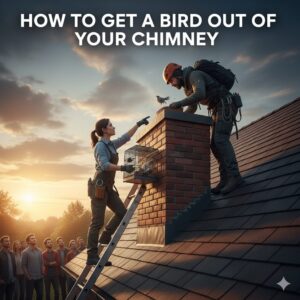
How Do You Get a Bird Out of Your Chimney? A Complete Step-by-Step Guide
The sudden sound of scratching and frantic fluttering from your fireplace can be incredibly jarring. A bird has accidentally turned your chimney into a trap, and now it’s up to you to resolve the situation safely and humanely. Your mind is likely racing with questions: How do I get it out? Can I do it myself? What if it’s hurt? This is a common problem for homeowners, and with a calm, methodical approach, it’s one you can certainly manage.
This guide is your complete resource for getting a bird out of your chimney. We will walk you through the crucial initial safety checks, provide detailed step-by-step instructions for several DIY removal methods, cover what to do when things go sideways, explain the legal landscape, and help you understand when it’s time to put down your gloves and call a professional. Our goal is to empower you to handle this stressful situation with the confidence of an expert.
To get a bird out of your chimney, first close the damper and all doors to the room, then open a single window or door to the outside. Darken the room completely. Carefully open the damper. Often, the bird will see the light from the open window and fly out on its own. If it falls into the firebox, you can gently place a box on its side in the hearth for it to hop into. For any complex situation — such as a nest with chicks or a bird trapped high up — your safest bet is to call a professional humane wildlife removal service.
The Critical First 10 Minutes: Don’t Panic, Prepare
What you do immediately after discovering the bird can significantly impact the ease and safety of the rescue. Rushing in without a plan can scare the bird further, create a mess in your home, or even put you or the animal at risk. Follow these preparation steps meticulously.
- Safety First — Ensure the Fireplace is Cold. Before you do anything else, confirm that your fireplace is completely cold with no lingering hot embers. Using the fireplace is strictly off-limits until the bird is gone and the chimney has been inspected.
- Close the Damper. The damper is a metal plate in the chimney’s throat that controls airflow. If it’s not already closed, gently close it. This prevents the bird from falling directly into your firebox unexpectedly and helps you gauge the bird’s location. If the sound stops or becomes muffled, the bird is likely on the smoke shelf just above.
- Containment — Secure the Room. Close all doors leading to other parts of your house. You want to contain the bird to one room if it gets out.
- Create an Escape Route. In the same room, open one (and only one) window or door that leads directly outside. The bird will need a clear path to freedom. Remove any screens from this opening — birds will fly directly into screens and injure themselves.
- Listen and Assess. Pay close attention to the sounds. Is it a single bird fluttering, or do you hear high-pitched peeping? Peeping is a strong sign of baby birds, which completely changes the situation and makes professional help almost mandatory. The intensity of sounds can also signal distress; a frantic bird is an exhausted bird and time is of the essence. You should understand the timeframe a bird can survive in a chimney to appreciate the urgency.
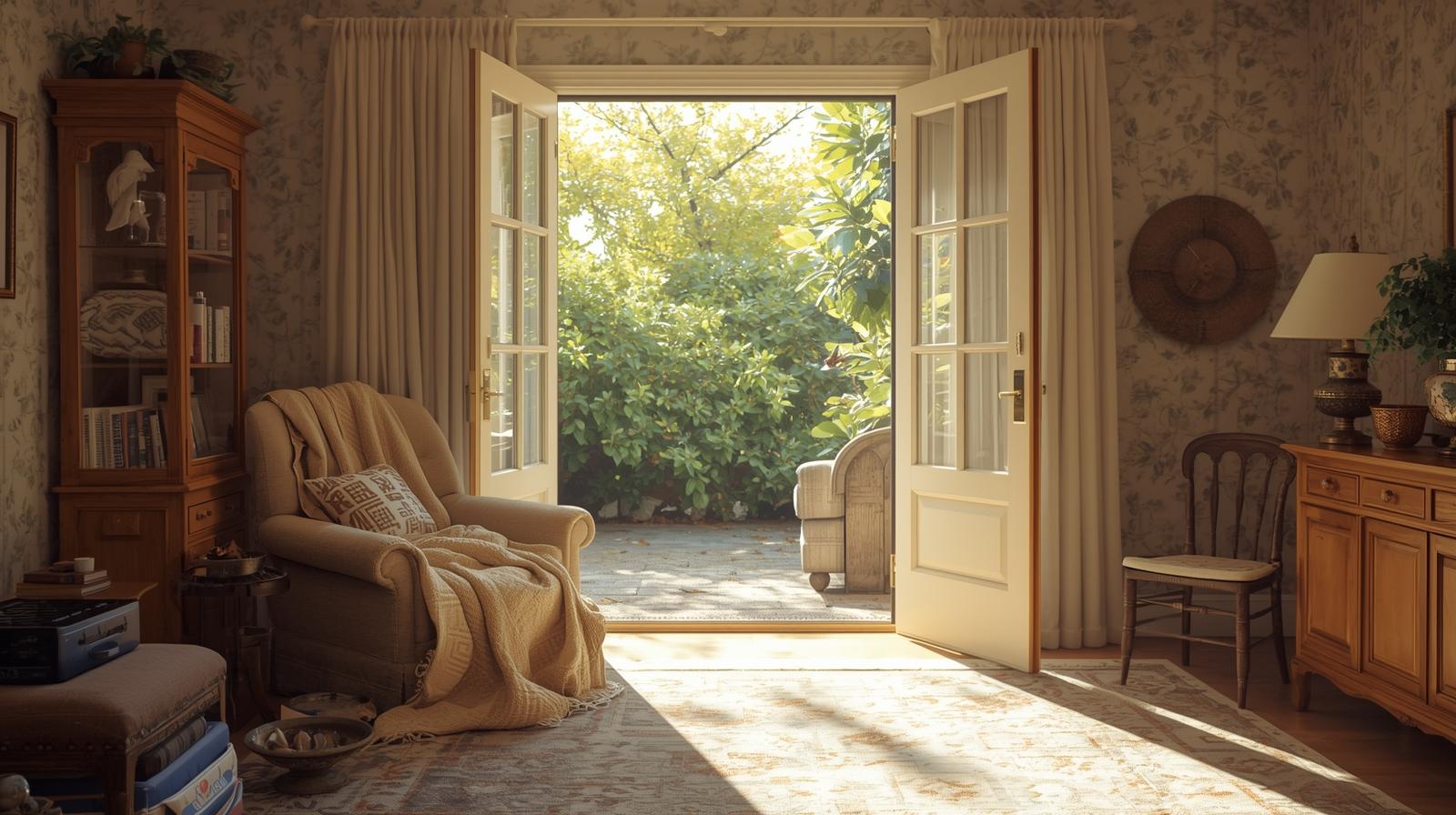
Prepare the room by creating a single, clear escape route to the outdoors before opening the damper.
Identify What You Are Actually Dealing With
Before you choose a removal method, you need a clear picture of the situation. Treating every bird-in-chimney scenario the same way is a common mistake that leads to failed rescues. Take two minutes to gather this information before you act.
How Many Birds Are There?
A single bird trapped accidentally is a very different scenario from a family of birds that has taken up residence. Listen carefully. Can you hear multiple sets of wings, or does it sound like one individual? Multiple birds almost always indicate an established nest, which requires a completely different strategy — one that typically involves professional intervention and an awareness of your legal obligations under federal wildlife law.
Is It an Adult or Baby Bird?
The sounds you hear are your most reliable clue. A trapped adult bird produces sounds of effort and panic — heavy flapping, scratching against the flue walls, and intermittent single calls. Baby birds (nestlings or fledglings) produce a distinctly different sound: a repetitive, high-pitched peeping or chirping, often in rapid bursts. This sound is the chick calling to its parents for food. If you hear it, there is an active nest. Do not attempt a DIY removal. Call a wildlife professional immediately.
Where Is the Bird Located?
The location within your chimney system determines which removal method has the best chance of success. There are three distinct zones:
🔥 Zone 1: The Firebox
- Bird is already below the damper
- You may be able to see it
- Easiest to reach and handle
- Box method works well here
- Most likely scenario after damper is opened
🌫️ Zone 2: Smoke Shelf
- Bird is sitting on the ledge just above the damper
- Sound is immediate and loud when damper is open
- Light and dark method most effective
- Bird may fall into Zone 1 when damper opens
- Very common resting spot for exhausted birds
🏗️ Zone 3: Upper Flue
- Bird is partway or near the top of the chimney
- Sound is muffled or distant
- Hardest DIY scenario
- Rope and branch method or pro needed
- Often a Chimney Swift clinging to flue walls
How Long Has the Bird Been Trapped?
If you only just discovered the sound and it started within the last hour or two, the bird is likely still energetic enough for a successful self-rescue with gentle guidance. If the sound has been present for many hours or you woke up to it and it had been going on overnight, the bird may be severely exhausted, dehydrated, and in a weakened state. An exhausted bird is less likely to respond to the light-and-dark technique and more likely to need the direct towel-and-grab method or professional intervention.
The Two Paths: DIY Rescue vs. Calling a Professional
You’re at a crossroads. You can attempt the rescue yourself or call for backup. The right choice depends on the situation and your comfort level.
The DIY path is often successful for a single, adult bird that is low down in the chimney. If you are patient and careful, you can often guide the bird to safety without any harm.
The professional path is the wisest choice if you suspect a nest, if the bird is large or potentially aggressive (like an owl), if it’s high up in the flue, or if you simply don’t feel comfortable with the task. There’s no shame in calling for help — in fact, it’s often the most responsible decision. If you feel this is the best route, we have a complete guide on who to call for a bird stuck in the chimney that details the pros and cons of each type of service.
| Situation | Best Approach | Why |
|---|---|---|
| Single adult bird, low in flue or firebox | DIY — Light & Dark or Box Method | Bird is accessible and can self-navigate to light |
| Single adult bird, high in upper flue | DIY Rope Method or Professional | Requires roof access; call pro if not comfortable |
| Multiple birds / chirping sounds | Professional Only | Active nest — legal and safety complications |
| Bird appears injured or unable to move | DIY Towel Method + Wildlife Rehab | Needs gentle handling and professional care after |
| Large bird (owl, duck, pigeon) | Professional recommended | Can injure you; needs specialist handling |
| Smell suggests bird may be deceased | Chimney Sweep | Camera inspection and safe carcass retrieval needed |
| No sound — unsure if bird is present | Chimney Sweep Inspection | Camera confirms presence and location safely |
The Complete DIY Guide: 4 Safe Methods for Bird Removal
If you’ve decided to proceed yourself, arm yourself with patience and the right gear. You will need thick gloves, safety glasses, a dust mask, old sheets or drop cloths, and a cardboard box. Have everything prepared before you open the damper — once it’s open, you need to be ready.
Method 1: The Passive “Light and Dark” Technique
This is the simplest and least invasive method. It uses the bird’s natural instinct to fly towards light. This is your first attempt in almost every scenario because it requires zero direct contact with the animal.
- Set the Scene: After preparing the room (one exit open, other doors closed), make the room as dark as possible. Turn off all lights, close curtains and blinds. The only significant light source should be the natural light coming from the single open window or door to the outside.
- Prepare for Soot: Lay down your old sheets or drop cloths around the hearth. A bird exiting the chimney will be covered in soot and can make a considerable mess on carpets and furniture.
- Open the Damper: Put on your gloves and safety glasses. Slowly and quietly, open the fireplace damper. Stand to the side rather than directly in front — occasionally a bird will drop straight out with surprising force.
- Be Patient and Quiet: Step back and give the bird significant space — at least 10 feet. The bird, seeing the light, will hopefully navigate its way out of the fireplace opening and fly directly towards the light and out of your house. This can take a few minutes or over an hour. Resist every urge to make noise or shoo it along, as this will cause panic and send it deeper into the room.
Method 2: The “Box on the Hearth” Method
If the bird falls into the firebox but is too disoriented or exhausted to fly, this method can help you contain it safely without any physical contact.
- Follow the room preparation steps — dark room, single light exit.
- Get a Box Ready: Find a cardboard box large enough for the bird to fit in comfortably. Place it on its side inside the fireplace opening, with the open side facing into the hearth space.
- Open the Damper Gently: If the bird tumbles down, it might instinctively see the dark, enclosed space of the box as a safe haven and hop or flutter right in.
- Contain and Release: If it enters the box, calmly approach and gently turn the box upright, then cover it with a piece of cardboard or a towel. Take the box outside, well away from the house, set it on the ground, open it, and step back at least 10 feet. The bird will fly off when it’s ready.
If the bird is in the firebox but won’t go into the box, try a flashlight. Shine the beam from behind the bird, directing its attention toward the box opening. The instinct to move away from the light behind it and toward the perceived safety of the dark box can encourage it to move in the right direction. Do not shine the beam directly into the bird’s eyes.
Method 3: The “Towel and Grab” Method (Use with Caution)
This method should only be used if the bird is in the firebox, clearly exhausted or slightly injured, and unable to move on its own. It involves direct physical handling and should only be attempted with proper protective gear.
- Wear Your Gear: This is non-negotiable. Heavy gloves and safety glasses are a must. Even a small songbird can scratch and peck with surprising force when frightened.
- Approach Slowly: Move calmly and deliberately. Approach from behind the bird rather than head-on. Sudden movements will terrify it.
- Use a Light Towel: Gently drop or drape a light towel or old t-shirt over the bird. Darkness provided by the towel will calm it and prevent it from flapping wildly.
- Secure the Bird: Through the towel, gently but firmly grasp the bird around its body, securing both wings against its sides. Your goal is to immobilize it without squeezing the chest — birds breathe through lateral expansion and can suffocate if the chest is compressed.
- Immediate Release: Carry the bird outside immediately and release it at ground level. Do not bring it further into your home. If it appears injured and cannot fly, place it in a ventilated box with a towel and call a wildlife rehabilitator.
Method 4: The “Rope and Branch” Trick (For Birds Higher Up)
Sometimes a bird is stuck higher in the flue because the smooth metal or clay liner provides no grip. You can help by providing a makeshift ladder — the bird can use it to climb down to a level where the light-and-dark technique takes over.
- Find a Rope: You’ll need a rope slightly longer than your chimney is tall — typically 15 to 30 feet for most residential chimneys.
- Attach a Grippable Object: Tie a small rough branch, a bundle of pine needles, or a wadded ball of burlap or chicken wire to one end. The object should provide a grippable surface but be small enough not to get stuck in the flue.
- Access the Roof Safely: This is the most dangerous part of the operation. If you are not completely comfortable and safe on your roof — with a properly secured extension ladder, non-slip footwear, and a second person present — do not attempt this. Call a professional.
- Lower the Rope: From the top of the chimney, slowly and carefully lower the rope down the flue. Lower it to well below where you estimate the bird to be. The bird may panic initially at the disturbance, but once it recognizes the object provides a foothold, it can often climb or flutter its way up the rope and escape at the top.
- Wait at a Safe Distance: Once the rope is in place, back away from the chimney top. The bird is much more likely to climb up if there is no perceived threat at the exit point. Check every 10 minutes without approaching too close.
- NEVER start a fire or try to “smoke them out.” This is cruel and ineffective. It will likely kill the bird and poses a massive fire hazard if there is a flammable nest present.
- DO NOT spray a hose down the chimney. You risk drowning the bird, cracking a clay tile flue liner from thermal shock, and causing significant water damage to the firebox and surrounding structure.
- AVOID banging on the chimney flue or walls. This can send the bird into a panic, causing it to injure itself or have a cardiac arrest from extreme stress.
- DO NOT open the damper without preparing the room first. An unprepared room turns a containable chimney problem into a chaotic bird-loose-in-house situation.
- NEVER leave the fireplace and a room door open simultaneously — giving the bird access to your entire home dramatically extends and complicates the situation.
Bird Already in Your Firebox: Specific Guidance
In many cases, by the time a homeowner investigates the noise and opens the damper, the bird has already tumbled all the way down into the firebox. This is actually a relatively fortunate situation — it is the most accessible position for a successful DIY rescue. However, it requires careful handling to prevent the bird from flying deeper into the house or injuring itself.
Confirm the Glass Doors Are Closed First
If your fireplace has glass doors, make sure they are closed and latched before you take any other action. This contains the bird completely while you prepare the room. Once the room is darkened and your single exterior exit is open, you can partially open the glass doors to allow the bird access to the room. Crack them only a few inches at first — a small opening directs the bird forward rather than allowing it to burst sideways.
Use the Hearth as Your Advantage
The firebox has three solid walls and one open front — this naturally guides the bird toward the room. With the room darkened and the single light source at the window, the bird’s flight path will be linear: out of the firebox, across the room, and out the window. Remove any furniture that stands between the fireplace and the open exit to create the clearest possible flight corridor.
The Soot Factor
A bird that has been in a chimney will be completely coated in fine black soot. When it takes flight from the firebox, it will scatter soot across any surface it touches — furniture, walls, curtains, and carpet. Laying down drop cloths is not optional in this situation. Use old bed sheets, painter’s drop cloths, or anything you don’t mind getting heavily soiled. Close the doors to any adjacent rooms where you don’t want soot tracked.
When the Bird Escapes Into Your Living Space
Despite your best preparation, a panicked bird sometimes flies past your carefully positioned exit and disappears into the room — or worse, manages to get through a door into another part of the house. This is stressful but entirely manageable if you maintain calm and follow a systematic strategy.
Immediate Containment Is Everything
The moment you realize the bird is loose in the room, your single most important priority is preventing it from accessing more of your home. Close every interior door in the room immediately. Stuff the gap under any door it might squeeze through with a rolled towel. A bird loose in one room is a 15-minute problem. A bird loose in an entire house is an hours-long ordeal that risks significant property damage and serious stress to the animal.
The Darkness Strategy — Applied to the Whole Room
- Close all curtains and blinds except at your chosen exit point. The room should be as dark as possible everywhere except where you want the bird to go. Light is the strongest behavioral driver you have.
- Fully open your exterior exit and remove the screen. The brighter and wider this opening, the stronger the visual magnet effect on the bird.
- Exit the room yourself if possible. Your presence is the biggest source of panic for the bird. If you can leave the room, close the door partially, and observe through a crack, the bird will calm significantly within minutes and begin seeking the light.
- Wait without intervening for at least 15 minutes. Most birds will find a bright exterior exit on their own within this window if the room is properly darkened and the exit is unobstructed.
- If the bird has landed and gone still — this is your window for a gentle towel rescue. Approach from behind, move slowly, drape the towel, secure the wings, and walk it directly outside.
What if the Bird Has Flown Into Another Room?
If the bird has escaped containment and is now somewhere in your home, remain calm and apply the same principles room by room. Close all other interior doors except the room it’s in and the route to the nearest exterior exit. Darken every room it passes through except for the final exterior exit. Use a process of progressive darkening and directed light to funnel it toward freedom. This may take 30–60 minutes but is almost always successful without any direct physical intervention.
How Your Chimney Type Changes the Rescue
The physical structure of your chimney determines how a bird got trapped, how difficult the rescue will be, and which methods are most likely to succeed. Understanding your chimney type takes the guesswork out of choosing the right approach.
Masonry Chimneys with Clay Tile Liners
Traditional brick chimneys lined with square or rectangular clay tile are the most common in older homes. The clay tile interior creates a smooth, vertical surface. Most birds — with the notable exception of Chimney Swifts, who have specially adapted claws for clinging to rough surfaces — cannot grip this surface. Once a bird enters and descends below the clay section into the smoke chamber, it cannot climb back out and is fully dependent on human assistance to escape downward through the damper.
The relatively large flue opening at the top of a masonry chimney (commonly 8×8 inches up to 13×13 inches) makes entry easy for almost any bird species. The smoke shelf above the damper provides a landing platform where exhausted birds frequently come to rest, which is why so many homeowners hear the bird loudly when they first open their damper — the bird has come to rest just above it.
Metal / Prefabricated Chimneys
Factory-built metal chimneys are made of smooth, round stainless steel pipe. The interior is completely grip-less for any bird species. A bird that enters a metal flue is essentially free-falling in slow motion — unable to grab the walls at any point. This makes the bird’s exhaustion rapid and also means that the rope-and-branch method may be less effective, as the rough object you lower may also struggle to stay in position against smooth pipe walls. For metal flues, the preferred approach is to open the bottom cleanout or damper and rely on the light-and-dark method, or to call a chimney professional who can disassemble a section of the pipe from below.
Gas Fireplace Flues
Direct-vent gas fireplaces draw combustion air through a sealed double-pipe arrangement and are essentially birdproof. However, natural-draft or B-vent gas fireplace flues are open at the top and vulnerable to bird entry. There is a critical safety consideration unique to gas appliance flues: even a small bird or a partial blockage from feathers and droppings can disrupt the combustion draft, causing carbon monoxide to backdraft into the living space. If you have a natural-draft gas appliance and suspect any blockage, do not operate the appliance under any circumstances and call a gas appliance technician before calling a chimney sweep.
Wood-Burning Insert Flues
Wood-burning inserts use a flexible stainless steel liner that runs through the original masonry chimney. These liners are relatively narrow — typically 5 to 7 inches in diameter — and are quite smooth. A bird that enters one of these liners is in a very confined space and cannot spread its wings sufficiently to generate any upward lift. The rope method is often effective here because the narrow diameter keeps the rope in contact with the walls and gives the bird something to grip throughout the full length of the descent.
Species-Specific Rescue Considerations
Every bird species has a different physiology, level of aggression, flight pattern, and behavioral response to stress. Knowing what you’re dealing with makes your rescue approach safer and more likely to succeed.
Chimney Swift
The Chimney Swift is uniquely built for vertical surfaces — its tiny feet can grip rough brick and mortar at any angle. Unlike other trapped birds, a Swift that is stuck in a masonry chimney may not need to come down through the damper at all; it may be able to slowly work its way back up and out the top if given time and no disturbance. If you believe the bird is a Chimney Swift (rapid high-pitched chattering, sounds high in the flue), close the damper, leave the chimney completely alone for 24 hours, and then listen again. The Swift may have exited on its own. These birds are federally protected; if professional intervention becomes necessary, ensure the professional has experience with protected migratory species.
European Starling
Starlings are the most commonly rescued chimney bird. They are medium-sized, bold, and can become quite aggressive when cornered — expect some pecking through your gloves if physical handling becomes necessary. Starlings are not federally protected in the US, giving you greater flexibility in how you handle them. They respond well to the light-and-dark method and will typically exit quickly once the damper is opened in a properly darkened room.
Pigeon / Rock Dove
Pigeons are bulky and heavy-flighted. When panicked inside a room, they fly in wide, erratic circles and can strike walls and windows with surprising force. Their primary instinct is to fly upward, which can work against the light-and-dark method in rooms with high windows. For pigeons, your exterior exit should ideally be at mid-height or lower rather than a high transom window. Pigeons are not federally protected and removal has no legal complications.
Owl
Owls in chimneys are a night-time scenario that almost always requires professional handling. They are significantly larger than most chimney birds, have razor-sharp talons capable of inflicting serious wounds, and have a defensive response that involves spreading their wings and striking with both feet simultaneously when threatened. Do not attempt to physically handle an owl. Call a wildlife professional immediately. Owls are fully protected under the Migratory Bird Treaty Act.
Juvenile / Fledgling Bird
Fledglings — young birds that have left the nest but are not yet fully capable fliers — sometimes tumble into chimneys from an adjacent nest. They have most of their feathers but limited flight capability. They are delicate, easy to handle, and should be treated with extreme gentleness. If a fledgling falls into your firebox, the box method is ideal — it provides a contained, safe space. A fledgling that appears healthy and alert should be released outdoors near shrubs or low vegetation, where it can hide while its parents continue to feed it. If it appears weak or has obvious injuries, contact a wildlife rehabilitator.
Handling an Injured or Stunned Bird
Not every rescue ends with a healthy bird flying confidently out your window. Trauma from the fall, prolonged confinement, dehydration, or striking a hard surface inside the flue can leave a bird in various states of injury. Knowing how to respond appropriately can mean the difference between the bird’s survival and death.
Signs of Injury to Look For
- Bird is sitting on the floor of the firebox or hearth and cannot stand upright
- One wing is held lower than the other or dragging along the ground
- Bird is breathing rapidly with its beak open (sign of extreme stress or respiratory distress)
- Eyes appear closed or half-closed despite being disturbed
- Head tilted to one side (may indicate concussion or spinal injury)
- Blood visible on feathers or skin
- Legs appearing crooked or unable to grip a surface
The “Stunned” Bird vs. the “Injured” Bird
A stunned bird has been temporarily disoriented — typically by striking a hard surface — but has no serious underlying injury. It may sit completely still, appear unresponsive, and breathe rapidly. Given 20–30 minutes in a quiet, dark box with adequate ventilation, a stunned bird will often recover fully and fly away normally when released. This is the most common scenario and often resolves without any veterinary intervention.
A genuinely injured bird will show persistent symptoms even after the rest period. A wing that remains drooped after 30 minutes, a bird that cannot stand, or one showing blood or visible wounds requires professional wildlife rehabilitation care. Do not attempt to splint, bandage, or treat a wild bird yourself — improper handling can worsen injuries significantly.
Emergency Care Steps for an Injured Bird
- Prepare a temporary holding box. A cardboard shoebox or small box with a lid works well. Punch 10–15 small air holes in the lid and sides. Line the bottom with a single layer of paper towel — not cotton balls or fluffy material, which can entangle feet and toes.
- Use gloves and the towel method to contain the bird. Place it gently inside the box and close the lid.
- Do not offer food or water. This is one of the most common well-meaning mistakes. Birds in shock can aspirate liquids, leading to pneumonia. Metabolic needs are minimal over the short period before professional care. Feeding the wrong foods can also cause serious organ damage.
- Place the box in a warm, quiet, and dark location. Room temperature is appropriate. Avoid direct sunlight, which can cause fatal overheating, and avoid cold drafts.
- Contact your nearest wildlife rehabilitator immediately. Search “wildlife rehabilitator near me” or contact your state’s Fish and Wildlife department for a referral. Many rehabilitators offer guidance over the phone while you transport the bird.
Legal Considerations You Must Know Before Acting
Federal wildlife law in the United States makes it illegal to harm, harass, kill, or disturb the nests and eggs of the vast majority of wild bird species. Many homeowners are completely unaware of this until after they have already taken action — sometimes at significant legal risk.
The Migratory Bird Treaty Act: What It Means for You
The Migratory Bird Treaty Act (MBTA) is a federal statute that protects nearly all native migratory bird species. The law prohibits any activity that results in the taking, killing, possession, or disturbance of a protected bird, its eggs, or its active nest. Violations can result in criminal charges, with fines up to $15,000 per violation for individuals.
In a chimney context, this means:
- You may legally rescue and release an adult bird that has accidentally become trapped, as long as you handle it humanely and release it unharmed.
- You may not legally destroy, remove, or relocate an active nest — defined as one containing eggs or live young — without a federal permit, regardless of the inconvenience it causes you.
- You may not deliberately harm or kill a trapped bird of a protected species, even if it is causing property damage.
Which Species Are Not Protected?
Only three bird species commonly encountered in chimney scenarios are explicitly exempt from MBTA protections in the US: the European Starling, the House Sparrow, and the Rock Pigeon. All three are non-native, introduced species. For these specific birds, you have greater legal flexibility in terms of removal methods. However, the most effective and safest approach — humane rescue and outdoor release — is identical regardless of legal status.
If you hear the distinctive peeping of nestlings in your chimney, this is an active, legally protected nest. Any removal or disturbance of this nest without a federal wildlife permit is a violation of the MBTA. Contact a licensed wildlife rehabilitator or your state’s Fish and Wildlife office. They can advise you on the legally correct course of action, which often involves simply waiting until the birds fledge and depart naturally — typically a period of 4 to 6 weeks — before installing a chimney cap.
When to Stop and Call a Professional: Recognizing Your Limits
There is a moment in many DIY rescue attempts where continuing to work independently stops being helpful and starts making the situation worse. Recognizing that moment and making the call for professional help is not a defeat — it is the most responsible action you can take for both the animal’s welfare and your own.
Clear Signs That Professional Help Is Needed
- You can hear baby birds chirping — an active nest requires a wildlife professional, full stop
- The bird has been in the chimney for more than 24 hours — exhaustion and dehydration make professional intervention essential
- The bird sounds very large — an owl, a large duck, or a hawk requires specialist handling equipment
- You cannot safely access your roof for the rope method
- After 2 hours of the light-and-dark method, the bird has not moved toward the exit
- You have opened the damper and the bird is not in the firebox or smoke shelf — it is high up and out of reach
- You suspect the bird may be deceased based on silence combined with a developing odor
- The bird has escaped into your home and you are unable to contain it to a single room
- You or someone in your household has a compromised immune system — the health risks from bird droppings and mites are significantly elevated in this case
Who to Call and What to Expect
Your first call should be to a local wildlife rehabilitator or humane wildlife removal service. Wildlife rehabilitators are non-profit volunteers or organizations licensed to handle protected species — their service is often free, though donations are vital. Humane removal companies are for-profit services that typically charge $150–$500 depending on the complexity of the extraction. For post-rescue inspection, nest removal, and chimney cap installation, a CSIA-certified chimney sweep is your go-to professional. Many homeowners end up needing both a wildlife specialist for the animal itself and a chimney sweep for the structural follow-up.
The Aftermath: What to Do Once the Bird is Out
Congratulations — the rescue was a success. But your work is far from finished. The post-rescue cleanup and professional inspection are just as important as the rescue itself. Skipping these steps puts your home and family at risk.
1. Cleaning the Fireplace Safely
The firebox will be a mess of soot, feathers, and bird droppings. Bird droppings can harbor bacteria and fungi — including Histoplasma capsulatum, the organism responsible for histoplasmosis, a potentially serious respiratory illness. Always wear an N95 mask and nitrile or latex gloves during cleanup. Use a shop vac equipped with a HEPA filter if possible — standard vacuums will blow fine particles back into the air. Once the solid material is removed, disinfect the firebox surfaces with a diluted bleach solution (one part bleach to ten parts water) or an EPA-registered disinfectant. Dispose of all cleanup materials — gloves, mask, drop cloths — in sealed heavy-duty garbage bags.
2. The Professional Chimney Inspection
A bird got in for a reason. This is a clear sign that your chimney is vulnerable, and it is absolutely essential to have a professional inspection before using the fireplace again. A certified chimney sweep will:
- Remove any nesting material: Bird nests are highly flammable and a documented cause of chimney fires. They must be completely removed, not just pushed aside.
- Check for blockages: The nest or even a concentration of feathers can create a partial blockage that causes dangerous carbon monoxide to back up into your home.
- Inspect for liner damage: A panicked animal can crack clay tile flue liners or dislodge joints in a metal liner during its struggles.
- Assess the damper: Repeated contact with a bird can bend or warp a damper plate, preventing it from sealing properly — wasting energy and admitting drafts year-round.
Finding a reputable professional is key. We recommend using a directory of the best chimney services to find a certified and insured sweep in your area.
Prevention: Never Let It Happen Again
The most empowering thing you can do after resolving a bird-in-chimney situation is to ensure it can never happen again. Prevention is far cheaper, less stressful, and kinder to local wildlife than repeated rescues.
The Chimney Cap: Your Single Most Effective Defense
A chimney cap is a metal roof installed at the very top of your flue, surrounded by mesh side panels. The mesh is sized (typically ½ inch to 1 inch openings) to allow smoke to pass freely while physically excluding birds, squirrels, bats, raccoons, and other wildlife. It also prevents rain, snow, leaves, and debris from entering the flue — benefits that extend well beyond animal exclusion.
Choosing the Right Cap
Chimney caps come in several configurations to match different chimney types. Bolt-on single-flue caps are the most common and install directly onto the clay tile liner at the top of a masonry chimney. Multi-flue caps cover the entire chimney crown and protect multiple flue openings at once. Top-mount damper caps replace your traditional throat damper with a silicone-sealed cap at the very top of the chimney, combining weather exclusion, animal exclusion, and energy-efficient damper function in a single device. For material, stainless steel (304-grade) is the optimal choice for durability and longevity — it resists corrosion from acidic flue gases and typically carries a lifetime warranty from quality manufacturers.
Additional Prevention Measures
- Keep your damper closed when the fireplace is not in use. A closed damper is a second line of defense should the cap ever fail or be dislodged. It also dramatically improves your home’s energy efficiency by preventing conditioned air from escaping up the chimney.
- Schedule an annual chimney inspection. A CSIA-certified sweep will check the cap’s condition during a routine inspection. Caps can be dislodged by wind, falling branches, or large animals. Catching a compromised cap early prevents the next bird intrusion.
- Bird deterrent spikes on the chimney crown: For chimneys in areas with very high bird pressure, stainless steel bird spikes installed on the flat chimney crown and cap ledges prevent birds from perching and investigating the flue opening. They are completely humane — they create physical discomfort when landing, causing the bird to seek a different perch without causing any injury.
- Chimney balloon or plug: For gas fireplaces or wood-burning fireplaces during the warm months when they are not in use, an inflatable chimney balloon creates a temporary airtight seal just inside the flue. It prevents drafts, saves energy, and blocks any bird that manages to pass the cap from reaching the damper area. It must be removed before any fire is lit.
The Best Time to Install a Cap
The optimal window for chimney cap installation is late winter, before migrating birds begin returning north to scout nesting locations. Installing in this window closes the entry point before any bird has a chance to establish a nest claim on your chimney. If a bird has already begun nesting and you are dealing with a protected species, you may be legally required to wait until the birds fledge and depart before installing the cap — typically a period of several weeks. Plan ahead and schedule your cap installation during the late winter off-season to avoid this situation entirely.
Health Risks From Birds in Your Chimney
Beyond the immediate disruption, a bird in or nesting in your chimney creates genuine health hazards that require active remediation. These risks are most serious for households with young children, elderly members, pregnant individuals, or anyone with a compromised immune system.
Histoplasmosis
Histoplasmosis is a fungal lung infection caused by Histoplasma capsulatum, which thrives in accumulations of bird droppings. When droppings dry, the fungal spores become airborne and can be inhaled. In healthy adults, the infection typically resolves on its own, presenting as a mild flu-like illness. In immunocompromised individuals or those with pre-existing lung conditions, it can progress to a severe and potentially life-threatening form requiring hospitalization and prolonged antifungal treatment. Always wear an N95 mask when cleaning up any bird-related debris in or around your fireplace.
Bird Mites
Bird nests harbor mite populations that feed on the host birds. When a nest is disturbed or abandoned, these mites — microscopic arachnids barely visible to the naked eye — search for a new host. They can travel through the chimney structure and emerge into your living space, where they may bite humans and pets. The bites cause intense itching and skin irritation. While bird mites cannot reproduce on human blood and will die within a few weeks without a bird host, an active infestation requires professional pest control treatment of the affected area, along with thorough removal of all nesting material.
Carbon Monoxide Risk from Nest Blockage
A bird nest inside your flue is a potentially life-threatening hazard if you operate any combustion appliance vented through that chimney. Even a partial blockage from nesting material can disrupt the chimney draft, causing combustion gases — including odorless, colorless carbon monoxide — to spill back into your living space instead of exhausting safely outdoors. Never use a fireplace, gas appliance, or any other combustion device vented through a flue that you suspect may contain a nest or any other blockage. Install working carbon monoxide detectors on every floor of your home and test them monthly.
Essential Gear for Rescue, Cleanup, and Prevention
Having the right tools on hand can make this process safer and easier. Here are some top-rated products available on Amazon that are perfect for the job.

The Forever Cap Bolt-On Chimney Cap
This is the ultimate prevention. A high-quality stainless steel cap prevents any animal from getting into your chimney ever again. It’s a small investment for massive peace of mind. Measure your flue first!
Check Price on Amazon
OZERO Heavy-Duty Leather Work Gloves
Essential for any DIY method. Protect your hands from scratches, pecks, and dirt. These are durable enough for handling a panicked bird or cleaning up rough debris.
Check Price on Amazon
3M Aura Particulate Respirator N95
Safety during cleanup is paramount. An N95 mask will protect your lungs from inhaling fine soot particles and potentially harmful fungal spores from bird droppings. Don’t skip this step.
Check Price on AmazonFrequently Asked Questions (FAQ)
Can a bird get out of a chimney on its own?
It is highly unlikely for most species. Most birds cannot generate the sustained upward vertical thrust required to exit a tall, narrow flue. Once inside, they are usually trapped until assisted. The one notable exception is the Chimney Swift, which has specialized claws adapted for clinging to vertical surfaces and may be able to work its way back up a masonry flue given enough time and no disturbances. For all other species, human assistance is almost always necessary.
What if I hear chirping? Does that mean there are babies?
Yes, almost certainly. If you hear constant, high-pitched peeping — especially in repetitive bursts — you have an active nest with nestlings calling to their parents for food. Do not attempt a DIY removal. It is often illegal to disturb the nests of native species under the Migratory Bird Treaty Act. You will also likely orphan the chicks, who cannot survive without parental feeding. This scenario absolutely requires a humane wildlife professional who is licensed to handle protected species.
How do I know if the bird is gone?
The most obvious sign is the cessation of all noise — no more scratching, fluttering, or chirping. After a successful release, wait and listen in silence for at least one hour to be sure. Check the firebox visually with a flashlight if the damper allows. A professional chimney sweep can use a specialized video camera on a flexible rod to visually confirm every inch of the flue is empty. This camera inspection is strongly recommended before you resume using the fireplace.
My chimney already has a cap — how did a bird still get in?
Several failure modes are common. The mesh on an older cap may have corroded and developed openings large enough for small birds. The cap may have been physically dislodged by a windstorm, falling branch, or a heavy animal. Some lower-quality caps use mesh with openings greater than 1 inch — sufficient to admit small birds like sparrows or swifts. Occasionally, mortar around the cap’s base flashing has deteriorated, allowing entry alongside rather than through the cap. A professional inspection will identify the exact point of failure and allow it to be corrected.
How long does the light-and-dark method usually take?
Results vary significantly based on the bird’s species, condition, and location within the chimney. An energetic adult starling or pigeon in the firebox can find its way out within 5 to 20 minutes of the damper being opened in a properly prepared dark room. A bird that has been trapped for many hours and is exhausted may take considerably longer — up to two hours in some cases. If after two hours there is still no movement toward the exit, the bird may be too weak to fly out independently, and either the towel-and-grab method or professional assistance should be considered.
Is it safe to use the fireplace while a bird is in the chimney?
Absolutely not, under any circumstances. Lighting a fire with any animal — alive or deceased — or any nesting material in the flue creates multiple serious risks simultaneously. A live bird will be killed immediately. Nesting material is highly flammable and can cause a chimney fire. Any blockage from the bird or nest prevents proper drafting of smoke and combustion gases, creating a severe carbon monoxide poisoning risk for everyone in the home. The fireplace must remain completely out of service until a professional has confirmed the flue is entirely clear.
Can a bird in the chimney make me sick?
Yes, it is a genuine health risk that should not be dismissed. Bird droppings can harbor Histoplasma capsulatum, the fungal organism responsible for histoplasmosis — a respiratory illness that can range from mild flu-like symptoms in healthy adults to a severe, potentially fatal infection in immunocompromised individuals. Bird nests also frequently harbor bird mites, which can migrate into your living space when the nest is disturbed, causing skin irritation and intense itching. Proper protective equipment — N95 mask, gloves — during cleanup is essential, and professional decontamination may be warranted after significant bird presence.
What does it cost to have a professional remove a bird from a chimney?
A wildlife rehabilitator’s rescue service is typically free (donations are vital to keep these organizations operating). A humane wildlife removal company will generally charge between $150 and $500, with higher costs for nests, multiple birds, or difficult-to-access locations. A chimney sweep’s visit for post-rescue inspection, nest removal, and cleaning typically starts around $200–$350. The cost of prevention — a quality stainless steel chimney cap installed professionally — is $150–$400 in most markets. Spending on prevention now is always less expensive than paying for emergency removal plus post-event inspection later.
Should I feed or give water to a bird I’ve rescued from the chimney?
No — and this is one of the most common well-meaning mistakes people make. Birds in shock or stress can easily aspirate liquids, causing potentially fatal aspiration pneumonia. Feeding the wrong foods (bread, milk, or other human foods) can cause serious metabolic harm. Wild birds have very specific dietary requirements depending on species, and providing the wrong food — even with good intentions — can cause significant organ damage. The correct action is to place the bird in a dark, quiet, ventilated box at room temperature and contact a wildlife rehabilitator as quickly as possible. They will provide appropriate food and fluids under professional supervision.
Conclusion: A Safe Rescue and a Secure Chimney
Getting a bird out of your chimney is a process that begins with calm, thorough preparation and ends with preventative measures that protect both your home and your local wildlife. By identifying what you’re truly dealing with — a single adult bird, a family with nestlings, an injured animal, or a protected species — and matching your approach accordingly, you maximize your chances of a successful and humane resolution.
Whether you resolve the situation yourself with the light-and-dark method or make the responsible call to bring in a wildlife professional, the outcome should be the same: a healthy bird returned to the wild, a clean and fully inspected chimney, and a quality cap installed at the top of your flue. That final step — the chimney cap — is the only measure that actually prevents the problem from recurring.
- Confirm the bird is out — listen for 60 minutes of complete silence
- Clean the firebox wearing an N95 mask and gloves; dispose of all material in sealed bags
- Do not use the fireplace until a professional inspection is complete
- Schedule a CSIA-certified chimney sweep for nest removal, blockage check, and liner inspection
- Install a quality stainless steel chimney cap before the next nesting season
- Test carbon monoxide detectors on every floor of your home
- Keep your damper fully closed whenever the fireplace is not actively in use