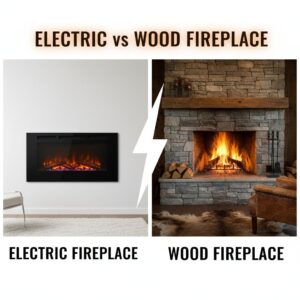
Electric Fireplace vs. Wood Fireplace: The Ultimate Modern vs. Traditional Showdown
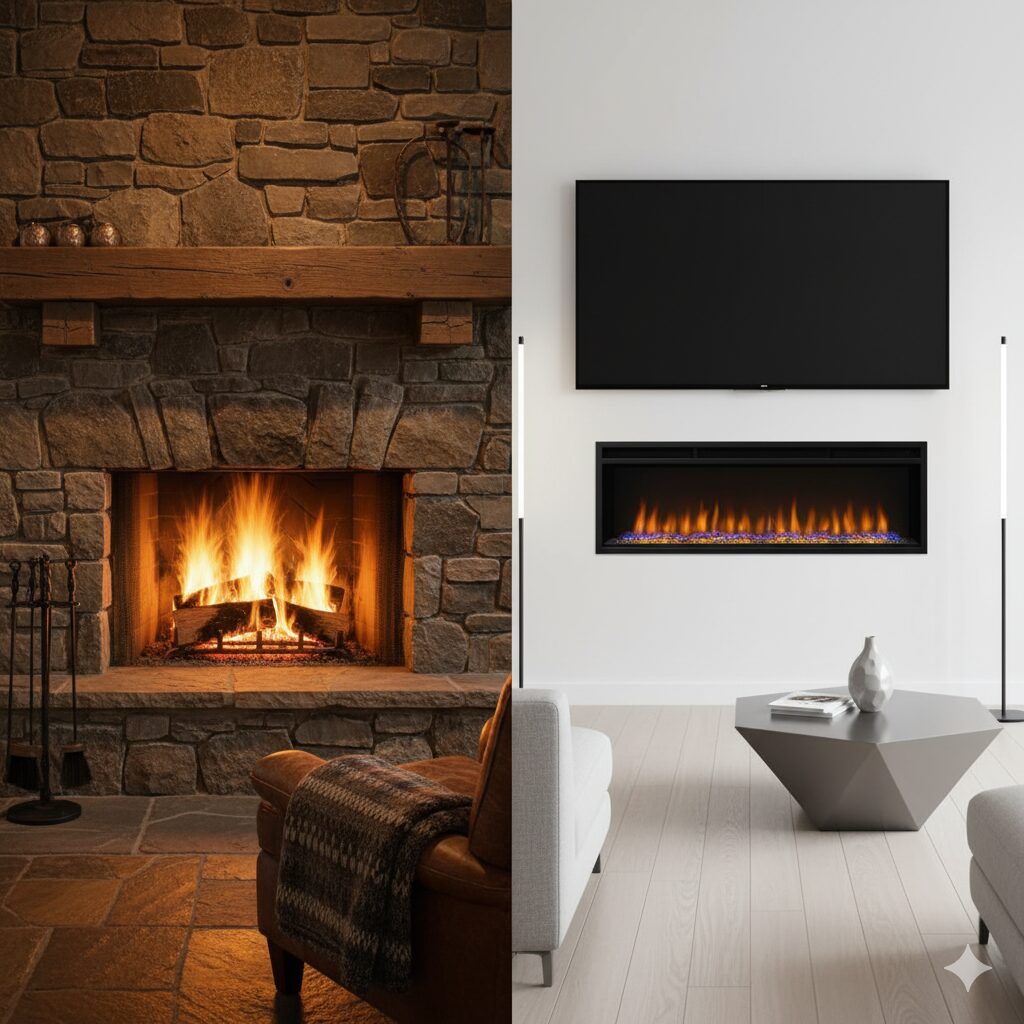
The fireplace has long been the heart of the American home—a primal centerpiece radiating warmth, light, and a sense of gathering. For generations, the only option was a traditional wood-burning fireplace, with its unmistakable crackle, smoky aroma, and hands-on ritual. But in the 21st century, a powerful contender has emerged: the modern electric fireplace. This isn’t your grandmother’s fake-looking heater anymore. Today’s electric models offer stunningly realistic flame effects, incredible convenience, and unparalleled safety.
This creates a classic dilemma for homeowners: Do you choose the authentic, timeless appeal of wood or embrace the effortless, high-tech convenience of electric? The decision impacts everything from your installation budget and monthly bills to your home’s safety and your weekend chores. It’s a battle between nostalgic tradition and modern innovation.
In this definitive guide, we will conduct a head-to-head comparison, breaking down the electric vs. wood fireplace debate across every crucial category — including types, costs, efficiency, environmental impact, home value, and much more — giving you the expert insights needed to choose the perfect hearth for your lifestyle and home.
📋 What’s Covered in This Guide
- Expert’s Perspective
- Types of Electric Fireplaces
- Types of Wood Fireplaces
- Round 1: Heat Output & Efficiency
- Round 2: Installation & Versatility
- Round 3: Ambiance & Realism
- Round 4: Safety
- Round 5: Maintenance & Upkeep
- Deep Dive: True Operating Costs
- Environmental Impact
- Home Resale Value
- Fireplaces for Renters & Apartments
- Indoor Air Quality
- Wood Fireplace Efficiency Upgrades
- Converting a Wood Fireplace to Electric
- Electric Fireplace Buying Guide
- Mantel & Hearth Décor Ideas
- The Third Option: Gas
- Final Verdict & Summary Table
- Frequently Asked Questions
An Expert’s Perspective on the Great Fireplace Debate
As a home heating specialist who has installed hundreds of hearths — from massive stone-and-mortar wood fireplaces to ultra-modern, wall-mounted electric units — I’ve seen the satisfaction and the frustration that comes with both. The most common mistake I see is a homeowner choosing based on a romanticized idea rather than their actual lifestyle. A wood fireplace is a commitment, a hobby. An electric fireplace is an appliance, a convenience. Neither is inherently “better,” but one is almost certainly better for you. My goal here is to give you a brutally honest, practical breakdown to help you make a choice you’ll be happy with for years to come.
Types of Electric Fireplaces: Which Style Is Right for You?
Before comparing electric to wood, it helps to understand that “electric fireplace” is an umbrella term covering a wide range of styles and applications. Each serves a different purpose and fits different spaces and budgets.
🖼️ Wall-Mounted Electric Fireplace
Hangs on the wall like a large flat-panel TV. Available from 30 to 80+ inches wide. Offers a sleek, modern look with zero floor footprint. Requires wall-mounting hardware and an outlet. The most dramatic statement piece option.
📦 Built-In / Recessed Electric Fireplace
Designed to be framed into a wall cavity for a seamless, flush-mount appearance. Requires a small construction project to create the recess but delivers an architectural look indistinguishable from a traditional fireplace opening at first glance.
🪵 Electric Fireplace Insert
Sized to slide into an existing wood-burning fireplace opening, instantly converting a cold, unused hearth into a clean, convenient electric unit. The most common retrofit option for homes with existing masonry fireplaces.
🏠 Mantel / Surround Package
Combines an electric firebox with a decorative mantel and surround — essentially a complete fireplace furniture piece. Available in traditional, craftsman, and modern styles. Plugs in anywhere. Ideal for rooms without an existing fireplace.
📺 TV Stand / Media Console Fireplace
A furniture piece that combines a media console (for your TV and entertainment equipment) with an integrated electric firebox below. Hugely popular for living rooms. Offers practical function and the ambiance of a fireplace in a single piece of furniture.
🚶 Freestanding / Corner Electric Stove
Resembles a traditional cast-iron wood stove aesthetically but operates electrically. Freestanding, easily moved, and plugs into any outlet. Available in corner-fitting versions to make use of otherwise dead wall space. Popular in bedrooms and sunrooms.
For apartments and rental spaces where wall modifications aren’t allowed: choose a freestanding stove or mantel package. For maximizing visual impact in a living room: choose a wide wall-mounted or built-in unit. For repurposing an existing wood fireplace: choose an electric insert. For combining fireplace ambiance with practical furniture: choose a media console model.
Types of Wood Fireplaces: Not All Wood Fireplaces Are the Same
Similarly, “wood fireplace” encompasses several distinct appliance types that vary enormously in cost, efficiency, and installation requirements.
🧱 Masonry Wood Fireplace
The traditional, built-in-place construction of brick or stone, mortar, and a cast masonry firebox. The gold standard for authenticity and permanence. Requires a concrete foundation and a fully constructed chimney. Efficiency is typically 10–15% for an open-hearth design. The most expensive option by a wide margin.
🏭 Prefabricated (Zero-Clearance) Wood Fireplace
Factory-built metal firebox units designed to be installed in framed wall cavities. Dramatically cheaper and faster to install than masonry. Quality units are code-tested and safe. The standard choice for new construction today. Efficiency similar to masonry (low), but inserts are available to upgrade both types.
🔥 Wood-Burning Fireplace Insert
A heavy steel or cast iron firebox designed to slide into an existing open masonry or prefab fireplace. Transforms an inefficient open-hearth fireplace into a high-efficiency (60–80%) wood stove. The single best efficiency upgrade for an existing wood fireplace. Vented with a stainless steel liner up the existing chimney.
🪵 Wood Stove (Freestanding)
Not technically a fireplace, but often considered in the same buying decision. A freestanding cast iron or steel appliance vented through a wall or ceiling with triple-wall pipe. The most efficient way to heat with wood — quality models reach 75–80% efficiency. Requires a hearth pad underneath and proper clearances from combustible materials.
This distinction matters enormously when comparing efficiency figures. Critics of wood heat often cite the 10–15% efficiency of an open masonry fireplace. But a modern EPA-certified wood stove or a quality fireplace insert can rival a gas appliance for heating efficiency while delivering real flames and zero fuel cost if you have access to your own wood.
Round 1: Heat Output & Efficiency
A fireplace should provide warmth, but how it creates and delivers that heat differs dramatically between electric and wood.
Wood Fireplace: Intense Radiant Heat (with a Catch)
A wood fire produces powerful radiant heat. This is the intense warmth you feel when you’re directly in front of the flames. It’s fantastic for warming people, but it’s an incredibly inefficient way to heat a room. Why? A traditional open-hearth fireplace is a massive energy sink.
- Massive Heat Loss: Up to 90% of the heat generated by the fire goes straight up the chimney, along with a huge volume of your already-heated indoor air. This can create a net heat loss in your home, making other rooms colder.
- No Temperature Control: You can’t set a wood fire to 72°F. It’s either blazing hot or dying down. Your only control is adding more of the best firewood for your fireplace or letting it burn out.
- Poor Heat Distribution: The heat is concentrated in one spot. People a few feet away will be roasting while those across the room feel nothing. For more efficient wood heating, you’d need to compare a wood stove vs. fireplace heating system, as stoves are far superior heaters.
Electric Fireplace: Efficient & Controlled Zone Heating
Electric fireplaces produce heat through a fan-forced heater, creating convection heat. A quiet fan pushes air over heated coils and circulates it into the room.
- 100% Efficiency: Because there is no venting, no heat is lost. Every single watt of electricity consumed is converted directly into heat for the room.
- Thermostatic Control: You can set the desired temperature on a remote or digital display, and the fireplace will cycle on and off to maintain it perfectly.
- Designed for Zone Heating: Most electric fireplaces are designed to heat a specific area, typically up to 400 square feet. This allows you to turn down your home’s central furnace and just heat the room you’re in, saving significant money.
Verdict: For actual heating performance, control, and efficiency, the electric fireplace is the decisive winner. It turns electricity into heat with perfect efficiency and precision.
Round 2: Installation & Versatility
This is perhaps the most significant point of difference, where one option offers boundless freedom and the other requires a major construction project.
Wood Fireplace: A Major, Permanent Construction Project
Installing a true masonry wood-burning fireplace is a complex and expensive undertaking. It’s an architectural feature, not an appliance.
- Structural Requirements: It requires a concrete foundation to support its immense weight, skilled masonry work, and a professionally constructed chimney that must extend a specific height above your roofline.
- Massive Cost: The cost for a new masonry fireplace and chimney can range from $8,000 to $30,000 or more.
- Location is Fixed: Once it’s built, it’s there forever. You can’t move it to another wall or take it with you when you sell the house.
- Codes and Clearances: It must be built to strict building codes with required clearances from combustible materials. Building it correctly often requires hiring one of the best chimney services from the start.
Electric Fireplace: Ultimate “Plug-and-Play” Flexibility
Electric fireplaces offer a world of possibilities with minimal fuss. If you can hang a TV, you can install many types of electric fireplaces.
- Endless Styles: They come in various forms: wall-mounted units, inserts for existing fireplaces, log sets, and full mantel packages.
- Install Anywhere: Because there’s no combustion, there’s no need for venting, chimneys, or clearances. You can install one in a bedroom, bathroom, kitchen, apartment, or even an RV.
- Simple & Cheap Installation: Many models require zero professional installation. Costs range from $200 for a simple unit to $3,000 for a high-end, built-in model.
Verdict: It’s not even a contest. The electric fireplace wins by a landslide for its low cost, simplicity, and incredible installation versatility.

Top Pick for Versatility: R.W.FLAME 50″ Wall-Mounted Electric Fireplace
This is a perfect example of modern electric fireplace flexibility. It can be fully recessed into a wall for a seamless look or simply hung on the wall like a piece of art. With multiple flame colors, a remote control, and a thermostat, it offers a high-end look and effective zone heating for a fraction of the cost of a traditional fireplace.
Check Price on AmazonRound 3: Ambiance & Realism
This is the most subjective category and often the one that matters most to traditionalists. Can technology truly replicate the magic of a real fire?
Wood Fireplace: The Authentic, Multi-Sensory Experience
The appeal of a wood fire is visceral. It engages all the senses in a way that technology cannot (yet) fully replicate.
- Real Flames: The dancing, unpredictable, and chaotic nature of real flames is mesmerizing.
- The Sound: The distinctive crackle and pop of burning logs is a huge part of the experience.
- The Smell: The faint, smoky aroma of burning wood is a powerful and nostalgic scent.
- The Ritual: The process of building, tending, and watching a fire is a satisfying, hands-on experience.
Electric Fireplace: A Surprisingly Realistic Simulation
Electric fireplaces have made incredible leaps in realism. While they can’t replicate the smell or the exact physics of a real fire, high-end models can be shockingly convincing.
- Advanced Flame Effects: Modern units use advanced LED technology, often projecting flames onto a back screen to create a sense of depth. Some high-end models, like Dimplex’s Opti-Myst line, use water vapor and light to create an astonishingly realistic 3D flame and smoke effect.
- Customization: You can often change the flame color, brightness, and speed with a remote control.
- Sound Effects: Many models come with built-in speakers that play looped recordings of crackling sounds.
- Heat-Free Ambiance: A massive advantage is the ability to run the flame effect without the heater. You can enjoy the ambiance of a fire on a warm summer night — something impossible with wood.
Verdict: While electric technology is impressive, the raw, multi-sensory experience of a wood fireplace remains undefeated for pure authenticity. However, the gap is closing fast, and the “good enough” realism of modern electrics, combined with their other benefits, is often a winning trade-off.
Round 4: Safety
When you have a fire in your home, safety is the paramount concern. Here, the two options are worlds apart.
Wood Fireplace: Inherent Risks Requiring Constant Vigilance
A wood fire is a controlled combustion event in your living room, which comes with numerous risks.
- Sparks and Embers: A popping log can send hot embers onto your floor or rug, creating a serious fire hazard. A screen is mandatory.
- Carbon Monoxide & Smoke: Improper venting, downdrafts, or a blocked chimney can lead to dangerous CO and smoke spillage. Many homeowners face issues with fireplace smoke coming into the house, which is a sign of underlying fireplace draft problems.
- Chimney Fires: Burning wood creates creosote, a flammable tar that builds up in your chimney. If it ignites, it can cause a devastating house fire.
- Hot Surfaces: The fireplace glass, doors, and surrounding masonry get dangerously hot, posing a burn risk to children and pets.
Electric Fireplace: The Pinnacle of Safety
An electric fireplace eliminates virtually every risk associated with a traditional fire.
- No Combustion: There is no real fire, which means no smoke, no CO, no dangerous fumes, and zero risk of a chimney fire.
- Cool-to-the-Touch: While the heating element gets warm, the front glass and frame on most units remain cool to the touch, making them perfectly safe for homes with kids and pets.
- Automatic Shut-Off: They have built-in safety features that automatically turn the unit off if it overheats.
- Zero Emissions: They don’t release any particulates or emissions into your home, improving indoor air quality.
Verdict: The electric fireplace is the safest option by an enormous margin. It provides the ambiance of a fire with none of the associated dangers.

Essential for Wood Fireplaces: A Quality Fireplace Tool Set
If you choose a wood fireplace, a sturdy tool set is non-negotiable for safety and maintenance. This set includes a poker, tongs, shovel, and brush to safely manage the fire and clean the hearth. A good set keeps you at a safe distance from the flames and helps you keep the fire area tidy and free of hazardous debris.
Check Price on AmazonRound 5: Maintenance & Upkeep
How much work are you willing to do to enjoy your fire? The answer to this question may be the ultimate deciding factor.
Wood Fireplace: A High-Maintenance Lifestyle
Owning a wood fireplace is an ongoing commitment that requires significant time and effort.
- Fuel Management: You have to source, purchase, haul, split, and stack firewood. This is a physically demanding, year-round chore.
- Daily Cleaning: You must scoop out ash from the firebox regularly, which is a messy job.
- Annual Professional Servicing: This is a critical safety requirement. You must hire a professional to inspect and sweep your chimney every year to remove dangerous creosote. This involves using tools like the best chimney brush for the liner and a chimney sweep vacuum to do the job properly.
- Ongoing Repairs: The masonry can crack and require tuckpointing with the best mortar for your chimney, and the chimney cap may need replacing to protect against rain and pests. It’s not uncommon to have to find out who to call for a bird stuck in the chimney.
Electric Fireplace: Virtually Zero Maintenance
The upkeep for an electric fireplace is almost non-existent.
- Occasional Dusting: You’ll need to dust the unit as you would any other piece of furniture or appliance.
- Lightbulb Replacement: After thousands of hours of use, you may eventually need to replace the LED bulbs that create the flame effect. This is typically a simple and inexpensive task.
Verdict: For anyone who values their time and wants to avoid chores and ongoing costs, the electric fireplace is the clear winner in a landslide.
Deep Dive: The True Operating Cost of Each Option
Comparing “costs” between these two fireplace types requires looking beyond the sticker price. The full picture includes purchase, installation, annual maintenance, fuel, and opportunity costs over the life of the appliance. Here’s how the numbers actually shake out over a typical five-season period for an American household burning fires regularly (assume three fires per week, October through March).
📊 5-Year Cost Comparison (Illustrative Example)
These are illustrative ranges — your actual costs depend on local electricity rates, firewood prices in your region, and how heavily you use the fireplace. The key takeaway: even a mid-range electric fireplace purchased and operated for five full seasons typically costs less in total than just the initial construction cost of a new masonry fireplace before a single log is burned.
Running a 1,500-watt electric fireplace for 3 hours per night costs approximately $0.68 at the national average electricity rate of $0.15/kWh. If that 3-hour session allows you to lower your whole-home thermostat by 2–3°F for those hours, many homes save more in furnace fuel costs than the electricity used by the fireplace. Zone heating done right can produce a net energy savings, not a net increase in your bill.
Environmental Impact: Which Is More Eco-Friendly?
The environmental comparison between electric and wood fireplaces is more nuanced than a simple answer suggests — and the “correct” answer depends heavily on how your local electricity is generated and how responsibly you source your wood.
Wood Fireplace: Carbon-Neutral in Theory, Polluting in Practice
Wood is technically a carbon-neutral fuel source — trees absorb CO2 while growing, and burning releases roughly the same amount, making the net atmospheric carbon impact theoretically neutral over the long cycle. However, this theoretical neutrality is undermined by the real-world air quality impact of wood combustion. Wood fires release significant amounts of fine particulate matter (PM2.5), carbon monoxide, volatile organic compounds (VOCs), and polycyclic aromatic hydrocarbons. These are the same pollutants that make urban smog dangerous. The EPA has progressively tightened emissions standards for new wood-burning appliances precisely because of these health and environmental impacts.
Modern EPA-certified wood stoves and fireplace inserts burn dramatically cleaner than open-hearth fireplaces — some emit 90% fewer particulates than older appliances. If environmental impact matters to you and you want to burn wood, this is a compelling argument for upgrading an open fireplace to a certified insert rather than continuing to burn in an open-hearth design.
Electric Fireplace: As Clean as Your Grid
An electric fireplace produces zero direct emissions at the point of use. Its environmental footprint is entirely a function of how the electricity powering it was generated. In states with high renewable energy penetration (California, Washington, Iowa), an electric fireplace can be genuinely low-carbon. In states relying heavily on coal-fired electricity, the upstream emissions from generating the electricity may actually exceed those of a well-designed wood appliance. As the U.S. grid continues its transition toward renewables, the environmental case for electric appliances improves automatically year over year without the homeowner needing to do anything.
The greenest fire is the one you don’t need to light. But if warmth and ambiance matter, the most environmentally responsible choice depends on your specific electricity grid, not a universal rule.
Home Resale Value: Which Fireplace Type Adds More Value?
Both fireplace types can add value to a home, but the nature and magnitude of that value-add differ significantly based on buyer demographics, region, and market conditions.
Wood Fireplaces and Home Value
A traditional wood-burning fireplace — especially a beautifully finished masonry fireplace with a stone or brick surround — is consistently cited by real estate professionals as a premium selling feature. Multiple studies and surveys of home buyers rank fireplaces as a highly desirable feature. One National Association of Realtors survey found that 46% of home buyers consider fireplaces an important feature, and that homes with fireplaces sell for a median of 6–12% more than comparable homes without in many markets. In cold-climate regions and in the luxury segment, this premium can be even higher.
However, this value equation has some caveats. An old, deteriorated, or non-functional wood fireplace that requires $5,000+ in repairs before use can actually be a negative in a buyer’s eyes. A well-maintained, recently serviced, functional wood fireplace is the asset — a neglected one is a liability.
Electric Fireplaces and Home Value
Electric fireplaces are largely treated as personal property by appraisers and real estate agents — similar to a refrigerator or washing machine. A high-quality built-in or recessed electric fireplace can add perceived value and appeal, particularly in markets where buyers value modern, low-maintenance features. However, they rarely command the same resale premium as a true wood-burning fireplace in appraisal terms. That said, a beautiful electric fireplace feature wall has become an increasingly popular design element that savvy buyers associate with a well-appointed home.
Bottom line on value: If maximizing resale value is a priority and you have a suitable home and budget, a well-constructed and well-maintained wood fireplace is the stronger investment. If you’re focused on personal enjoyment and plan to take the fireplace with you when you move, an electric unit offers more flexibility.
Fireplaces for Renters & Apartment Dwellers
For the estimated 44 million renter households in the United States, the electric fireplace is not just the preferred option — it’s often the only legal and practical one.
Installing or modifying a wood-burning fireplace requires landlord permission and typically structural permits that no reasonable landlord will approve for a tenant. Gas fireplace installation requires similar structural work plus a gas line modification. Neither is a realistic option for renters.
Electric fireplaces, on the other hand, are the perfect renter’s fireplace:
- No permanent modification required — most models simply plug into a standard outlet
- Portable — take it with you when you move
- No landlord permission needed (for freestanding and plug-in models)
- Apartment-safe — no combustion, no CO risk, no smoke alarm triggers
- Available in sizes that fit small spaces — including compact tabletop and mini units for studio apartments
For renters who dream of a fireplace but are stuck with bare walls and a no-modification lease, the electric fireplace is genuinely transformative — converting a cold, generic rental space into a warm and inviting home at a fraction of the cost of a new place with a real fireplace.
Indoor Air Quality: The Health Comparison
Indoor air quality (IAQ) is an increasingly important consideration for homeowners, particularly those with young children, elderly family members, or anyone with asthma, allergies, or respiratory conditions.
Wood Fireplace: A Significant Source of Indoor Pollution
Despite the romance associated with wood fires, the health science is clear: burning wood generates substantial amounts of indoor air pollutants. These include:
- Fine Particulate Matter (PM2.5): Tiny particles small enough to penetrate deep into lung tissue. Exposure is linked to respiratory disease, cardiovascular disease, and premature death with chronic exposure.
- Carbon Monoxide (CO): Produced by all combustion, potentially fatal at high concentrations.
- Polycyclic Aromatic Hydrocarbons (PAHs): Several of these compounds are known carcinogens.
- Formaldehyde and Benzene: Both carcinogens, released in small quantities by wood combustion.
Even with a properly functioning wood fireplace and chimney, some combustion byproducts inevitably enter the living space when the fire is being started, when logs are added, and when the fire dies down. A wood fire in a closed room measurably degrades air quality compared to baseline. For households with asthma sufferers, this is a real concern that should not be dismissed.
Electric Fireplace: Zero Impact on Indoor Air Quality
An electric fireplace produces zero combustion byproducts. There is no CO, no particulate matter, no VOCs, and no smoke. The only emission is heat and potentially dust if the fan is not cleaned regularly. For households where indoor air quality is a health priority — particularly in tightly-insulated modern homes where air exchanges are limited — the electric fireplace is the dramatically superior choice.
Wood Fireplace Efficiency Upgrades: Getting More from What You Have
If you already have a wood-burning fireplace and want to dramatically improve its efficiency and safety without replacing it, there are several proven upgrades worth knowing about.
🔲 Install a Fireplace Insert
The single best upgrade for an inefficient open-hearth fireplace. A quality EPA-certified wood-burning insert can transform your 10–15% efficient open fireplace into a 65–80% efficient closed stove system, dramatically reducing both wood consumption and creosote buildup. It’s installed with a new stainless steel liner running up the existing chimney.
🪟 Install Glass Fireplace Doors
A set of tempered glass fireplace doors is one of the cheapest and most effective efficiency improvements for an open masonry fireplace. When closed after the fire dies down, they prevent the convective loss of warm indoor air up the chimney. Studies suggest this simple addition can reduce a fireplace’s heat loss by 30–50%.
💨 Add a Fireplace Blower / Grate Fan
An electric grate blower sits beneath the fireplace grate and circulates warm air from the firebox into the room. This moves the radiant heat that would otherwise stay near the fireplace out into the living space, improving the effective heat delivery of any wood fire.
🔥 Upgrade Your Fireback
A cast iron fireback is placed at the rear of the firebox. It absorbs heat from the fire, re-radiates it into the room rather than losing it through the masonry at the back, and protects the rear masonry from heat damage. This classic technology dates back centuries and still works.
🌬️ Repair the Damper
A corroded or poorly sealing damper is one of the single biggest sources of heat loss in a home — like leaving a 6×8 inch hole in your ceiling year-round. A properly functioning damper seals tightly when the fireplace is not in use. Consider a top-sealing chimney cap/damper, which seals from the top and keeps animals and rain out simultaneously.
🧹 Annual Chimney Cleaning
A clean chimney with good draft is more efficient than a partially blocked one. Annual professional cleaning removes creosote, ensures proper airflow, and directly improves the quality of your fires while critically reducing fire risk.
Converting a Wood Fireplace to an Electric Insert: The Best of Both Worlds?
For homeowners who have an existing wood-burning fireplace that they rarely or never use — perhaps because of health concerns, maintenance costs, or lifestyle changes — converting it to an electric insert is an increasingly popular and surprisingly elegant solution.
What Is an Electric Fireplace Insert?
An electric fireplace insert is a self-contained electric firebox unit sized to fit inside an existing fireplace opening. It slides in, typically with no modification to the existing structure, and plugs into a standard outlet. The existing mantel, surround, and hearth remain intact, giving you the visual presence of a traditional fireplace with the convenience and safety of an electric appliance.
Why Convert?
- Health: Eliminates all combustion byproducts without losing the visual aesthetic of a fireplace
- Economics: No more chimney sweeping, creosote treatment, firewood, or masonry repairs
- Lifestyle: Instant-on convenience replaces the ritual of building and tending fires
- Safety: Eliminates chimney fire risk, CO risk, and spark hazards
- Ambiance preservation: Retains your existing fireplace’s architectural presence and mantel
What to Know Before Converting
Measure your fireplace opening carefully — width, height, and depth — before purchasing an insert. Most electric inserts are designed for standard openings, but some masonry fireplaces have oversized or irregularly shaped openings that may require a custom fit or a surround kit to fill any gap. You’ll also want to ensure there’s a standard outlet accessible near the fireplace; if not, you may need a licensed electrician to add one before installation.
Electric Fireplace Buying Guide: What to Look for Before You Buy
With hundreds of models at every price point, choosing the right electric fireplace requires knowing which specifications actually matter and which are marketing fluff.
Key Specifications to Evaluate
Wattage and Heating Capacity: Most portable electric fireplaces use a standard 1,500-watt heating element — this is regulated by UL safety standards and is common across almost all models. The difference in heating performance between brands comes from the fan design and airflow efficiency, not the wattage number. Look for a rated heating area of at least 400 sq ft for typical living room use.
Flame Technology: Entry-level models use simple spinning reflectors and a single LED behind an embossed screen. Mid-range models use layered LED projection onto a back screen for greater depth. Premium models use 3D projection, water vapor (Opti-Myst), or multi-speed fan-driven steam to create the most realistic effects. If realism matters to you, watch video reviews of the specific model operating — still photos never tell the full story of how a flame looks in motion.
Thermostat vs. Temperature Setting: A thermostat-equipped model senses room temperature and cycles the heater on and off to maintain your set temperature — far more energy-efficient than running at full power continuously. This is a feature worth paying for. A simple “low/high heat” switch without a thermostat is more common on budget models.
Flame-Only Mode: Confirm the unit can run the flame effect without the heater. This allows year-round use of the visual ambiance without heating a room that’s already warm. Almost all quality units offer this, but verify before purchasing.
Circuit Requirements: Most 1,500-watt electric fireplaces draw 12.5 amps on a standard 120V circuit. This is within the capacity of a standard 15-amp household circuit but uses most of it. On a 15-amp circuit, avoid plugging other significant loads (vacuum cleaner, hair dryer, space heater) into the same circuit simultaneously. Larger, high-output electric fireplaces (some built-in models up to 5,000 watts) may require a dedicated 240V circuit — have an electrician assess this before purchase.
Brands Worth Considering
The electric fireplace market ranges from no-name imports to well-regarded specialty brands. At the premium end, Dimplex (known for Opti-Myst technology), Modern Flames (known for ultra-realistic linear designs), and Touchstone (known for value-to-quality ratio in wall-mount units) are brands that have earned strong reputations. At the mid-range, R.W.FLAME, PuraFlame, and Amantii offer good performance at accessible price points. Avoid the lowest-tier no-brand units from unfamiliar vendors — the flame quality gap between a $150 generic and a $400 quality unit is significant.
Mantel & Hearth Décor Ideas: Making Your Fireplace a Design Centerpiece
Whether you choose electric or wood, the fireplace surround and mantel are a major design opportunity. Here are approaches that work beautifully with both types.
🪨 Stone & Tile Surround
Stacked ledgestone, marble tile, slate, or subway tile surrounding the firebox creates a dramatic focal point. Works with both masonry and built-in electric fireplaces. Mix natural stone with a clean white mantel for contrast.
🎨 Shiplap or Wood Feature Wall
Flanking a wall-mounted electric fireplace with horizontal shiplap creates a cozy, farmhouse-inspired look. Electric fireplaces are ideal here since the minimal heat output allows combustible wood paneling much closer to the unit than a wood fireplace would permit.
📺 TV Above the Fireplace
One of the most popular design choices for electric fireplaces — mounting a TV directly above the unit creates a striking media wall. This works safely with most electric models since they vent heat forward and downward rather than upward. Always verify manufacturer clearance specs for the specific unit.
🌿 Mantel Styling
The mantelpiece is your year-round display shelf. Layer with items of varying heights: a large mirror or artwork anchors the center, flanked by candlesticks, plants, books, or seasonal décor. Odd numbers of objects and varied heights create the most visually interesting arrangement.
The Third Option: What About Gas?
It’s worth noting there’s a popular middle ground. Gas fireplaces offer real flames and efficient heat like a wood stove, but with the convenience and control of an electric unit (thermostat, remote start). They are a fantastic choice but require professional installation and a gas line. Direct Vent gas units are the most popular residential choice, combining sealed combustion safety with 70–85% heating efficiency. To learn more, explore our detailed guide on gas fireplace venting options.
Final Verdict: The Head-to-Head Summary
| Feature | Electric Fireplace | Wood Fireplace |
|---|---|---|
| Heat Efficiency | Excellent (100% Efficient) | Poor (10–15% for open hearth; up to 80% with insert) |
| Installation Cost | Very Low ($200–$3,000) | Extremely High ($8,000–$30,000+) |
| Operational Cost | Low to Moderate (Electricity) | Moderate to High (Wood + Maintenance) |
| Ambiance/Realism | Good to Excellent (Simulated) | Perfect (Authentic) |
| Safety | Excellent (Zero Combustion Risk) | Poor to Fair (Requires Constant Vigilance) |
| Maintenance | Virtually None | Very High (Annual Professional Service Required) |
| Versatility | Excellent (Install Anywhere, Including Apartments) | Poor (Fixed, Structural) |
| Indoor Air Quality | Excellent (Zero Emissions) | Poor (Particulates, CO, VOCs) |
| Home Resale Value | Moderate (Appreciated; rarely appraised) | High (Consistently cited as premium feature) |
| Environmental Impact | Depends on local electricity grid | Carbon-neutral if sustainably sourced |
Who Should Choose an Electric Fireplace?
- Convenience, safety, and low maintenance above all else.
- Affordability, both in upfront cost and installation.
- Installation flexibility to put a fireplace in any room, including apartments and rentals.
- Efficient zone heating with precise temperature control.
- Households with young children, pets, or respiratory health concerns.
- Enjoying flame ambiance year-round, with or without heat.
Who Should Choose a Wood Fireplace?
- Authenticity is your number one priority, and you won’t settle for anything less than a real, multi-sensory fire.
- You have a large budget for a major construction project or are buying a home that already has one.
- You view the process of managing a fire as an enjoyable hobby, not a chore.
- You live in a rural area with easy, cheap access to firewood.
- Maximizing resale value is a priority and your market rewards wood-burning fireplaces.
Frequently Asked Questions
Q: Do electric fireplaces actually look realistic?
A: Yes, modern high-quality electric fireplaces can look surprisingly realistic. While entry-level models might have a simple, flat flame effect, more advanced units use 3D projection, layered LED lights, and even water vapor to create a flame and smoke effect that can fool most people at a glance. It’s best to see them in person or watch videos of specific models to judge for yourself.
Q: How much does it cost to run an electric fireplace?
A: The cost depends on your local electricity rates. A typical fireplace heater is 1,500 watts. If your electricity costs $0.15 per kilowatt-hour (kWh), running the heater would cost about 22.5 cents per hour. Running just the flame effect (without heat) uses negligible energy, similar to a couple of lightbulbs, costing only a few cents per hour.
Q: Can an electric fireplace be my primary heat source?
A: No, an electric fireplace is not designed to be a primary heat source for a whole house. It is designed as a “supplemental” or “zone” heater for a single room or area up to about 400 sq. ft. It’s perfect for warming the room you’re in so you can lower your main thermostat.
Q: Can I put my TV above an electric fireplace?
A: In most cases, yes! This is a major advantage over wood or gas. Most electric fireplaces vent heat from the front or bottom, directing it into the room, not upwards. This keeps the wall above them cool and safe for mounting a television. Always check the manufacturer’s specifications for clearances, but it’s a very common and safe installation.
Q: What is the best electric fireplace for an apartment?
A freestanding electric stove or a plug-in mantel package is ideal for most apartments — no wall modifications, no landlord permission needed, and fully portable when you move. If you have permission to mount things on the wall (as most leases allow for picture-hanging), a wall-mounted unit is an excellent option. Look for units that plug into a standard 120V outlet and avoid large built-in models that require electrical work.
Q: Does a wood fireplace add value to a home?
Yes, a well-maintained, functional wood-burning fireplace consistently ranks as a desirable home feature in buyer surveys. NAR data suggests homes with fireplaces can command a 6–12% price premium in many markets, particularly in cold-climate regions. However, a fireplace that’s in poor condition, has a damaged chimney, or hasn’t been serviced can actually reduce buyer confidence. Functionality and condition matter as much as the fireplace’s mere presence.
Q: Can I convert my existing wood fireplace to an electric one?
Yes — this is one of the most practical and affordable conversions available. An electric fireplace insert is sized to slide directly into your existing fireplace opening, plugs into a standard outlet, and requires no modification to your chimney or masonry. Measure your opening’s width, height, and depth carefully and look for an insert with a faceplate or surround kit to cover any gap between the unit and the fireplace opening. The transformation is immediate and the cost is typically $400–$1,200 all-in.
Q: Are pellet stoves a good alternative to both?
Pellet stoves occupy an interesting middle ground. They burn compressed wood pellets with high efficiency (75–85%), have a thermostat and automatic ignition (like electric), produce real flames and heat (like wood), and are EPA-certified with much lower emissions than open-hearth wood burning. The downsides: they require a vent pipe, they need electricity to operate the auger and fan (no power = no heat, unlike most wood appliances), and the pellet hopper needs regular refilling. For homeowners wanting real combustion with greater convenience than traditional wood, pellets are genuinely worth exploring.
Q: What does “zero-clearance” mean for a wood fireplace?
A zero-clearance (ZC) fireplace is a factory-built, insulated metal firebox unit designed to be installed with minimal clearance from combustible wall framing — as opposed to a traditional masonry fireplace which requires significant non-combustible material buffers. ZC fireplaces are the standard for new construction today, costing a fraction of masonry construction and achieving the same visual result when properly finished with a surround and mantel. They still require a proper chimney system and must meet the same code requirements as masonry designs.
Q: How do I prevent smoke from coming into the room with a wood fireplace?
Smoke entering the room is one of the most common and frustrating wood fireplace problems. The most frequent causes are: a cold chimney flue (warm it with a lit newspaper held near the open damper before lighting the main fire), a closed or partially-open damper, wet or green wood, negative air pressure in the home (caused by exhaust fans or a tight building envelope), or an obstruction in the chimney (creosote buildup, animal nests, damaged cap). A professional chimney inspection will identify which cause applies to your specific situation.