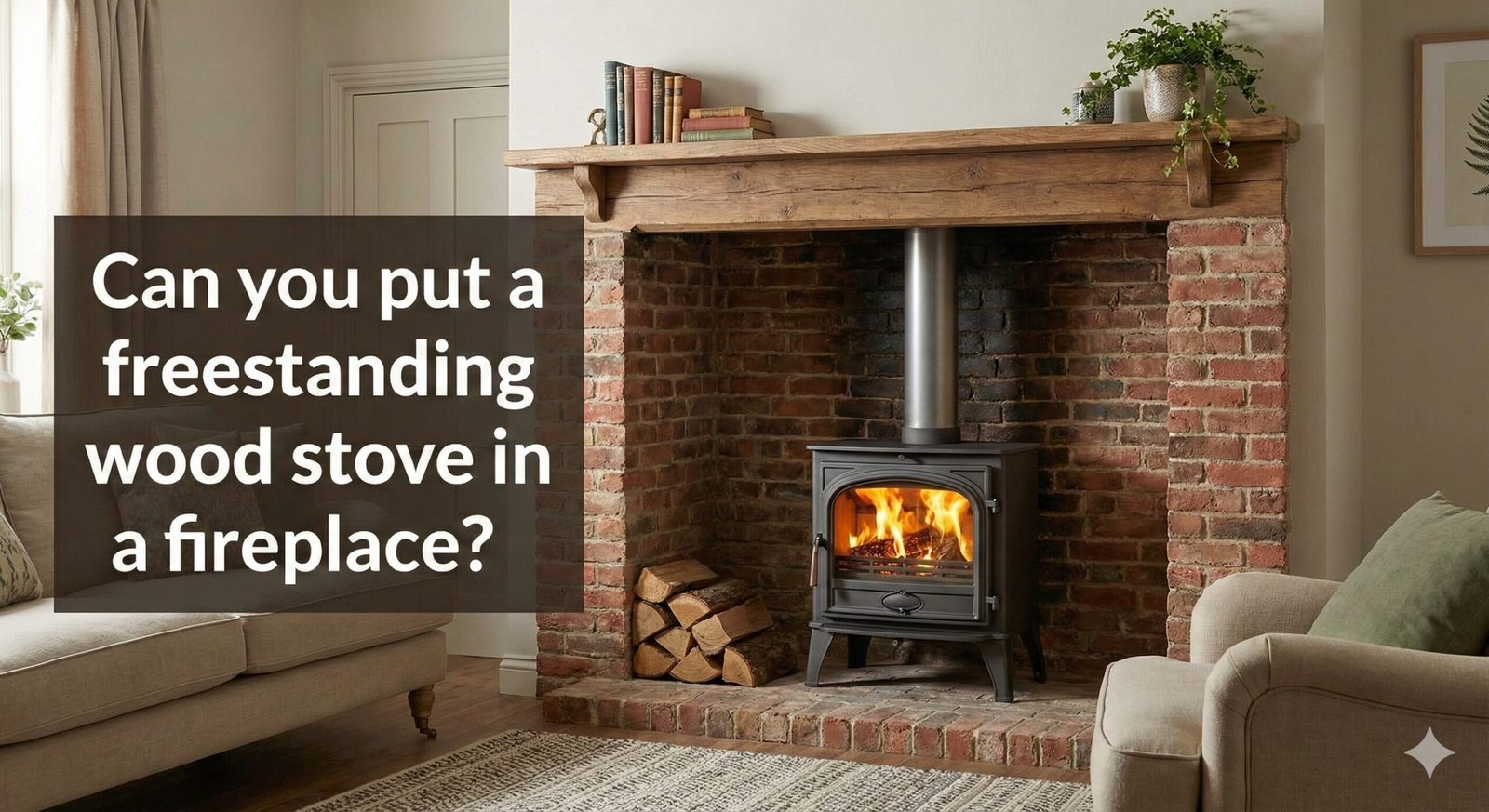
Can You Put a Freestanding Wood Stove in a Fireplace? Requirements & Risks
By Chimney Insight Editorial Team
Posted on January 25, 2026
Disclosure: This page contains affiliate links. We may earn a commission from qualifying purchases at no extra cost to you. As an Amazon Associate I earn from qualifying purchases.
There is an undeniable romance to an open masonry fireplace. The snap of the logs, the smell of woodsmoke, and the dancing flames are the epitome of comfort. However, from a heating perspective, traditional fireplaces are disastrously inefficient. Studies show that a standard open fireplace sends up to 80-90% of the heat right up the chimney, often pulling warm air from the rest of your house along with it.
If you are tired of feeding wood into a fire that barely warms the room, you have likely asked: Can you put a freestanding wood stove in a fireplace?
The answer is a resounding yes. This process, often called a “hearth stove installation,” allows you to utilize the existing masonry structure of your fireplace while gaining the massive efficiency and heat output of a modern wood stove. However, this is not as simple as shoving a stove into the hole and lighting a match. It requires careful planning, specific venting, and adherence to safety codes.
The Short Answer: Yes, But There Are Rules
Installing a freestanding wood stove into an existing fireplace firebox is a common and highly effective upgrade. Unlike a “fireplace insert”—which slides in and sits flush with the wall—a freestanding stove sits either partially inside the firebox or out on the hearth extension.
This setup offers a rustic aesthetic and often provides more radiant heat than an insert because more surface area of the stove is exposed to the room. However, to do this safely, you must address three critical components:
- Clearances: The stove must fit physically, but it also needs air space around it to prevent the masonry from overheating and to allow for air circulation.
- Venting: You cannot simply vent the stove into the open cavern of the chimney. You must install a stainless steel liner that connects the stove directly to the top of the chimney.
- Hearth Protection: The floor in front of the stove must meet R-value requirements to protect your subfloor from heat and embers.

Voda 4-Blade Heat Powered Stove Fan
Once you install your freestanding stove, you need to push that heat into the room. This fan sits on top of the stove, requires no electricity, and circulates warm air efficiently.
Why Convert to a Hearth Stove?
Why go through the trouble of retrofitting a stove rather than just using the fireplace as is? The difference in performance is night and day.
Efficiency and Heat Output
Modern EPA-certified wood stoves are engineered to burn wood completely. They utilize secondary burn tubes or catalytic combustors to burn the smoke before it exits the flue. This results in efficiency ratings of 70% or higher, compared to the 10-15% efficiency of an open fireplace.
Compare the Stats:Want to see the hard numbers on heat loss vs. heat gain? Check out our detailed comparison on Wood Stove vs. Fireplace Heating
Reduced Creosote and Pollution
Because wood stoves burn so cleanly, they produce significantly less creosote—the tar-like substance that causes chimney fires. They also emit far less particulate matter into the atmosphere, making them an environmentally friendlier choice.
Step 1: Assessing Your Fireplace
Before you buy a stove, you need to measure your firebox. You aren’t just measuring for the stove itself, but for the necessary clearances.
- Height: Measure the opening height. Most freestanding stoves have a flue collar on top. You need enough clearance to connect the stove pipe elbow to the liner.
- Width and Depth: Ensure the stove fits with at least a few inches of clearance on the sides and rear for airflow.
- The Lintel: The metal bar supporting the masonry across the top of the fireplace opening is often the biggest obstacle. If your stove is too tall, it won’t slide under the lintel.
You also need to inspect the condition of the masonry. If your chimney is crumbling or unlined, you have work to do before installation.
Maintenance Check: Before any installation, the chimney must be spotless. Learn How Often Should You Clean a Chimney to prepare for your new stove.
Step 2: The Critical Chimney Liner
This is the most important technical aspect of the installation. You must install a stainless steel chimney liner. You cannot simply shove the stove pipe into the fireplace throat and hope the smoke goes up.
A wood stove requires a specifically sized flue (usually 6 inches) to create the proper draft. An open masonry chimney is far too large. If you vent a stove into a large, cold masonry flue, the smoke will cool rapidly, lose its lift, and settle as dangerous creosote glaze on the walls.
A continuous stainless steel liner runs from the top of the stove all the way to the chimney cap, ensuring a strong, safe draft and easy cleaning.
Draft Issues? Understanding airflow is key to a smokeless fire. Read about common Fireplace Draft Problems and how liners solve them.

Forever Flex 6″ x 25′ Stainless Steel Chimney Liner Kit
This kit includes everything you need: the flexible liner, the cap, the flashing, and the connectors. Essential for safely venting a wood stove through an existing masonry chimney.
Installation Methods: Rear Vent vs. Top Vent
Freestanding stoves typically vent from the top, but some have a rear option. This matters greatly for fireplace installation.
- Top Vent: Most common. Requires more height clearance. You will need to install a 90-degree elbow or a flexible adapter to turn the pipe backward into the chimney flue.
- Rear Vent: Ideal for shallow fireplaces. The pipe comes out the back and goes straight up the chimney, allowing the stove to sit further out on the hearth, providing better radiant heat to the room.
The Secret Weapon: The Block-Off Plate
Many DIY installers skip this step, and it costs them heat. A block-off plate is a sheet of metal installed inside the chimney throat, around the new stainless steel liner.
Without this plate, the heat generated by your stove will rise, hit the damper area, and escape up the chimney cavity surrounding your new liner. The block-off plate seals the chimney, forcing the heat to stay in the room. For maximum efficiency, you should also insulate above this plate.
Keep the Heat In: Proper insulation is what separates a good install from a great one. Learn How to Insulate a Chimney for maximum efficiency.

Rutland 600°F RTV High Heat Silicone Sealant
When installing your block-off plate and sealing the flue collar, you need a sealant that won’t crack under intense heat. This black silicone blends in and holds up to extreme temperatures.
Pros and Cons of Freestanding Stoves in Fireplaces
Pros
- Cooking: Unlike inserts, the top of a freestanding stove is often exposed, allowing you to cook or boil water during power outages.
- Radiant Heat: With more surface area exposed to the room, you get better radiant heating than an insert.
- Aesthetics: Offers a charming, rustic farmhouse look that many homeowners prefer.
- Cost: Freestanding stoves are often cheaper than dedicated fireplace inserts.
Cons
- Space: The stove will likely protrude onto the hearth, taking up floor space.
- Cleaning: It can be harder to clean around and behind a stove tucked into a fireplace recess.
- Installation Difficulty: Maneuvering a 300+ lb stove into a tight firebox can be physically difficult.

Kidde Carbon Monoxide Detector (Digital Display)
Changing the draft physics of your home requires safety precautions. A digital CO detector is mandatory to ensure your new stove is venting properly and not leaking gas back into the home.
Frequently Asked Questions
Do I need a permit to install a wood stove in my fireplace?
In most municipalities, yes. Installing a wood stove is considered a major modification to your home’s heating system. You will likely need a building permit and a final inspection by the fire marshal or building inspector to ensure clearances and venting meet local codes.
Can I just extend the stove pipe up past the damper?
No, this is called a “slammer install” and is dangerous and illegal in many codes. The pipe must connect to a full liner that goes to the top of the chimney. Venting into the large masonry void causes draft issues and massive creosote buildup.
How much space do I need around the stove?
Clearances vary by stove model. Check the owner’s manual for “clearance to combustibles.” If your fireplace is masonry (brick/stone), these are non-combustible, but you still need air gaps (usually 2-6 inches) for the stove to function properly and not overheat the masonry.
Is a wood insert better than a freestanding stove?
It depends on your goal. Inserts look cleaner and flush, often have blowers to push air, and save floor space. Freestanding stoves offer radiant heat, a cooking surface, and a classic look but take up hearth space.
How do I clean the chimney with a stove installed?
Most modern installations use a “T-connector” at the back of the stove with a removable clean-out cap, or the baffle inside the stove can be removed to sweep from the top down, allowing the soot to fall into the stove firebox for removal.
Can I use my existing chimney damper?
Usually, the existing damper must be removed or permanently locked in the open position to allow the new stainless steel liner to pass through. You will rely on the stove’s air controls to regulate the burn, not the chimney damper.
What do I do if my hearth is too small?
You will need to extend the hearth protection. This can be done using a hearth pad (purchased online) or by laying tile/stone over a non-combustible board (like Micore or Durock) on the floor in front of the fireplace to meet the R-value requirements.
Will the stove handle stick out too far?
This is a common oversight! Measure the depth of your firebox and the depth of the stove including the loading door handle and the ash lip. Ensure you have enough hearth extension to catch embers when the door is open.