Who to Call for Chimney Bird Rescue and Safe Removal
By Chimney Insight Editorial Team
Posted on September 23, 2025
Disclosure: This page contains affiliate links. We may earn a commission from qualifying purchases at no extra cost to you. As an Amazon Associate I earn from qualifying purchases.
It’s a sound that can be both mystifying and deeply distressing: a frantic scratching, chirping, or fluttering coming from deep within your fireplace. Your heart sinks as you realize an animal, most likely a bird, has made a terrible mistake and is now trapped in your chimney. Your first instinct is to help, but how? And more importantly, who should you call for a bird stuck in a chimney?
This situation is more common than you might think, especially during nesting seasons in the spring and fall. Navigating this problem correctly is crucial for the safety of the bird, the cleanliness of your home, and the integrity of your chimney. Panic can lead to poor decisions, but don’t worry. We’re here to guide you through every step with expert advice.
Quick Answer: Who to Call First
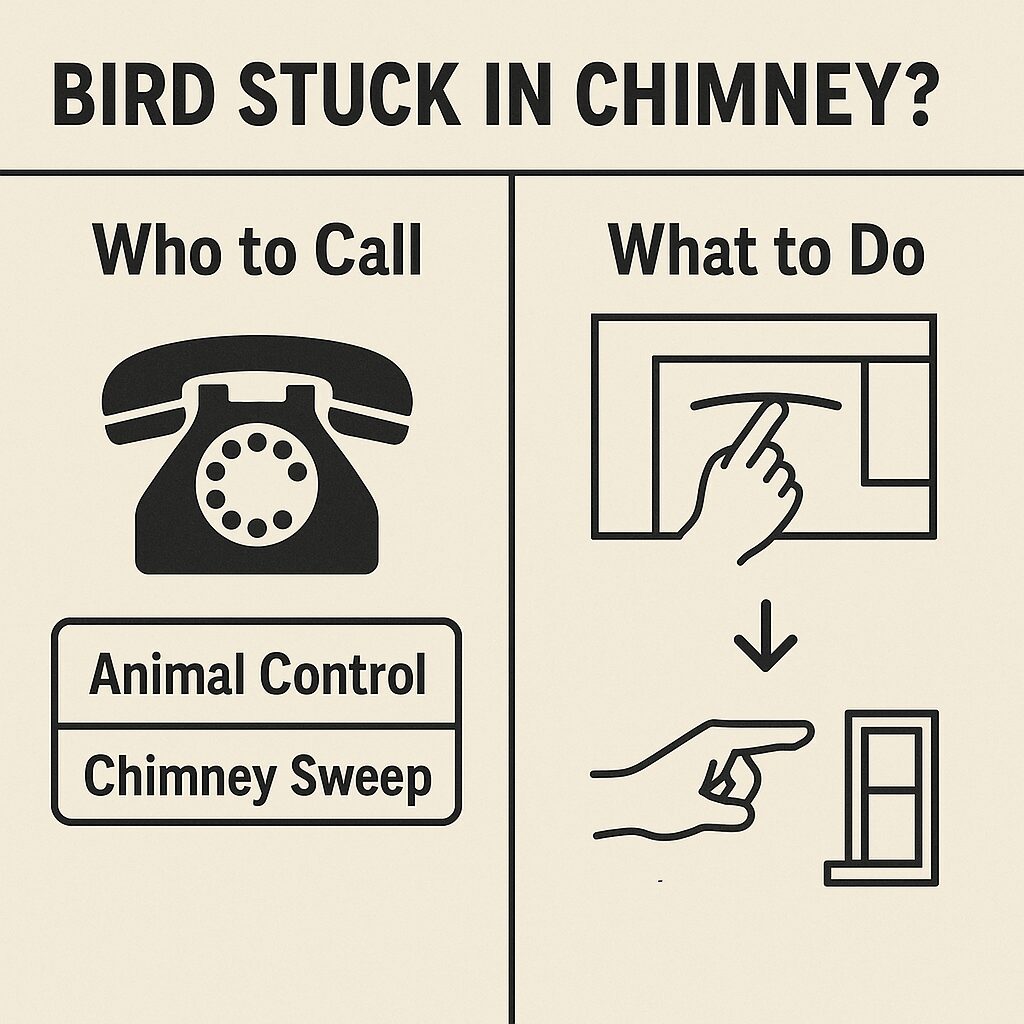
For a live bird stuck in your chimney, your best first call is to a local wildlife rehabilitation center or a humane animal removal service. If the bird is deceased or you suspect a nest is causing a blockage, a certified chimney sweep is the most qualified professional to handle the situation safely and thoroughly.
Immediate First Steps: What to Do in the First 15 Minutes
Before you pick up the phone, a few immediate actions can make a huge difference. Your goal is to secure the area, assess the situation without causing more harm, and prepare for a potential rescue.
- Confirm the Fire is Out: This seems obvious, but double-check that your fireplace is completely cold. There should be no hot embers or residual heat. Do not use the fireplace until the situation is resolved.
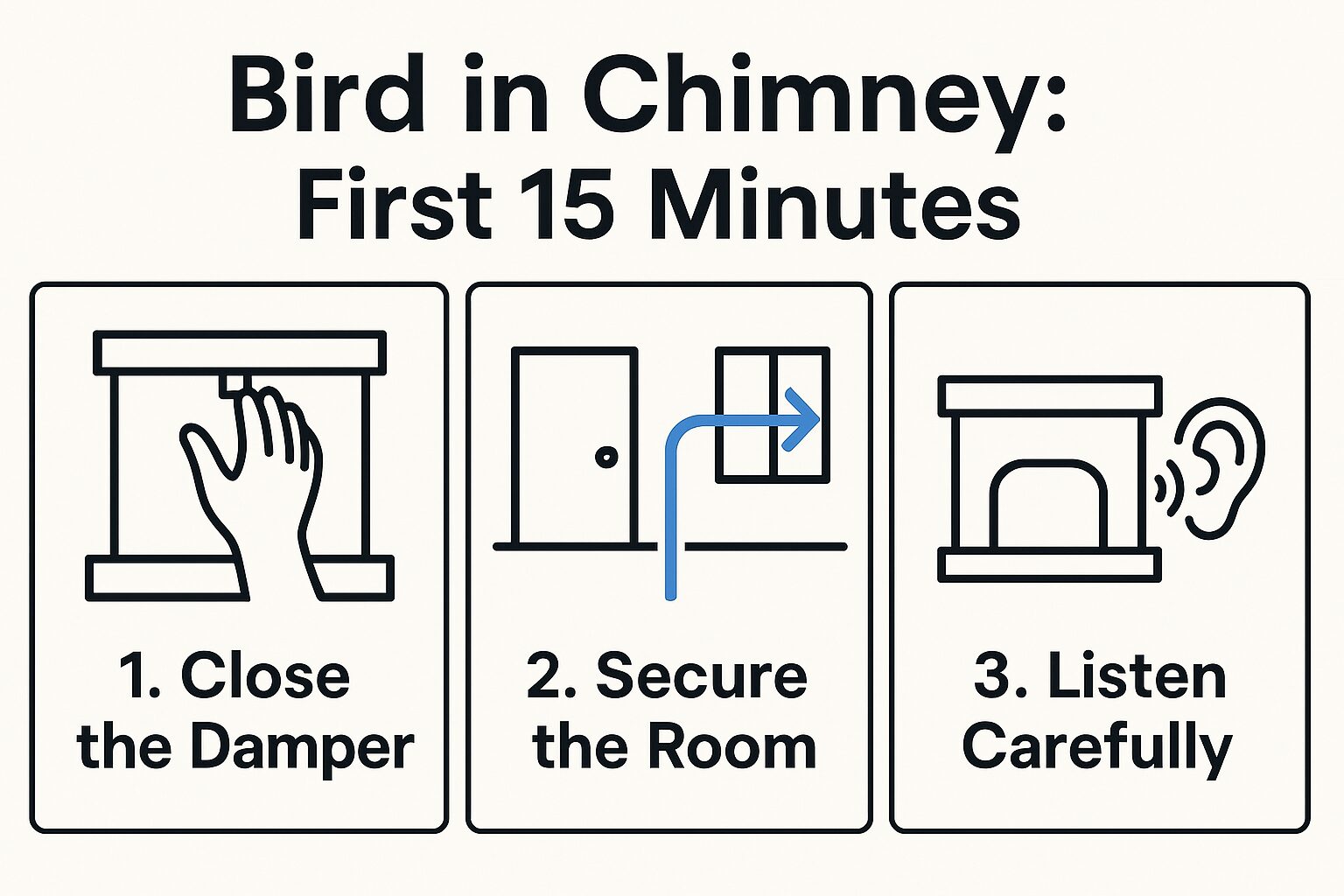
- Close the Damper: The damper is the metal plate inside your chimney flue. If it’s open, the bird could fall directly into your fireplace. Gently close it. If you hear the bird right above the damper, you know it’s close. If the sound is farther up, it’s higher in the flue.
- Secure the Room: Close all doors to the room with the fireplace. Open a window or an exterior door in that room. If the bird manages to get out, you want to give it a clear and easy escape route to the outside, not the rest of your house.
- Listen Carefully: Try to pinpoint the bird’s location. Is the sound high up, or does it sound like it’s just behind the damper? Is it constant fluttering, or intermittent chirping? This information will be vital when you call for help. The sounds can also give you a clue about the urgency. Continuous, frantic struggling means the bird is exhausted and needs help soon. It’s a sad reality, but it’s important to understand how long a bird stuck in the chimney might survive to gauge the urgency of the situation.
- Minimize Noise: Turn off TVs, radios, and talk quietly. Loud noises will only stress the trapped animal further. Keep pets and children out of the room entirely.
Important Safety Warning
NEVER try to “smoke out” a bird or animal. This is incredibly cruel and ineffective. You will likely kill the bird, and you risk a serious chimney fire if there is a nest (which is highly flammable). This is the single worst thing you can do in this situation.
The Definitive Guide: Who to Call for a Bird in Your Chimney
You’ve assessed the situation, and now it’s time to call in the cavalry. But which hero do you summon? The right choice depends on your specific circumstances, local resources, and the condition of the bird.
1. Wildlife Rehabilitator / Rescue Center
This is often the best and most humane first call for a live, uninjured or slightly injured animal.
- What They Do: These are non-profit organizations or licensed individuals dedicated to the care and recovery of wild animals. Their goal is to rescue, treat, and release animals back into their natural habitat.
- When to Call Them: Call them if you are certain the bird is alive and you want the most humane outcome. They are experts in handling stressed wildlife without causing further injury.
- Pros: Experts in animal behavior and handling. They prioritize the animal’s welfare. Often a free service, though donations are heavily encouraged.
- Cons: As non-profits, they can be understaffed and may not offer 24/7 emergency service. They may not be equipped to deal with complex chimney issues (like a nest high up).
- How to Find Them: Search online for “[Your City/County] wildlife rehabilitator” or “wildlife rescue near me.” The Humane Society’s website or your state’s Department of Fish and Wildlife website often maintain lists of licensed rehabilitators.
2. Humane Animal Removal Service
These are professional, for-profit companies that specialize in removing wildlife from homes and businesses in a humane way.
- What They Do: They have the equipment and training to safely access and remove animals from attics, walls, and chimneys. They often also offer exclusion services to prevent future incidents.
- When to Call Them: This is an excellent choice if a volunteer rehabber isn’t available, or if you suspect the situation is complex (e.g., a whole family of birds or a nest).
- Pros: Professional, insured, and usually offer quick response times. They have the right tools for the job (ladders, graspers, cameras). They can identify and address the entry point.
- Cons: This is a paid service, and costs can range from $150 to $500+ depending on the complexity. Be sure to vet the company to ensure they are genuinely humane and not just a “pest control” service that will harm the animal.
- How to Find Them: Search for “humane animal removal [Your City]” or “wildlife removal services.” Check reviews carefully and ask about their methods before hiring.
3. Certified Chimney Sweep
While their main job is cleaning and maintenance, experienced chimney sweeps are masters of the chimney environment and frequently encounter this issue.
- What They Do: A certified sweep inspects, cleans, and repairs chimneys. They have specialized cameras and tools to see inside the entire flue and can safely remove blockages, including nests and deceased animals.
- When to Call Them: This is the ABSOLUTE BEST call if you suspect a nest is involved, if the bird is deceased, or if you can’t get a wildlife specialist to come out. They are also the right call for post-removal inspection and prevention.
- Pros: Unmatched expertise in the physical structure of your chimney. They can remove the bird and the reason it got stuck (the nest). They can perform a full safety inspection and install a proper chimney cap to prevent it from ever happening again. For reliable professionals, it’s wise to consult a guide to the best chimney services in your area.
- Cons: Their primary expertise isn’t live animal handling (though many are experienced). This is a paid service.
- How to Find Them: Look for sweeps certified by the Chimney Safety Institute of America (CSIA). Search “CSIA certified chimney sweep near me.”

4. Municipal Animal Control
This is the government agency responsible for public safety concerning animals. Their role can vary significantly by location.
- What They Do: Animal Control Officers (ACOs) respond to calls about stray, dangerous, or neglected domestic animals. Their involvement with wildlife can be limited.
- When to Call Them: Call them if a bird has gotten out of the chimney and is now loose and uncontrollable in your house. You can also call them as a last resort if you cannot find any other help.
- Pros: No cost to you as it’s a public service.
- Cons: In many municipalities, wildlife inside a private residence is considered the homeowner’s responsibility. They may lack the specific equipment for chimney rescues and may have policies that lead to euthanasia rather than rehabilitation for common species. Their response time can be slow.
- How to Find Them: Search for “[Your City/County] Animal Control” or look on your local government’s website.
Expert Tip: When you call any service, be ready to provide clear information: what you hear, where you think the bird is, the type of chimney you have (masonry or metal), and your home’s accessibility (e.g., roof pitch). This helps them come prepared.
Identifying the Bird Species: Why It Matters More Than You Think
Before you call anyone, take a moment to observe and listen. The species of bird trapped in your chimney is not just a curiosity—it has direct legal, behavioral, and tactical implications for how the rescue should proceed. Getting this wrong can lead to unintentional violations of federal wildlife law or a failed rescue attempt.
The Chimney Swift: The Most Common and Most Protected
The Chimney Swift (Chaetura pelagica) is the species most synonymous with chimneys. These small, sooty-brown birds with a distinctive rapid, twittering call are aerialists—they eat, drink, and even mate while in the air. Historically they nested in hollow trees, but as forests shrank and chimneys multiplied across North America, they adapted to use masonry flues as their primary nesting habitat.
Chimney Swifts are protected under the federal Migratory Bird Treaty Act (MBTA). It is illegal to remove, relocate, or disturb an active Chimney Swift nest at any time. The birds typically arrive in early spring and depart in September. If you hear rapid, high-pitched chattering from your chimney during these months, assume Chimney Swifts until proven otherwise and contact a wildlife professional before taking any action.
Other Common Chimney Bird Species
European Starling
- Shiny black with iridescent spots
- Very common, invasive non-native species
- Loud, varied calls; mimics other birds
- Not protected under MBTA
- Often enters through open dampers
Pigeon / Rock Dove
- Gray, bulky body; distinctive cooing
- Common in urban and suburban chimneys
- Nests are bulky and fire-hazardous
- Not federally protected
- Often enters wider, uncapped flues
Barn / Screech Owl
- Hissing screech or tremolo call
- Usually falls in accidentally at night
- Protected under MBTA
- Can become aggressive when cornered
- Needs professional handling only
Duck (Mallard, etc.)
- Loud, heavy thumping and quacking
- Usually a female seeking a nesting cavity
- Protected under MBTA
- Requires large-diameter flue to enter
- Rarely trapped; usually can self-rescue
How to Identify by Sound Alone
You may never see the bird directly. Sound is your primary diagnostic tool during the initial assessment:
- Rapid, high-pitched chattering: Almost certainly Chimney Swifts. Stop everything and call a wildlife expert before proceeding.
- Single, intermittent chirping or peeping from multiple sources: Baby birds (nestlings) from any species, including protected ones. Do not disturb. Call a wildlife professional.
- Heavy thumping and fluttering: A larger bird like a pigeon, owl, or duck is trapped and struggling. Prioritize rapid professional rescue—larger birds exhaust themselves quickly.
- Scratching and scrabbling with occasional low call: Could also be a squirrel or raccoon—not a bird at all. Reassess.
- Silence after initial sounds: May indicate the bird has died, become too exhausted to move, or (hopefully) found a way out through a gap. Proceed carefully and call a chimney professional to inspect.
The Seasonal Guide: When Birds Enter Chimneys and Why
Bird-in-chimney incidents are not evenly distributed throughout the calendar. Understanding the seasonal rhythms of bird behavior helps you understand exactly what you’re dealing with—and sets realistic expectations about the timeline and complexity of the resolution.
| Season | Common Species | Reason for Entry | Likely Situation | Urgency Level |
|---|---|---|---|---|
| Early Spring (Mar–Apr) | Chimney Swifts, Starlings | Scouting for nesting sites | Adults exploring; no eggs yet | High (install cap now) |
| Late Spring (May–Jun) | Chimney Swifts, Pigeons, Starlings | Active nesting; raising young | Established nest with eggs or chicks | Very High (legal protections apply) |
| Summer (Jul–Aug) | Chimney Swifts (fledglings) | Young birds learning to fly; accidental falls | Fledgling fallen into firebox | High (fledglings need prompt care) |
| Fall (Sep–Oct) | Various migratory species | Disorientation during migration | Solitary trapped adult bird | Moderate (no nest involved) |
| Winter (Nov–Feb) | Owls, Starlings | Seeking warmth; accidental fall | Cold, exhausted adult bird | High (hypothermia risk for bird) |
The Best Time to Install a Chimney Cap
The absolute best window for installing a chimney cap is late winter—before migrating birds begin their return journey north. Installing a cap between late January and early March ensures you close the entry point before nesting season begins, avoiding any legal complications and completely eliminating the risk of trapping a nesting bird inside.
How Your Chimney Type Affects the Situation
Not all chimneys are created equal, and the physical design of your chimney has a direct bearing on how a bird gets trapped, how difficult it is to rescue, and what your long-term prevention options are. A chimney professional can identify your chimney type instantly; as a homeowner, understanding the basics arms you with better questions to ask.
Masonry Chimneys (Brick and Mortar)
The classic red-brick chimney is the most common in older American homes. These chimneys typically have a clay tile liner inside the brick outer shell. The inner tile liner creates a smooth, vertical surface that birds—except for Chimney Swifts, which cling to rough surfaces with specially adapted claws—cannot grip or scale. Once a bird falls past the damper level into the smoke chamber, it is effectively stranded.
Masonry chimneys typically have a larger flue opening at the top (6×6 inches up to 13×13 inches depending on the fireplace size), which makes them more susceptible to bird entry than narrower metal flues. They are also the preferred habitat of Chimney Swifts, who cling to the rough brick surfaces above the clay liner section.
Metal / Prefabricated Chimneys
Factory-built metal chimneys consist of double or triple-wall stainless steel pipe. They are smooth on the inside, which makes it nearly impossible for any bird (including Chimney Swifts) to cling to the walls. However, the termination cap on these systems can fail over time, and the opening—while smaller than masonry flues—is still large enough to admit smaller birds. A trapped bird in a metal flue is typically tumbling freely inside the pipe with no surface to grip, making exhaustion rapid.
Gas Fireplace Flues
Direct-vent gas fireplace systems are sealed units that draw combustion air directly from outside through a concentric pipe arrangement. They are essentially impossible for birds to enter during normal operation. However, B-vent and natural-draft gas fireplace chimneys have open termination points and are fully susceptible to bird entry. A critical warning: if a bird or nest is blocking a natural-draft gas flue, it creates a severe carbon monoxide backdrafting risk. If you smell gas or notice your CO detector alarming, evacuate immediately and call your gas company and emergency services.
Wood-Burning Insert Flues
A wood-burning insert is a sealed steel firebox inserted into a traditional masonry fireplace and connected to a flexible stainless steel liner that runs up through the original brick flue. The flexible liner typically terminates with a cap, but if that cap is damaged or missing, the narrow diameter of the liner (usually 6 inches) can still admit small birds. The positive news is that the insert’s sealed door prevents a bird from entering the living space even if it falls to the bottom of the liner.
Legal Considerations: What You Can and Cannot Do
This is one of the most consistently misunderstood aspects of a bird-in-chimney situation. Many homeowners assume that because the bird is in their property, they have the right to handle it however they choose. Federal and state wildlife law makes this assumption potentially costly.
The Migratory Bird Treaty Act (MBTA)
The MBTA is a federal law that prohibits the taking, killing, possessing, or disturbing of migratory birds, their eggs, nests, or chicks. The list of protected species is extensive—it covers most wild bird species found in North America, including Chimney Swifts, most songbirds, owls, hawks, waterfowl, and many others.
What this means practically for your chimney situation:
- You cannot intentionally kill a trapped bird of a protected species, even if it is causing property damage.
- You cannot remove, destroy, or relocate an active nest (one containing eggs or live young) of a protected species without a federal permit.
- You can remove a single adult bird that has accidentally fallen or become trapped, as long as you release it unharmed.
- You can install a chimney cap—but only after the nesting season is over and after the birds have departed on their own, typically after September for Chimney Swifts.
Unprotected Species: What Changes
A handful of bird species are explicitly not protected by the MBTA. The most relevant to chimney situations are the European Starling, the House Sparrow, and the Rock Pigeon. These are all non-native, introduced species. For these birds, a homeowner has more legal flexibility in terms of removal. However, the most humane and effective approach—rescuing the bird and releasing it outdoors—is the same regardless of legal status.
When in Doubt, Call a Professional
If you are uncertain about the species, assume it is protected. The legal penalties for violating the MBTA can include fines of up to $15,000 per violation for individuals. A licensed wildlife rehabilitator or humane removal specialist carries the appropriate federal and state permits to legally handle protected species during rescue operations.
If the Bird Escapes Into Your Home: A Room-by-Room Strategy
Despite your best precautions, the moment you open the damper, there is always a chance the bird will fly directly into your living space rather than finding the window you prepared. A panicked bird loose inside a home is a chaotic situation, but it is entirely manageable if you stay calm and follow a systematic approach.
The Immediate Priority: Containment
Your first objective when a bird enters the room is to contain it to that single room. Immediately close all doors leading to hallways and other rooms. A bird loose in an entire house—especially one that reaches upstairs—becomes exponentially harder to guide out. The fewer rooms it can access, the faster this situation resolves.
Creating the Exit Path
Birds are instinctively drawn to light. Your exit strategy exploits this natural behavior:
- Darken the room completely. Close all blinds, curtains, and block light from under the door with a towel. The room should be as dark as possible, except for your chosen exit point.
- Open one large exit to the outside. Open the largest available window or exterior door fully. Remove the screen if possible—birds will fly into screens. The bright exterior light will draw the bird toward this exit like a beacon.
- Step back and be still. Resist every urge to chase the bird or wave your arms. A frightened bird in full flight is moving too fast for you to catch and your movement will only further disorient it. Stillness is your most powerful tool here.
- Wait and observe. In most cases, once the bird locates the bright exit, it will fly out within 5–15 minutes. Do not rush this process.
- If it doesn’t leave: use a large towel. If the bird has landed and is sitting still (a sign of exhaustion or shock), you can very slowly approach from behind and drape a large, light towel over it. Gently gather it up, holding the wings against the body without squeezing. Take it directly outside and open the towel near ground level, giving it a moment to orient before it flies.
If the Bird Is Injured
Sometimes the trauma of being trapped and the panic of escaping into a new space results in the bird striking a window or wall and injuring itself. Signs of injury include the bird sitting on the floor, unable to fly, holding one wing lower than the other, or appearing dazed and unresponsive. In this case:
- Do not leave it unattended on the floor where pets can reach it.
- Place it gently in a shoebox with a few air holes. Do not offer food or water—birds in shock can aspirate liquids and feeding them incorrectly can cause serious harm.
- Place the box in a quiet, warm (not hot), dark location.
- Call your local wildlife rehabilitator immediately. Even a few hours of quiet rest in a dark box can help a stunned bird recover enough to be safely examined and released.
DIY Rescue: Should You Try to Remove the Bird Yourself?
For the brave and cautious homeowner, a DIY rescue is sometimes possible, but only if the bird is very close to the bottom of the flue, just above the damper. Safety must be your absolute priority—for both you and the bird.
Proceed with Extreme Caution
Attempt a DIY rescue only if you are confident the bird is an arm’s length away and not tangled or trapped in a large nest. Never climb on your roof to try and access the bird from above. If you have any doubts, call a professional.
The “Box and Light” Method
This gentle method uses the bird’s natural instincts to its advantage.
- Prepare Your Gear: You’ll need thick work gloves, safety glasses, a dust mask, an old towel or blanket, and a large cardboard box with a lid. Cut a small, bird-sized hole in the side of the box.
- Set the Scene: Place the box on your hearth, with the hole facing the fireplace opening. Darken the room completely. The only light source should be the open window or door you prepared earlier. Birds are naturally drawn to light.
- Protect the Area: Lay down old sheets or a drop cloth around the fireplace. A rescue can be messy with soot and droppings.
- Open the Damper: Put on your gloves and glasses. Very slowly and carefully, open the damper. Be prepared for the bird to fall out immediately.
- Wait Patiently: If the bird doesn’t fall out, it may be perched on the smoke shelf. It will see the light from the window/door and hopefully fly out towards it. If it flies into the room, stay calm and still.
- The Box Option: If it’s disoriented, it may flutter down into the hearth area. You can gently try to guide it into the prepared box with a towel, then close the lid.
- Release: Take the box outside, well away from the house. Open the lid and step back. The bird will likely need a moment to get its bearings before flying away.
The “Rope Drop” Method (for Birds Higher in the Flue)
If you can clearly hear that the bird is higher up in the flue and cannot reach the damper level on its own, a second technique can sometimes coax it downward so the Box and Light method can take over.
- Tie a thick rope or a knotted length of heavy twine to a weight (a bolt or small wrench works well).
- From the roof (with proper safety equipment and a second person spotting—never go on a roof alone), carefully lower the rope down the flue, making sure it reaches well below where the bird appears to be.
- The bird may use the rope as a ladder to climb down to the smoke shelf, within reach of the damper.
- Once it has descended, proceed with the Box and Light method from below.
Roof Safety
Never attempt roof access without a properly secured ladder, non-slip footwear, and a second person present. Falls from roofs are a leading cause of serious home accident injuries. If your roof pitch is steep or if the chimney is difficult to access, do not attempt this method. Call a professional who has the appropriate safety equipment.
After the Rescue: The Crucial Final Steps
Getting the bird out is a huge relief, but your job isn’t quite done. You need to clean up and, most importantly, prevent this from ever happening again.
1. Cleaning and Disinfection
Birds can carry mites, lice, and bacteria. Droppings (histoplasmosis risk) and nesting materials can be hazardous. Wear a mask and gloves during cleanup. Use a HEPA filter vacuum for soot and debris if you have one. Disinfect the area with a proper cleaning solution. Bag all debris in heavy-duty garbage bags before disposal.
2. Professional Chimney Inspection
This is not optional. A professional chimney sweep needs to perform a full inspection. They will:
- Remove the Nest: If a bird was trapped, there’s almost certainly a nest. Nests are serious fire hazards and can cause carbon monoxide to back up into your home.
- Check for Damage: A trapped animal may have damaged the chimney liner or damper in its panic.
- Ensure Proper Airflow: They’ll confirm the flue is completely clear of any blockages.
3. Prevention: Install a Chimney Cap
A chimney cap is the single most effective way to prevent animals, rain, and debris from entering your chimney. It’s a non-negotiable part of responsible homeownership. It’s a small investment that prevents huge, expensive, and stressful problems down the line.
Complete Prevention Guide: Keeping Birds Out for Good
A single bird-in-chimney experience is usually all the motivation a homeowner needs to take prevention seriously. The good news is that preventing future incidents is straightforward, affordable, and entirely within the reach of the average DIY-capable homeowner. Here is a complete prevention playbook.
The Chimney Cap: Your Primary Defense
A chimney cap is a covered metal housing installed at the very top of your chimney flue. It consists of a flat or sloped metal roof to keep out rain, surrounded by mesh wire panels on the sides to prevent animal entry while still allowing smoke to vent freely. The mesh openings are typically between ½ inch and 1 inch square—large enough to allow airflow and smoke to escape, but small enough to exclude birds, squirrels, bats, and raccoons.
Chimney caps serve multiple functions simultaneously:
- Prevents birds, squirrels, bats, and raccoons from entering the flue
- Blocks rain and snow from entering, preventing moisture damage to the flue liner and damper
- Prevents debris like leaves and twigs from accumulating in the flue
- Reduces downdrafts that can blow smoke back into the room
- Stops sparks and embers from escaping onto the roof (fire safety)
Types of Chimney Caps
Not all chimney caps are the same. Selecting the right style for your chimney type matters both for fit and for long-term performance:
- Single-Flue Bolt-On Caps: The most common type. These clamp directly to the top of a square or rectangular clay tile flue liner. They are the easiest to install and remove for cleaning. Measure the outer dimensions of your clay tile before ordering.
- Multi-Flue Caps: If your chimney serves multiple fireplaces and has multiple flue openings at the top, a large multi-flue cap covers the entire chimney crown in one piece, protecting all openings simultaneously.
- Top-Mount Dampers: These innovative devices replace your traditional damper entirely. A silicone-sealed cap at the very top of the chimney serves as both a damper (controlled by a stainless steel cable that runs down to your fireplace) and an animal/weather cap simultaneously. They are significantly more energy-efficient than traditional throat dampers because they seal the chimney from the top rather than letting cold air sit in the entire flue column.
- Wind-Directional Caps: These rotating caps are designed for chimneys that suffer from severe wind-induced downdrafts. The open face of the cap automatically rotates away from the prevailing wind, preventing backdrafts. They are excellent for chimneys on exposed, windy sites.
Material Matters: Galvanized Steel vs. Stainless Steel vs. Copper
Chimney caps are exposed to rain, UV radiation, extreme temperatures, acidic flue gases, and in coastal areas, salt air. The material you choose determines how long your cap lasts before it begins to rust or fail.
- Galvanized Steel: The most affordable option. The zinc coating provides initial rust protection but degrades over time, especially when exposed to acidic condensation from wood smoke. Expect a galvanized cap to last 5–10 years before showing significant corrosion.
- Stainless Steel (304 Grade): The best value for durability. 304-grade stainless is resistant to the full range of chimney conditions and typically carries a lifetime warranty from quality manufacturers. This is the strongly recommended choice for most homeowners.
- Copper: The premium aesthetic choice. Copper is extraordinarily durable, naturally antimicrobial, and develops a beautiful green patina over time. It is perfectly matched to historic or high-end homes. The cost is significantly higher than stainless but it will outlast the chimney itself in most cases.
Additional Bird Deterrent Strategies
For chimneys with existing caps that birds are somehow bypassing, or for homes in areas with very high bird pressure, supplementary deterrent measures can help:
- Bird Spikes: Stainless steel spikes installed on the chimney crown and cap ledges prevent birds from landing and investigating the flue opening. They are humane—they do not harm birds—but they do discourage perching.
- Reflective Deterrents: Hanging reflective tape or small mirrored discs near the chimney top. Moving light reflections disturb and disorient birds, discouraging them from landing. These are most effective as a temporary measure.
- Chimney Balloon / Plug: For gas or electric fireplaces, or wood-burning fireplaces during the warm months when they are not in use, an inflatable chimney balloon inserted just inside the flue creates a temporary but highly effective seal. It must be removed before any fire is lit.
Health Risks: What a Bird in Your Chimney Can Do to Your Family
Beyond the immediate drama of the rescue, a bird trapped in or nesting in your chimney poses genuine health risks that every homeowner should understand. These risks do not resolve when the bird leaves—they require active remediation.
Histoplasmosis: The Invisible Threat
Histoplasmosis is a fungal respiratory infection caused by Histoplasma capsulatum, a fungus that thrives in soil and environments enriched by bird or bat droppings. When bird droppings accumulate in your chimney over weeks or months and dry out, the microscopic fungal spores become airborne. These spores can then be drawn down through the flue into your living space by air currents when the damper is open or by the chimney’s natural draft.
In healthy adults, histoplasmosis typically presents as a mild flu-like illness. However, in immunocompromised individuals, young children, the elderly, or people with pre-existing respiratory conditions, the infection can become severe and even life-threatening, requiring hospitalization and antifungal treatment.
When to Seek Medical Attention
If anyone in your household develops flu-like symptoms—fever, cough, fatigue, chest pain—within 3 to 17 days of exposure to chimney debris or bird droppings, mention the potential histoplasmosis exposure to your doctor. Standard flu tests will not detect this infection; specific blood tests or cultures are required for diagnosis.
Bird Mites: A Hidden Infestation Risk
Bird nests are frequently infested with bird mites (Ornithonyssus sylviarum, the Northern Fowl Mite, or Dermanyssus gallinae, the Red Poultry Mite). These microscopic arachnids feed on bird blood. When a nest is abandoned or disturbed—as happens during a chimney rescue or cleaning—the mites are suddenly without their food source. Driven by hunger, they disperse through the chimney and into the adjacent living space, where they may attempt to feed on human or pet hosts.
Bird mites cannot reproduce on human blood and typically die within a few weeks without a bird host. However, the biting and crawling sensation during this period can be intensely uncomfortable and psychologically distressing. Prevention involves immediate, thorough removal of all nesting material after the birds depart and targeted treatment of the area with appropriate insecticides—a job best left to a pest control professional familiar with chimney environments.
Nest Blockage and Carbon Monoxide Risk
A bird nest constructed inside your chimney flue is not merely inconvenient—it is a life-threatening hazard if you operate a wood-burning fireplace, gas fireplace, gas furnace, or any other combustion appliance that vents through that flue. Even a partial blockage can prevent combustion gases—including carbon monoxide—from venting properly. Carbon monoxide is odorless, colorless, and kills silently. Every year, hundreds of Americans die from CO poisoning, and chimney blockages from bird nests are a documented contributing cause.
- Never operate a fireplace or combustion appliance if you suspect a nest in the flue
- Install carbon monoxide detectors on every floor of your home
- Test CO detectors monthly and replace batteries twice annually
- Have your chimney inspected by a CSIA-certified sweep annually, before each burning season
- Do not rely on smell alone to detect CO—it is completely odorless
Complete Cost Guide: What Every Service Actually Costs
Understanding the realistic cost of handling a bird-in-chimney situation—from emergency rescue through to prevention—helps you budget appropriately and avoid being overcharged. Prices vary by region, but the figures below represent a nationally averaged range.
| Service | Who Provides It | Typical Cost Range | Notes |
|---|---|---|---|
| Wildlife rehabilitation rescue | Non-profit wildlife rehab center | Free (donations encouraged) | Availability varies; may not offer 24/7 service |
| Humane animal removal | Private wildlife removal company | $150 – $500 | Higher cost for nests, larger species, or difficult access |
| Chimney sweep visit (inspection + cleaning) | CSIA-certified chimney sweep | $150 – $350 | Add $50–$150 if nest removal is required |
| Chimney camera inspection | Chimney sweep | $100 – $200 | Usually included in a Level 2 chimney inspection |
| Chimney cap supply and installation | Chimney sweep or contractor | $150 – $600 installed | DIY cap purchase: $30–$150 depending on size and material |
| Top-mount damper installation | Chimney sweep or contractor | $200 – $500 installed | Replaces standard damper; adds energy efficiency benefit |
| Droppings cleanup and disinfection | Chimney sweep or specialist cleaner | $150 – $400 | HEPA vacuum, antimicrobial treatment, safe disposal of materials |
| Pest control (bird mite treatment) | Licensed pest control company | $200 – $500 | Only needed if mite infestation has spread into living areas |
| Total (worst case: removal + cleaning + cap) | Multiple providers | $500 – $1,200 | Prevention upfront costs a fraction of this total |
The Financial Argument for Prevention
A quality stainless steel chimney cap costs $30–$150 for the product itself, plus $100–$200 for professional installation if you don’t DIY it. Total prevention cost: under $350 in most cases. Compare that to a worst-case scenario of $500–$1,200 for a full removal, inspection, cleaning, and cap installation after the fact. Prevention is not just kinder to local wildlife—it is dramatically cheaper.
Essential Tools for Prevention & Cleanup
Being prepared is key. Here are some highly-rated products available on Amazon that can help you clean up safely and prevent future wildlife intrusions.

Shelter Bolt-On Single Flue Chimney Cap
This is your number one defense. A sturdy, stainless steel or galvanized steel cap with mesh siding keeps birds, squirrels, and raccoons out while allowing smoke to escape. Measure your flue before ordering!

Heavy-Duty Leather Work Gloves
Never handle wildlife, even a small bird, with bare hands. A thick pair of leather gloves will protect you from pecks, scratches, and potential germs during a DIY rescue or cleanup.

Shop-Vac with HEPA Filter
For cleaning up fine soot, dust, and droppings, a vacuum with a HEPA filter is essential. It traps tiny particles that can be harmful to breathe, ensuring a truly clean and safe fireplace area.
Frequently Asked Questions (FAQ)
What kind of bird gets stuck in chimneys most often?
Chimney Swifts are the most notorious, as they are specially adapted to cling to vertical surfaces inside chimneys. However, starlings, pigeons, owls, and ducks are also common victims.
Is it illegal to remove a bird from my chimney?
It can be, depending on the species. Birds like the Chimney Swift are protected under the federal Migratory Bird Treaty Act, which makes it illegal to disturb their active nests (with eggs or chicks). This is why consulting a professional is so important—they know how to navigate these laws. Generally, removing a single trapped adult bird is not an issue.
Can a bird fly up and out of a chimney?
Usually not. Most birds cannot fly straight up vertically like a helicopter. They need a running or jumping start. Once inside the narrow, smooth flue, they are effectively trapped and cannot gain the momentum needed to escape. Chimney Swifts are a notable exception—they can cling to the rough surfaces of masonry chimneys and climb, but they still typically require an open, uncapped flue to exit.
I hear chirping. Does that mean there’s a nest with babies?
It’s very likely. If you hear high-pitched, consistent chirping, especially during spring or summer, it’s a strong indicator of a nest with hungry chicks. In this case, it is absolutely critical to call a humane wildlife service. They have methods to remove the entire family and, if possible, relocate them to a special nesting box outdoors where the parents can continue to care for them.
How much does it cost to have a bird removed from a chimney?
Costs vary widely by location and the complexity of the job. A wildlife rehabilitator might be free (but please donate!). A humane animal removal service can cost between $150–$500. A chimney sweep visit for removal and cleaning typically starts around $200–$400. The cost of prevention (a chimney cap) is far less than the cost of removal.
How do I know if a bird has died in my chimney?
The sounds you heard will stop entirely. Within a day or two of a bird’s death inside the flue, you may notice a foul odor entering the room when the damper is open. Over the following week or two, this odor can intensify significantly. Flies gathering around the fireplace or on nearby walls are another strong indicator of a deceased animal in the chimney. In this case, do not attempt to retrieve the carcass yourself—call a chimney sweep who can use camera equipment to locate and safely remove it.
My chimney has a cap—how did a bird still get in?
Several possibilities exist. The mesh on the existing cap may have corroded and developed holes large enough for birds to enter. The cap itself may have been dislodged by wind, a falling branch, or a large animal. Some caps use mesh with openings that are too large (greater than 1 inch) and can admit small birds. Rarely, an enterprising starling may have removed mortar or loose material adjacent to the cap to create a new entry point. A professional inspection will identify the exact failure point and allow you to address it properly.
Can I use my fireplace if I suspect a bird is in the chimney?
Absolutely not. Lighting a fire with any animal—alive or deceased—in the flue is both inhumane and dangerous. A living bird will be immediately killed and the carcass, along with any nesting material, creates a severe chimney fire risk. A deceased bird or nest already in the flue is itself a fire hazard. Additionally, any nest blockage prevents proper smoke and CO venting, creating a poisoning risk. The fireplace must remain out of service until a professional has confirmed the flue is completely clear.
How long can a bird survive trapped in a chimney?
This depends heavily on the species, the ambient temperature, the bird’s condition upon entry, and whether water is accessible. Small birds with high metabolisms may exhaust themselves fatally within 24–48 hours of frantic struggling in a confined space. Larger, more robust birds may survive 3–5 days. Heat is a significant factor—a chimney exposed to summer sun can reach temperatures that are lethal within hours. This is why rapid professional response is essential. Do not assume a bird that has gone quiet is safely resting—it may be in serious distress.
What is the difference between a chimney sweep and a wildlife removal specialist? Do I need both?
A chimney sweep’s expertise is the physical structure of the chimney—the flue, liner, cap, damper, and firebox. They have cameras, brushes, and vacuum systems to inspect and clean the interior of the flue. A wildlife removal specialist’s expertise is the safe, humane handling of the animal itself. In an ideal scenario where a live bird needs rescue and the chimney needs post-rescue cleaning, you may benefit from calling both. However, many experienced chimney sweeps have handled hundreds of animal-in-chimney calls and are comfortable managing the removal of the bird as well. Ask when you call them—most will be upfront about their comfort level with live animal handling.
Conclusion: Be Prepared and Act with Compassion
Finding a bird trapped in your chimney is an alarming experience, but it is a solvable problem. By staying calm, taking immediate safety precautions, identifying the species and situation as best you can, and calling the right professional—be it a wildlife expert, a humane removal specialist, or a chimney sweep—you can ensure a safe and humane outcome for both the bird and your home.
Understanding your legal obligations under the Migratory Bird Treaty Act, recognizing the genuine health risks from droppings and nesting material, and having a clear picture of the realistic costs involved makes you a more prepared and more effective responder when this situation arises. And if you have not yet experienced a bird-in-chimney crisis, consider yourself fortunate—and take action today to ensure you never have to.
The most important action item from this entire guide is simple: install a quality stainless steel chimney cap. It is the most cost-effective, humane, and durable solution available. It protects your home from water damage, fire hazards, and carbon monoxide risks simultaneously. It is a gift to local wildlife that keeps them from making a potentially fatal mistake. And it is a one-time investment that pays dividends for decades of worry-free fireplace enjoyment.
Your Action Checklist
- If a bird is trapped right now: close the damper, contain the room, open one exterior window, and call a wildlife rehab center or humane removal service immediately
- Never light a fire with any animal in the flue
- Never try to smoke out a bird—it is cruel and creates a fire hazard
- After the rescue: schedule a professional chimney inspection and cleaning
- Install a quality stainless steel chimney cap before the next nesting season
- Install or test carbon monoxide detectors on every floor of your home
- If you handle any bird or nest material: use gloves, a mask, and wash thoroughly afterward